

readwithpride.com
Have you ever walked through a museum: one of those grand, silent buildings with echoing marble floors and a slightly intimidating "don't touch" vibe: and suddenly felt like you were being watched? You turn a corner, and there he is. A Roman athlete, a Greek god, or a Renaissance interpretation of a biblical hero, standing in all his unblushing, naked glory.
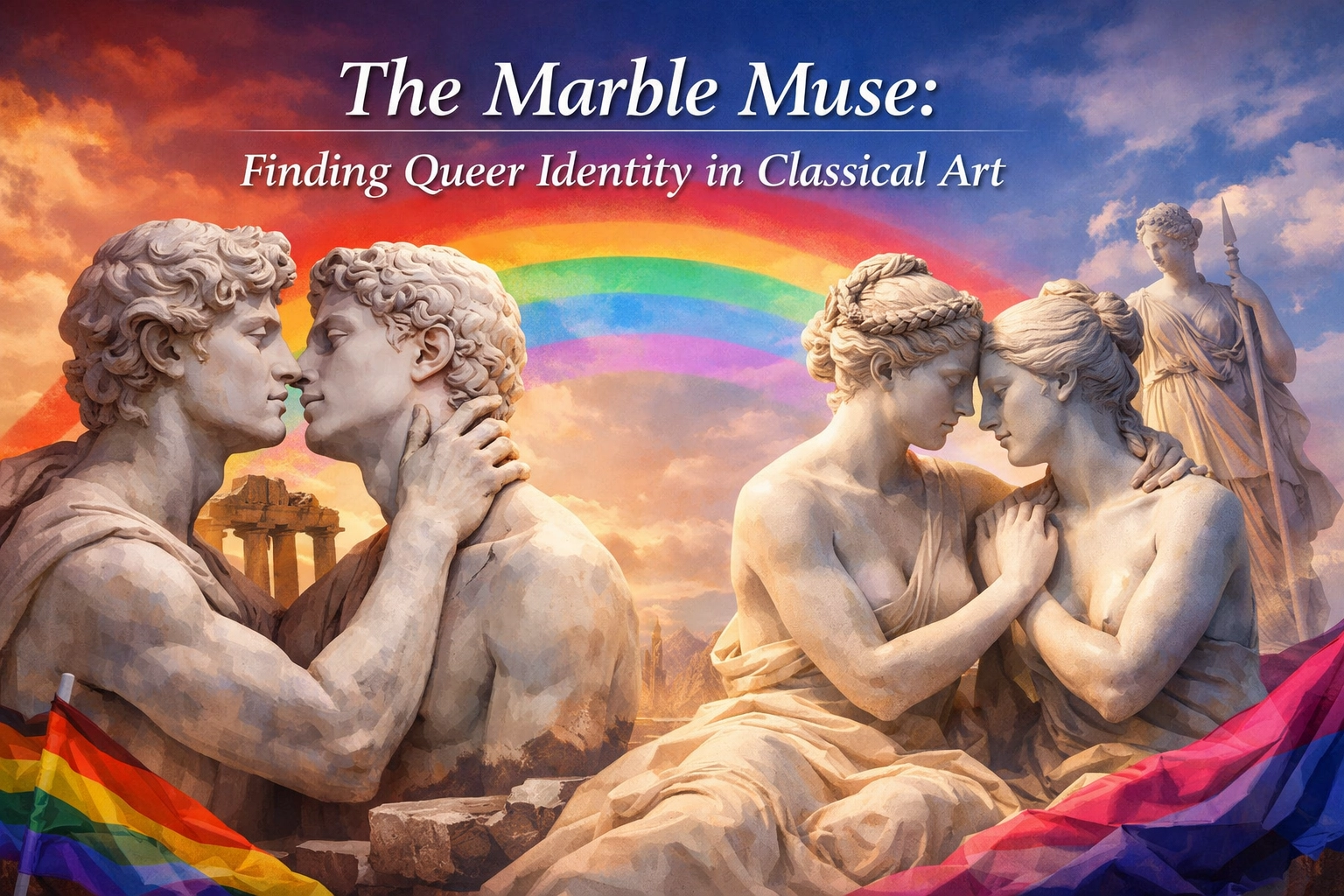
For a lot of us in the LGBTQ+ community, those moments are more than just an art history lesson. They are a mirror. In a world that often tries to tell us our desires are "new" or a "modern trend," standing face-to-face with a 2,000-year-old masterpiece that celebrates the male form feels like a homecoming. It’s a reminder that we have always been here, and we have always been considered beautiful enough to be carved into eternal stone.
At Read with Pride, we’re all about the stories that define us. Whether it’s through the pages of the latest MM romance books or the silent gaze of a marble statue, finding our heritage is a vital part of the queer experience.
The OG Thirst Traps: Why Classical Art Matters
Let’s be real: classical statues are the original thirst traps. But beyond the aesthetics, there’s a deep, historical layer of "if you know, you know" (IYKYK) that has connected gay men for centuries. Back in the 18th and 19th centuries, before we had the vocabulary of "queer" or "gay," classical art was a safe harbor.
Research shows that artists and collectors used ancient Greece and Rome as a strategic "get out of jail free" card. You couldn’t necessarily paint a portrait of your boyfriend in a compromising position, but you could definitely paint him as "Hyacinthus" or "Ganymede." By wrapping homoeroticism in the cloak of classical mythology, creators could explore their desires under the guise of "high culture."
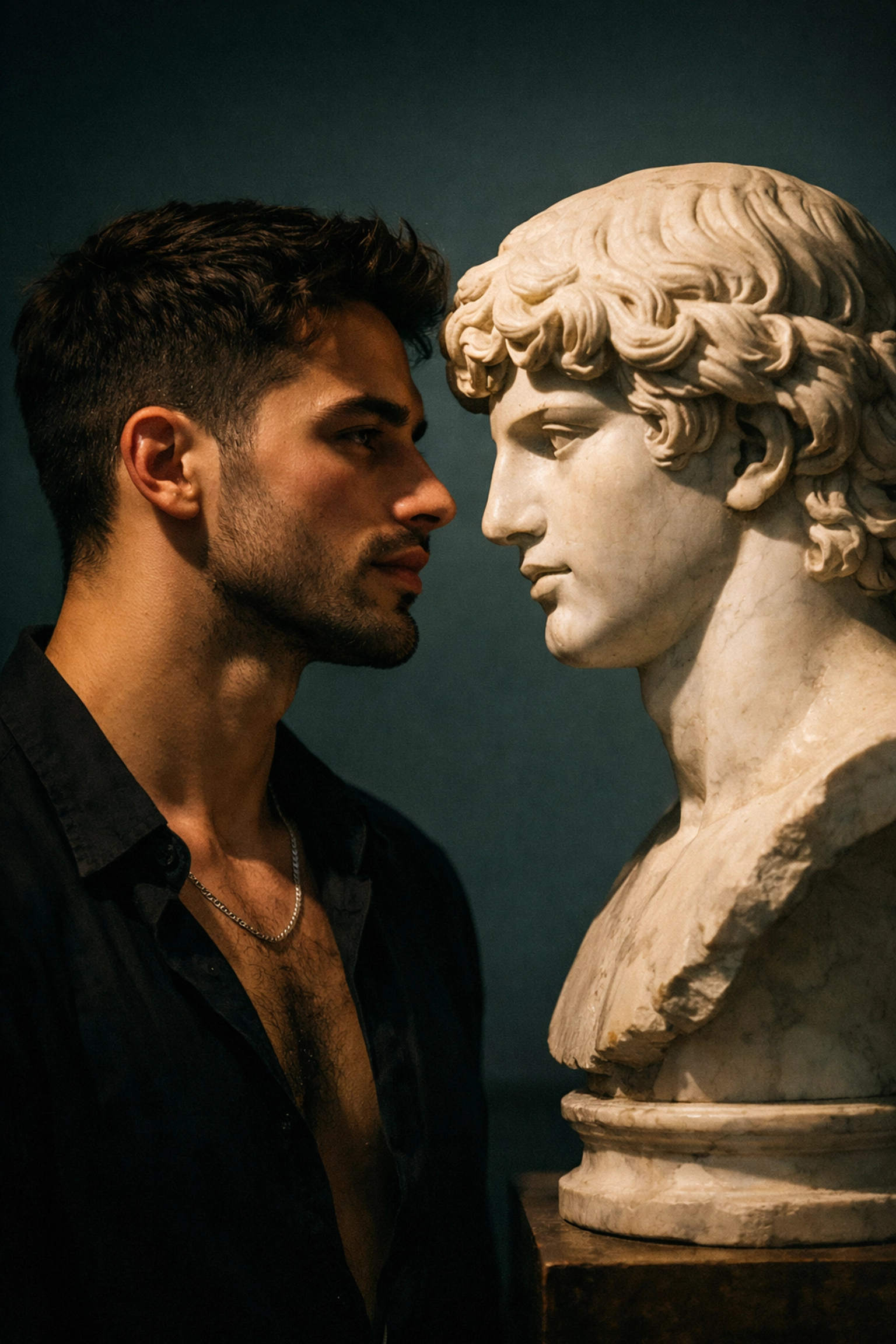
When we look at these statues today in a university gallery or a metropolitan museum, we aren’t just looking at rocks. We’re looking at a survival strategy. We’re looking at the ways our ancestors navigated a world that didn't always have a place for them. It’s the same energy we find in gay historical romance today: that thrill of finding love and desire in places where it was supposed to be hidden.
The University Gallery: Where Education Meets Identity
For many young queer people, the first real encounter with "naked art" happens in a university setting. Whether you’re an art history major or just taking an elective to fill credits, the experience of studying the male nude in an academic context can be transformative.
There’s something powerful about a professor standing in front of a slide of Michelangelo’s David and discussing the "idealized male form." In those lecture halls, the queer body is centered. It is the subject of study, the pinnacle of perfection, and the foundation of Western art. For a student still figuring out their place in the world, that validation is huge.
It also opens up the conversation about how we interpret these works. As we move through 2026, the way we talk about art is evolving. We’re moving past the "they were just very good roommates" narrative and acknowledging the queer gaze. Museums and exhibitions are finally catching up, creating spaces where we can discuss the ambiguity of gender and sexuality in ancient works, like the Ain Sakhri Lovers or the gender-fluid depictions of Hermaphroditus.
From Marble to Ebooks: The Artistic Continuum
The transition from a marble statue in a museum to the cover of a modern MM romance novel is shorter than you might think. The "statuesque" hero is a trope for a reason. When authors write about a lead with "chiseled features" or a "physique that would make Praxiteles weep," they are tapping into a visual language that has been established for millennia.
At Readwithpride.com, we see this connection every day. Our collection of gay fiction and queer fiction often draws on these classical archetypes. Whether it’s a gay fantasy romance featuring a literal god descending to earth or a gay contemporary romance set in the sun-drenched ruins of Italy, the influence of the "Marble Muse" is everywhere.

We find a sense of continuity when we bridge the gap between ancient art and modern storytelling. It reminds us that the feelings we have: the longing, the admiration, the passion: are part of a long, unbroken chain of human experience. You can find these themes explored deeply in our product-sitemap1.xml, where the latest releases often pay homage to these timeless ideals.
Nudism, Art, and the Modern Museum Experience
There’s a specific kind of bravery in nudism in art. It’s about vulnerability. When we see naked gay bodies in art: whether they are photographs by Wilhelm von Gloeden or modern exhibitions celebrating the male form: we are seeing a rejection of shame.
Museums are increasingly becoming sites of queer pilgrimage. Seeing an exhibition that specifically highlights LGBTQ+ themes allows us to claim space in institutions that once excluded us. It’s about saying, "This art belongs to me, too."
If you're looking to dive deeper into how these themes manifest in literature, check out some of the best MM romance titles on our blog_post-sitemap1.xml. Many of our authors are experts at weaving art and identity into their narratives, creating stories that feel as enduring as the statues themselves.
Why We Still Look
Why do we keep going back to the museums? Why do we still get a little breathless in the presence of a well-lit marble torso?
Because representation matters. In 2026, we have more visibility than ever, but there is something grounding about historical visibility. It provides a foundation. It tells us that our identity isn't a "lifestyle choice" or a phase: it’s a masterpiece.
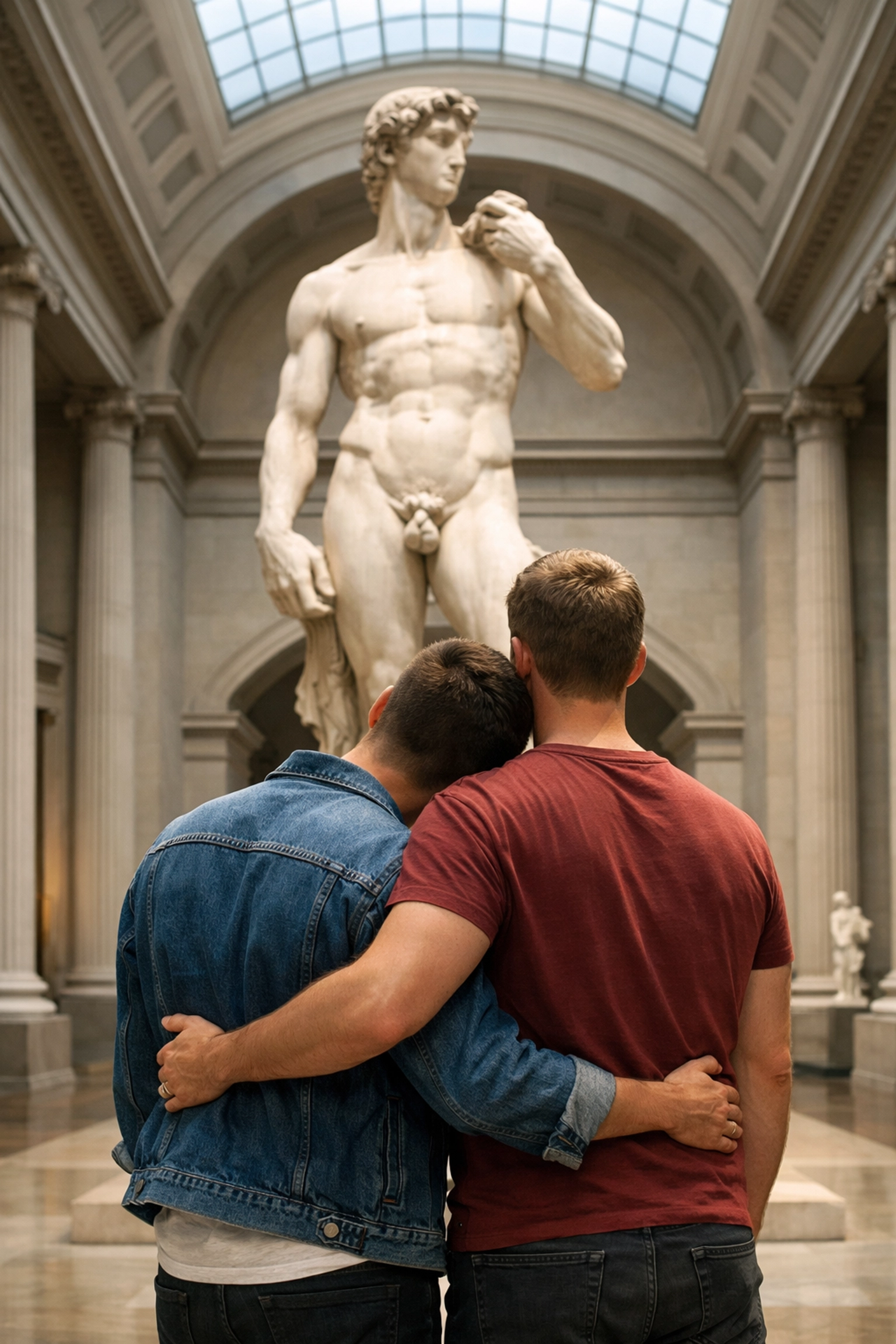
The next time you’re in a museum or scrolling through an online gallery, take a second to really look at those classical nudes. Don’t just see the technique or the history. See the person who posed. See the artist who lingered over the curve of a muscle. See the centuries of gay men who stood exactly where you are standing and felt exactly what you are feeling.
Join the Conversation
Art is a dialogue, and so is reading. At Read with Pride, we want to hear how art influences your reading habits. Do you find yourself drawn to gay love stories that mirror the epic scale of classical myths? Are you a fan of MM historical romance that explores the hidden lives of artists?
Explore our full library of LGBTQ+ ebooks and join a community that celebrates our history, our art, and our future.
- Browse our latest releases: readwithpride.com
- Check out our FAQ for more info: readwithpride.com/index.php/faq
- Got a question about queer literature? Ask us here!
Don't forget to follow us on social media to stay updated on the new gay releases of 2026 and join the discussion on queer art and culture:
- Facebook: Read with Pride
- Instagram: @read.withpride
- X (Twitter): @Read_With_Pride
Whether it's carved in stone or written in pixels, our stories deserve to be seen. Read with pride. Stay inspired. And never stop looking for the muse.
#MMRomance #GayArt #QueerHistory #ReadWithPride #ClassicalArt #LGBTQBooks #GayFiction2026 #MuseumVibes #MaleNudeArt #QueerIdentity

Leave a Reply
You must be logged in to post a comment.