

readwithpride.com
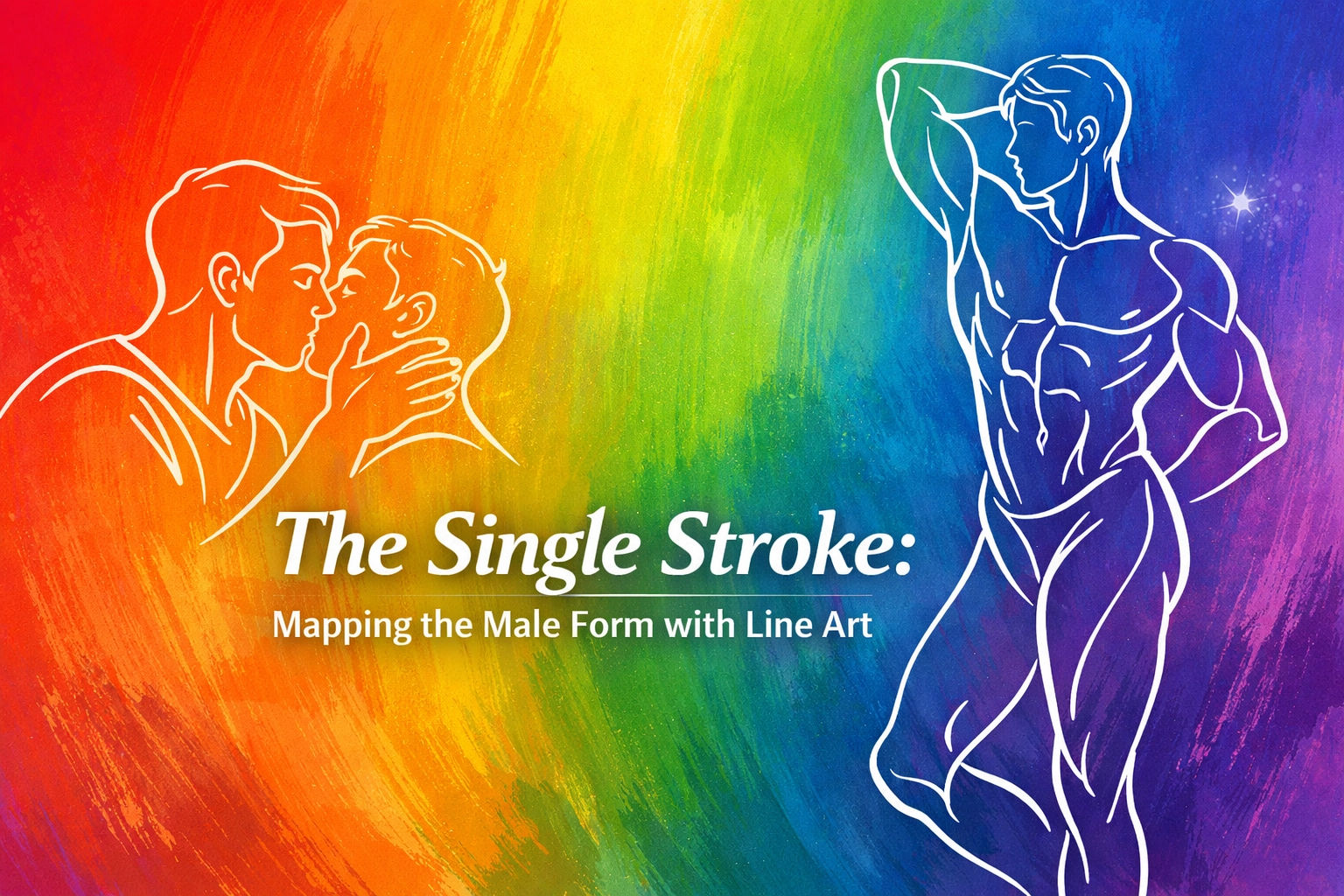
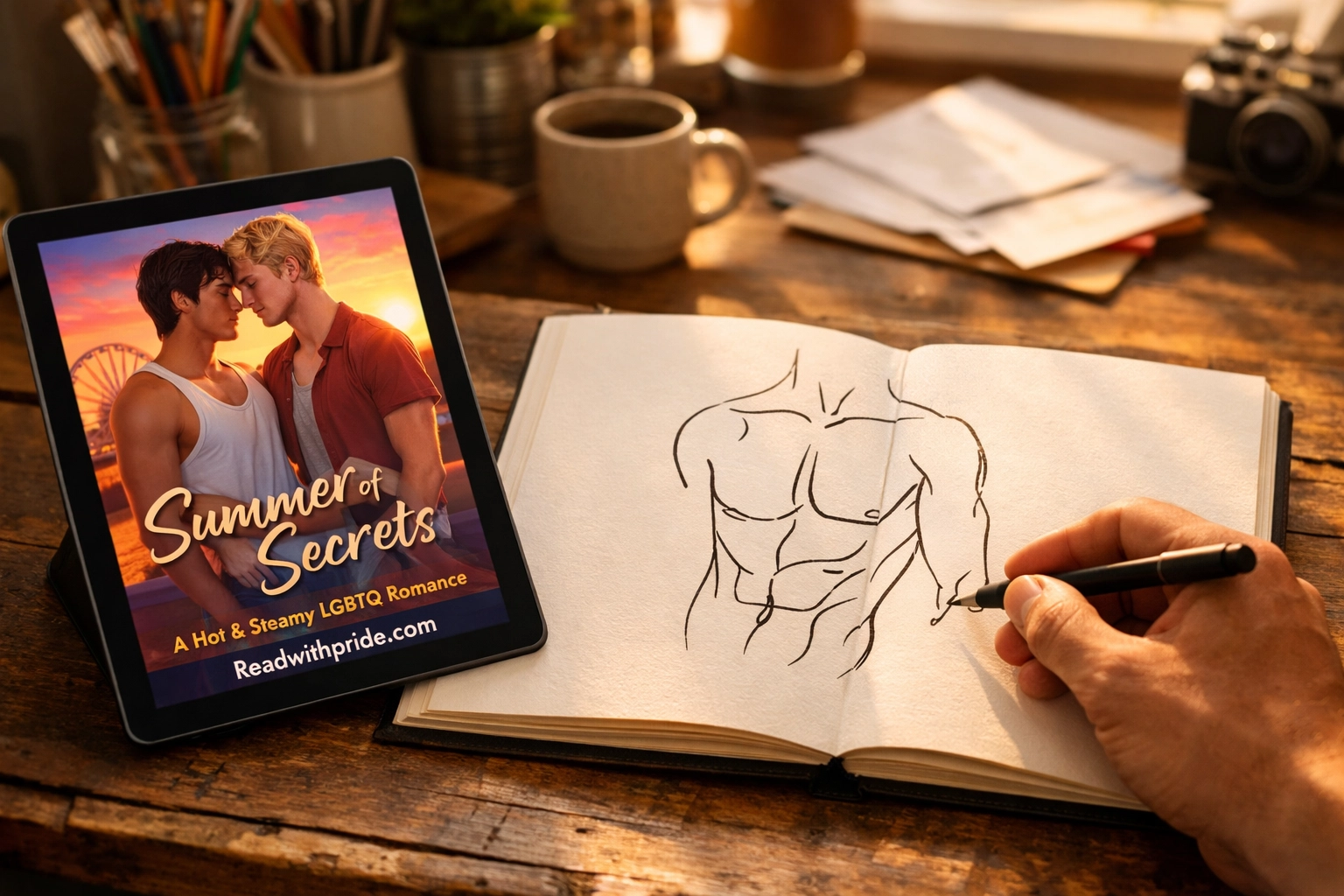
There is something inherently intimate about a single line. In the world of art, where we are often bombarded with hyper-realistic renders and high-definition photography, the simplicity of line art feels like a breath of fresh air. It’s the visual equivalent of a whisper in a crowded room. At Read with Pride, we’re all about celebrating the nuances of the queer experience, and nothing captures the raw, kinetic energy of the male form quite like a continuous stroke of ink.
Mapping the male body through a single line isn’t just a technical exercise; it’s an exploration of desire, anatomy, and the "less is more" philosophy. When an artist refuses to lift their pen from the paper, they are forced to find the most essential truths of their subject. They have to decide: what makes a back look powerful? What makes a bum look invitationally soft or intensely muscular? How do the legs anchor a man to the earth?
In this deep dive, we’re looking at how line art strips away the noise to reveal the breathtaking architecture of the naked male body. Whether you’re a fan of MM romance books or a connoisseur of museum-grade sketches, there’s no denying the pull of a well-placed curve.
The Philosophy of the Continuous Line
The "one-line drawing" technique is a challenge of flow. To create a recognizable male nude without breaking the connection between pen and paper requires a deep understanding of human anatomy. It’s about "mapping" the body: not just drawing it. The artist’s eye must travel across the shoulders, down the dip of the spine, and over the swell of the glutes in one fluid motion.
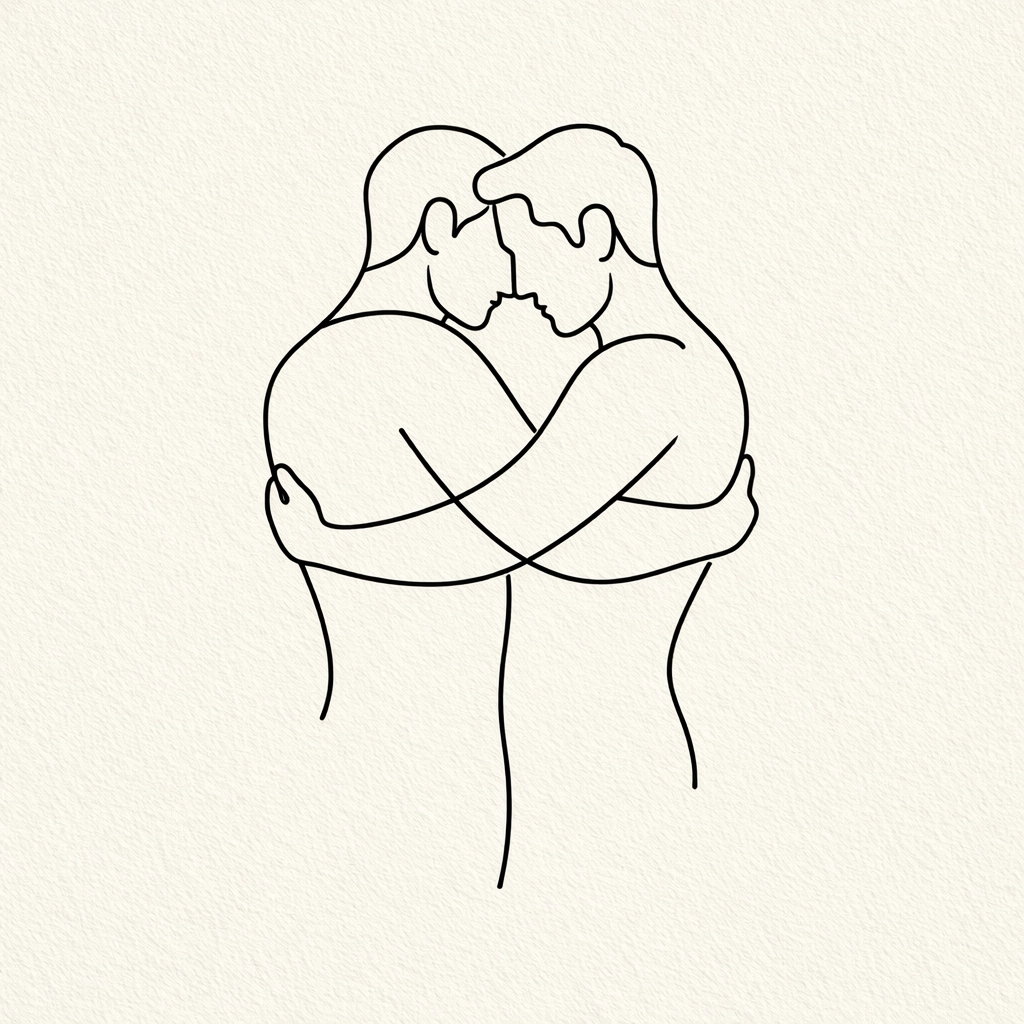
For the LGBTQ+ community, this style of art often resonates because it mirrors our own journeys. It’s about connection. It’s about the thread that ties our stories together. Much like the gay romance novels we publish and promote at Readwithpride.com, line art focuses on the essential connection between form and feeling.
The Architecture of the Back: The V-Taper
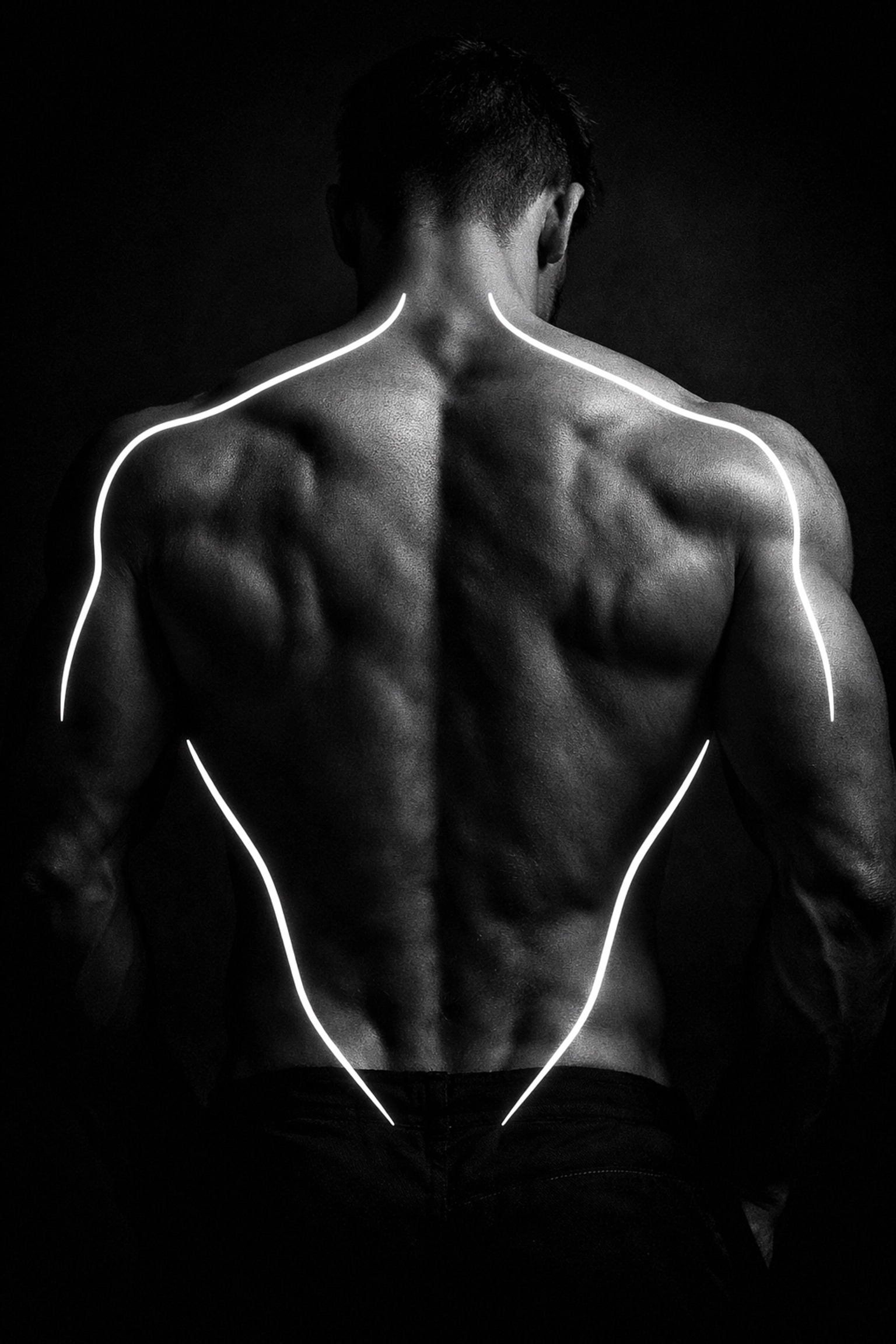
Let’s start at the top. The male back is a canvas of complex muscle groups: the traps, the lats, the erector spinae. In traditional art, you might see hours of shading to define these areas. In line art, the magic happens in the "V-taper."
A single stroke can start at the base of the neck, sweep out to the edge of a broad shoulder, and then tuck back in toward the waist. This one movement defines the strength and vulnerability of a man’s silhouette. There’s a specific tension in the back that line art captures perfectly: the way a man might look when he’s looking out a window, or the way his muscles ripple when he’s reaching for something just out of grasp. It’s a common trope in MM romance covers for a reason; the back represents a shield, a support, and a mystery all at once.
The Art of the Bum: Curves and Contours
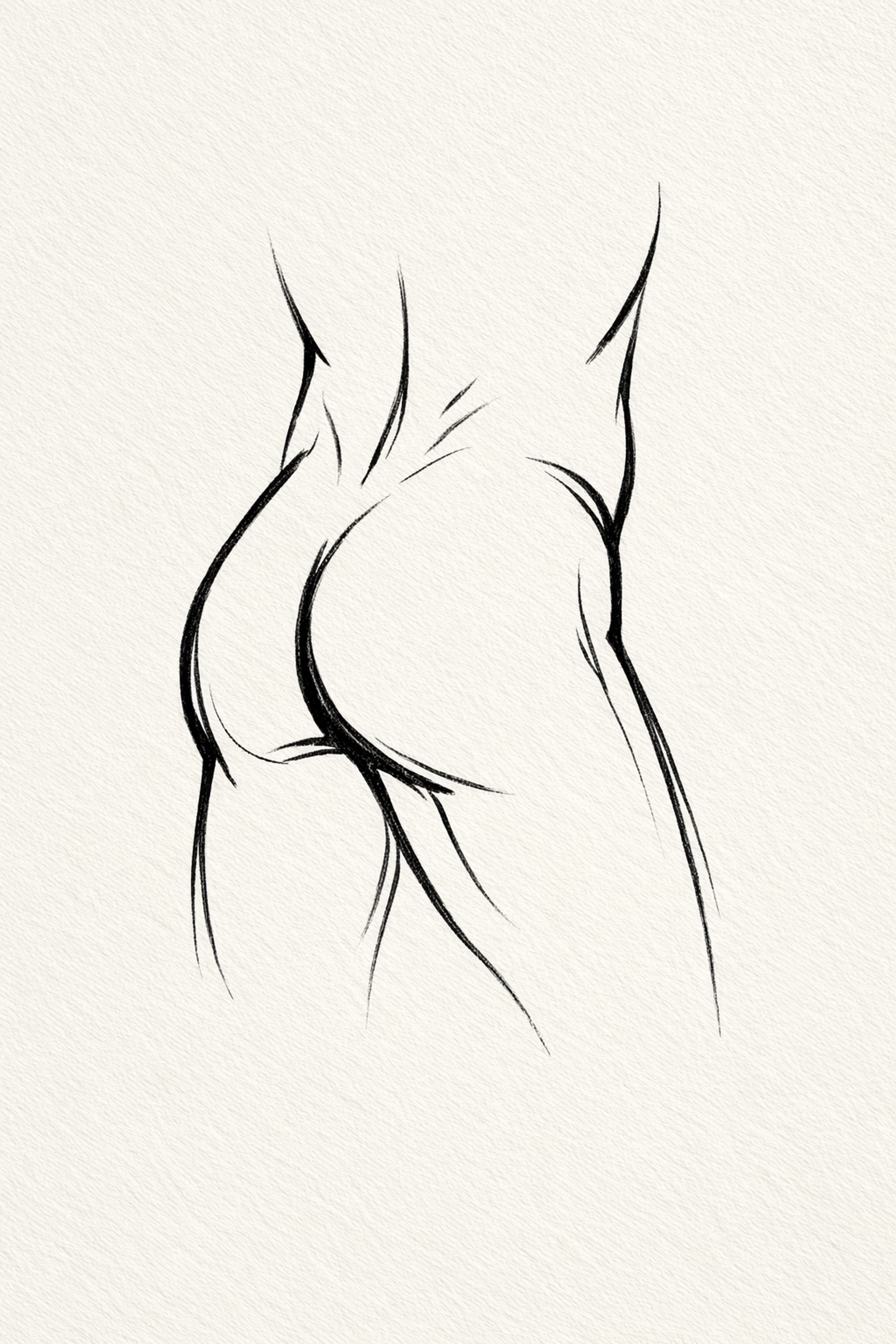
We can’t talk about the male form without giving credit where credit is due: the glutes. In the realm of "naked gay bodies art," the bum is often the focal point. But how do you represent such a substantial, rounded part of the anatomy with just a thin line?
The secret lies in the contour. A master of line art knows that you don’t need to draw the whole circle. You just need the curve of the outer hip and the sharp, decisive line where the glute meets the thigh. This "crease" is the map’s most important landmark. It suggests weight and muscle tone without needing a single drop of shadow.
When you look at this kind of art in a university exhibition or a modern museum, you see how the artist uses the line to "hold" the weight of the body. It’s a celebration of the male posterior that feels sophisticated rather than purely Shore-line. It’s the kind of aesthetic we love to see reflected in the descriptions of our favorite gay love stories.
Legs for Days: Strength and Movement
Moving down the map, we hit the legs. The male leg is a marvel of engineering: quadriceps, hamstrings, and the powerful curve of the calf. In line art, the legs serve as the pillars of the composition.
The challenge here is capturing the "stance." Is the man standing tall, or is he leaning? One line can dictate the entire mood. A jagged, quick line might suggest a man in motion: perhaps a scene from a gay adventure romance: while a slow, languid line suggests a man at rest, basking in the sun of a gay contemporary romance setting.
Mapping the legs requires the artist to follow the "line of action." By tracing the outer thigh down to the ankle in one go, the artist creates a sense of height and elegance that is hard to achieve with more cluttered styles. It’s about the flow of energy from the torso down to the toes.
Why Line Art Dominates Queer Aesthetics in 2026
As we move through 2026, we’re seeing a massive resurgence of minimalist art in the LGBTQ+ space. Why? Because it’s inclusive and interpretive. A single line can represent any man. It leaves room for the viewer’s imagination to fill in the details: the skin tone, the scars, the tattoos, the history.
This minimalism is also why line art has become the "it" style for MM contemporary book covers and digital art. It’s sleek, it’s modern, and it looks incredible on a Kindle screen. If you browse through the product-sitemap1.xml or check out our latest LGBTQ+ ebooks, you’ll see this influence everywhere. It bridges the gap between high art and popular culture.
From Museums to Your Bookshelf
You don’t have to go to a prestigious gallery to appreciate the mapping of the male form. While university exhibitions are doing incredible work showcasing "naked art" that challenges gender norms, the most accessible version of this art is in the palm of your hand.
At Read with Pride, we see the parallels between a well-drawn line and a well-written sentence. Both require the author (or artist) to know exactly where to start and where to end to create the maximum impact. Whether it’s a steamy MM romance or a heartfelt gay fiction piece, the "lines" of the story map out the emotional anatomy of the characters.
If you’re looking to dive deeper into the world of queer aesthetics and storytelling, our blog-category-sitemap1.xml is a great place to start. We cover everything from the history of gay literature to the best new gay releases of 2026.
Supporting the Vision
Art and literature are the lifeblood of our community. When we support gay artists and gay authors, we are ensuring that the "map" of our lives continues to be drawn with precision and pride.
If you want to stay updated on the latest trends in queer fiction and male-centric art, make sure to follow us on our social platforms. We’re constantly sharing snippets of the beautiful forms (both literal and literary) that make our community so vibrant.
- Facebook: Read with Pride
- X (Twitter): @Read_With_Pride
- Instagram: @read.withpride
Final Thoughts: The Line That Connects Us
Mapping the male form with a single stroke is an act of confidence. It says, "I know this body so well that I only need one line to show you its soul." It’s an authentic way to view masculinity: one that isn't afraid of the curves of a bum or the vulnerability of a bare back.
As you explore the best MM romance titles of 2026 or wander through a local art gallery, take a moment to look for the single lines. Look for the way they map out the muscles and the movement. It’s a reminder that even in our most complex forms, there is a beautiful, simple thread that connects us all.
Ready for your next great read? Head over to readwithpride.com to discover your next obsession. Whether you’re into gay historical romance, MM fantasy, or a gritty gay thriller, we’ve got the stories that map out the heart of the LGBTQ+ experience.
#ReadWithPride #MaleForm #LineArt #GayArt #MMRomance #LGBTQBooks #GayFiction #MinimalistArt #QueerCulture #MaleNudeArt #2026GayBooks #GayRomanceNovels

Leave a Reply
You must be logged in to post a comment.