

readwithpride.com
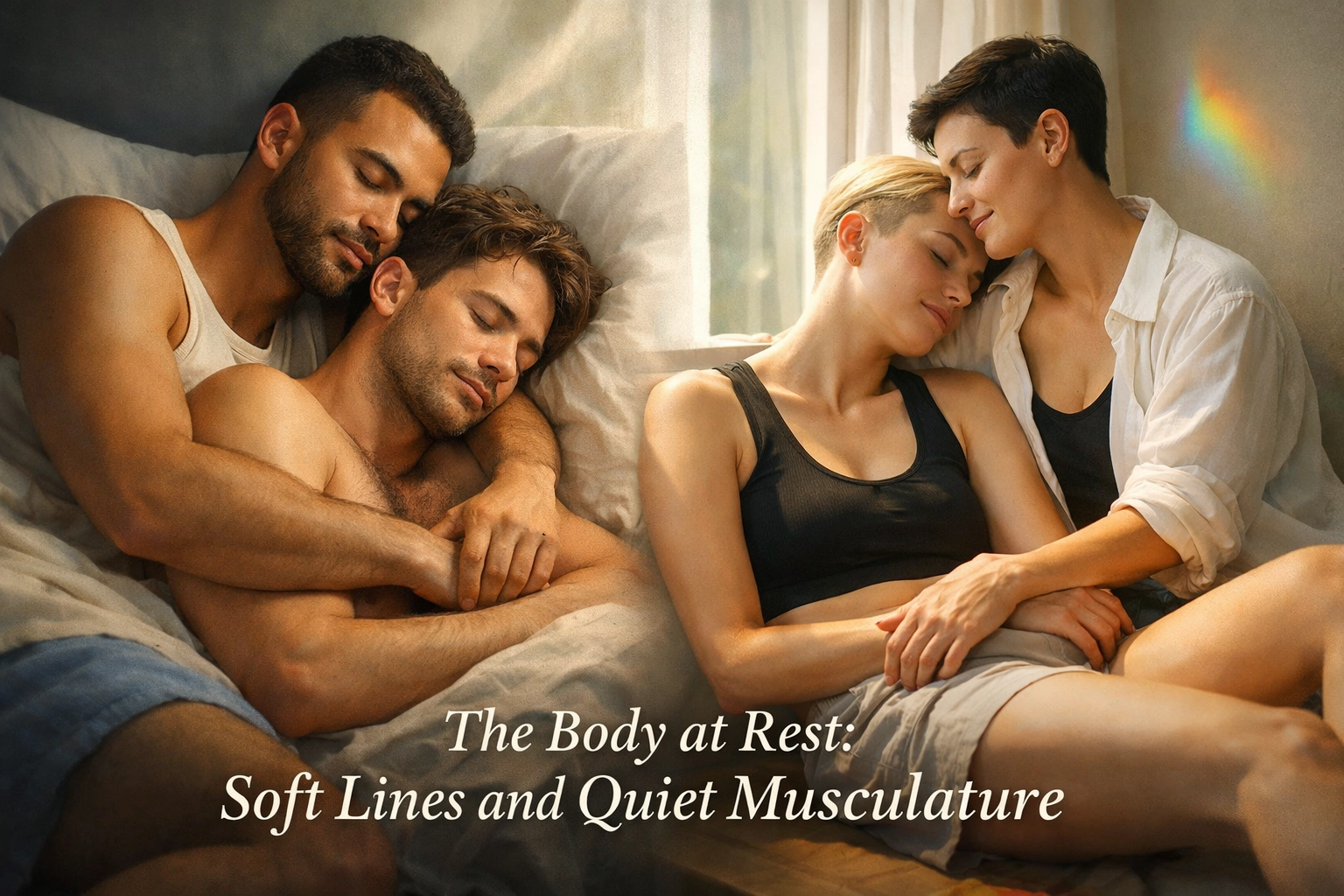
There is something profoundly intimate about a body that isn't trying to do anything. In a world that constantly demands performance: whether that’s at the gym, in the office, or on a dating app: the male form in repose feels like a quiet act of rebellion. At Read with Pride, we spend a lot of time talking about the heat and the drama of MM romance books, but today, we’re slowing things down. We’re looking at the art of the naked body when the muscles are soft, the breath is steady, and the lines are blurred by the simple gravity of sleep.
Whether it’s a sketch in a university art studio or a sprawling canvas in a modern exhibition, nude art that focuses on the "quiet musculature" offers a different kind of beauty. It’s not about the flex; it’s about the flow.
The Vulnerability of Stillness
When we think of "muscular" art, our minds often jump to the hyper-defined, Herculean statues of the Renaissance or the airbrushed covers of some gay romance novels. While we love a six-pack as much as the next person, there is a specific magic in the body at rest. When a man is asleep or lounging, his muscles lose their hard edges. The bicep flattens against the sheets; the quads soften; the abdomen rises and falls without the tension of a pose.
This vulnerability is what makes the male nude so compelling in a queer context. For so long, masculinity has been defined by hardness and action. To see a man captured in a moment of soft, quiet repose is to see him at his most authentic. It’s a theme we see reflected in some of the best gay fiction of 2026, where the most romantic moments aren't the grand gestures, but the quiet mornings watching a partner sleep.

The Curve of the Hip and the Geometry of the Bum
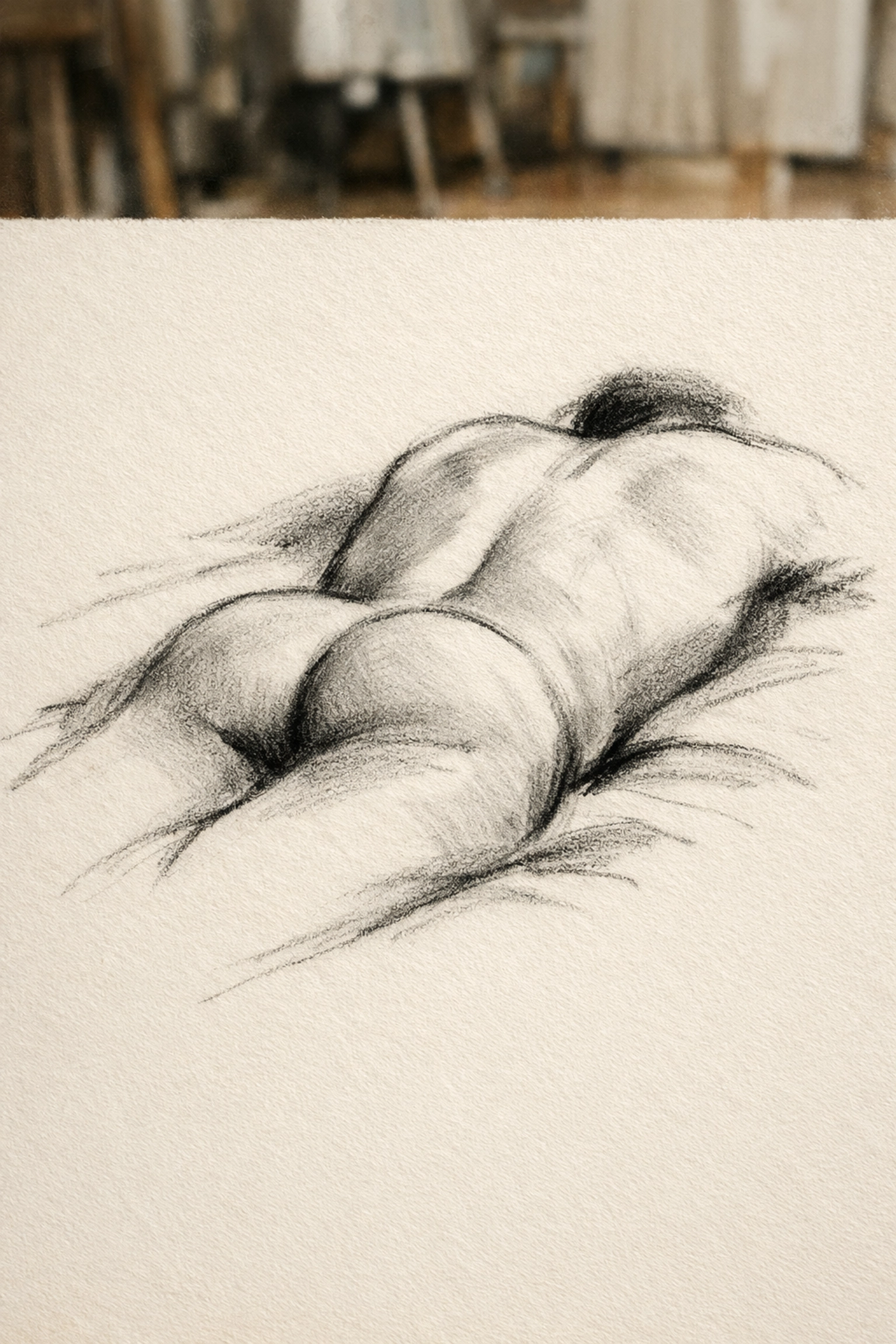
Let’s get specific. There is an incredible geometry to the human back and the curve of the bum when a body is lying on its side. In art classes from London to New York, students are taught to look for the "line of action," but in a resting body, the line is one of grace.
The way the lower back dips into the swell of the glutes is a classic focal point for both classical and contemporary artists. In a museum setting, these lines are often treated with a clinical, almost architectural respect. But in the world of LGBTQ+ fiction and photography, these lines represent comfort. They represent the "at home" feeling of being with someone you love.
When an artist focuses on the "bums and muscles" in a state of rest, they aren't just capturing anatomy; they’re capturing a mood. It’s the difference between a sprint and a sigh. The skin stretches differently over the hip bone; the hamstrings relax their grip. It’s a reminder that even the strongest bodies need a place to land.
From the University Studio to the Museum Wall
If you’ve ever stepped into a life drawing class at a university, you know the atmosphere is one of intense observation. There’s no ego in the room: just the scratch of charcoal on paper and the steady breathing of the model. This is where the "art of naked bodies" is truly dissected.
Universities have become safer spaces for exploring the queer male form, moving away from the "idealized" male and toward the "real" male. We’re seeing more exhibitions that celebrate different body types, hair, scars, and the natural "imperfections" that make a body unique. This shift in the art world mirrors what we’re seeing in MM contemporary literature. Readers are moving away from the "perfect" hero and toward characters who feel like real people: men who have bodies that move, age, and rest.
For those looking to dive deeper into the intersection of art and identity, check out our selection of gay literature that explores these themes. Books like The Canvas and the Closet delve into the life of the artist and the profound connection between the creator and the subject.
Why the "Quiet" Body Matters in 2026
As we move through 2026, the trend in both visual art and gay romance series is leaning toward authenticity. We’ve had enough of the filtered, the tucked, and the strained. There is a collective yearning for something that feels tactile and honest.
The "body at rest" serves as a visual metaphor for the peace we are all searching for. In a queer context, where our bodies have often been sites of political struggle or external judgment, seeing a naked gay body in a state of pure, unadulterated rest is powerful. It’s a claim to safety. It says, "I am allowed to be still. I am allowed to be soft."
This is why we see so many popular gay books this year focusing on the "slow burn." It’s the literary equivalent of a figure drawing: taking the time to notice every curve, every shadow, and every shift in weight before the action begins.
Capturing the Moment: Photography vs. Painting
While painting and sketching allow for a certain interpretation of the body, photography captures the fleeting reality of rest. A photograph of a man’s back as he sleeps, sunlight catching the fine hairs on his skin and the subtle ripples of his muscles, is a masterpiece of timing.
In exhibitions across the globe, photographers are stripping away the "sexy" lighting of the past and opting for natural, soft light that mimics the way we actually see our partners in the bedroom. This "nude art" isn't about provocation; it’s about recognition. It’s the "I know that curve" or "I’ve seen that shadow" feeling that connects the viewer to the piece.

Finding Art in the Everyday
You don't have to be in a museum to appreciate the lines of a naked body. In fact, most of our favorite gay love stories celebrate the art of the everyday. It’s the way your boyfriend looks when he’s sprawled across the sofa, or the way the muscles in his back shift when he’s reaching for a coffee mug.
At Read with Pride, we believe that art and literature are two sides of the same coin. Both are trying to capture what it means to be human, to be queer, and to be beautiful. If you’re looking for your next read that captures this aesthetic, why not browse our post-sitemap for recommendations on MM romance books that feature artists, models, and the beauty of the male form?
Conclusion: The Art of Being
The soft lines and quiet musculature of the male body remind us that we are more than what we do. We are the sum of our quietest moments. Whether you’re an artist with a sketchbook or a reader with one of our LGBTQ+ eBooks, we hope you take a moment to appreciate the beauty of the body at rest.
The bums, the muscles, the curves, and the lines: they are all part of the story we’re telling. And at Read with Pride, we’re proud to give those stories a home.
Explore more about the intersection of art and identity at Readwithpride.com. Don't forget to follow our journey on social media for the latest updates on 2026 gay books and queer culture:
- Facebook: Read with Pride
- Instagram: @read.withpride
- X (Twitter): @Read_With_Pride
Let’s celebrate the body, in all its flexed and unflexed glory.
#ReadWithPride #NudeArt #GayFiction #MMRomance #MaleForm #QueerArt #BodyPositivity #GayBooks2026 #ArtAndIdentity #QuietMusculature

Leave a Reply
You must be logged in to post a comment.