

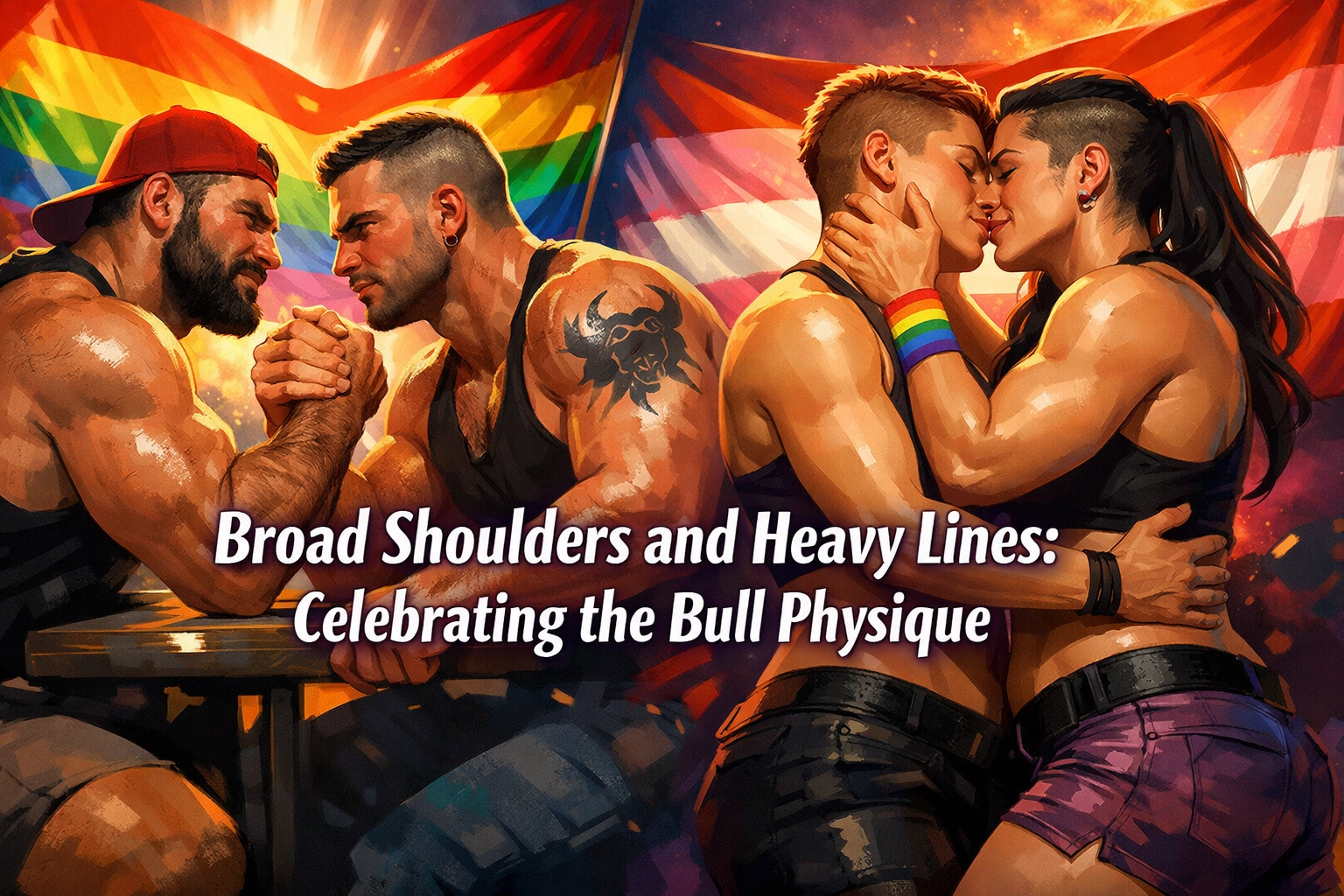
readwithpride.com
There is something undeniably magnetic about the "bull" physique. In the world of queer art and gay fiction, we often see a focus on the lean, the lithe, or the traditionally athletic. But there’s a different kind of power found in the broad-shouldered, heavy-set, and profoundly muscular "bull" aesthetic. It’s a celebration of mass, an appreciation for the "heavy lines" of a body that takes up space and commands attention without saying a word.
At Read with Pride, we’ve always believed that every body tells a story. When it comes to the bull physique: characterized by that thick bone structure, massive neck, and shoulders that seem to span horizons: the story is one of strength, protection, and a raw, grounding masculinity that has fascinated artists for centuries.
The Anatomy of the Bull: More Than Just Muscle
When we talk about the "bull" in art, we aren't just talking about a guy who hits the gym. We’re talking about a specific physiological blueprint. According to biological research, a bull’s physical build is defined by a significantly higher muscle-to-bone ratio compared to others. In art, this translates to thick necks, larger feet, and a "hump" of muscle over the shoulders that creates a distinctive silhouette.
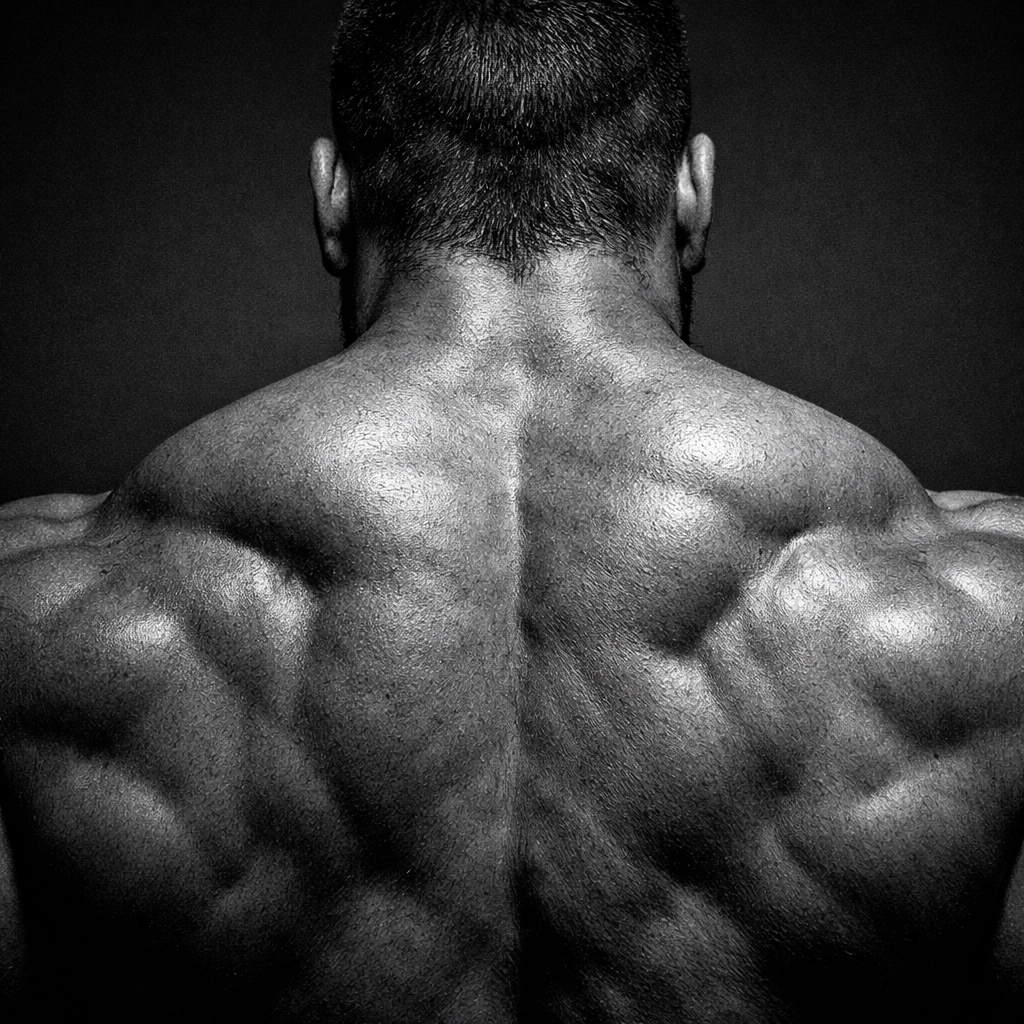
The beauty of this physique lies in its structural integrity. Artists often focus on the shoulder angle: that 45-to-60-degree slope that provides a shock-absorbing look. In a charcoal drawing or a high-contrast photograph, these lines create a sense of immovable weight. It’s the "top line" of the body: the muscles running along the spine and the forequarters: that really defines the bull. When an artist captures a man with this build, they aren't just drawing a person; they are drawing an architectural marvel of flesh and bone.
From Classical Marble to Modern Digital Brushes
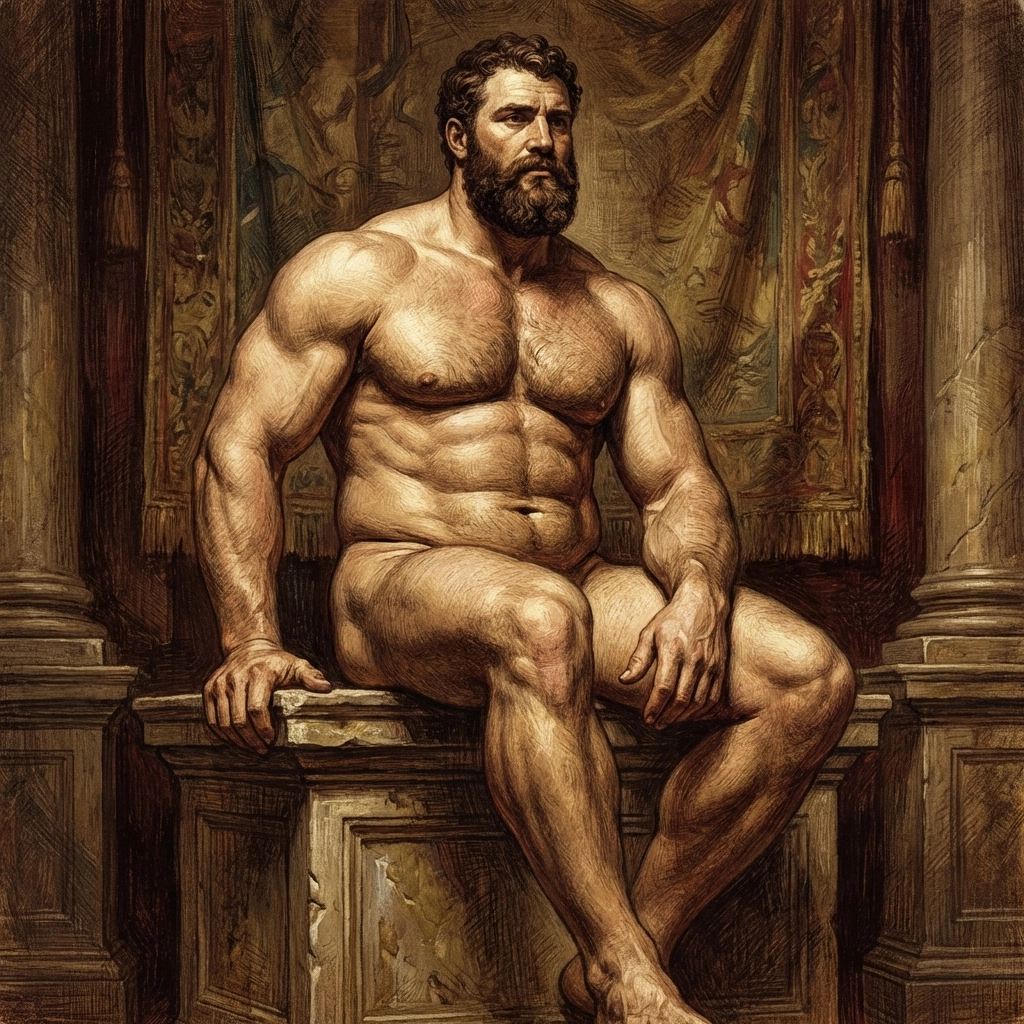
The obsession with the heavy male form isn't new. If you walk through any major museum, you’ll see the "bull" physique in the works of the masters. Think of the late-Renaissance sculptures or the rugged depictions of Hercules. These weren't CrossFit bodies; they were depictions of "heavy" men: men with thick waists, massive thighs, and shoulders that looked like they could carry the weight of the world.
In modern university art programs and contemporary exhibitions, this appreciation is being reclaimed by the LGBTQ+ community. We are moving away from the "heroin chic" or the overly-groomed "twunk" aesthetics of the early 2000s and returning to a celebration of mass. Modern queer photographers are using lighting to emphasize the "mane" of hair on a thick neck or the way light pools in the deep grooves of a heavily muscled back.
This isn’t just about "naked gay bodies art"; it’s about the politics of presence. For a long time, the queer community was pressured to be small, to be invisible, or to be "palatable." The bull physique is the opposite of that. It is loud, it is heavy, and it refuses to be ignored.
The Bull in Queer Literature and MM Romance Books
This visual power carries over perfectly into the world of MM romance books. In the realm of queer fiction, the "bull" character often occupies the role of the protector, the gentle giant, or the stoic lead. Readers of gay romance novels in 2026 are increasingly looking for characters who reflect this physical diversity.
Think about the "size difference" trope: one of the most popular themes in MM contemporary and gay fantasy romance. There is a specific thrill in reading about a character who is described with these "heavy lines." When a writer describes a hero with "broad shoulders that fill a doorway" or a "neck as thick as a thigh," they are tapping into that same bull-like aesthetic that we see in the galleries.
If you’re looking for your next read that features these larger-than-life men, check out some of the best MM romance books of 2026 on our platform. Whether it’s a gay historical romance where a rugged blacksmith takes center stage or a gay thriller featuring a burly bodyguard, the bull physique provides a grounded, powerful anchor for the narrative.
The Lines of the Body: A Study in Bums and Muscles
In art classes, the study of the "bull" physique focuses heavily on the posterior chain. We’re talking about the glutes (the "bums") and the hamstrings: the engine room of the body. For a man with a bull-like build, these muscles are often massive, providing a literal foundation for their strength.
When an artist sketches these lines, they are looking for the way the muscle overlaps and creates "heavy" shadows. There is a weight to the way a bull-physique man sits or stands. Every movement feels deliberate. In "naked art" exhibitions, you’ll often see these men posed in ways that emphasize this density: squatting, leaning, or tensed: showing off the raw power of the human form.
For many of us, this art serves as a form of body positivity. It reminds us that masculinity isn't one-size-fits-all. The bull physique celebrates thickness, hair, and the kind of "bulk" that was once sidelined in mainstream media. At Readwithpride.com, we celebrate this through our curated selection of gay literature and MM novels that don't shy away from diverse body types.
Why We Love the "Bull" Aesthetic in 2026
As we move further into 2026, the trend in LGBTQ+ fiction and art seems to be leaning toward authenticity. We want to see bodies that look like they’ve lived, worked, and thrived. The bull physique represents a certain kind of "earthiness." It’s a body type that feels connected to the ground: strong, stable, and enduring.
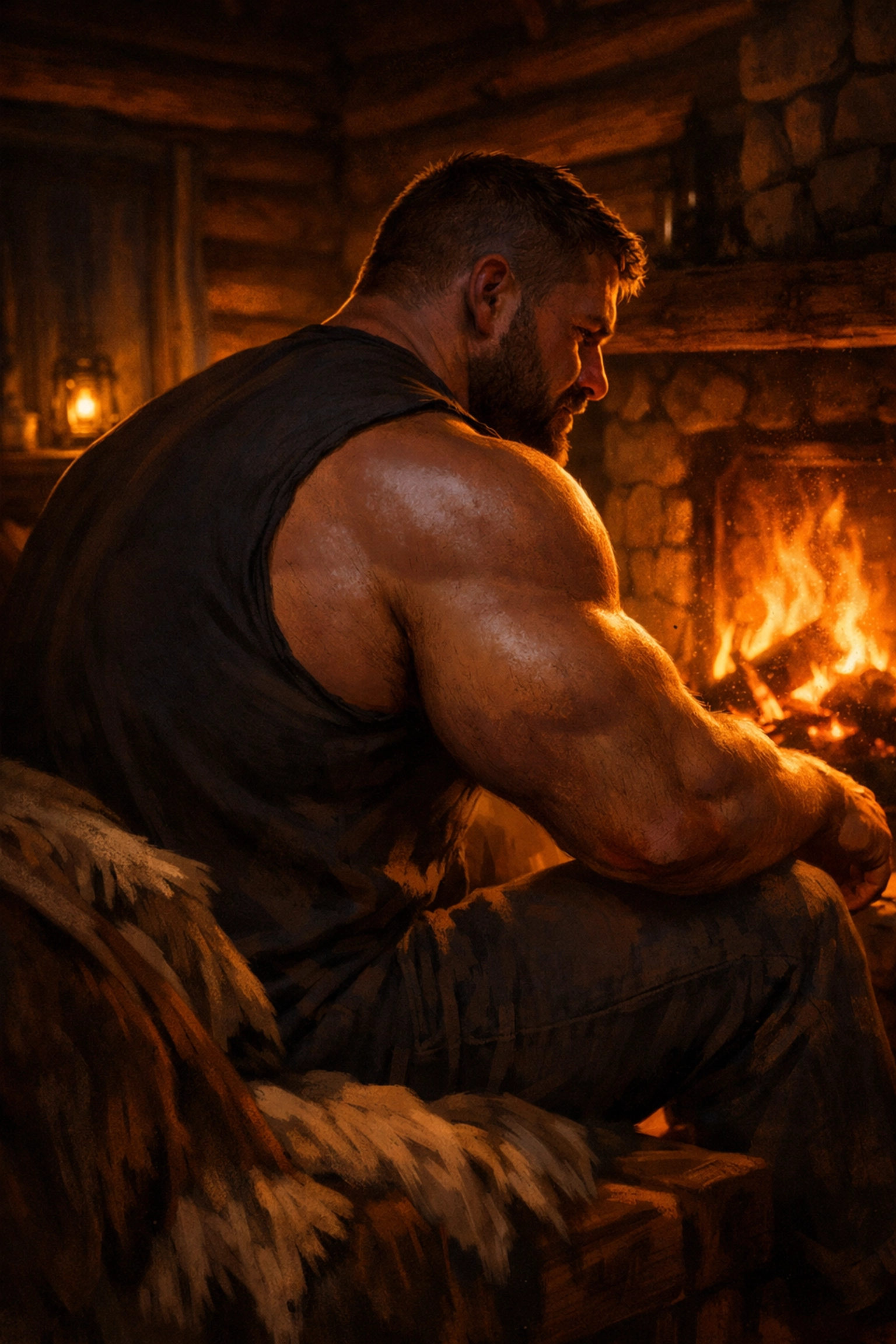
This aesthetic also plays into the "forced proximity" trope often found in steamy MM romance. Imagine two characters stuck in a small cabin, and one of them is a "bull." The sheer physical presence of that character changes the energy of the room. It creates a tension that is both physical and emotional, a hallmark of the gay love stories we love to publish.
Finding Your Tribe and Your Art
If you’re captivated by the broad shoulders and heavy lines of the bull physique, you aren't alone. From the halls of prestigious museums to the digital pages of LGBTQ+ Kindle books, this aesthetic is thriving. It’s a testament to the fact that our community finds beauty in strength, in mass, and in the unapologetic display of the male form.
We invite you to explore this world with us. Whether you’re looking for popular gay books, award-winning gay fiction, or just a heartfelt gay fiction story to get lost in, we have something for everyone. Our FAQ page can help you get started with our massive library of queer authors and MM authors.
Don't forget to follow the conversation and see more art and book recommendations on our social media:
- Facebook: Read with Pride
- X (Twitter): @Read_With_Pride
- Instagram: @read.withpride
Conclusion: The Power of the Heavy Line
The bull physique is more than just a body type; it’s an art form in itself. It represents a specific kind of queer masculinity that is as much about softness and protection as it is about raw power. By celebrating these broad shoulders and heavy lines, we are expanding the definition of what is beautiful, what is desirable, and what it means to "read with pride."
Whether you’re an artist with a charcoal stick in hand, a reader looking for a new gay release, or just someone who appreciates the finer points of "bums and muscles," remember that there is room for every size in the queer canon.
#ReadWithPride #MMRomance #GayArt #QueerFiction #BullPhysique #GayRomanceBooks #LGBTQBooks #MaleNudeArt #BodyPositivity #GayLiterature #2026Books #MMRomanceTrope

Leave a Reply
You must be logged in to post a comment.