

readwithpride.com
For a long time, if you wanted to see the queer male body in a museum, you had to be really good at reading between the lines, or rather, between the marble muscles. You’d look at a Greek statue of two "friends" wrestling and think, Sure, Jan. Or you’d stare at a Renaissance painting of Saint Sebastian looking suspiciously ecstatic while being pierced by arrows and realize that the artist definitely had a "type."
But fast forward to February 2026, and the shadows are officially a thing of the past. The queer body isn't just a subtext anymore; it’s the main event. From massive retrospectives in London to intimate galleries in Philadelphia, major cultural institutions are finally giving the queer male form the spotlight it deserves. At Read with Pride, we’re all about celebrating the stories that make us who we are, whether those stories are told through MM romance books or a stunning oil painting on a gallery wall.
Breaking the "Marble" Mold
Historically, "masculinity" in art was about power, conquest, and rigid strength. It was the soldier, the king, the stoic god. But the contemporary shift in public art spaces is challenging that narrow definition. We’re seeing a move toward what critics are calling "Soft Masculinity."
Take the exhibition "In the Soft Light" at Philadelphia’s InLiquid Gallery. This wasn't about the hyper-aggressive male gaze. Instead, photographers like T.W. Moore and German Ayala Vazquez, alongside the sculptural work of Michael Biello, explored tenderness. They showcased the male body not as a weapon, but as a site of vulnerability and intimate love. This mirrors what many of us love about gay love stories: the moment the "tough guy" lets his guard down. In 2026, seeing this celebrated in a public space feels like a collective exhale for the community.

The Body as a Living Archive
One of the most radical shifts we’ve seen recently is the concept that the queer body itself is a museum. The project "My Body is a Queer History Museum" has been making waves by turning performance art into a living intervention. Instead of just hanging pictures on a wall, artists use their own bodies and personal stories to disrupt traditional museum spaces.
It asks a vital question: Who is this space for? For too long, museums felt like ivory towers where queer history was sanitized or ignored. By centering the physical, lived experience of queer men: scars, tattoos, age, and all: these exhibitions are forcing public institutions to be more hospitable to the "other."
This is the same energy we bring to our collection of gay novels at Readwithpride.com. We don’t just want the "perfect" versions of ourselves; we want the gritty, authentic, and beautifully complex versions. Whether it’s a gay psychological thriller or a heartfelt MM contemporary romance, the goal is to see ourselves reflected back, unapologetically.
From 1869 to 2026: The Long Road to the Spotlight
If you think queer art is a "new" trend, think again. Exhibitions like "The First Homosexuals: Global Depictions of a New Identity, 1869-1930" at Wrightwood 659 have done the heavy lifting of showing just how long we’ve been here. This massive showcase featured over 300 works that proved that even when the language for "gay" or "queer" was limited or illegal, the art was already speaking volumes.
These historical deep dives are essential. They provide a lineage for the gay historical romance writers of today and give context to the modern "nudism in art" movements. Seeing a sketch from 1890 of two men sharing a quiet, naked moment in a forest reminds us that our desire for connection and visibility isn't a modern invention: it’s an ancient pulse.

Diversity Beyond the "Adonis"
One of the most important critiques of early gay art was its obsession with a very specific type of body: young, white, and muscular. Thankfully, the 2026 art scene is finally catching up to the reality of our community.
Exhibitions like "Queer Body Politic(s)" have been instrumental in this. By featuring self-portraits that use "regendering, images of older and weighted bodies, and courageous vulnerability," artists are unmasking the instability of traditional masculinity. They are showing that the queer body is diverse. It is trans, it is disabled, it is aging, and it is fat. And every single one of those bodies is a masterpiece.
This diversity is something we prioritize in our queer fiction recommendations. The "perfect" hero is great, but there’s something so much more resonant about a character who looks like the people we actually see at the bar, at the gym, or in the mirror.
Why Public Art Matters for the LGBTQ+ Community
You might ask, "Why does it matter if a museum in São Paulo or London shows naked gay art?" It matters because visibility is a form of protection. The Museum of Sexual Diversity in Brazil, for instance, links art directly to activism and human rights. When our bodies are treated as "art" rather than "taboo," it shifts the social consciousness.
It’s the same reason we advocate for LGBTQ+ eBooks and physical gay books. When you can walk into a public library, a university gallery, or a major museum and see a celebration of masculinity that includes you, the world feels a little bit safer and a lot more welcoming.

The Intersection of Art and Literature
At Read with Pride, we often see the crossover between the visual arts and the written word. Many of the best MM romance books of 2026 feature protagonists who are artists, photographers, or museum curators. There’s a reason for that: art is how we process our identity.
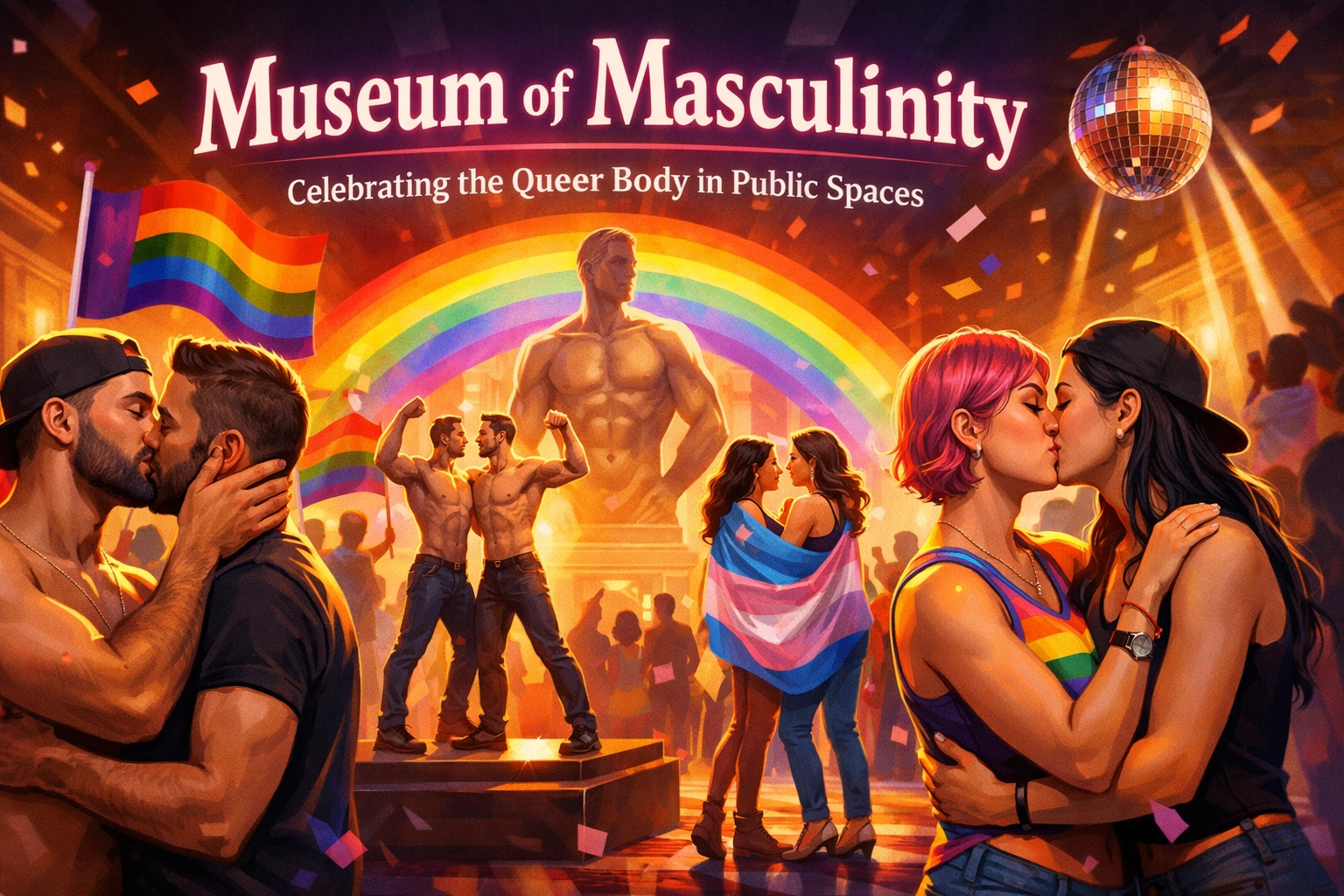
Think about a gay fantasy romance where the magic is tied to the beauty of the human form, or a gay spy romance where a stolen painting holds the key to a hidden life. The "Museum of Masculinity" isn't just a building; it’s a mindset. It’s about taking pride in the male form in all its iterations.
What’s Next for the Queer Gaze?
As we move through 2026, expect to see more "guerrilla" art exhibitions: pop-up galleries that showcase the raw, unfiltered side of the gay community. We’re talking about art that explores the complexities of our nightlife, our struggles with intimacy, and our triumphs in love.
Whether you’re exploring a gay thriller on your Kindle or walking through a university exhibition of nude photography, the message is the same: We are here, we are beautiful, and we are art.

Join the Conversation
Art is meant to be discussed, debated, and loved. What’s the most moving piece of queer art you’ve ever seen? Does it change how you read your favorite MM romance books?
We want to hear from you! At Read with Pride, we’re building a community that celebrates every facet of queer life. From the books we publish to the art we champion, we’re here to make sure our stories are never hidden again.
Check out more from Read with Pride:
- Browse our latest gay love stories
- Find your next obsession in our post-sitemap
- Ask us anything at our Question Portal
Don’t forget to follow us on social media for daily doses of queer joy, book recs, and art spotlights!
Follow us here:
- Facebook: Read with Pride
- X (Twitter): @Read_With_Pride
- Instagram: @read.withpride
#ReadWithPride #QueerArt #MuseumOfMasculinity #MMRomance #LGBTQBooks #GayFiction #MaleNudeArt #QueerHistory #2026GayBooks #GayRomanceNovels

Leave a Reply
You must be logged in to post a comment.