

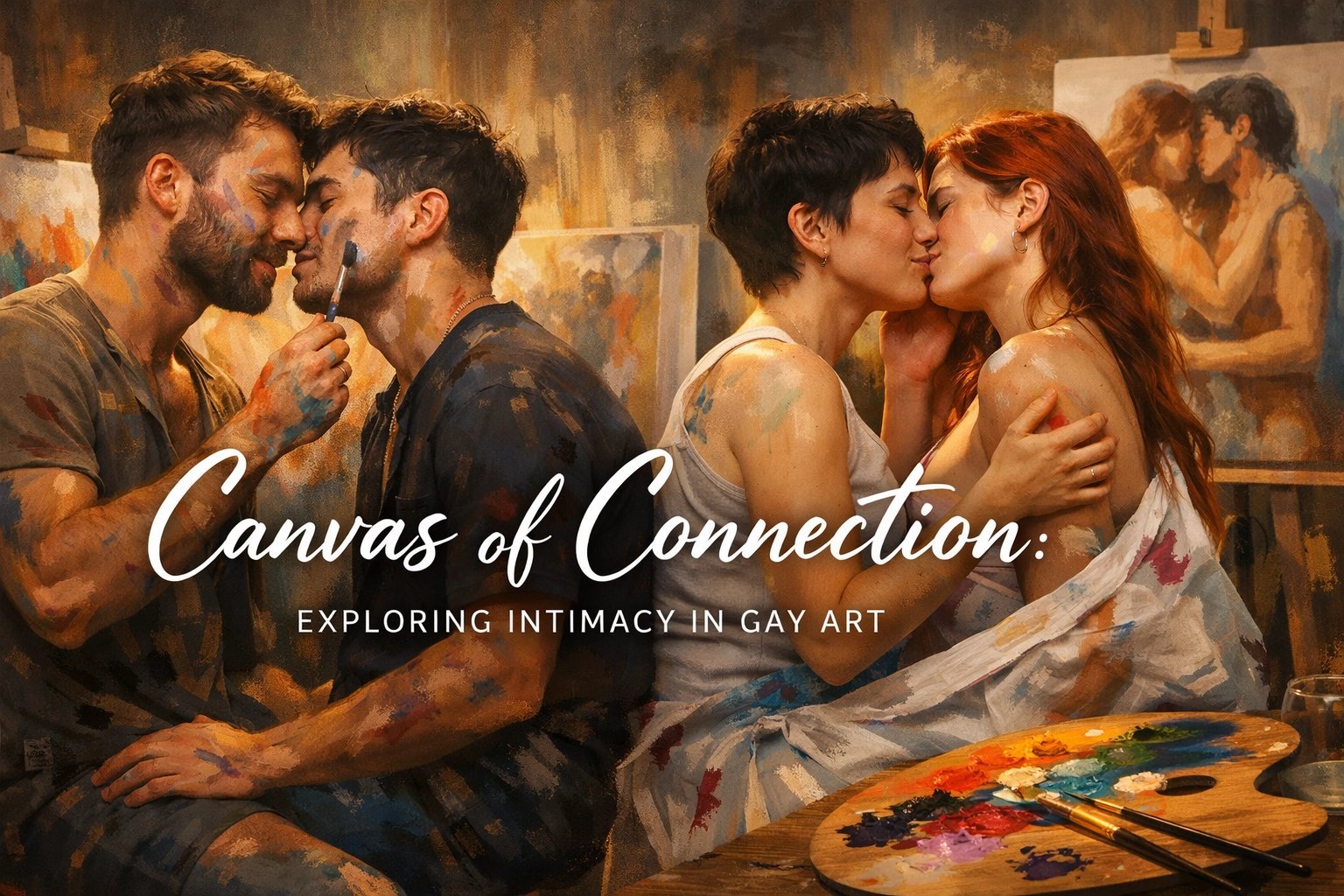
readwithpride.com
Let’s be real for a second: there is something about a well-captured male form that just hits differently. And no, I’m not just talking about the thirsty scrolls through Instagram (though we’ve all been there). I’m talking about art. The kind of art that makes you stop, tilt your head, and feel a little tug at your heartstrings because you recognize the raw, unfiltered human connection staring back at you from the canvas.
For centuries, the naked gay body in art has been more than just a study of anatomy. It’s been a battlefield, a sanctuary, and a love letter all rolled into one. At Read with Pride, we spend a lot of time talking about the power of words in gay romance novels and MM romance books, but today, we’re putting down the paperbacks and picking up the paintbrush. We’re diving into how artists have used the male nude to tell stories of intimacy that were often too "scandalous" to be written down.
The Art of the 'Hidden' Hug: Historical Coding
Back in the day, and by "the day," I mean the eras when living your truth could land you in a cold cell, artists had to get creative. They couldn't exactly paint two guys having a domestic moment in a London flat without raising some serious eyebrows. Instead, they turned to "historical references."
Take Frederic Leighton or Simeon Solomon, for example. These guys were masters of the "coded" aesthetic. They’d paint these incredibly sensuous male nudes and frame them within Greek mythology or biblical scenes. To the average Victorian viewer, it was just "classical art." But to those in the know? It was a wink and a nudge. It was visibility.
Of course, society still caught on eventually. Critics would grumble about "unwholesomeness" or "effeminacy," which was basically 19th-century code for "this is way too gay for us." But the impact was already made. By putting the male body on a pedestal, these artists were asserting that our form, and by extension, our desires, deserved to be seen and celebrated. It’s the same energy we find in gay historical romance today, where characters find ways to love each other in the margins of history.

From Shoeboxes to Museum Walls
Not every piece of art was meant for the public eye. One of the most fascinating parts of gay art history is the "private archive." Think about Duncan Grant, a staple of the Bloomsbury set. While he had his public-facing work, he also had a massive collection of erotic drawings and paintings created purely for himself and his circle. These weren't just sketches; they were vibrant, playful, and deeply intimate depictions of men in various states of repose and connection.
For a long time, this kind of art lived in the literal shadows, hidden in shoeboxes at the back of closets or passed around in secret. It’s a bit like the early days of queer fiction, where stories were shared in hushed tones or under different names.
But fast forward to 2026, and the vibe has shifted. We’re seeing these private moments finally getting the spotlight they deserve in universities and major exhibitions. There’s a profound power in seeing a sketch that was once a "secret" now hanging in a sunlit gallery. It validates the idea that queer intimacy isn't something to be tucked away, it’s a masterpiece.
The Modern Gaze: Beyond the 'Perfect' Body
When we think of "naked art," our minds often jump to the idealized, marble-statue look. You know the one, six-pack, chiseled jaw, looks like he’s never seen a carb in his life. While there’s definitely a place for that (we love a bit of eye candy in our steamy MM romance covers, don’t we?), modern gay art is pushing boundaries.
Contemporary artists and photographers are moving away from the "perfect" and toward the "real." They’re exploring the entanglement of friendship and desire, the softness of a quiet morning, and the complexity of navigating space as a queer person of color. Artists like Zanele Muholi use the body to act in solidarity, showing that intimacy isn't just about sex, it’s about being seen.
This shift is so important because it mirrors what’s happening in gay contemporary romance and MM fiction. We’re seeing more "dad bods," more neurodivergence, more trans representation, and more genuine human imperfection. When an artist paints a man with stretch marks or a scar, and depicts him being loved and desired, it’s a revolutionary act of self-love.

The University and the Exhibition: Education through Art
You might wonder why we see so much "naked art" in university galleries and specialized exhibitions. Is it just to be provocative? Honestly, sometimes, and why not? Art should provoke! But more often, it’s about education and de-stigmatization.
Universities are often the front lines of these conversations. By hosting exhibitions that focus on the gay male form, they’re teaching the next generation that the queer body isn't an "other", it’s a subject of beauty and study. It challenges the heteronormative gaze that has dominated art history for way too long.
Walking through a museum and seeing a massive photograph or painting of two men in a tender embrace does something to your psyche. It tells you that your love belongs in the hallowed halls of culture, not just in the dark corners of the internet. It’s the same feeling you get when you find a really good award-winning gay fiction novel on the front shelf of a mainstream bookstore. It’s a sense of "Oh, I belong here too."
Translating the Canvas to the Page
As a publisher at Read with Pride, I can’t help but see the parallels between a beautiful painting and a well-written MM romance.
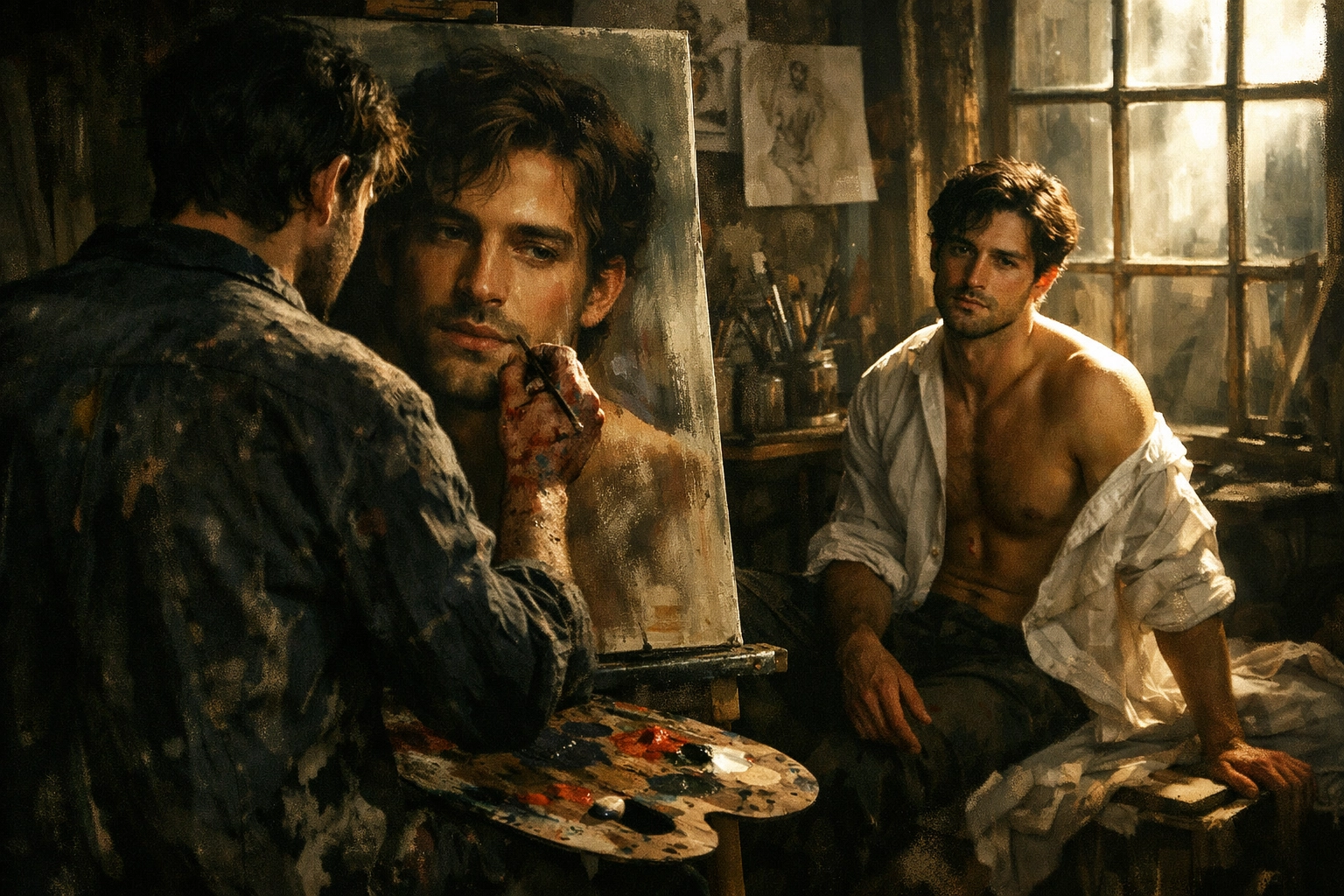
Think about the slow burn trope. In art, that’s the tension in a painting where two men are close, but not quite touching. You can feel the heat radiating off the canvas. Or think about forced proximity: a cramped, intimate sketch where every line conveys the lack of space and the abundance of feeling.
Art gives us the visual vocabulary for the emotions we read about in our favorite gay love stories. When we read a book like The Canvas and the Closet, we’re engaging with that same intersection of visual beauty and emotional depth. We’re looking for that "canvas of connection" in every chapter.
Why Visibility Still Matters in 2026
We’ve come a long way, but the journey isn't over. In a world that sometimes feels like it’s trying to push us back into those shoeboxes, being loud and proud about our art is essential. Whether it’s a provocative photograph in a New York gallery or a tender painting in a small-town exhibition, every piece of gay art is a stake in the ground.
It’s about saying: This is us. This is how we love. This is how we look when we’re vulnerable.
So, next time you see an exhibition featuring the male form, or you’re browsing through some new gay releases of 2026, take a moment to appreciate the intimacy. Look past the skin and see the soul of the work. Because at the end of the day, whether it’s on a canvas or on a Kindle screen, connection is what makes us human.
If you’re looking to dive deeper into these themes of art, identity, and romance, check out our latest collection of gay ebooks and MM romance books over at Readwithpride.com. We’ve got everything from gay historical romance to the latest gay psychological thrillers.
Let’s keep celebrating our stories, in every medium possible.
Stay proud, stay reading, and keep looking at the art.
#ReadWithPride #LGBTQArt #GayRomance #MMRomance #QueerVisibility #GayLiterature #2026Books #ArtAndIntimacy
Connect with us:

Leave a Reply
You must be logged in to post a comment.