

readwithpride.com
Let’s be real: for a long time, being queer meant living in the subtext. It was the stolen glance, the coded letter, or the "roommate" who stayed for forty years. But while the words were often whispered, the visual record was being built in the dark, literally. At Read with Pride, we’re obsessed with how our community tells its stories, whether it’s through the latest steamy MM romance or a blurred photograph from a century ago.
Today, we can scroll through Instagram or visit a high-end gallery to see the male form celebrated in all its glory. But that freedom wasn't a gift; it was a heist. The history of queer nude photography is a timeline of rebellion, where photographers risked prison and ruin to prove that our bodies were beautiful, worthy of art, and, most importantly, real.
The "Scientific" Smokescreen (1880s – 1920s)
In the late 19th century, the camera was a brand-new toy, and the law was… well, let’s just say it wasn’t exactly "pride-friendly." If you wanted to photograph a naked man without ending up in a cold cell, you had to have an excuse. Usually, that excuse was "science."
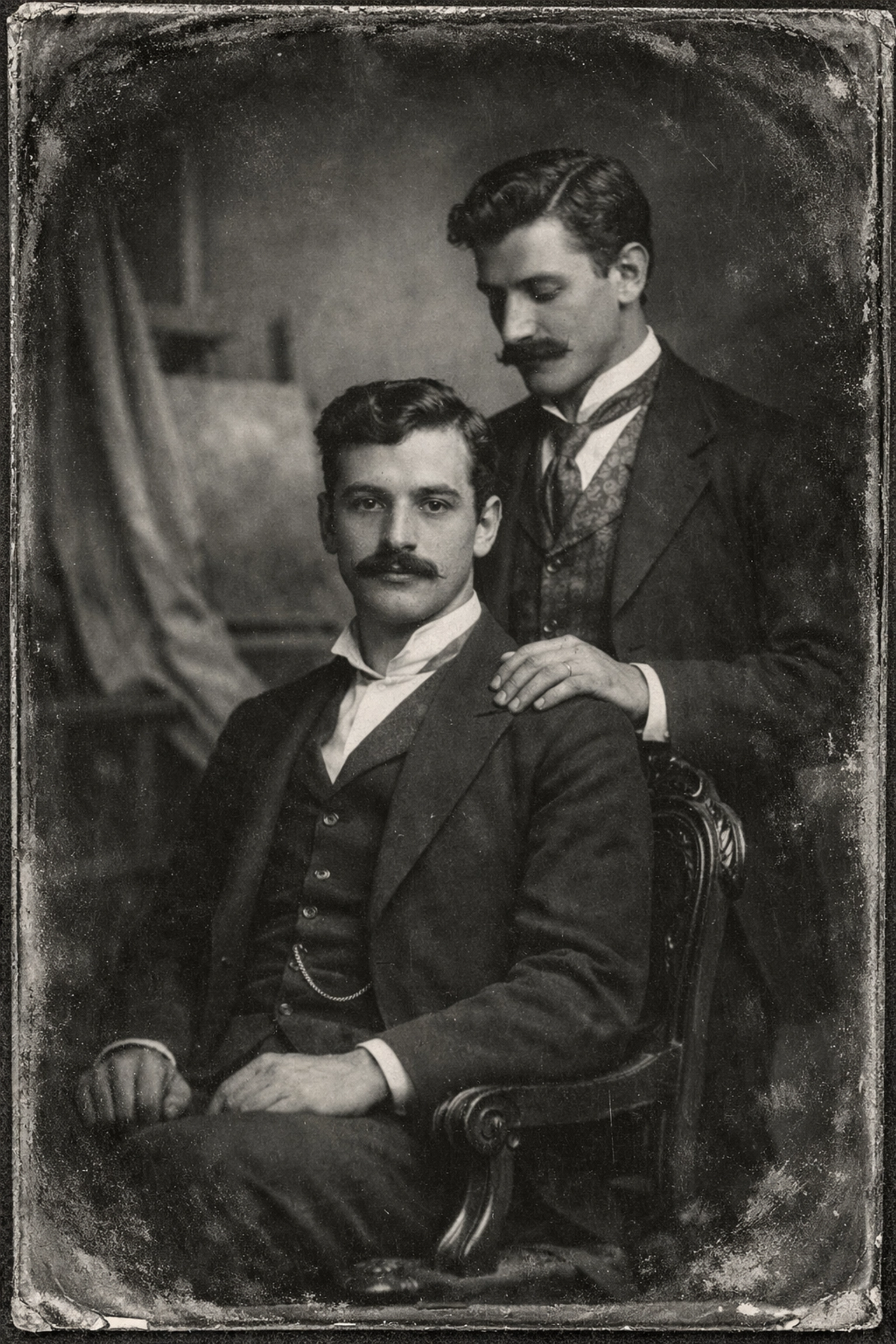
Early pioneers like Edward Muybridge, famous for his studies of motion, would tuck "transgressive" moments into his work. In 1887, he captured sequences that included women kissing, masked by the clinical framing of motion study. It was a loophole. If it was for "anatomy" or "artistic reference," you might get away with it.
Then you had legends like Alice Austen. Back in 1891, she was already playing with gender roles, photographing herself and her female friends in drag. These weren’t just "photos"; they were the first drafts of queer fiction. They were people using a lens to say, "This is who I am when the doors are locked." It reminds us of the roots of gay historical romance: the secret lives lived with passion against the backdrop of a world that demanded silence.
The Privacy of the Booth: A Technological Revolution
Before everyone had a high-def camera in their pocket, getting a photo developed was a gamble. You had to drop your film off at a chemist or a lab. If the technician saw two men being intimate: or even just one man being "too artistic": they could (and often would) call the police.
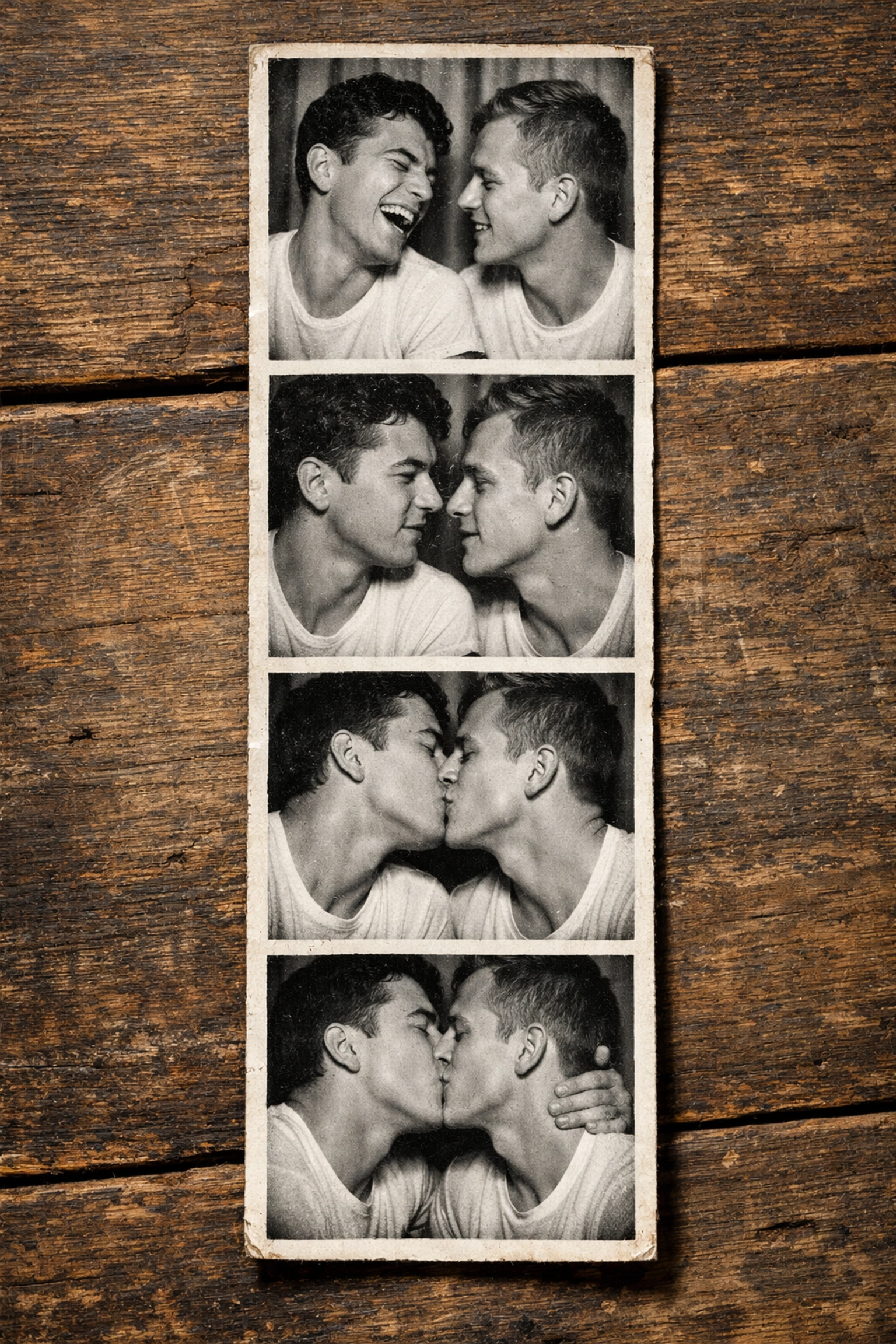
Enter the photo booth and, later, the Polaroid. These were game-changers for the LGBTQ+ community. Around 1953, artist Joseph John Bertrund Belanger used a photo booth to capture a passionate kiss between two men. It’s a tiny, grainy strip of paper, but it’s as powerful as any M/M books climax. No middleman, no lab tech, just a private space and a curtain.
This tech allowed queer people to document their own gay love stories without fear. It was the first time we owned the means of our own representation. It was raw, it was authentic, and it was ours.
The "Physique" Era: The Grandfathers of MM Romance Covers
If you’ve ever browsed the popular gay books section on Readwithpride.com, you know the aesthetic: the chiseled jaw, the perfectly sculpted torso, the brooding gaze. We owe that entire vibe to the "Physique" magazines of the 1940s and 50s.
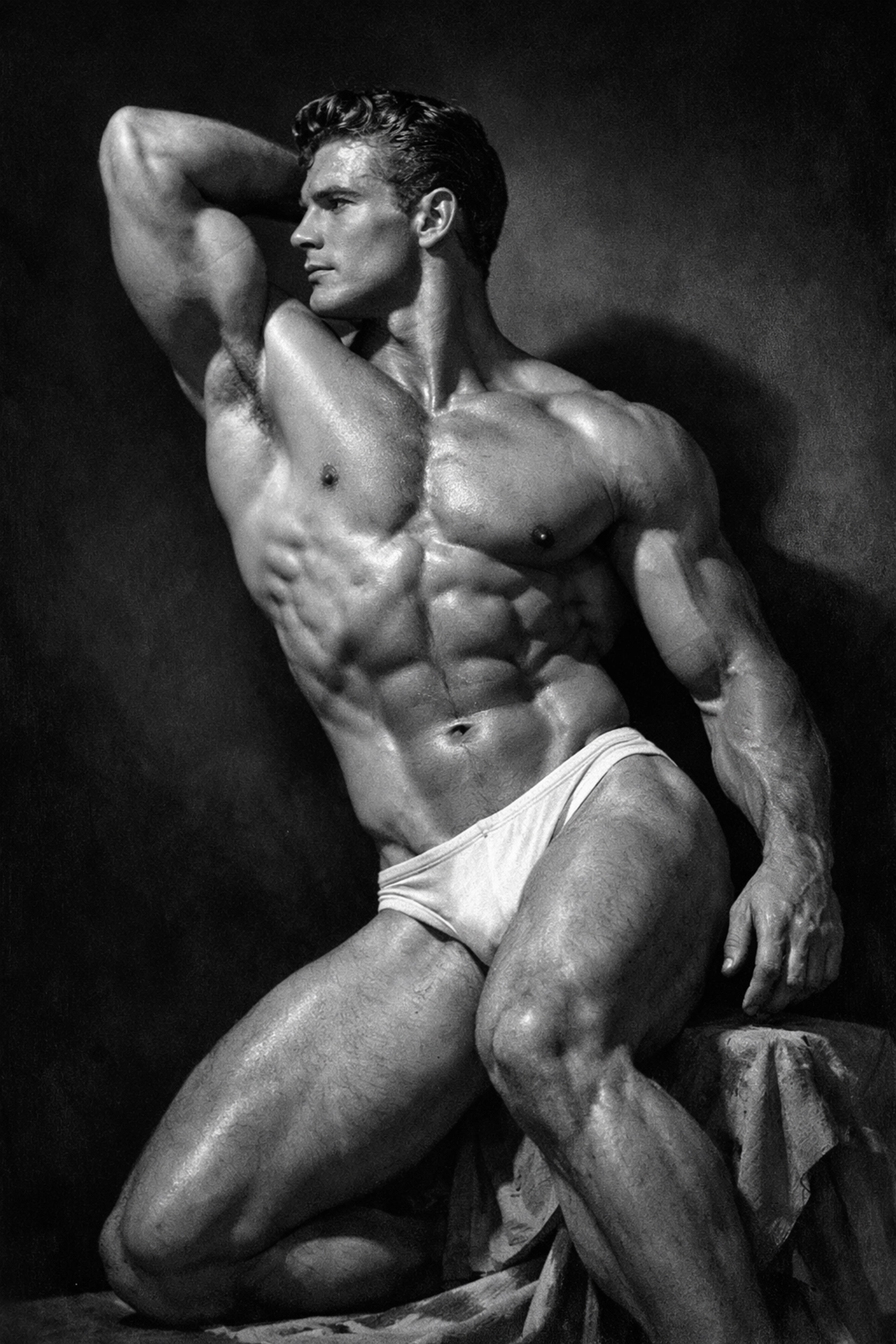
Because depicting "homosexuality" was illegal under various "obscenity" laws (like the 1857 Act in Britain), photographers had to get creative. They created "Physique" magazines: ostensibly for bodybuilding and fitness. These were the original gay literature visual companions. Photographers like Bob Mizer (Athletic Model Guild) captured men in "classical" poses, wearing nothing but a "posing pouch" (which was basically a tiny piece of fabric held together by a prayer).
These images were sold through clandestine catalogues and personal networks. They weren't just about thirst (though, let’s be honest, they were definitely about thirst); they were a signal. Owning one was a way of saying, "I am part of this community." This era laid the groundwork for the modern gay romance books industry: it taught us how to market desire while navigating a world that wanted to censor it.
The 70s and 80s: Out of the Darkroom, Into the Streets
The Stonewall era changed everything. We didn't want to hide in photo booths anymore. We wanted the walls of the museum.
This period gave us heavy hitters like Robert Mapplethorpe, who turned the queer male body into high art. He didn’t hide the sexuality; he made it the centerpiece. His work was symmetrical, stark, and unapologetic. It caused scandals, it sparked Congressional debates, and it changed the world.
At the same time, photographers like JEB (Joan E. Biren) were documenting the lesbian community with a focus on tenderness and everyday life. This wasn’t "pornography" in the eyes of the community; it was a mirror. It’s the same feeling you get when you find a heartfelt gay fiction novel that finally gets your life right. It’s the "I see you" moment.
The Digital Age and the 2026 Perspective
Fast forward to today. We live in a world where major museums like the Getty or the Photographers' Gallery in London hold massive retrospectives on queer photography. We’ve gone from secret photo booths to "A Hard Man is Good to Find!" exhibitions.
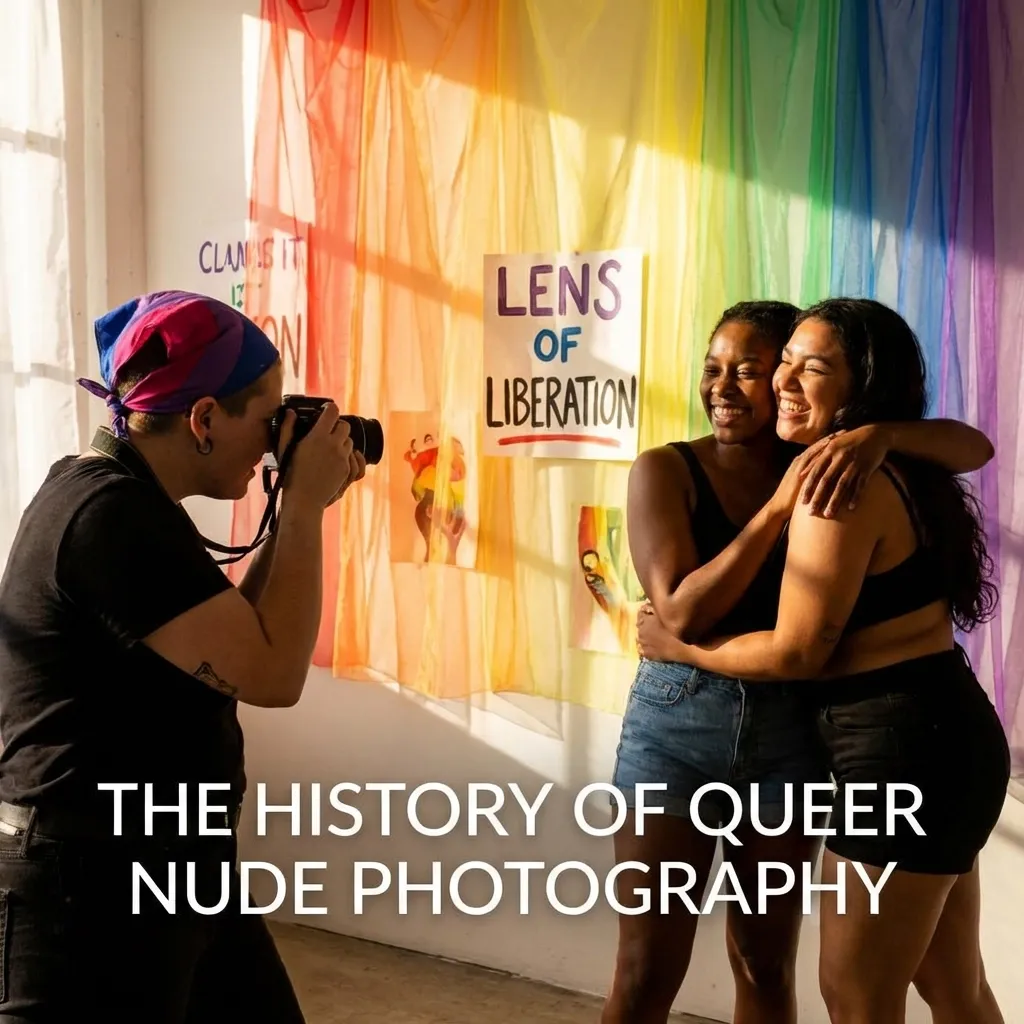
But the battle isn't over. While you can find steamy MM romance on Read with Pride easily, social media algorithms still frequently shadowban queer art and nude photography. The "Lens of Liberation" is still being adjusted.
Today, photographers are using the male nude to explore trans identities, body positivity, and intersectionality. It’s no longer just about the "Adonis" physique; it’s about the truth of every body. This evolution mirrors what we see in LGBTQ+ fiction today: a move toward diverse stories, from gay thriller to MM fantasy, where every kind of queer person gets to be the hero (and get the guy).
Why This Matters for Readers and Writers
You might wonder what photography has to do with gay novels or MM romance. The answer is: everything. Every time a writer describes a character’s vulnerability, every time a cover artist designs a jacket for a new gay release, they are drawing from this visual well.
The bravery of the photographers who stood behind the lens when it was illegal to do so is the same bravery queer authors use to write their truths today. Whether you’re looking for emotional MM books or the best MM romance of 2026, you are participating in a tradition of visibility that started with a few "anatomical" photos in the 1800s.
At Read with Pride, we believe in keeping your profits for your creative work, just as those early photographers fought for the right to own their images. If you’re a creator, check out our thoughts on The Royalties Revolution to see how we’re changing the game for queer authors.
Conclusion: Keep Looking, Keep Reading
The history of queer nude photography is a journey from the shadows to the spotlight. It’s a story of how we learned to look at ourselves and see beauty instead of shame.
So next time you pick up one of your favorite gay love stories or browse LGBTQ+ ebooks, take a second to think about the lens. Think about the flashbulbs that went off in secret basements and the Polaroids tucked into wallets. We are a community built on the courage to be seen.
Stay Proud. Stay Bold. Read with Pride.
Join the Community
Want more stories about our history, our art, and the best gay romance novels? Follow us and stay connected!
- Website: readwithpride.com
- Instagram: read.withpride
- X (Twitter): @Read_With_Pride
- Facebook: Read With Pride
#LGBTQ #QueerHistory #GayArt #MMRomance #ReadWithPride #PhotographyHistory #GayBooks #QueerVisibility #2026GayBooks #MaleNudeArt

Leave a Reply
You must be logged in to post a comment.