

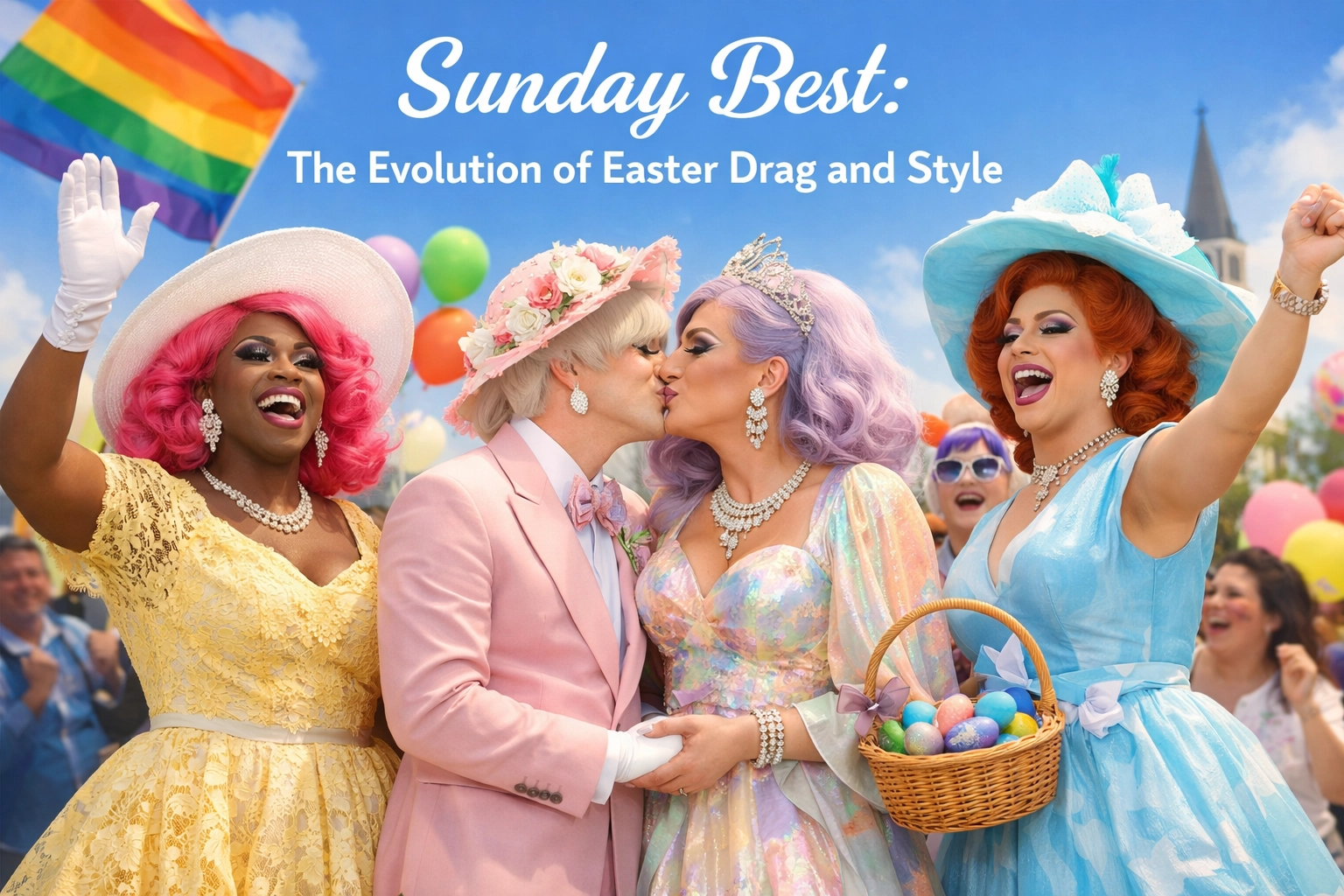
readwithpride.com
Honey, let’s be real: Easter has always been the unofficial Met Gala of the religious calendar. Long before we had red carpets and paparazzi, we had the "Sunday Best." It’s that one day of the year where the mandate isn’t just to celebrate a resurrection, but to ensure your outfit is absolutely killing it. At Read with Pride, we know a thing or two about a good transformation: whether it’s a character arc in one of our favorite MM romance books or a drag queen emerging from a cocoon of pastel tulle.
But how did we get from white linen robes in Ancient Rome to high-glamour drag in 2026? Put on your best bonnet, grab a mimosa, and let’s strut through the history of Easter fashion and the queer evolution of "the drag."
From Imperial Edicts to Easter Bonnets
Believe it or not, the "new clothes for Easter" trend wasn't started by a fashion influencer on TikTok. We can thank Emperor Constantine for this one. Back in A.D. 300, he decreed that everyone should wear their newest and finest garments to celebrate Easter, effectively canceling the drab, worn-out looks of Lent. It was the original "glow up."
Fast forward to the 19th century, and the tradition had solidified into a full-blown cultural phenomenon. This was the era of the New York City Easter Parade. It wasn't a parade in the sense of floats and marching bands; it was a "fashion stroll." Wealthy socialites would exit the grand churches on 5th Avenue and walk down the street to show off their latest Parisian acquisitions.
For the queer men of the past, this was a moment of high-stakes theater. In an era where being out was dangerous, fashion was a code. A perfectly tailored suit, a flamboyant silk cravat, or a specific flower pinned to a lapel: like the green carnation made famous by Oscar Wilde: were subtle nods to a community that lived in the shadows but dressed in the light. If you’re a fan of gay historical romance, you know that the "dandy" was often a figure of both admiration and suspicion, using style as a shield and a signal.
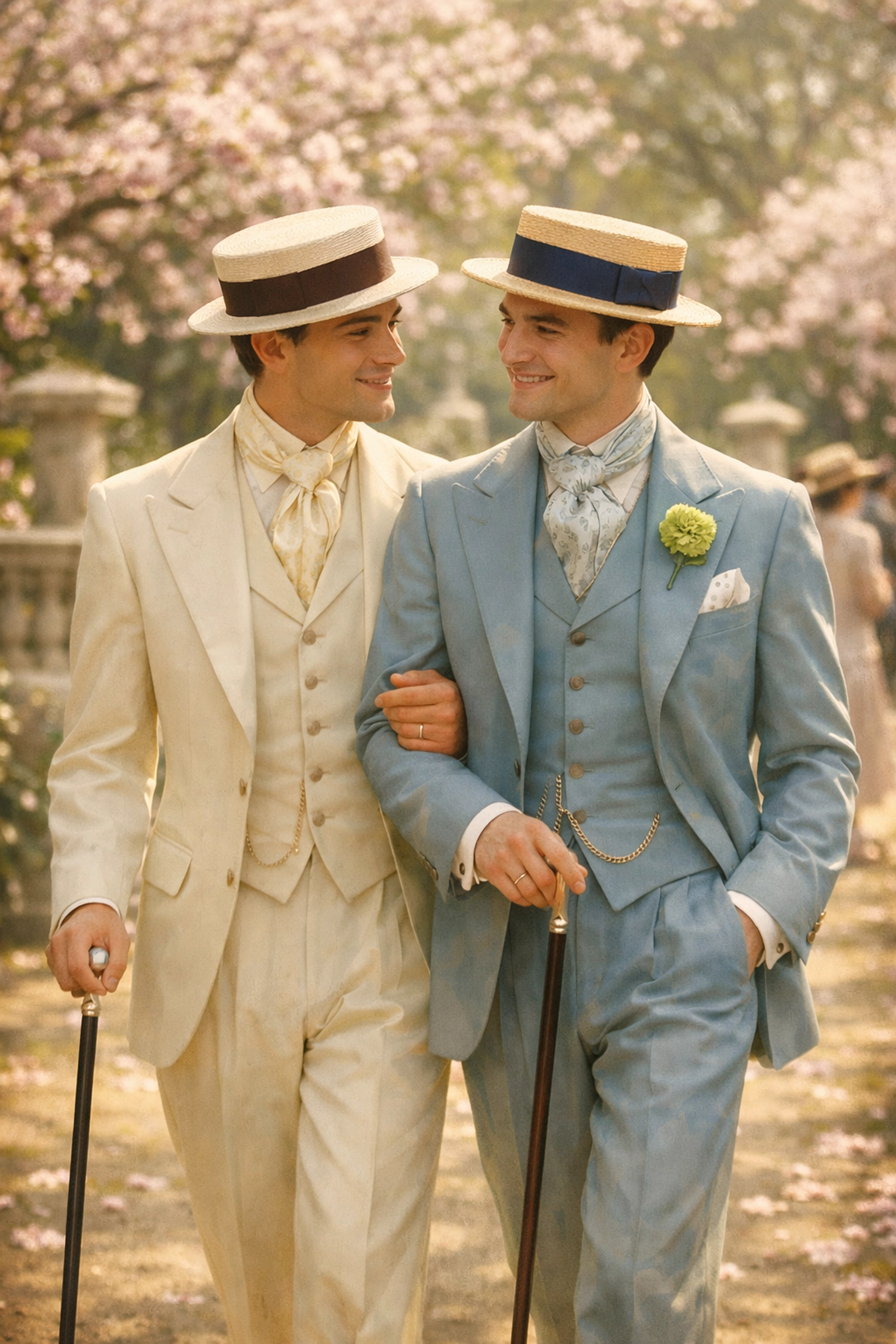
A vintage-inspired illustration of a dandy in a 1920s pastel suit, carrying a cane and wearing a floral boutonniere, capturing the 'Sunday Best' aesthetic.
"Walking the Drag": The Linguistic Twist
Have you ever wondered where the term "drag" comes from? While theater historians often point to "Dressed Resembling A Girl," there’s another fascinating linguistic thread tied to the Easter Parade. In the late 19th century, the main thoroughfares where people showcased their finery were often referred to as "the drag." To "walk the drag" meant to promenade in your finest clothes, seeing and being seen.
It’s no coincidence that our community reclaimed this term. For us, "drag" has always been about the performance of identity. Whether it’s a cis man in a sharp seersucker suit or a queen in a ten-pound wig made of silk lilies, the "Sunday Best" is about presenting a version of yourself that feels miraculous.
In many gay romance novels, we see this theme of the "mask": the suit worn to please the family versus the sequins worn to please the soul. The evolution of Easter fashion is the story of us slowly peeling back those layers until the mask becomes the masterpiece.
The Mid-Century Closet: Subversive Style
In the 1950s and 60s, Easter fashion for men was strictly defined: navy blazers, crisp white shirts, and perhaps a conservative clip-on tie for the younger boys. But for the queer community, even these rigid uniforms were an opportunity for drag excellence.
Queer men would often find ways to elevate the "Sunday Best" with impeccable tailoring that bordered on the erotic, or by choosing fabrics that were just a little too "loud" for the average suburban church. It was about taking the tools of the patriarchy and making them pretty. This period is a goldmine for MM romance tropes: think "forbidden pining at the garden party" or "stolen glances behind the hydrangea bushes."
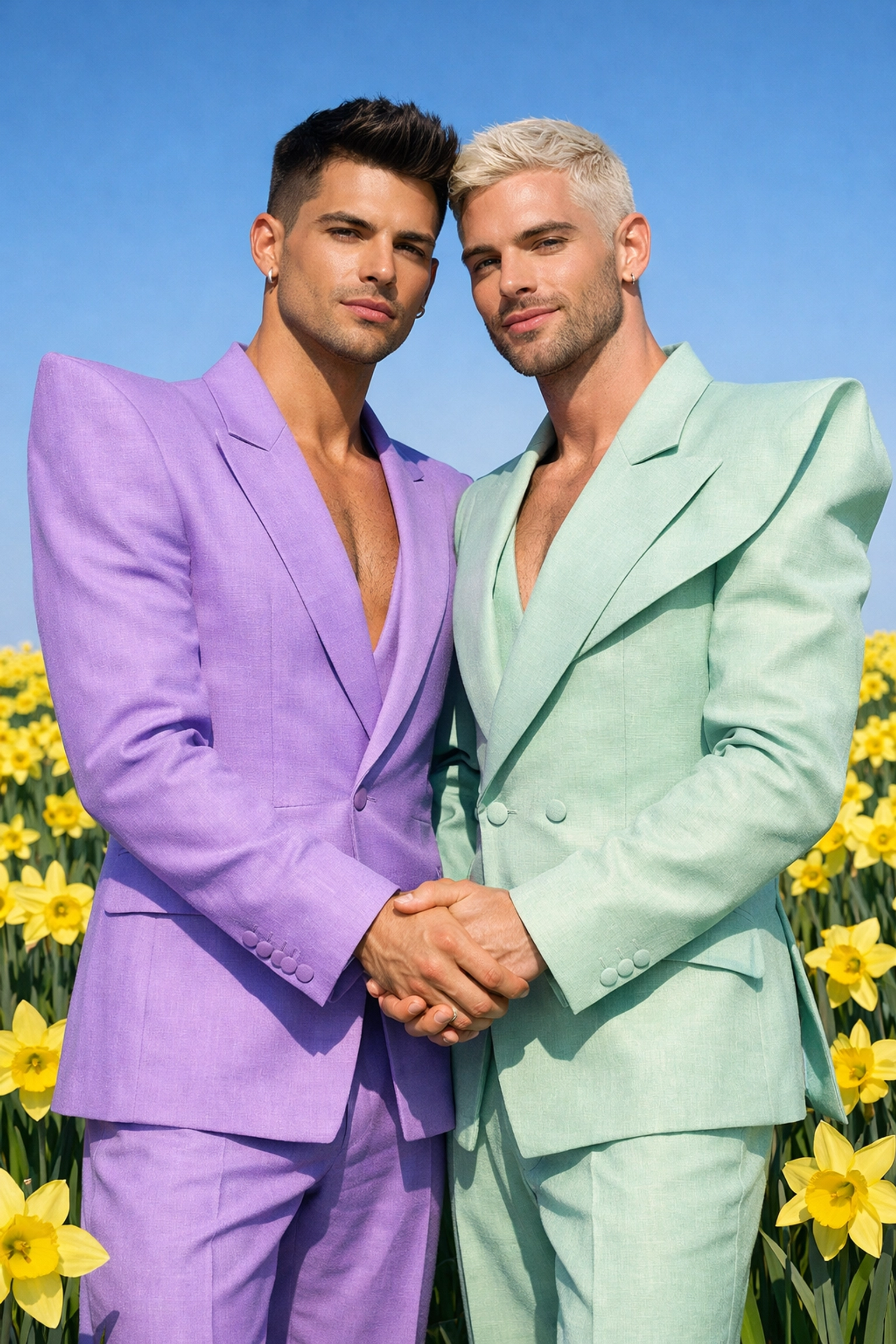
A high-fashion photography shot featuring two men in modern, avant-garde pastel suits holding hands in a field of spring flowers.
The Modern Era: Easter Drag Excellence
Today, Easter in the LGBTQ+ community is less about following Constantine’s rules and more about breaking them with style. In 2026, we’ve seen a massive surge in "Easter Drag" events across the globe. From the Sisters of Perpetual Indulgence in San Francisco to local drag brunches in London, the holiday has been reclaimed as a celebration of queer joy and rebirth.
Modern Easter drag is a riot of color. We’re talking:
- Floral Maximalism: Why wear a bouquet when you can be the bouquet?
- Architectural Millinery: Bonnets that defy gravity and probably require a permit.
- Gender-Bending Suits: Soft pink linens paired with bold makeup, or full Victorian gowns paired with a beard.
This is the peak of queer fiction come to life. We aren't just wearing clothes; we are telling stories. We are celebrating the fact that we have survived our own "winters" and have come out the other side in full bloom.
If you're looking for inspiration for your own 2026 look, or perhaps a new book to read while you recover from your Easter brunch, check out our latest releases at Readwithpride.com. From steamy MM romance to heartfelt gay fiction, we have the stories that celebrate every version of you.
Why Style Matters in Gay Literature
You might ask, "Penny, why are we talking about clothes on a book blog?" Because in gay literature, fashion is rarely just about the fabric. It’s a tool for character development. When a protagonist in a gay contemporary romance finally puts on an outfit that makes them feel powerful, it’s a moment of self-actualization.
In MM historical romance, the description of a silk waistcoat or the tension of a cravat being loosened is iconic. Fashion is the language of desire. It’s how our characters signal who they are and who they want.
At Read with Pride, we pride ourselves on publishing popular gay books that understand these nuances. Whether it’s a thriller where a character uses high-fashion to blend into a high-society gala or a fantasy where the clothing reflects the magic within, we know that the "Sunday Best" is a feeling, not just a dress code.
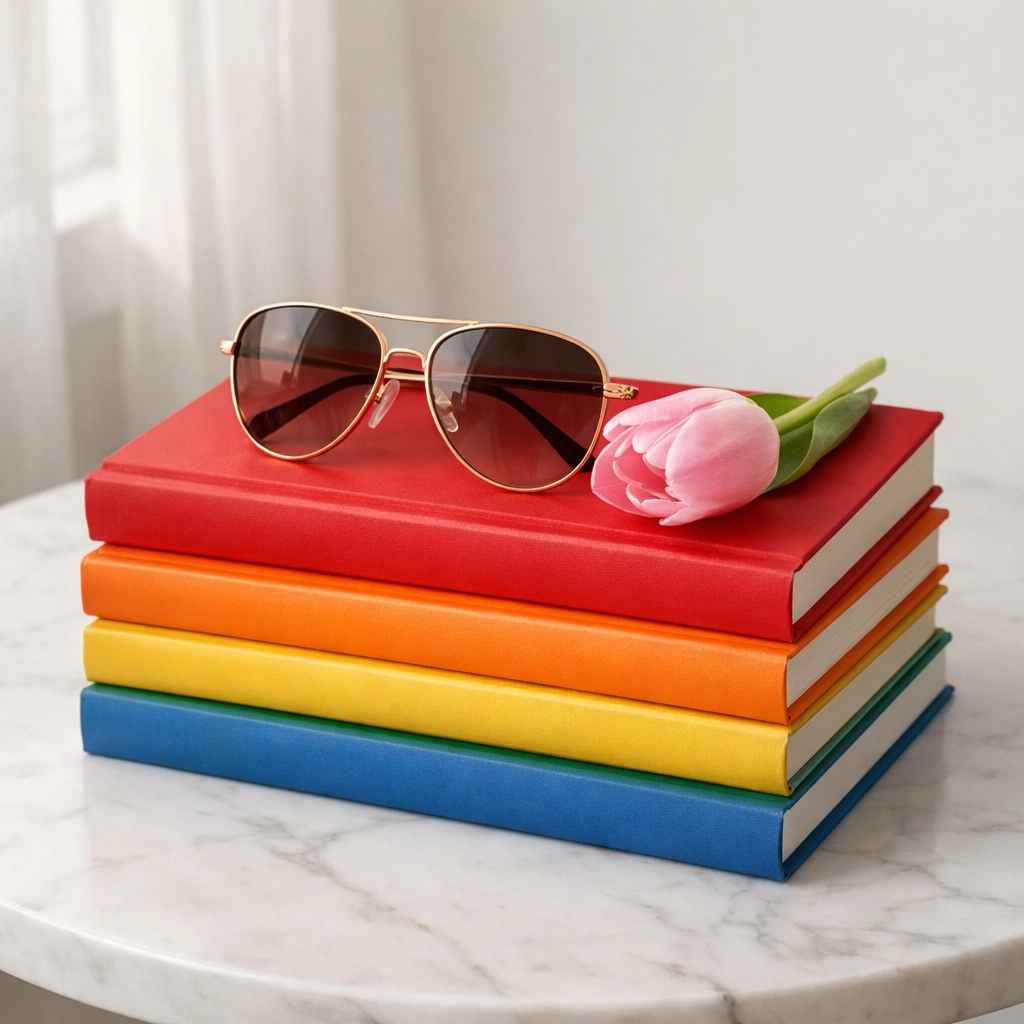
A stack of colorful LGBTQ+ books with a pair of designer sunglasses and a single tulip resting on top, symbolizing the intersection of style and stories.
Dressing for Your Own Resurrection in 2026
As we celebrate Easter this year, remember that your "Sunday Best" is whatever makes you feel like the most authentic version of yourself. Maybe it’s a thrifted blazer, maybe it’s a custom-made gown, or maybe it’s just a really great pair of jeans and a t-shirt that says "Read with Pride."
The evolution of Easter fashion mirrors our own journey as a community. We moved from hiding our best selves to parading them down 5th Avenue, and finally, to creating our own stages where drag excellence is the standard, not the exception.
Get Involved with the Community
Don't forget to share your Easter looks with us! Whether you're doing "church realness" or "garden party glam," we want to see it.
- Follow us on Facebook
- Check out our latest updates on X (formerly Twitter)
- See the visual magic on Instagram
And if you’re looking for your next favorite read, dive into our product catalog to find the best MM romance books of 2026.
Final Thoughts: The Spirit of the Season
Easter is a time of renewal. It’s a time to look at the stories we tell ourselves and see if they need a little "refresh." Just like a vintage suit can be tailored to fit a modern man, our traditions can be tailored to fit our modern lives.
So, here’s to the dandies of the past, the drag queens of the present, and the queer authors of the future who continue to dress our world in color. May your Easter be stylish, your brunch be boozy, and your reading list be long.
Stay fabulous, and keep reading with pride.
#EasterFashion #DragExcellence #ReadWithPride #MMRomance #LGBTQBooks #GayLiterature #SundayBest #QueerStyle2026 #GayAuthors #MMRomanceBooks
Looking for more? Check out these links to explore our world of queer stories:

Leave a Reply
You must be logged in to post a comment.