

readwithpride.com
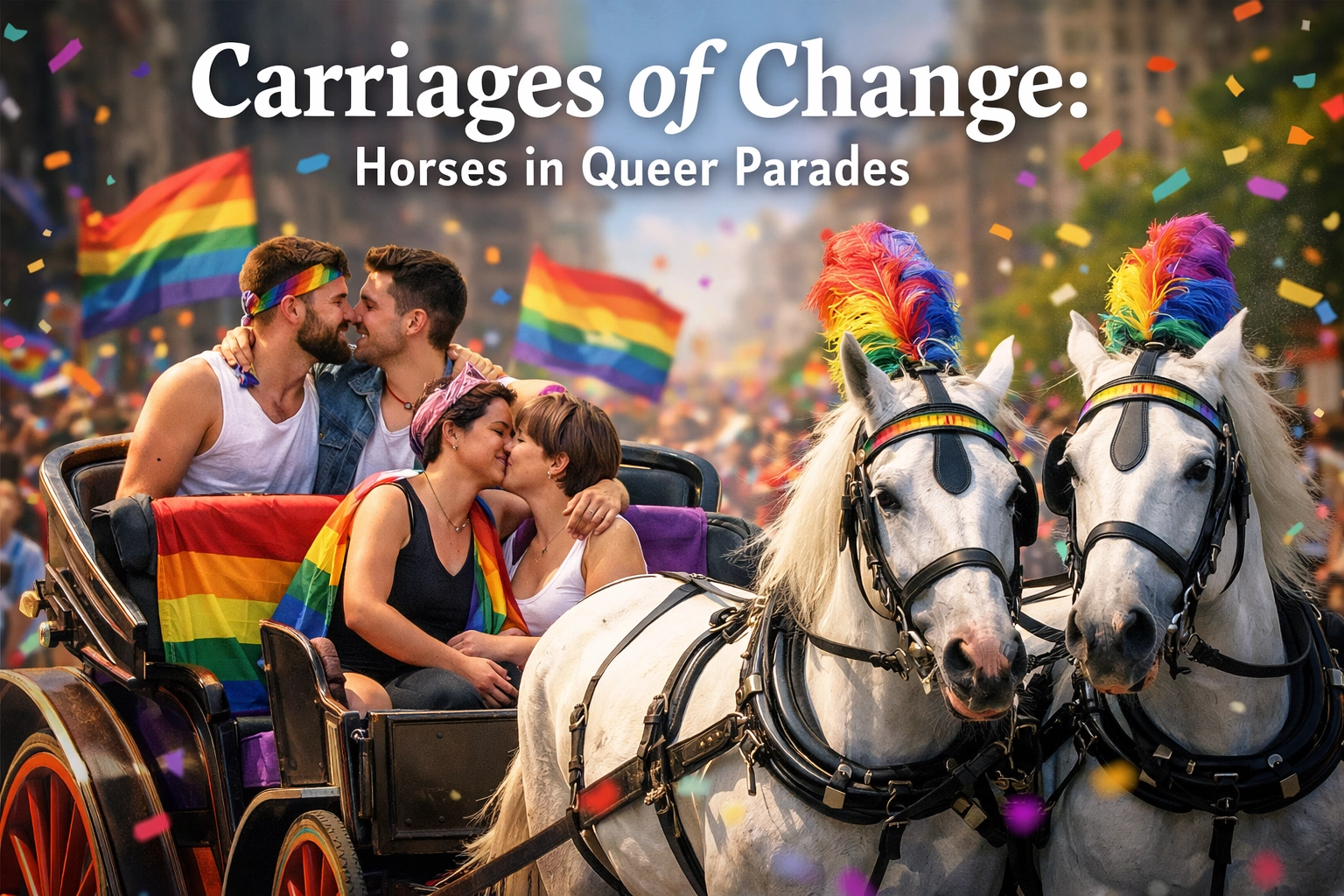
When you think of a Pride parade in 2026, your mind probably jumps straight to booming bass, towering floats, and enough biodegradable glitter to coat a small moon. But if you listen closely through the history of our movement, there’s another sound beneath the pop anthems: the rhythmic clack-clack of hooves on pavement.
Horses have been part of the queer narrative since long before the first brick was thrown at Stonewall. From the symbols of state power to the rustic charm of gay historical romance, horses have trotted through our history in ways that are both revolutionary and, at times, a little controversial. Whether they’re pulling a flower-laden carriage or carrying a mounted officer, these four-legged giants have seen it all.
The Heavy Hooves of History: Horses as Oppression
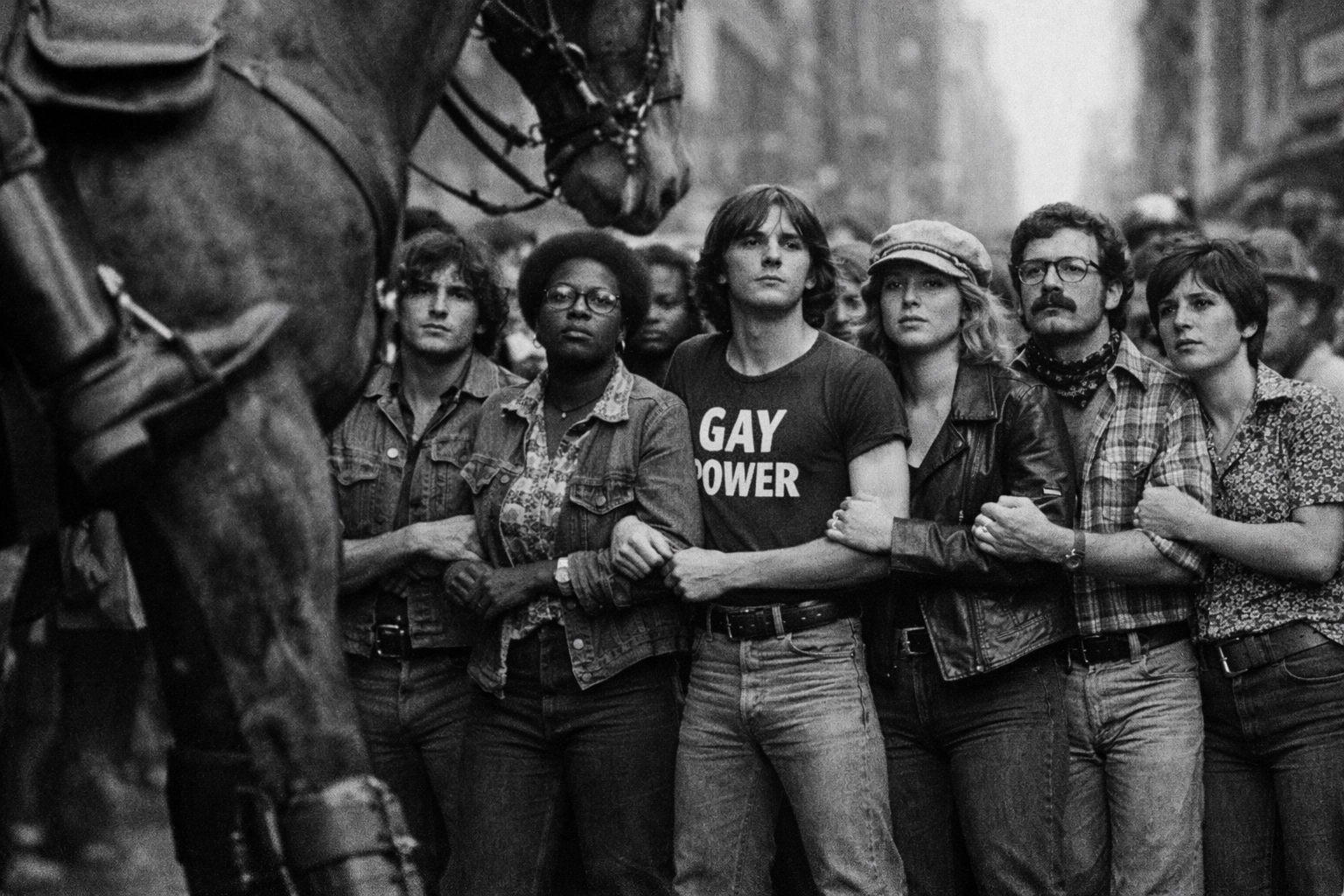
It’s impossible to talk about horses in queer spaces without acknowledging their complicated past. Before they were a festive addition to a parade, horses were primarily seen by our community as tools of the state. During the early days of the movement: think the late 60s and early 70s: the sight of a horse often meant the police were coming to break up a gathering.
In 1970, during the very first Christopher Street Liberation Day march in San Francisco (the predecessor to what we now call Pride), the police presence was heavy. Officers weren't just on foot; they were mounted on massive horses, looking down at the "radicals" and "misfits" who dared to demand space in the sun.
There’s a legendary story from that era: some of the marchers, in a display of radical kindness and cheeky defiance, actually invited the mounted officers to get off their horses and join the party. Unsurprisingly, the officers declined. Back then, the horse was a barrier: a literal wall of muscle used to intimidate and push back against queer bodies. It’s a far cry from the MM historical romance novels we read today, where a man on a horse usually signals a brooding hero coming to save the day!
Reclaiming the Carriage: From Protest to Pageantry
As the decades rolled on and the movement gained momentum, the "vibe" of horses in parades started to shift. We’ve always been a community that knows how to take something used against us and turn it into something fabulous.
By the 80s and 90s, the horse-drawn carriage became a symbol of "Queer Royalty." In cities with a deep sense of history, like New Orleans or London, horse-drawn carriages started appearing in parades not as a show of force, but as a show of elegance. We saw drag queens draped in faux fur and silk, waving from the back of a slow-moving carriage like the queens they truly are.
This transition was a way of saying, "We belong in the history books, too." By using transport that felt Victorian or classic, the community was laying claim to a past that had tried to erase them. It’s a theme we see a lot in gay literature and MM fiction, where our stories are retroactively inserted into the grand tapestries of history. If you're looking for stories that capture that blend of history and heart, Read with Pride has a massive library of gay historical romance that hits all those notes.
The Corporate Stagecoach: Visibility vs. "Pinkwashing"
As Pride became more mainstream in the 2010s, horses made a comeback in a big way: but this time, they had corporate sponsors. One of the most recognizable examples was the Wells Fargo stagecoach. For several years, these iconic horse-drawn carriages were a staple in major Pride parades across the United States.
On one hand, seeing a major bank put their brand: and their horses: behind a queer event felt like a win for visibility. It was a sign that we were finally "marketable." On the other hand, it sparked a lot of debate within the community. Critics pointed out the irony of a massive financial institution using a symbol of the "Old West" (a period often romanticized but steeped in colonial violence) to sell themselves to a community that was still fighting for basic rights.
There’s also the question of animal welfare. Let’s be real: a Pride parade is loud. Between the whistles, the cheering, and the 120-decibel remixes of Lady Gaga, it’s not exactly a "zen" environment for a sensitive animal. Many advocates started asking if it was fair to put horses in such high-stress situations just for a corporate photo op. In 2026, we’re seeing a lot more scrutiny on how animals are used in celebrations, leading many organizers to opt for horse-power of the mechanical kind instead.
The Rural Queer Connection: Horses in the Wild
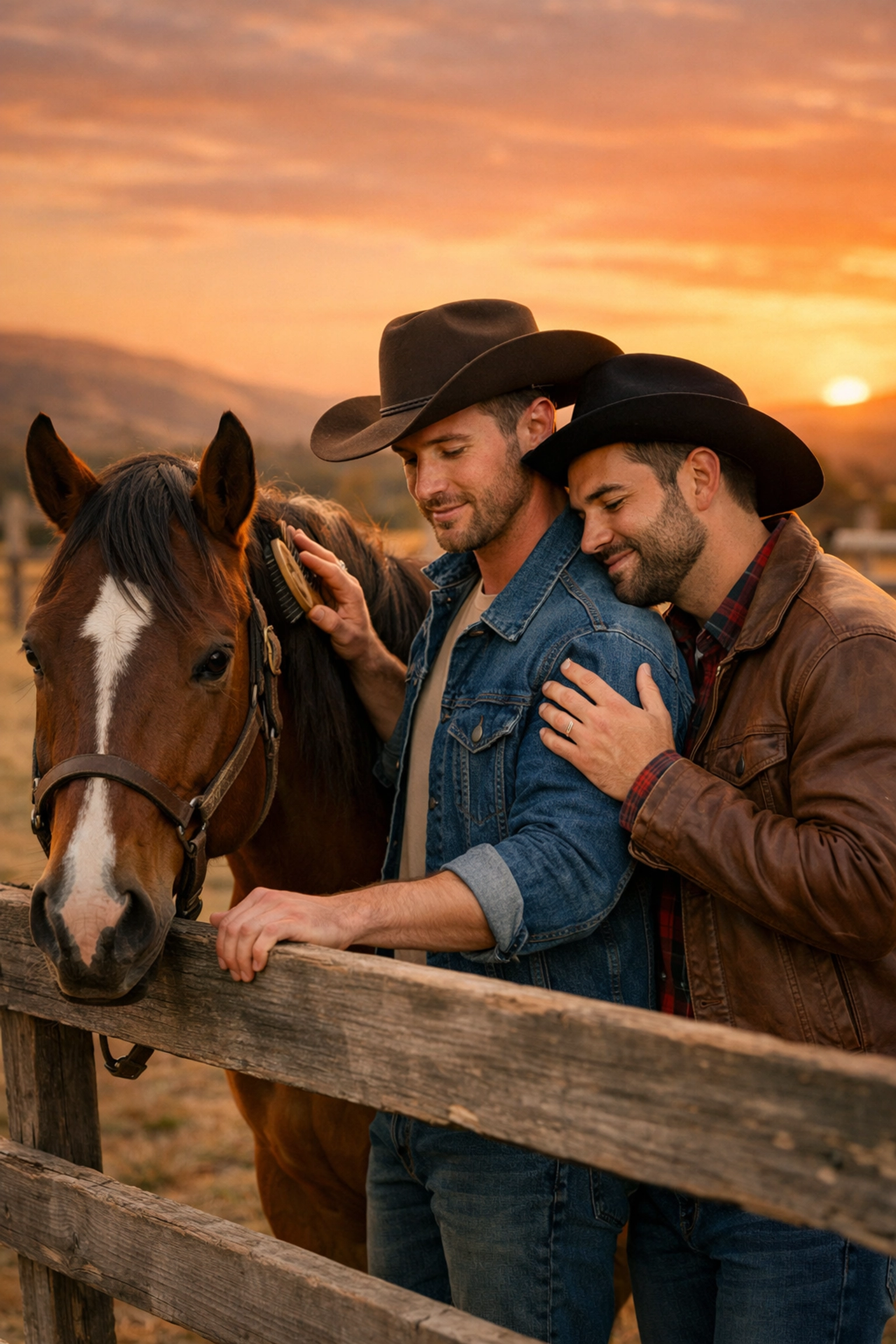
Beyond the city streets and the parade routes, horses represent a different kind of freedom for many in the LGBTQ+ community. There’s a thriving subculture of queer farmers, ranchers, and equestrians who find peace in the stable rather than the club.
The "Gay Cowboy" isn't just a trope from gay romance novels like the ones you'd find in the Read with Pride store; it’s a real and vibrant part of our community. For many, working with horses is a way to connect with nature and escape the "urban queer" expectations. It’s about strength, partnership, and a different kind of masculinity or femininity that doesn't always fit into the neon lights of a big city.
In literature, this shows up in some of the best MM romance titles: think "enemies to lovers" on a dusty ranch or a "slow burn" romance between two stable hands. There’s something inherently romantic about the bond between a person and a horse, and it’s a theme that continues to dominate gay contemporary romance and MM fantasy alike.
Why We Still Love the Aesthetic
Even if the ethics of live animals in parades are complicated, the aesthetic of the horse-drawn carriage remains iconic. It represents a slow, deliberate pace in a world that moves way too fast. In 2026, we’re seeing a resurgence of "Regency Core" and "Western Gothic" in queer fashion, and nothing completes that look quite like a carriage.
Whether it’s a symbolic representation or a well-cared-for team of horses in a smaller, quieter community march, the carriage reminds us of where we’ve been. It bridges the gap between the days of being chased by mounted police and the days of riding high as celebrated members of society.
Finding Your Own "Carriage" in 2026
If all this talk of horses and history has you craving a good story, you’re in the right place. At Readwithpride.com, we’re obsessed with the ways our community’s history intersects with our modern lives. Whether you’re into gay thriller novels, gay spy romance, or a classic MM romance book featuring a hero on horseback, we’ve got something for you.
Check out our latest releases and find your next favorite read:
The movement for equality is a long journey: sometimes it’s a sprint, sometimes it’s a march, and sometimes, it’s a slow, steady ride in a carriage of change. Let’s keep moving forward, with pride and maybe a little bit of hay in our hair.
Stay connected with the community:
- Facebook: Read with Pride
- Instagram: @read.withpride
- X (Twitter): @Read_With_Pride
#Community #LGBTQHistory #Pride2026 #MMRomance #ReadWithPride #GayCowboy #QueerCulture #HorseHistory

Leave a Reply
You must be logged in to post a comment.