

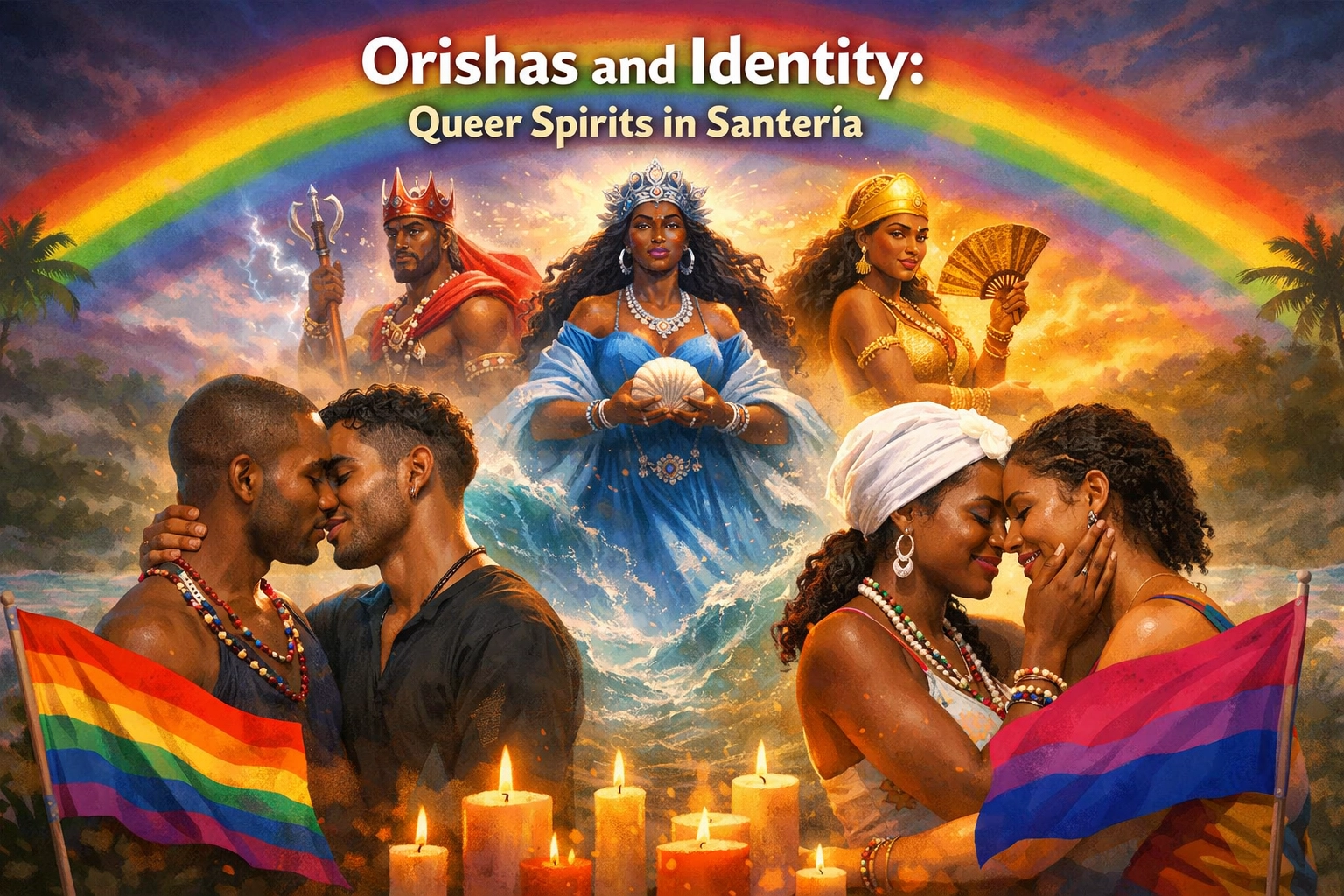
readwithpride.com
Let’s be real: for many of us in the LGBTQ+ community, the word "religion" carries more baggage than a transatlantic flight. We’ve spent years: decades, even: being told that sacred spaces aren't for us. But what if I told you there’s a spiritual tradition where being "different" isn’t just tolerated, but actually seen as a sign of spiritual power?
Enter Santería (or Regla de Ocha). Rooted in the traditions of the Yoruba people of West Africa and shaped by the resilience of the diaspora in Cuba and the Caribbean, Santería offers a vibrant, complex, and deeply inclusive framework for understanding identity. In this world, the divine isn’t a rigid, distant figure in the sky. Instead, it’s found in the Orishas: powerful spirits who embody the elements of nature, human emotions, and, most importantly for us, a profound sense of gender fluidity.
If you’re a fan of MM romance books that dive deep into soul-searching and identity, or if you love gay fantasy romance where the mystical meets the personal, the stories of the Orishas are going to feel like coming home.
The Divine Drag: Gender-Transcendent Spirits
In Santería, the Orishas aren't strictly male or female in the way humans think of the binary. While they are often depicted with a specific gender, their essence is far more fluid. They are "energies" or "forces of nature."
One of the most fascinating aspects of this tradition is the ritual of "mounting." During a ceremony, an initiate (a Santero or Santera) becomes a vessel for an Orisha. When the spirit "mounts" the practitioner, the physical gender of the person doesn't matter. A burly man can be mounted by the hyper-feminine Oshun, taking on her grace and sensuality. A woman can be mounted by the warrior spirit Shango, embodying his fierce, masculine virility.
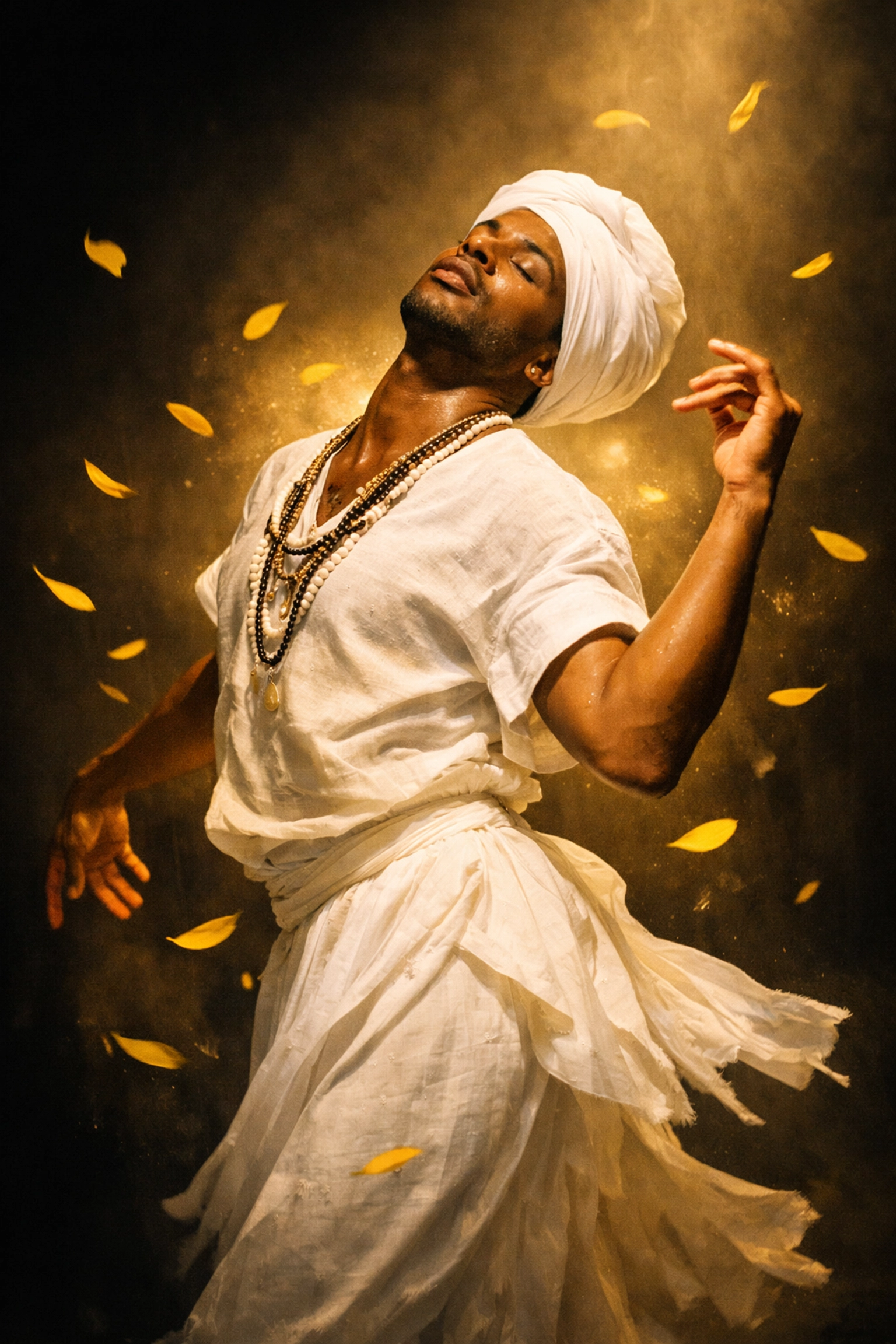
In these moments, the binary evaporates. The community doesn't see a man "acting" like a woman; they see the divine manifesting through a human vessel. For queer practitioners, this provides a sacred space where our inherent fluidity is mirrored in the divine. It’s why many in our community feel a natural pull toward these practices. In a world that wants us to pick a box, the Orishas say, "Why not be everything?"
Oshun: The Queen of Desire and Fluidity
If we’re talking about queer icons in the Orisha pantheon, we have to start with Oshun. She is the goddess of the river, of sweet water, love, sensuality, and art. In gay romance novels, we often look for characters who represent the unapologetic pursuit of pleasure and beauty. That is Oshun's entire vibe.
Oshun represents the "sweetness" of life, but don't mistake her kindness for weakness. She is a powerhouse of transformation. Because she governs all forms of love and attraction, she is often seen as the patroness of those whose love falls outside the "norm." Her energy is about the flow: like a river, it changes path, goes around obstacles, and refuses to be contained.
For a queer person, connecting with Oshun is about embracing your own beauty and your right to be loved. Whether you're browsing for heartfelt gay fiction or looking for spiritual grounding, Oshun’s message is clear: your desire is sacred.
Changó and the Legend of the Sacred Swap
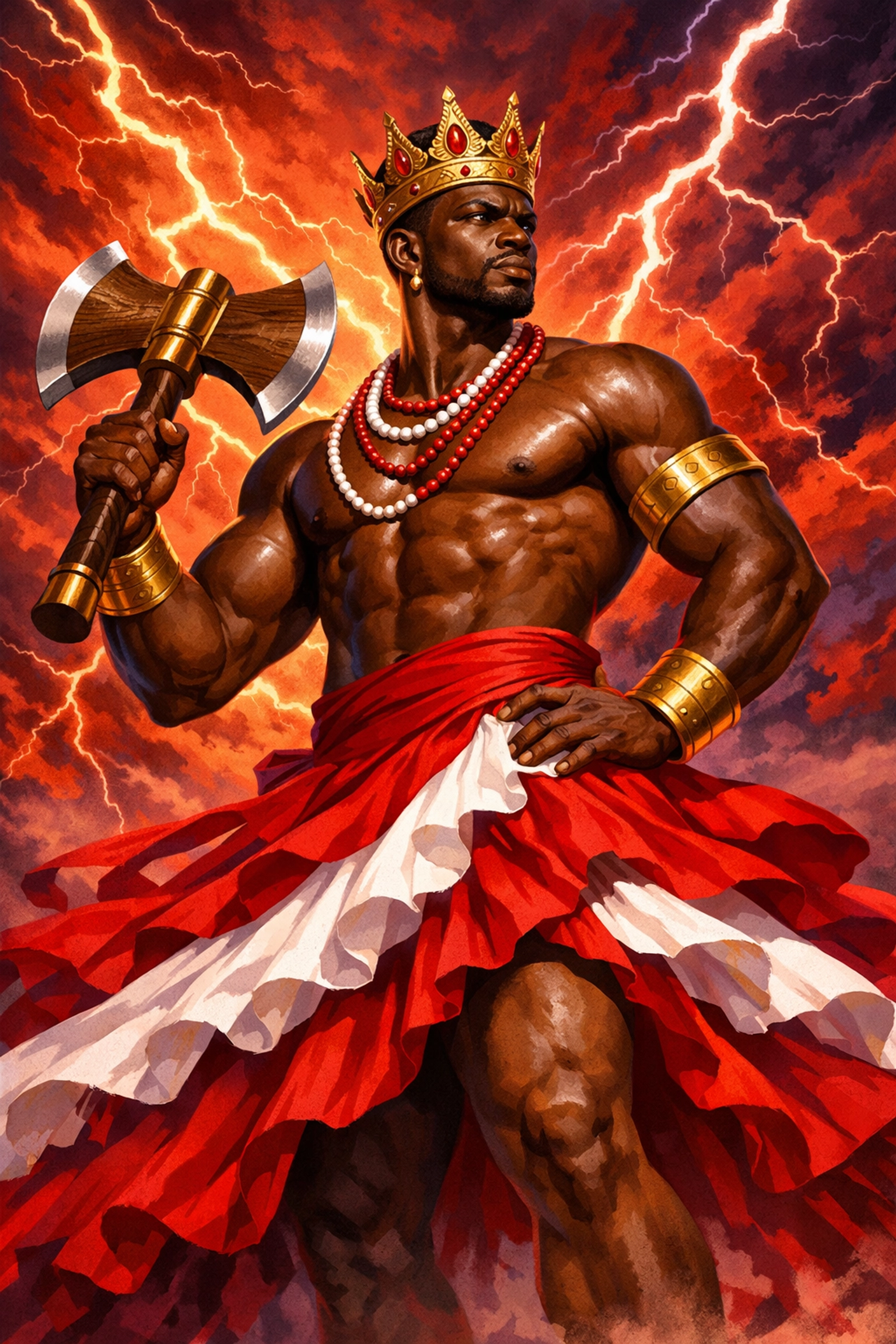
Then there’s Changó (or Shango). He’s the Orisha of thunder, lightning, and fire. He is the epitome of "masculine" energy: virile, powerful, and a bit of a rowdy king. You’d think this hyper-masculinity might leave little room for queer identity, right? Wrong.
There is a famous patakí (sacred story) where Changó is cornered by his enemies. To help him escape, his wife, the fierce wind-spirit Oyá, gives him her clothes. Changó dons her dress and veil, successfully hiding his identity to slip past his foes. This story is often cited by queer Santeros as a divine precedent for gender-crossing. It proves that even the most "macho" of the Orishas understands the power of the mask and the necessity of shifting one's presentation to survive and thrive.
This kind of nuance is exactly what we look for in great LGBTQ+ fiction. Characters who are multi-dimensional, who defy expectations, and who find strength in vulnerability. If you're struggling with how to write these kinds of complex layers, check out our guide on 7 mistakes you’re making with LGBTQ+ character development.
Inle: The Patron of the In-Between
While Oshun and Changó are the "superstars," many gay men in Santería find a special connection with Inle. Often depicted as an incredibly beautiful fisherman or a healer, Inle is an Orisha who exists in the spaces between: between the land and the sea, between health and sickness, and often, between the traditional gender roles.
Inle is frequently associated with the archangel Raphael and is considered by many to be a patron of gay men. His energy is refined, artistic, and deeply intuitive. In the world of MM contemporary romance, Inle would be that sophisticated, mysterious lead who heals the protagonist’s heart while maintaining an air of untouchable elegance.
The "Glass Ceiling" and the Future of the Faith
Now, I want to keep it authentic with you: it’s not all rainbow altars and glitter. Like any ancient tradition, Santería has its internal struggles. While the roles of Santero and Santera are open to queer folks, there is a priestly rank called the Babalawo (the high priests of Ifá) that, traditionally, has been restricted to heterosexual men.
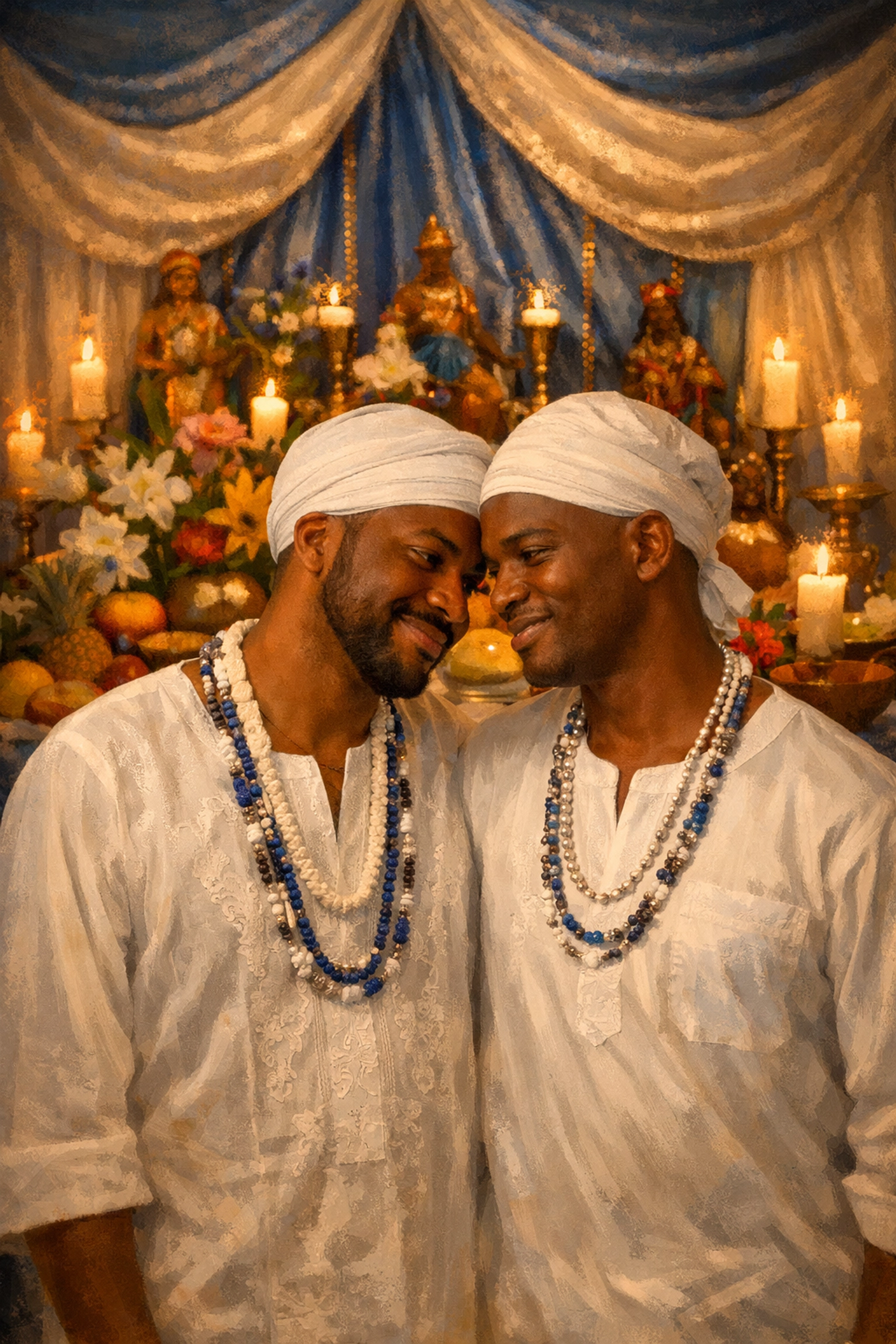
However, as we move through 2026, we’re seeing a massive shift. Queer practitioners are more visible than ever, claiming their space and challenging old prejudices. Many queer Olorishas (priests) have gained immense respect because of their deep ritual knowledge and their powerful connection to the spirits. They are proving that the Orishas don’t care who you love in the bedroom; they care about the character of your soul and your dedication to the community.
Why This Matters for the Stories We Tell
At Read with Pride, we believe that representation isn’t just about seeing a gay couple on a book cover. It’s about seeing the full breadth of our history, our spirituality, and our magic. Afro-Caribbean religions like Santería remind us that queer identity isn't a "modern trend": it's an ancient, sacred part of the human experience.
When we read gay historical romance or dive into MM fantasy, we are looking for those threads of connection to the past. Knowing that there were people hundreds of years ago in the Caribbean who looked like us, loved like us, and found a home in the arms of the Orishas is incredibly empowering.
If you’re looking for your next read that captures this spirit of resilience and magic, browse our latest releases for 2026. We’ve got everything from steamy MM romance to gay psychological thrillers that will keep you up all night.
Join the Conversation
The beauty of Santería is that it is a living, breathing tradition. It evolves, it grows, and it adapts. Just like our community. Whether you’re a practitioner or just a curious reader, there is so much wisdom to be found in the dance of the Orishas.
What do you think? Does the idea of gender-fluid deities change how you look at "traditional" religion? Let us know in the comments or find us on social media!
Stay proud, stay magical, and keep reading.
Follow us for more queer culture and book recs:
#QueerSpirituality #Santeria #Orishas #LGBTQHistory #ReadWithPride #MMRomanceBooks #GayFiction2026 #Oshun #Chango #QueerIdentity #AfroCaribbeanCulture #GayBooks #QueerAuthors
readwithpride.com

Leave a Reply
You must be logged in to post a comment.