

readwithpride.com
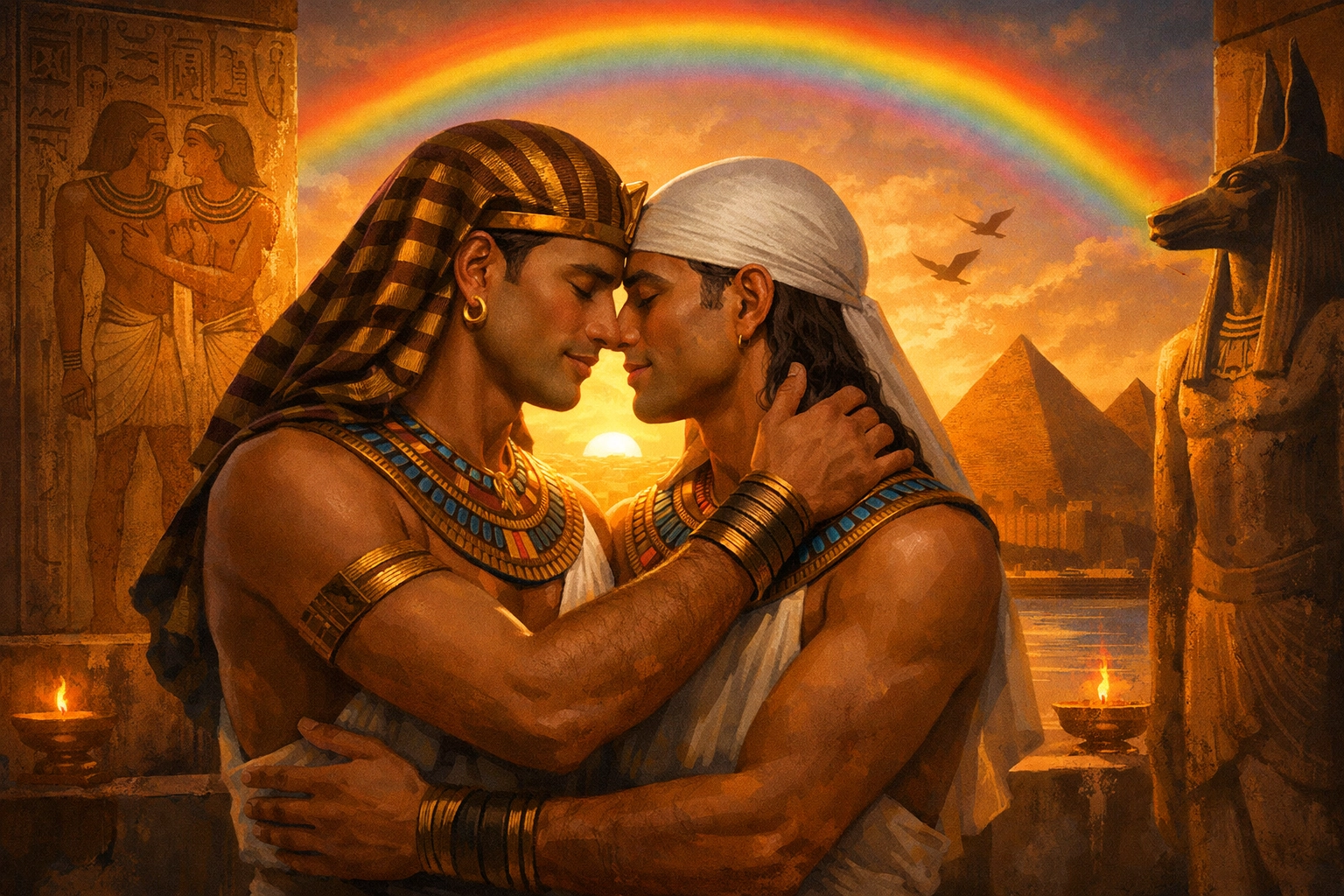
Forget everything you thought you knew about ancient history being a snooze-fest of dusty mummies and boring grain tallies. If you think the "roommates" trope started in the 20th century, you need to set your time machine back about 4,400 years. We’re heading to Saqqara, Egypt, circa 2400 BC, to meet the ultimate power couple of the Fifth Dynasty: Niankhkhnum and Khnumhotep.
At Read with Pride, we’re obsessed with stories that stand the test of time, and honestly, it doesn’t get more "timeless" than a tomb built for two men to snuggle in for eternity. Whether you’re a fan of MM historical romance or you just love a good archaeological deep dive that proves queer people have always been here, this story is for you.
The Overseers of the Manicurists (and Each Other’s Hearts)
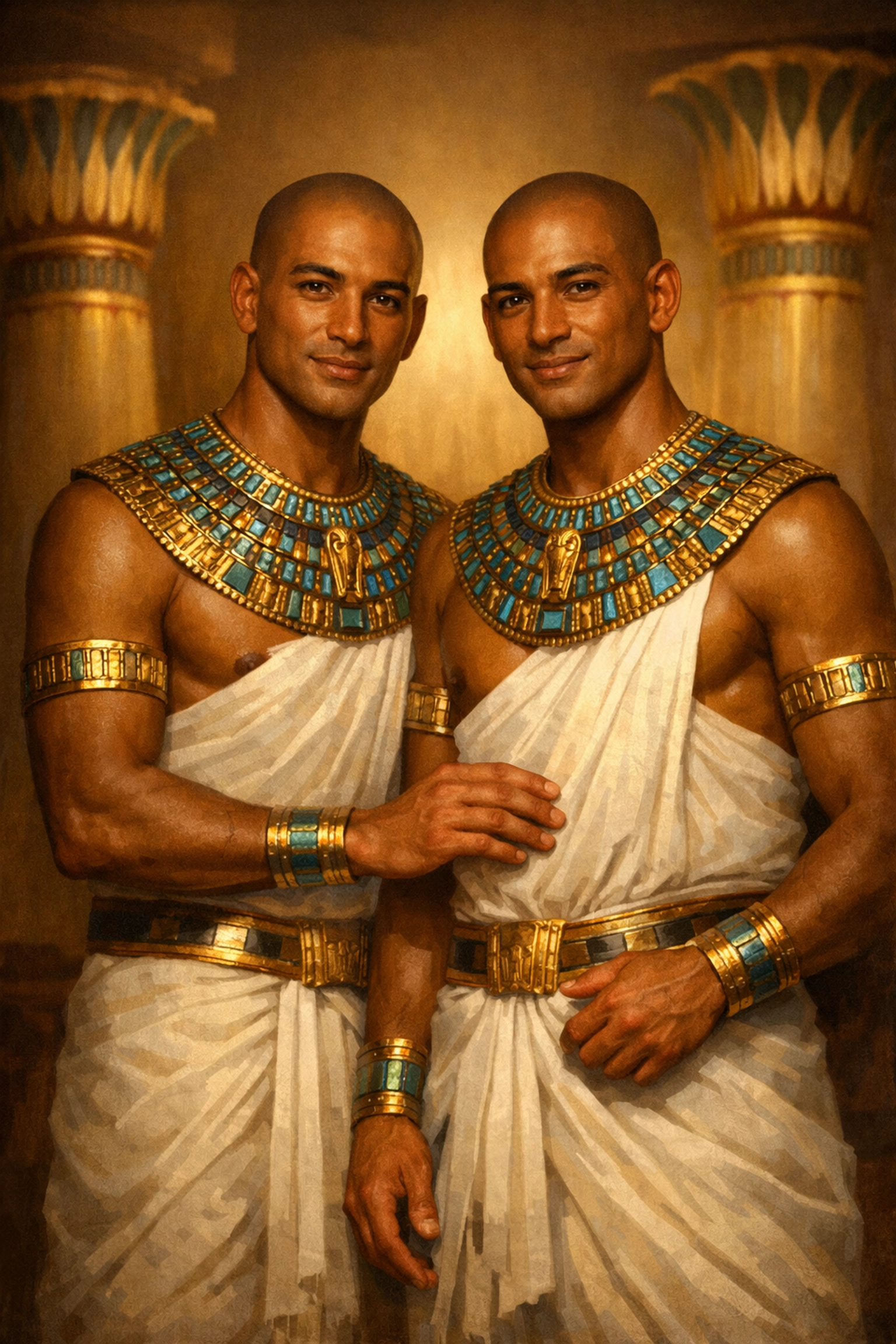
Let’s set the scene. Niankhkhnum and Khnumhotep weren’t just some random guys; they were high-ranking officials in the court of King Nyuserre. Their official title? "Overseers of the Manicurists of the Palace of the King." Now, before you start thinking they were just out here doing French tips, "Manicurist" in ancient Egypt was a prestigious role. It meant they were physically close to the Pharaoh, literally touching the royal person. This was a position of extreme trust and intimacy.
But it’s not their career ladder that has modern historians, and those of us who love gay historical romance, buzzing. It’s their tomb. Discovered in 1964 by Ahmed Moussa, their shared mastaba (a type of ancient tomb) is unique. Usually, these grand eternal homes were built for a man and his wife. Sometimes you’d see brothers sharing a tomb to save on costs, but the way Niankhkhnum and Khnumhotep are depicted is… well, it’s a lot more than "budget-friendly."
"Joined in Life, Joined in Death"
The very names of these two men suggest a soul-deep connection. Niankhkhnum translates to "Life belongs to Khnum," and Khnumhotep means "Khnum is satisfied." When you put them together, there’s a linguistic play that scholars interpret as "Joined in life, joined in death."
In the world of MM romance books, we call that "soulmates." In the world of 2400 BC, they called it a damn good reason to build a joint limestone monument.
As you walk through the chambers of their tomb, the artwork tells a story that feels remarkably modern. While both men are shown with wives and children in smaller, more peripheral scenes, those families are clearly not the main event. In fact, in one of the most famous scenes, Niankhkhnum’s wife was actually erased from the mural and replaced with a depiction of Khnumhotep. If that isn't the ultimate "friends-to-lovers" or "erasure of the beard" plot point for a gay novel, I don't know what is.
The Nose-Touch Heard 'Round the World
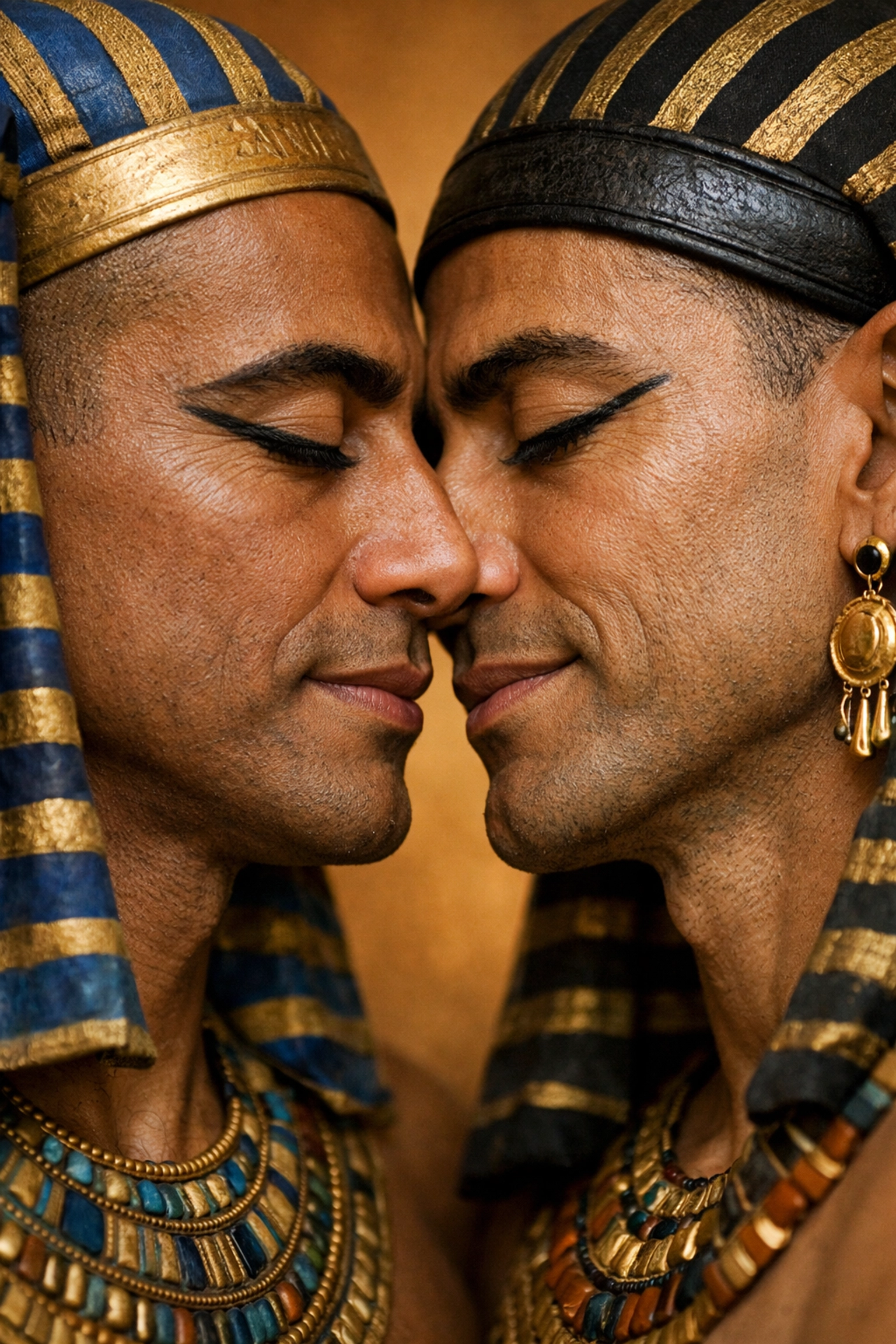
If you’re looking for the ancient equivalent of a spicy scene in one of our popular gay books, look no further than the "Nose-Rubbing" scene. In ancient Egyptian art, touching noses was the absolute peak of intimate expression. It was the equivalent of a deep, passionate kiss.
In the tomb of Niankhkhnum and Khnumhotep, the two men are depicted standing so close that their noses touch. Their bodies are pressed together in an embrace that, in any other tomb, was reserved strictly for a husband and wife. They are holding hands, their arms wrapped around each other's shoulders, looking into each other's eyes with a level of quiet intimacy that would make any MM historical romance author weep with joy.
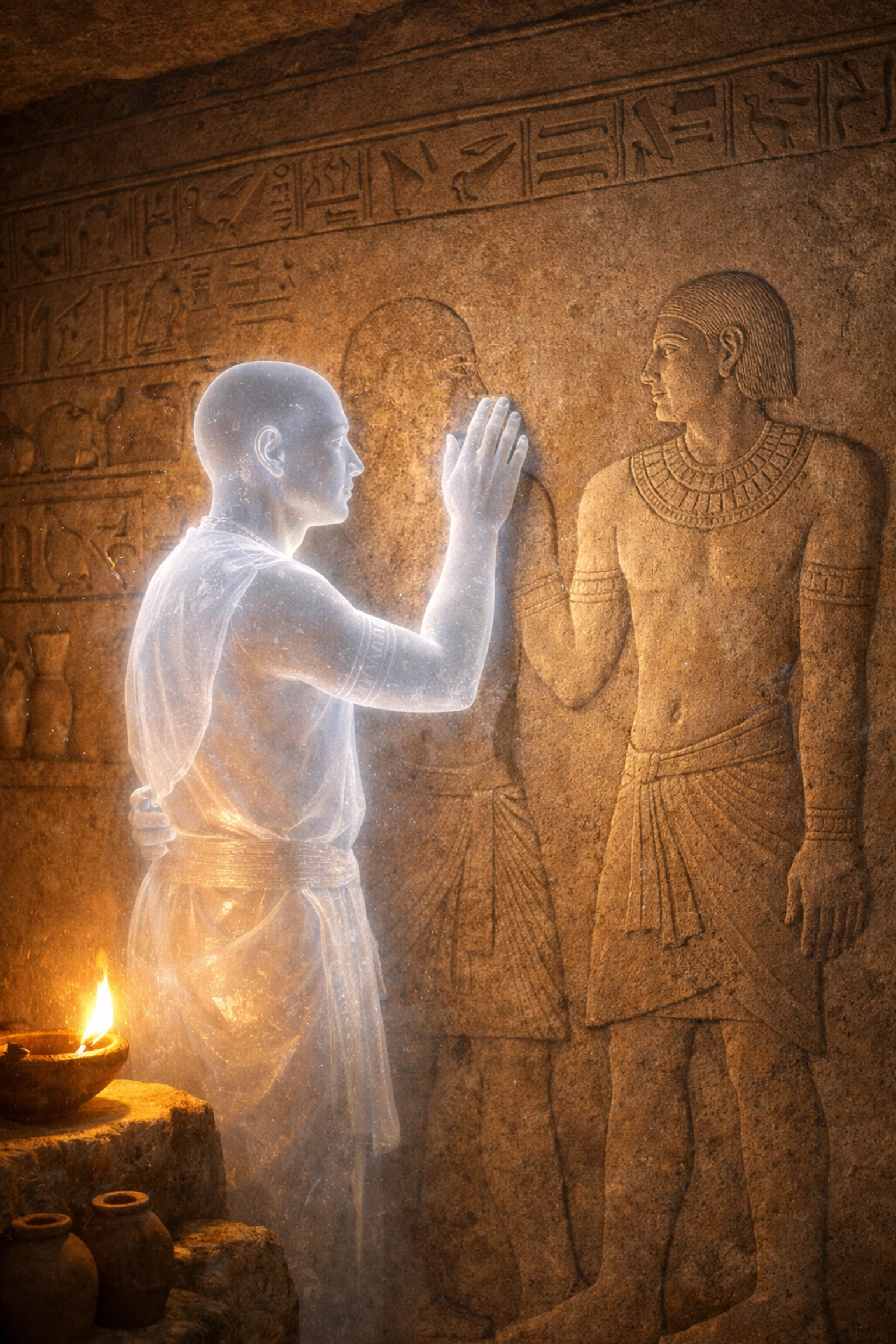
Historians have debated for decades: Were they brothers? Twins? Just "really good friends" who wanted to spend forever together in a tiny stone room? While the "Two Brothers" theory is the safe, heteronormative bet often found in older textbooks, modern queer eyes see something different. The positioning, the specific use of marital artistic tropes, and the sheer intentionality of their shared space point toward a romantic bond that was recognized and even celebrated by the Pharaoh himself.
Why Ancient Egypt Loves the "Marriage of Convenience" Trope
It’s fascinating to look at how these men navigated their society. They both had wives. They both had kids. In the 2400 BC version of the world, having children was a religious and social necessity: you needed someone to make offerings to your spirit after you died.
But their tomb suggests that while their duty was to their families, their hearts belonged to each other. This is a recurring theme we see in gay romance novels set in historical periods: the tension between social duty and private passion. It’s why genre-bending MM romance is so popular today: it explores these complex layers of identity.
If Niankhkhnum and Khnumhotep were around today, they’d probably be the stars of a best-selling MM romance series. We can almost see the blurb: Two royal manicurists, one shared tomb, and a love that defies the Pharaoh’s court.
Representation Matters: From Saqqara to 2026
At Read with Pride, we believe that seeing ourselves in history is just as important as seeing ourselves in the new gay releases of 2026. When we look at the walls of the tomb of Niankhkhnum and Khnumhotep, we aren't just looking at art; we’re looking at proof of our existence.
They weren't hiding. They didn't bury their love in a secret location. They put it on the walls of a grand monument in Saqqara, one of the most important cemeteries in the ancient world. They wanted to be seen. They wanted their bond to be eternal.
For those of us writing and reading queer fiction today, they are a beacon. They remind us that the "gay love story" isn't a modern invention or a "trend": it’s a fundamental part of the human experience that has been etched into stone for millennia.
Finding Your Own Eternal Embrace
If this historical deep dive has you craving more tales of epic, enduring love, why not check out some modern-day classics? Whether you’re into steamy MM romance or heartfelt gay fiction, the spirit of Niankhkhnum and Khnumhotep lives on in every story that celebrates two men choosing each other against all odds.
If you’re a writer looking to craft your own historical masterpiece, don’t forget to check out our guide on 7 mistakes you’re making with LGBTQ+ character development. You want to make sure your "Overseers" are as well-rounded and authentic as the men in Saqqara!
And for those who just want to curl up with a good book, our store is packed with gay literature that will give you all the feels.
The Legacy of the First Gay Couple
Niankhkhnum and Khnumhotep didn't just leave us a tomb; they left us a mystery and a message. They challenged the status quo of their time by demanding to be depicted as a couple in the afterlife. They used the language and art of their culture to say: We belong together.
As we move through 2026, let’s carry that same energy. Let’s be bold in our stories, authentic in our love, and unapologetic about our place in history.
Are you ready to dive into more queer history, or maybe some MM historical romance books inspired by these ancient legends? Let us know!
Stay proud, stay curious, and keep reading.
Check out more from Read with Pride:
- Explore our full catalog of LGBTQ+ eBooks
- Follow us on Facebook
- Join the conversation on X
- See our latest favorites on Instagram
#AncientEgypt #GayHistory #LGBTQHistory #MMRomance #ReadWithPride #QueerCulture #HistoricalRomance #NiankhkhnumAndKhnumhotep #GayLiterature #QueerBooks2026

Leave a Reply
You must be logged in to post a comment.