

readwithpride.com
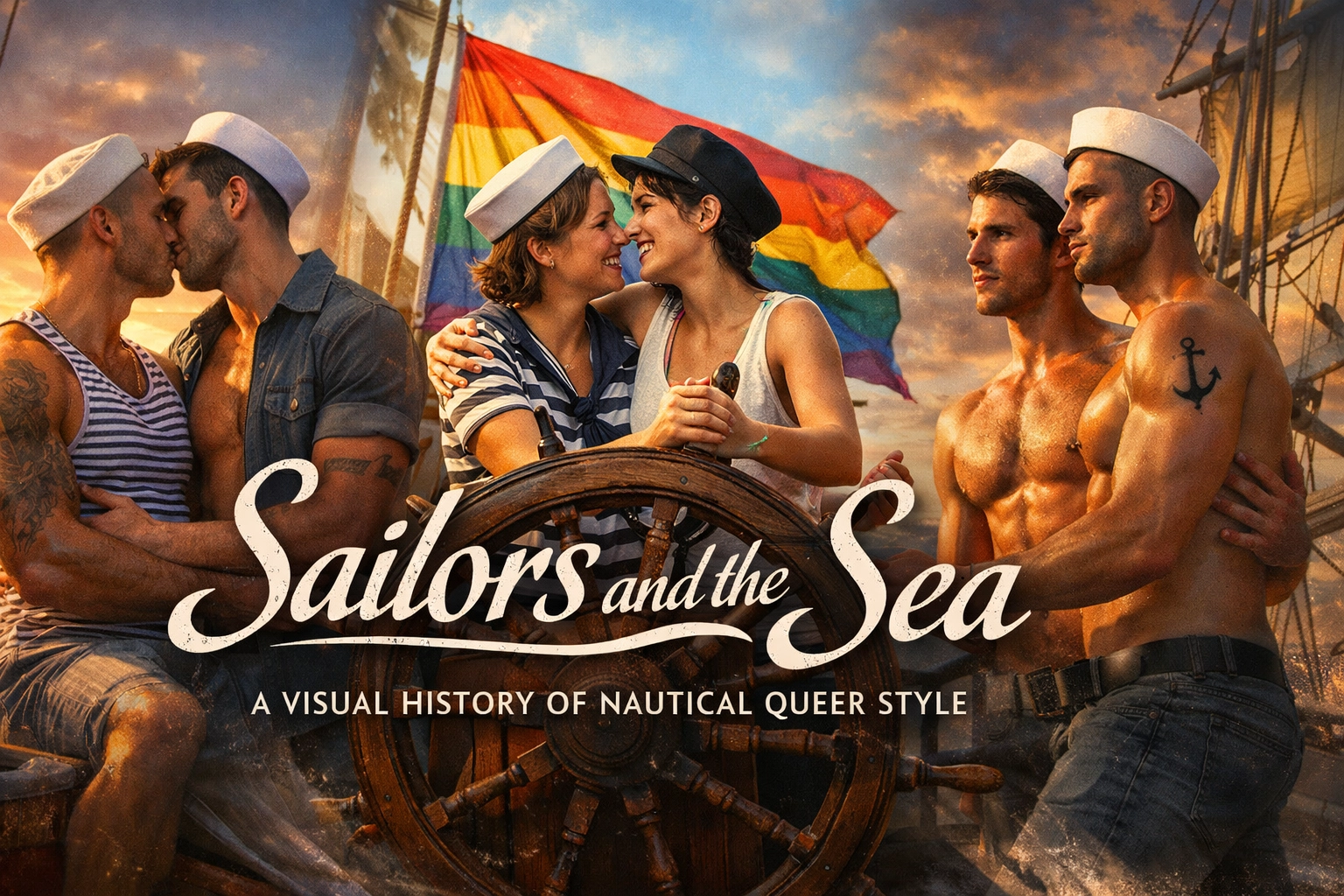
There is something about a man in a uniform: specifically, a crisp white sailor suit with those iconic navy stripes: that has sent hearts fluttering for over a century. Whether it’s the rugged charm of a merchant marine or the polished look of a naval officer, the "sexy sailor" isn't just a coincidence of military tailoring; it is a cornerstone of LGBTQ+ visual culture.
At Read with Pride, we spend a lot of time diving into MM romance books and gay historical romance, and if there’s one trope that never seems to sink, it’s the seafaring lover. But where did this obsession come from? How did a functional military uniform become a shorthand for queer desire, rebellion, and high fashion? Grab your life vest, because we’re charting a course through the history of nautical queer style.
The High Seas: A Sanctuary of Secret Lives
Historically, the ocean was one of the few places where the rigid rules of land-based society didn't quite reach. For centuries, maritime life offered a unique "alternative" community. On a ship, you weren't a son, a husband, or a clerk; you were a member of a crew. This isolation allowed for a level of physical and emotional intimacy between men that was often scrutinized or punished on solid ground.
Long before the "sexy sailor" was a pin-up, seafaring culture was associated with sexual freedom. This reputation laid the groundwork for the sailor to become a queer icon. In the early 20th century, the sailor represented the "rough trade" aesthetic: masculine, transient, and dangerously attractive. For a community looking for ways to signal to one another without alerting the authorities, the sailor aesthetic became a powerful tool.
The 1920s and 30s: Lesbians in Bell-Bottoms
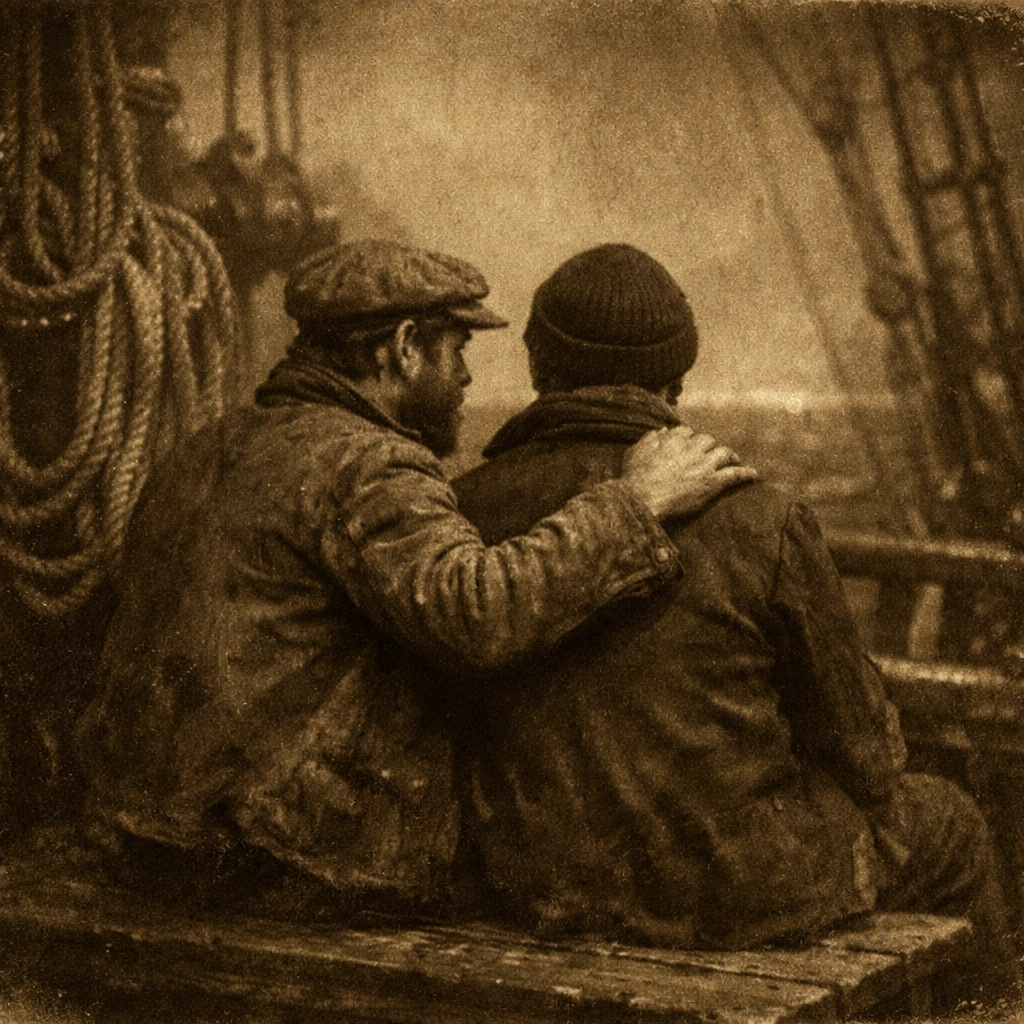
While the male sailor is a dominant image today, it’s important to remember that queer women were some of the first to weaponize nautical fashion as a statement of identity. In the bohemia of 1920s Paris and London, wealthy lesbians and queer performers adopted the sailor look to challenge gender norms.
Think of performers like Suzy Solidor, who dominated the Paris cabaret scene. She was famous for singing sea shanties while decked out in nautical gear. For these women, the style wasn't just about looking "sporty." It was a deliberate subversion. By wearing striped vests, wide-leg trousers, and berets, they were claiming a type of "gender freedom" that was otherwise denied to them. Trousers were still socially taboo for women in most contexts, but the "resort" or "nautical" excuse provided a loophole.
Paired with a monocle: a traditionally masculine status symbol: the sailor outfit became a uniform for the elite lesbian clubs like Le Monocle. It was a way of saying, "I am here, I am queer, and I look better in these pants than your husband does." This era of fashion is a frequent inspiration for gay historical romance writers who want to capture the defiant spirit of the interwar years.
From Propaganda to Pin-Ups: The Male Iconography
As we moved into the mid-20th century, the image of the sailor shifted from the "bohemian" to the "hyper-masculine." During World War II, the sailor was everywhere: on recruitment posters, in movies, and walking the streets of port cities like New York and San Francisco.
Artists like Paul Cadmus began to play with this imagery in ways that made the "mainstream" very uncomfortable. His 1934 painting, The Fleet’s In!, depicted sailors on shore leave in a way that felt undeniably homoerotic. The tight-fitting uniforms, the exaggerated muscles, and the suggestive poses turned the "heroic sailor" into an object of the queer gaze.
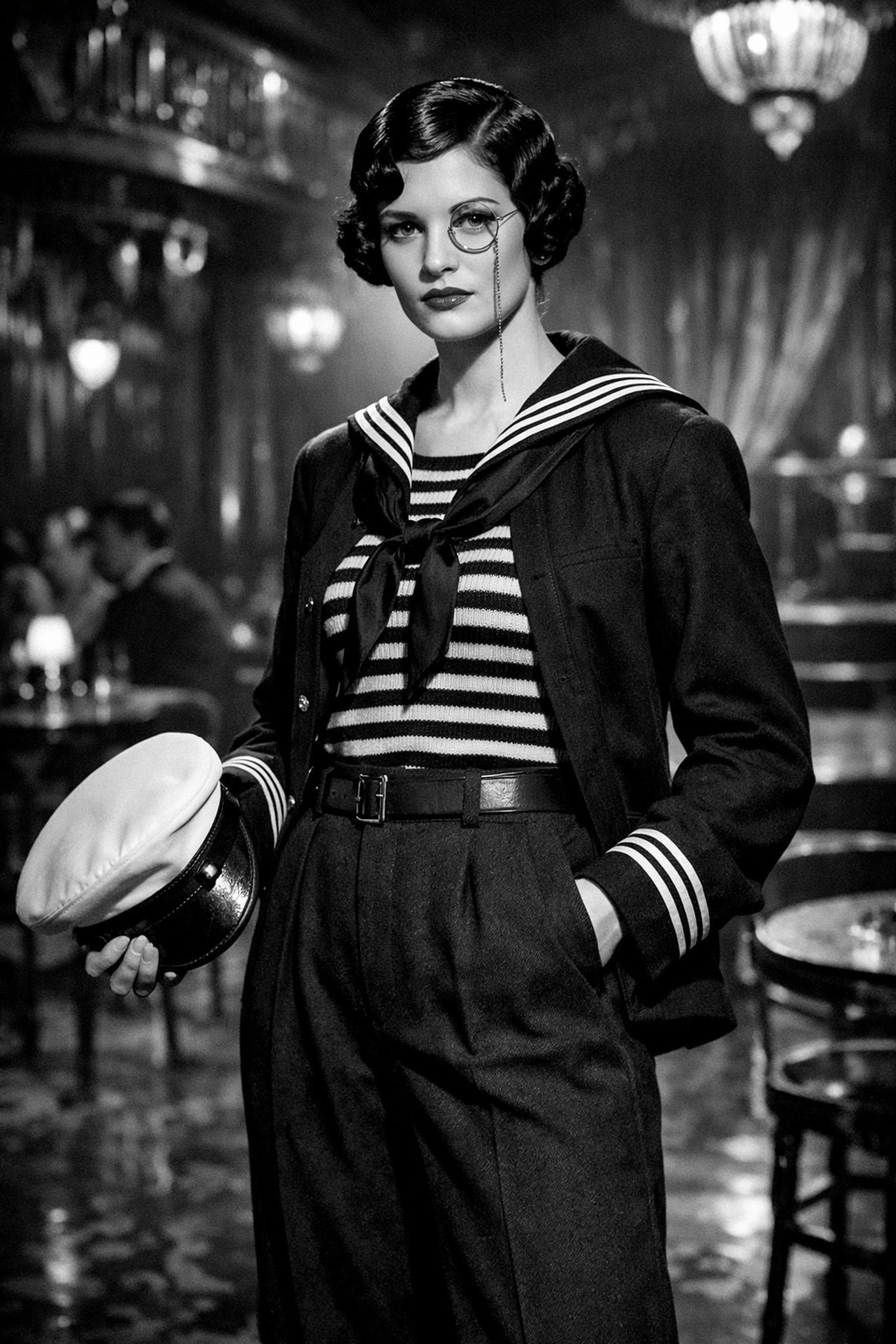
This paved the way for the ultimate evolution of the nautical aesthetic: Tom of Finland. If you’ve ever browsed popular gay books or art galleries, you’ve seen his work. He took the sailor uniform and dialed the sexuality up to eleven. The hats became saltier, the bell-bottoms tighter, and the chests broader. Through his art, the sailor became a symbol of strength and unapologetic queer sexuality. This hyper-masculine "Uniform Fetish" remains a massive draw in MM romance books and steamy MM romance today.
The "Sexy Sailor" Hits the Runway
By the time the 1980s and 90s rolled around, nautical style had jumped from the underground queer scene straight onto the high-fashion runways. No one did this more effectively than Jean Paul Gaultier.
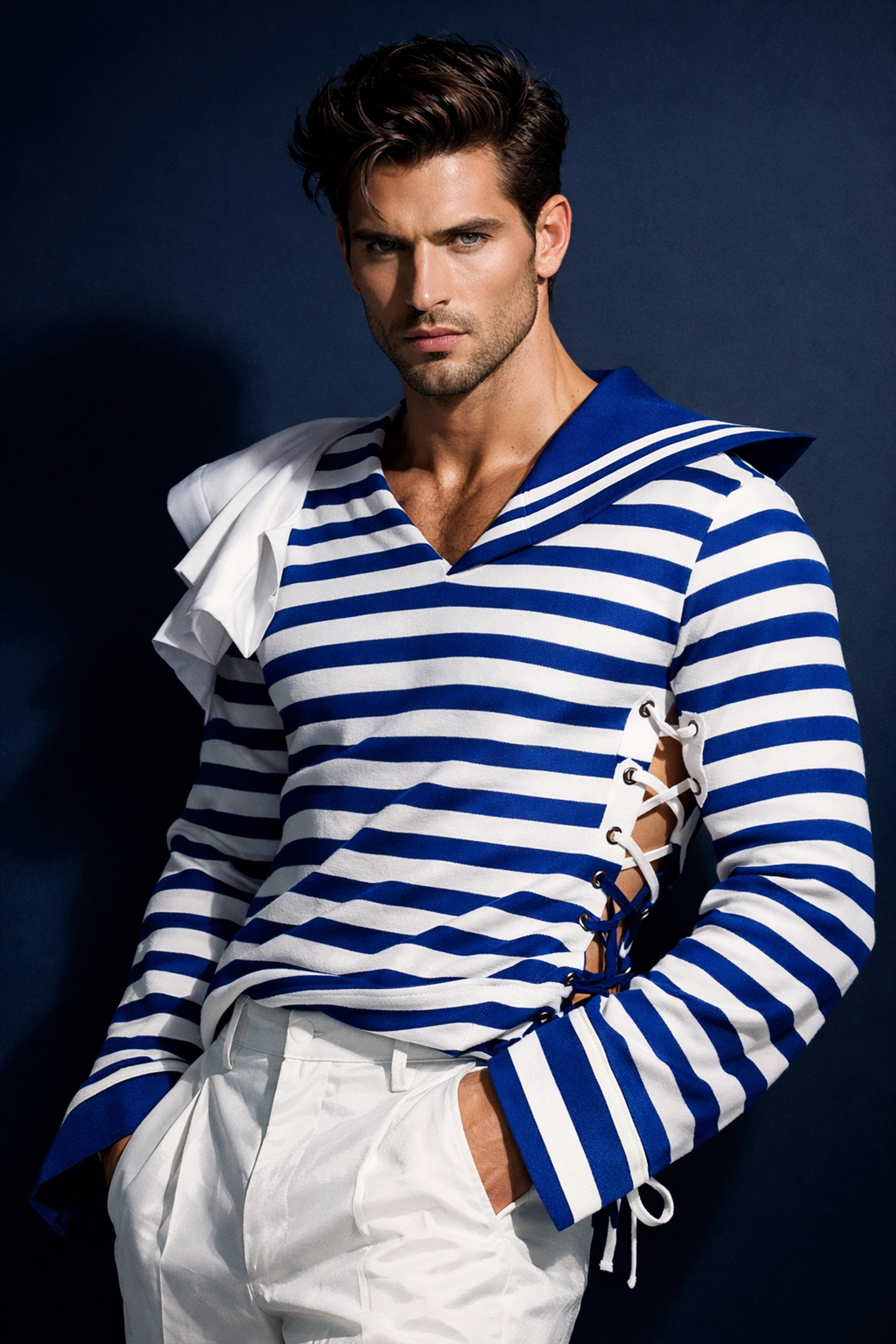
Gaultier turned the marinière (the classic French striped shirt) into a global fashion phenomenon. His 1995 fragrance, Le Male, featured a bottle shaped like a muscular male torso clad in a striped sailor shirt. It was camp, it was queer, and it was a massive commercial success. Gaultier wasn't just selling perfume; he was selling the visual history of queer desire.
Today, you see this influence everywhere: from the striped shirts at Pride parades to the "nautical chic" of summer fashion. It’s a style that manages to be both classic and subversive, a nod to a history of men and women who found freedom on the waves.
Why We Love Nautical Tropes in Gay Fiction
If you’re a fan of gay love stories or MM contemporary fiction, you know the "Sailor" trope is a heavy hitter. Why? Because it combines several of our favorite elements:
- The Uniform: There is an inherent power dynamic and visual appeal to the uniform. It represents discipline, but in gay romance novels, we love to see that discipline break.
- Forced Proximity: Nothing says "forced proximity" like being stuck on a ship in the middle of the Atlantic. It’s the perfect setting for a "slow burn" or an "enemies to lovers" arc.
- The Journey: Ships are literal and metaphorical vehicles for change. Characters leave their old lives behind on the shore and discover who they really are at sea.
Whether it’s a gay historical romance set in the British Royal Navy or a modern MM romance book about two guys on a private yacht, the sea provides a backdrop of danger and longing that is hard to beat. If you're looking for your next great read, check out the Read with Pride store for stories that capture this adventurous spirit.
Anchored in Pride
The visual history of nautical queer style is a reminder that our community has always found ways to express itself, even under the guise of "standard" clothing. We took a military uniform and turned it into a symbol of liberation. We took the isolation of the sea and turned it into a sanctuary for love.
As we look toward the best MM romance books of 2026, the sailor icon remains as relevant as ever. It’s a bridge between our history and our future: a look that says we are adventurous, we are resilient, and we are undeniably stylish.
So, the next time you see those blue and white stripes, remember the cabarets of Paris, the paintings of Paul Cadmus, and the countless sailors who found love under the stars. At Readwithpride.com, we’re proud to keep these stories alive.
Whether you are looking for LGBTQ+ eBooks, gay fiction, or just a community that gets your love for a good trope, you’ve found your home port.
Want to dive deeper into queer history and tropes?
- Check out our blog sitemap for more deep dives.
- Avoid these 7 mistakes with LGBTQ+ character development.
- Looking for something gritty? Discover The Fjord’s Hunger.
#ReadWithPride #MMRomance #GayHistory #NauticalStyle #QueerFashion #GayBooks2026 #SexySailor #LGBTQPlusFiction #MMHistoricalRomance
Find us on social media:
Facebook | Instagram | X (Twitter)

Leave a Reply
You must be logged in to post a comment.