

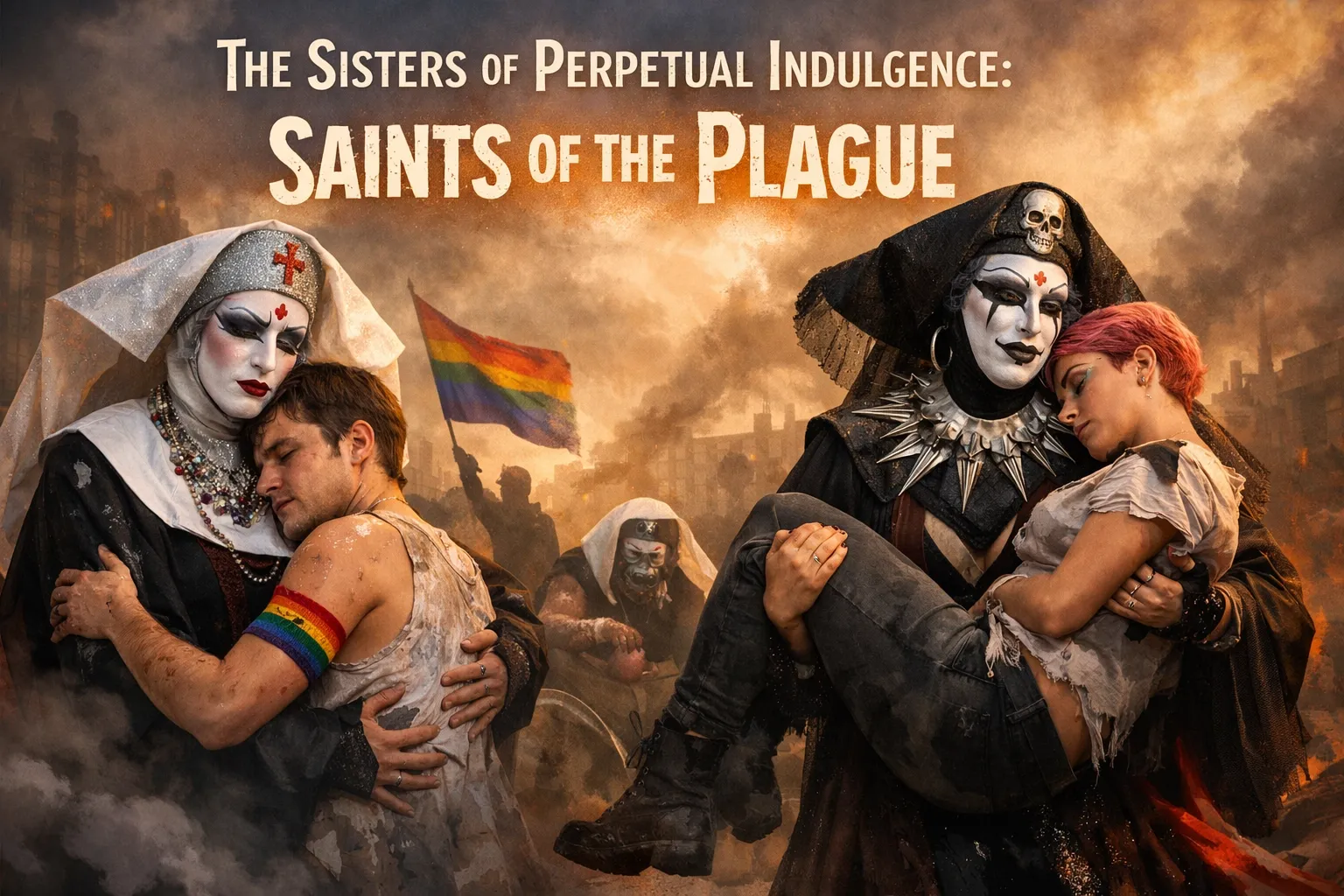
readwithpride.com
If you walked down the streets of San Francisco’s Castro District on Easter Weekend in 1979, you might have seen something that would make a traditional bishop faint: three men dressed in full, traditional nun’s habits, gliding through the crowds. They weren’t there to proselytize in the traditional sense. They were there to cause a holy ruckus.
These were the founding members of the Sisters of Perpetual Indulgence, and while they started as a piece of avant-garde street theater, they were about to become the most unlikely frontline soldiers in a war no one saw coming. As we look back from 2026, their legacy isn't just about the whiteface and the glitter: it’s about how they saved a community when the rest of the world turned its back.
At Read with Pride, we believe that queer history is just as vital as the MM romance books we publish. To understand the "joy as resistance" trope in our favorite gay fiction, we have to look at the real-life saints who lived it.
The Birth of Holy Mischief
The Sisters didn’t start with a grand plan to fight a pandemic. They started with a desire to "promulgate universal joy and expiate stigmatic guilt." Basically, they wanted to tell queer people that they weren't born in sin and that being fabulous was a divine right.
The founders: Ken Bunch (Sister Vicious PHB), Fred Brungard (Sister Missionary Position), Edmund Garron (Sister Hysterectoria), and Bill Graham (Reverend Mother): used religious imagery to reclaim the power that the church had used to oppress them for centuries. It was witty, it was camp, and it was deeply authentic.
But in 1981, the laughter was cut short. A "rare cancer" began appearing in gay men. The "GRID" (Gay-Related Immune Deficiency) era had begun, soon to be known as the AIDS crisis.
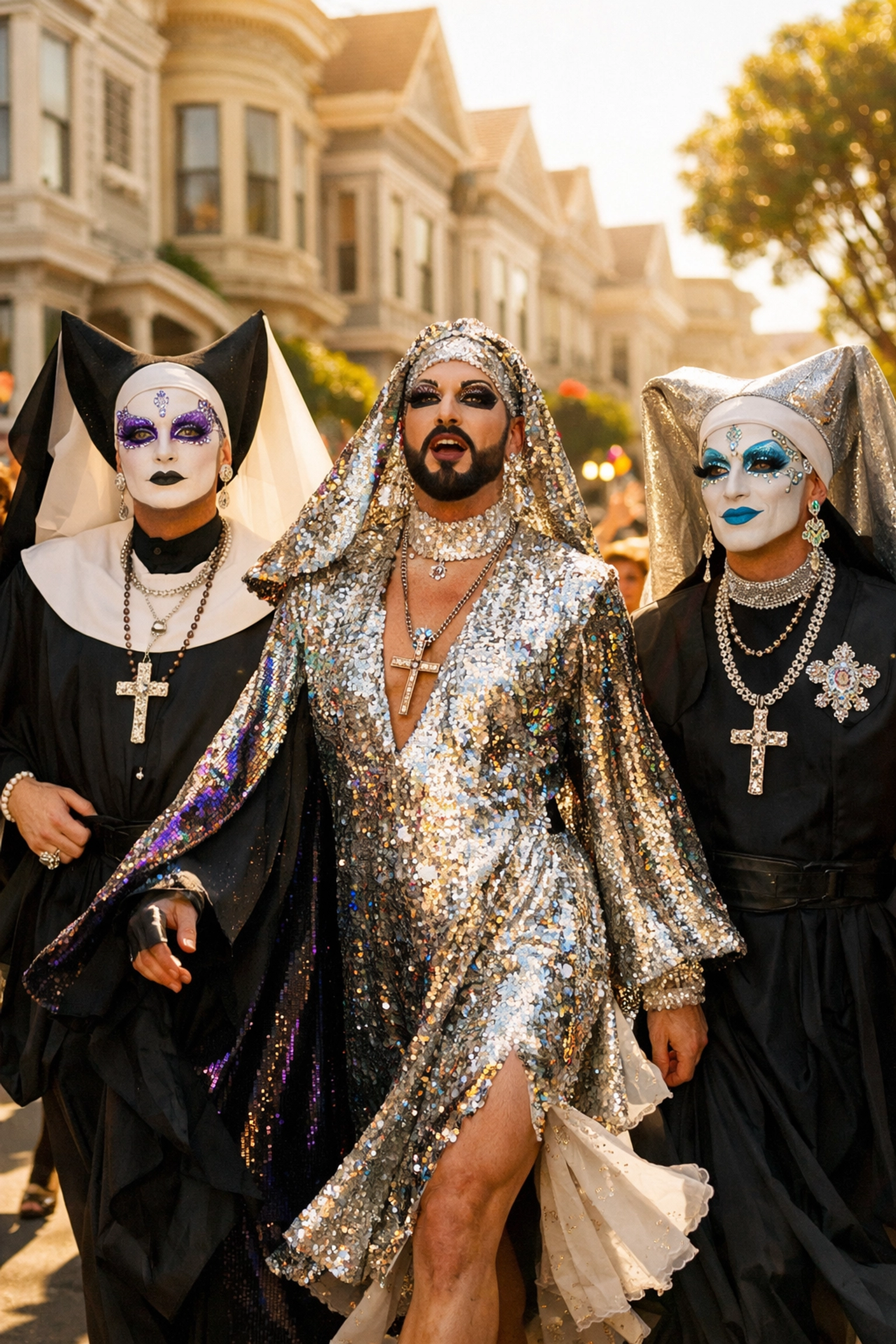
(Visual: A group of Sisters in vibrant, high-camp habits standing defiantly on a city street, blending religious tradition with drag flair.)
Fundraising with a Bark: The World’s First AIDS Benefit
Long before massive red-ribbon galas and celebrity endorsements, the Sisters were on the ground doing the dirty work. In 1981, they organized the world’s very first fundraiser for the disease that was decimating their friends.
It wasn't a somber affair. It was a dog show on Castro Street.
They enlisted the legendary disco artist Sylvester to serve as a judge. While the government was refusing to even say the word "AIDS," the Sisters were raising money for the Kaposi’s Sarcoma Research & Education Foundation (which later became the San Francisco AIDS Foundation). They knew that if they didn't take care of their own, no one would. This spirit of community is exactly what inspires many gay love stories and MM historical romance titles today: the idea that family is who you choose when the world gets cold.
"Play Fair!": The First Sex Ed
In 1982, the Sisters did something revolutionary: they talked about safe sex before anyone else dared to. They published a pamphlet called "Play Fair!" It used humor, non-judgmental language, and: of course: a bit of camp to teach gay men how to protect themselves and their partners.
At a time when the medical establishment was clinical and cold, and the religious right was screaming about "divine punishment," the Sisters provided information wrapped in love and wit. They were practicing "joy as a form of resistance" in its purest form. They understood that to keep a community alive, you had to empower them, not shame them.
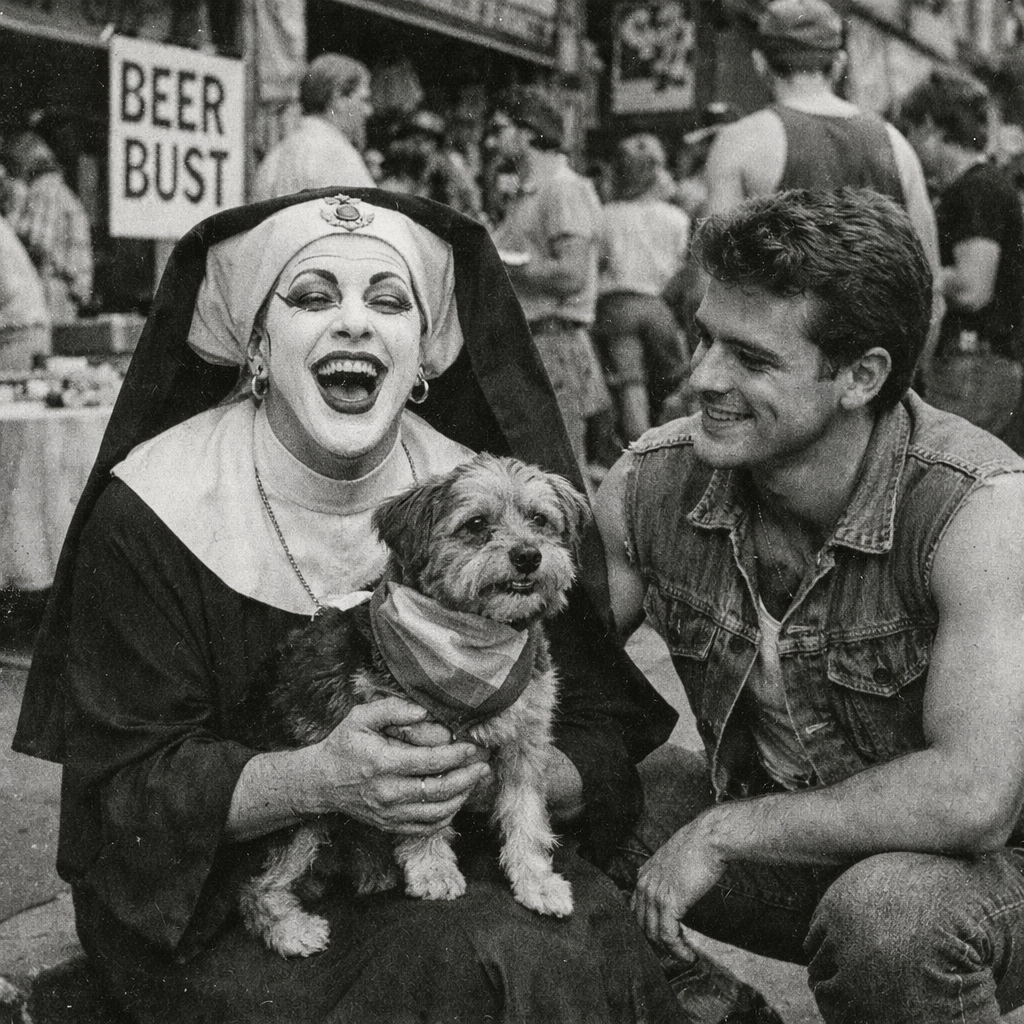
(Visual: A vintage-style black and white photo of a Sister holding a "Play Fair!" pamphlet, surrounded by activists in the early 80s.)
Saints in the Hospice
As the 80s rolled into the 90s, the death toll climbed. The Sisters didn't just fundraise; they became caregivers. Many men were being kicked out of their apartments, fired from their jobs, and abandoned by their biological families.
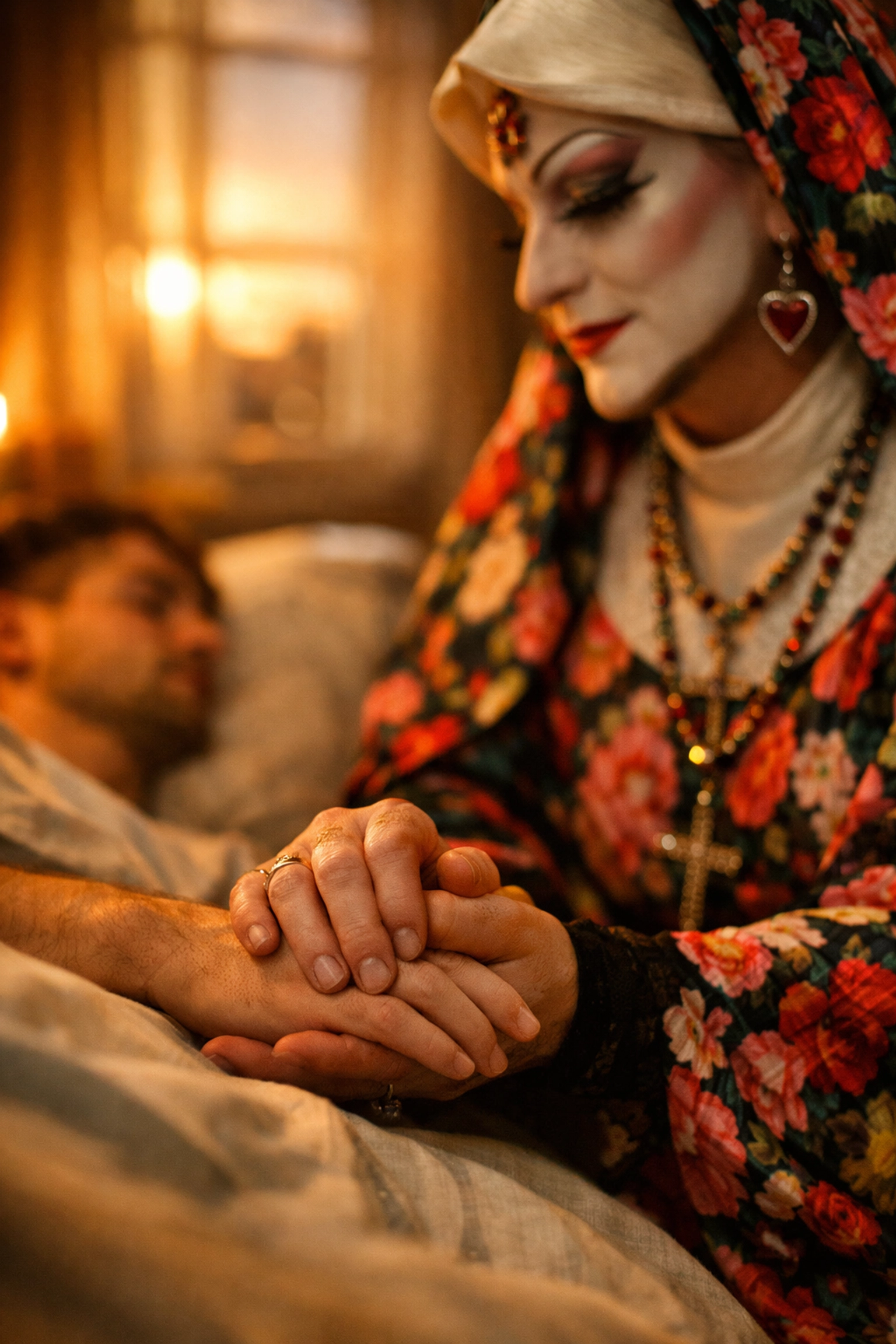
The Sisters stepped into the gap. They visited hospices, sat by bedsides so no one had to die alone, and performed "last rites" that were more about celebration and peace than judgment. They became the "nuns" the community actually needed: sisters who wouldn't judge your life, but would hold your hand through the end of it.
This era of gay literature is often heavy, but the Sisters remind us that even in the darkest gay psychological thriller or tragic history, there is room for light. They proved that you could wear a 10-pound headdress and still do the heavy lifting of social work.
Global Expansion and the Modern Era
What started in San Francisco quickly spread. Chapters (or "Orders") began popping up in Sydney, Toronto, London, and beyond. Each order adapted to the needs of its local community, but the mission remained the same: fighting stigma and spreading joy.
Today, in 2026, the Sisters are still here. They fight for trans rights, support homeless youth, and continue to advocate for those living with HIV. They have become icons of queer resilience. If you’re looking for new gay releases that capture this kind of bravery, look for stories that highlight the "found family" trope: it’s a cornerstone of the LGBTQ+ fiction we love at Read with Pride.
(Visual: A modern 2026 pride parade featuring a diverse group of Sisters from various backgrounds, showing the evolution of the movement.)
Why Their Story Matters to Readers and Writers
As a publisher focusing on LGBTQ+ eBooks and popular gay books, we often get asked why we focus so much on the history of the community. The answer is simple: because our stories are our survival.
The Sisters of Perpetual Indulgence used performance and storytelling to change the narrative of the AIDS crisis. They refused to let gay men be seen only as victims. They insisted on being seen as vibrant, spiritual, and hilarious beings, even in the face of death.
When you read a steamy MM romance or a heartfelt gay fiction novel, you are participating in that same tradition of celebrating queer life. Authors who write MM contemporary or gay adventure romance are building on the foundation of joy that the Sisters poured during the hardest years of our history.
How to Support the Mission Today
The fight isn't over. HIV/AIDS is still a global issue, and the stigma against the LGBTQ+ community is still a reality in many parts of the world. Here’s how you can keep the spirit of the Sisters alive:
- Support Local Orders: Most major cities have a Sisters of Perpetual Indulgence chapter. They are always raising money for local grassroots charities.
- Read and Write Our History: Don't let these stories fade. Whether it's through gay classics or modern MM romance series, keep the history of the plague years alive so we never forget the lessons learned.
- Practice Joy: In a world that can often feel hostile, being unapologetically happy is a radical act. Wear the glitter. Buy the gay eBooks. Share the love.
The Sisters taught us that you don't need a cathedral to be a saint. You just need a habit, some face paint, and a heart big enough to hold an entire community. They are the patron saints of the Castro, the guardians of the sick, and the queens of universal joy.
At Readwithpride.com, we honor their legacy by continuing to provide a platform for stories that reflect the full spectrum of our lives: from the struggles of the past to the best MM romance books of 2026.

(Visual: A close-up of a book cover featuring a historical MM romance set in the 1980s, symbolizing the intersection of history and literature.)
Stay Connected with Read with Pride:
- Explore our library: readwithpride.com
- Follow us on Twitter/X: Read_With_Pride
- Find us on Instagram: read.withpride
- Join our community on Facebook: Read With Pride
#ReadWithPride #SistersOfPerpetualIndulgence #LGBTQHistory #MMRomanceBooks #GayFiction #AIDSActivism #QueerResistance #GayBooks2026 #MMRomance #GayLiterature #FoundFamily #JoyAsResistance

Leave a Reply
You must be logged in to post a comment.