

readwithpride.com
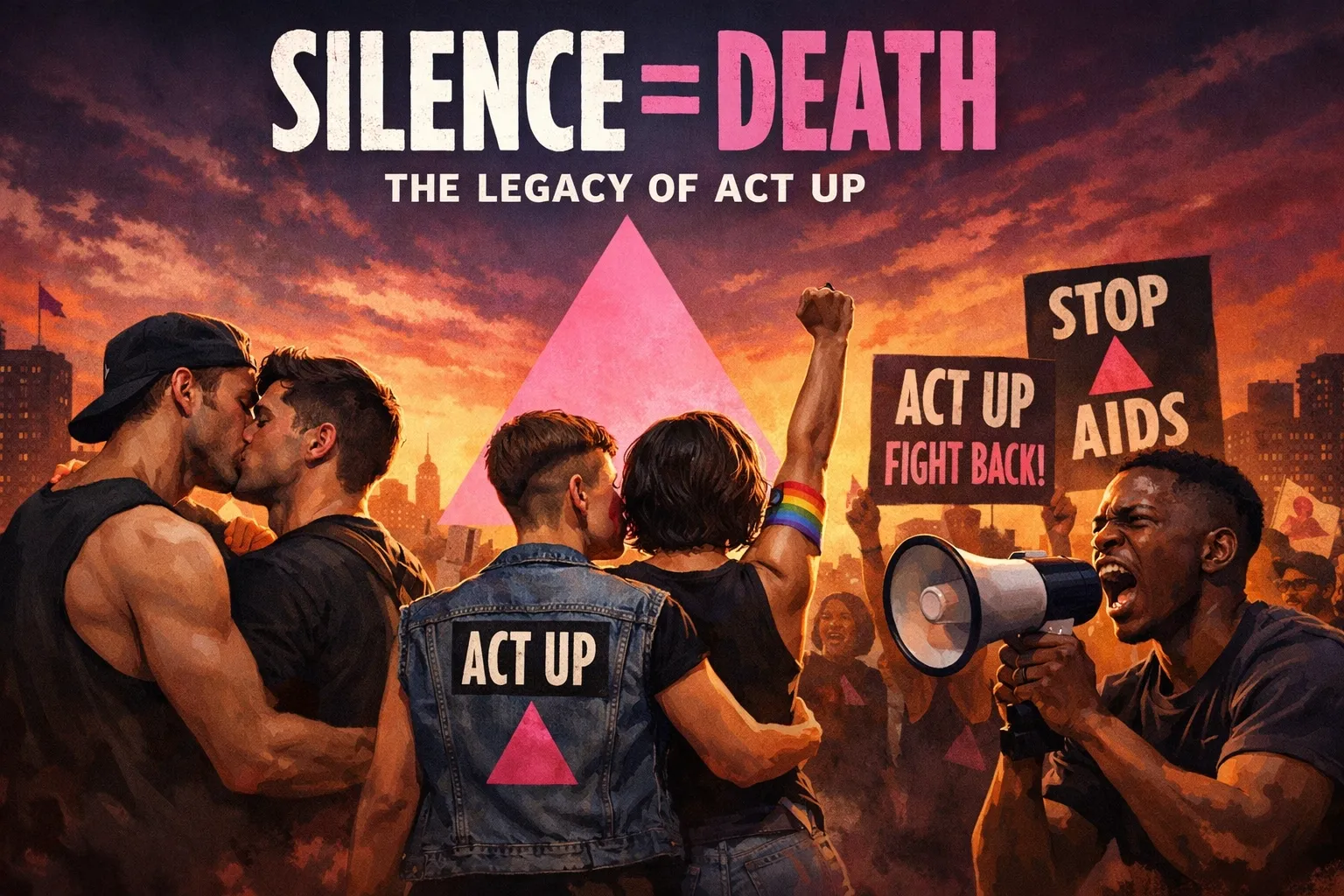
If you’ve ever walked through a Pride parade or scrolled through the history sections of Read with Pride, you’ve seen it. Six simple words in stark, white Futura font, sitting under a neon pink triangle on a black background: SILENCE = DEATH. It’s arguably the most iconic piece of political art in history, but it wasn't created to look cool on a t-shirt. It was created because people were dying, and the world: from the White House to the evening news: was looking the other way.
In the 1980s, the LGBTQ+ community wasn't just fighting for the right to marry or to see ourselves represented in gay romance novels. We were fighting for the right to breathe. Today, we’re diving into the raw, radical, and absolutely essential history of ACT UP (AIDS Coalition to Unleash Power) and the man whose rage sparked a revolution: Larry Kramer.
The Silence of the Eighties
To understand why ACT UP was necessary, you have to understand the atmosphere of 1987. Imagine a world where a plague is decimatimg your friends, your lovers, and your chosen family, and the President of the United States won't even say the name of the disease out loud. That was the reality. While we celebrate LGBTQ+ fiction and the abundance of MM romance books today, back then, the stories being written about us were mostly obituaries.
The "Silence = Death" poster actually predates ACT UP. It was designed by a six-person collective (the Silence = Death Collective) who wheat-pasted it all over New York City. They chose the pink triangle: the symbol Nazis used to identify gay men in concentration camps: and flipped it upward as a sign of reclamation and defiance. The message was clear: if we don't speak up, we disappear.

Larry Kramer: The Angry Heart of the Movement
If the Silence = Death Collective provided the visual, Larry Kramer provided the voice: and it was a loud, scratchy, unapologetic scream. Kramer was already a controversial figure in the community. His 1978 novel Faggots (a staple in any deep dive of gay literature) had ruffled feathers for its critique of the fast-and-loose lifestyle of the time. But when his friends started dying, his criticism turned into a fierce, protective rage.
On March 10, 1987, at the Lesbian and Gay Community Services Center in New York, Kramer gave a speech that changed everything. He asked the room a terrifying question: "If I told you that in two years, half of you would be dead, what would you do?"
He didn't want a moment of silence. He wanted a riot. Two days later, ACT UP was born. This wasn't a polite non-profit; it was a non-partisan group of diverse individuals united in anger and committed to direct action. They weren't interested in being "likable." They were interested in surviving.
Die-ins and Desperation: The Tactics of Radical Protest
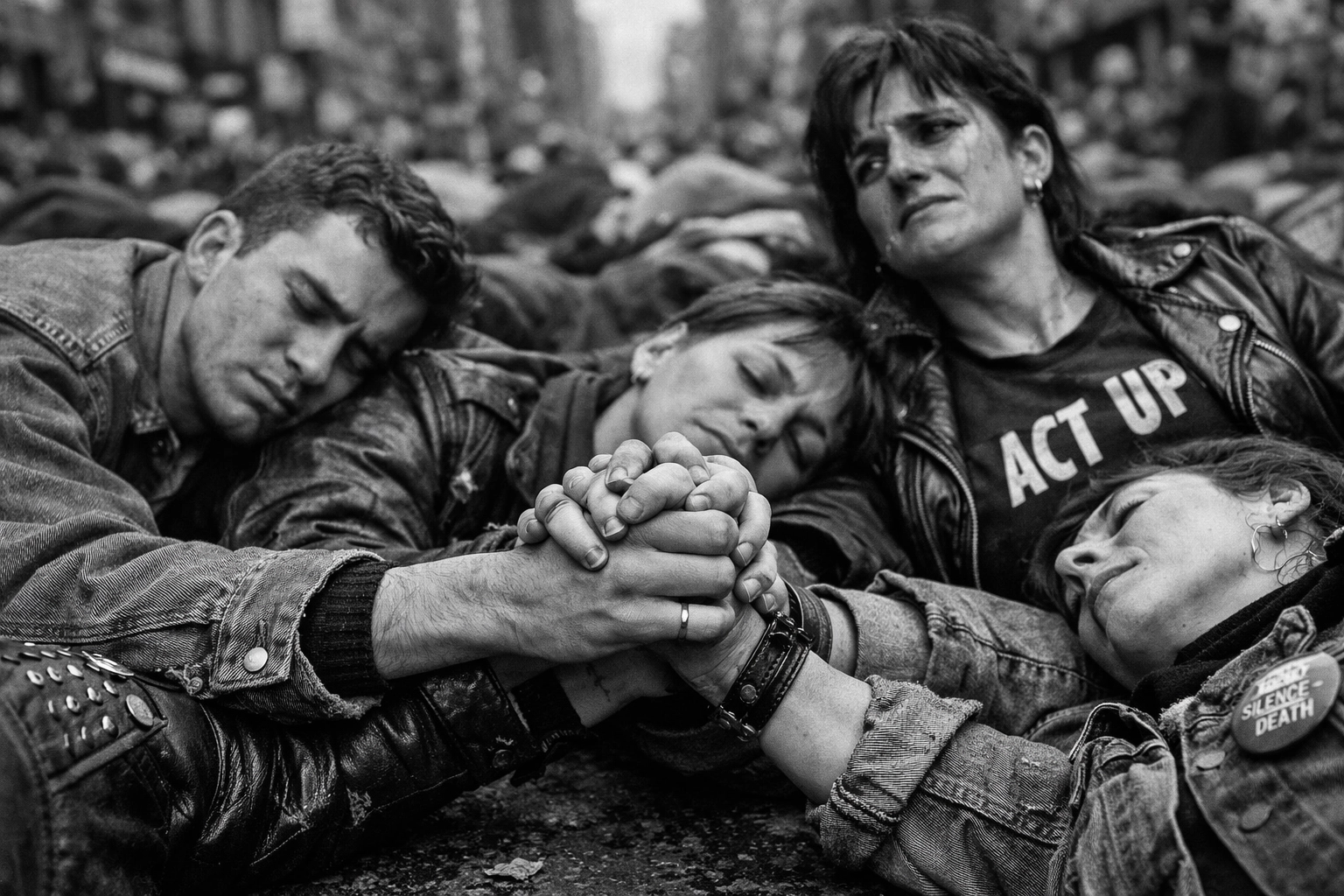
ACT UP understood something that many advocacy groups forget: you have to make it impossible for people to ignore you. They brought the "die-in" to the mainstream. Activists would collapse on the pavement in front of the FDA, the New York Stock Exchange, or inside St. Patrick’s Cathedral, representing the thousands of bodies being lost to government inaction.
One of their most famous actions happened on Wall Street. Protesters blocked traffic and chained themselves to balconies to demand that Burroughs Wellcome (the manufacturer of AZT, the only drug available at the time) lower its astronomical prices. AZT was costing patients $10,000 a year: in 1980s money. Because of ACT UP’s relentless pressure, the company eventually caved and lowered the price by 20%.
These weren't just protests; they were performances. They were witty, sharp, and media-savvy. They knew that a photo of a man being carried away by police while wearing a "Silence = Death" shirt would make the front page. They used the same energy we see in the best MM romance: fierce loyalty and a refusal to give up on the people they loved: and weaponized it against the state.
Changing Medical History: From Activists to Scientists
Perhaps the most incredible part of the ACT UP legacy is how they literally rewrote the rules of the FDA. Before ACT UP, the drug approval process was slow, bureaucratic, and geared toward protecting companies rather than saving lives.
The activists in ACT UP didn't just scream; they studied. They became "citizen scientists." They read the medical journals, understood the molecular biology of the virus, and walked into meetings with NIH officials knowing more than the bureaucrats across the table. They demanded: and got: what they called the "Parallel Track." This allowed people with AIDS to access experimental drugs while they were still in the trial phase.
They accelerated drug approval by years. If you are reading popular gay books today or enjoying the latest new gay releases of 2026, you are living in a world shaped by these activists. Their work didn't just help the gay community; it changed how all terminal illnesses are treated in the US.
Why We Must "Read with Pride" and Remember
At Read with Pride, we believe that every gay love story is a political act. Whether it’s a steamy MM romance, a gay historical romance, or a heartfelt gay fiction piece, these stories exist because a generation of activists refused to let our community be erased.
The legacy of ACT UP is a reminder that our history isn't just about suffering; it’s about agency. It’s about the fact that when the world tried to silence us, we turned up the volume. We see that same spirit in queer fiction today: the refusal to be a footnote and the insistence on having our "happily ever afters."
As we look toward the future, including the top LGBTQ+ books of 2026, we carry the pink triangle with us. It reminds us to stay vigilant. The fight against HIV/AIDS isn't over, and the fight for LGBTQ+ rights globally continues. But we know the formula now: Action = Life.

Join the Conversation
What's your favorite piece of LGBTQ+ history? Or perhaps a book that captured this era perfectly? Check out our blog-category-sitemap1.xml for more deep dives into our vibrant past.
If you’re looking for stories that honor our resilience, explore our collection of MM historical romance and see how authors are keeping the flame of our history alive.
Keep Reading. Keep Fighting. Keep Loving.
Explore more at Read with Pride:
Follow us for more queer history and book recs:
- Facebook: Read With Pride
- Instagram: @read.withpride
- X: @Read_With_Pride
#ACTUP #SilenceEqualsDeath #LGBTQHistory #GayFiction #ReadWithPride #MMRomance #AIDSActivism #LarryKramer #QueerLiterature #GayRomanceBooks #2026GayBooks

Leave a Reply
You must be logged in to post a comment.