

readwithpride.com
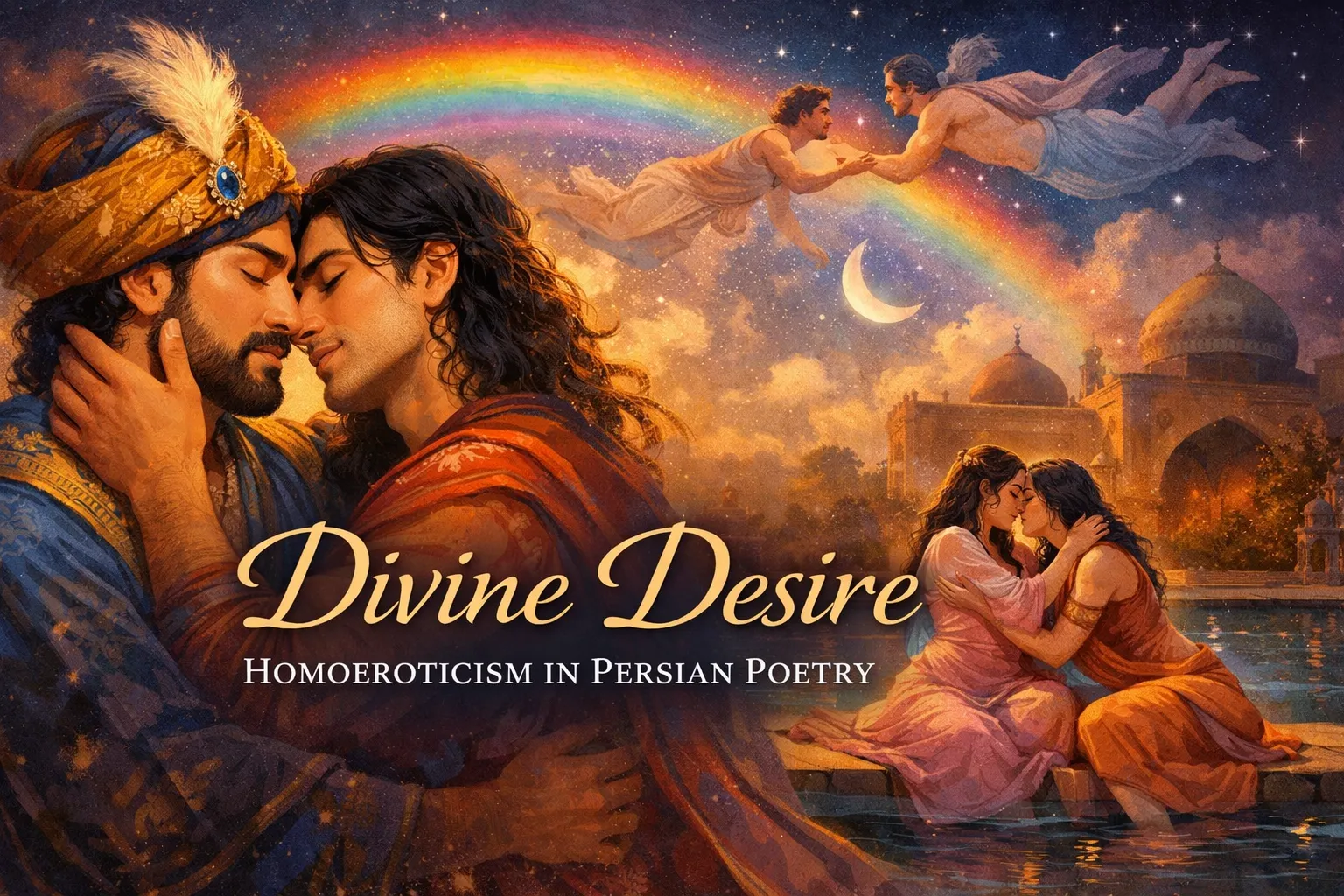
If you’ve ever stayed up until 2 AM devouring a particularly emotional MM romance, you know that feeling of intense, soul-aching longing. It’s that "I can’t breathe without you" energy that makes gay love stories so addictive. But what if I told you that some of the most intense "boy meets boy" vibes weren’t written in a modern ebook, but in 13th-century Persia?
Welcome to the world of classical Persian poetry, where the line between "I love God" and "I love that guy with the great eyes" isn't just blurry: it’s non-existent. At Read with Pride, we’re all about celebrating queer stories in every form, and today we’re going deep into the history of the "Beloved." We’re talking Rumi, Hafez, and Sa’di: the OG masters of gay historical romance (even if the history books try to tell you otherwise).
More Than Just a Metaphor: The "Beloved"
In the Western world, we often get taught that Persian poets were strictly talking about God when they wrote about "the Beloved." We’re told the wine is "spiritual intoxication" and the beautiful youth is "divine light." And sure, that’s part of it. But for poets like Sa’di of Shiraz, the beauty of a young man wasn’t just a metaphor for God; it was a gateway to God.
This wasn't just some abstract idea. It was a lived reality. In the Persian tradition, there’s a concept called shahid-bazi, or "play of the witness." The idea is that God’s beauty is reflected in the world, and nowhere is it more visible than in the face of a beautiful human being: specifically, a beautiful young man.
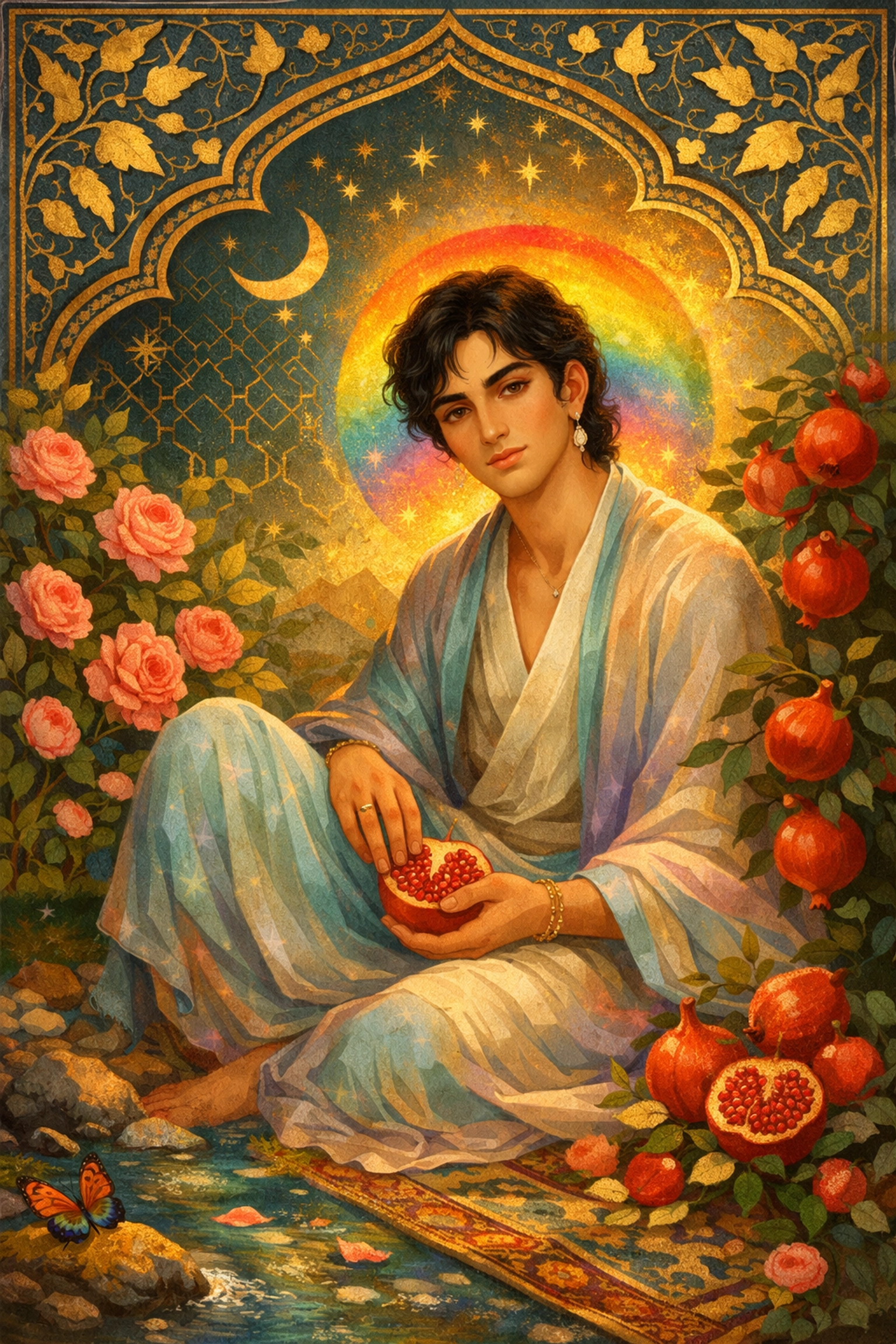
When you read gay literature from this era, you’re seeing a spiritual philosophy that says: "I am so moved by your beauty that I can feel the Divine moving through me." It’s the ultimate "soulmates" trope, backed by medieval philosophy.
Sa’di of Shiraz: The Original Stan of Beautiful Boys
Sa’di (d. 1282 CE) is basically the king of the Persian ghazal. If he were alive in 2026, he’d probably be writing the best MM romance novels on the market. His work is famous for its balance of the worldly and the spiritual.
In one of his most famous poems, he’s in a bathhouse (talk about a classic MM romance setting!) and he encounters a piece of scented clay. The clay tells him, "I was just a piece of worthless mud, but I spent time with a rose, and its fragrance rubbed off on me." While it sounds sweet and metaphorical, scholars have pointed out that Sa'di's admiration for young boys was very much grounded in reality.
He used arguments from big-brain philosophers like Avicenna to say that contemplating human beauty is a legit spiritual practice. He wasn't just "appreciating art"; he was arguing that desire: real, human, heart-thumping desire: was essential for a spiritual ascent. For Sa'di, the beloved wasn't a placeholder for God; he was a real person whose beauty allowed the poet to catch a glimpse of the Creator's majesty.
If you're looking for gay romance books with a side of deep philosophical yearning, Sa'di is your man.
Rumi and Shams: The Ultimate "Slow Burn"
We can’t talk about Persian poetry without talking about Rumi. Most people know Rumi from those inspirational quotes on Instagram, but the real story is much more intense. Rumi’s entire life changed when he met a wandering dervish named Shams-e Tabriz.
The connection between them was so powerful it caused a scandal. They spent months in "solitary union," ignoring everyone else. When Shams disappeared, Rumi was so devastated he started writing poetry to process his grief. This resulted in the Divan-e Shams-e Tabrizi, a collection of some of the most passionate, erotic, and spiritually charged poetry ever written.
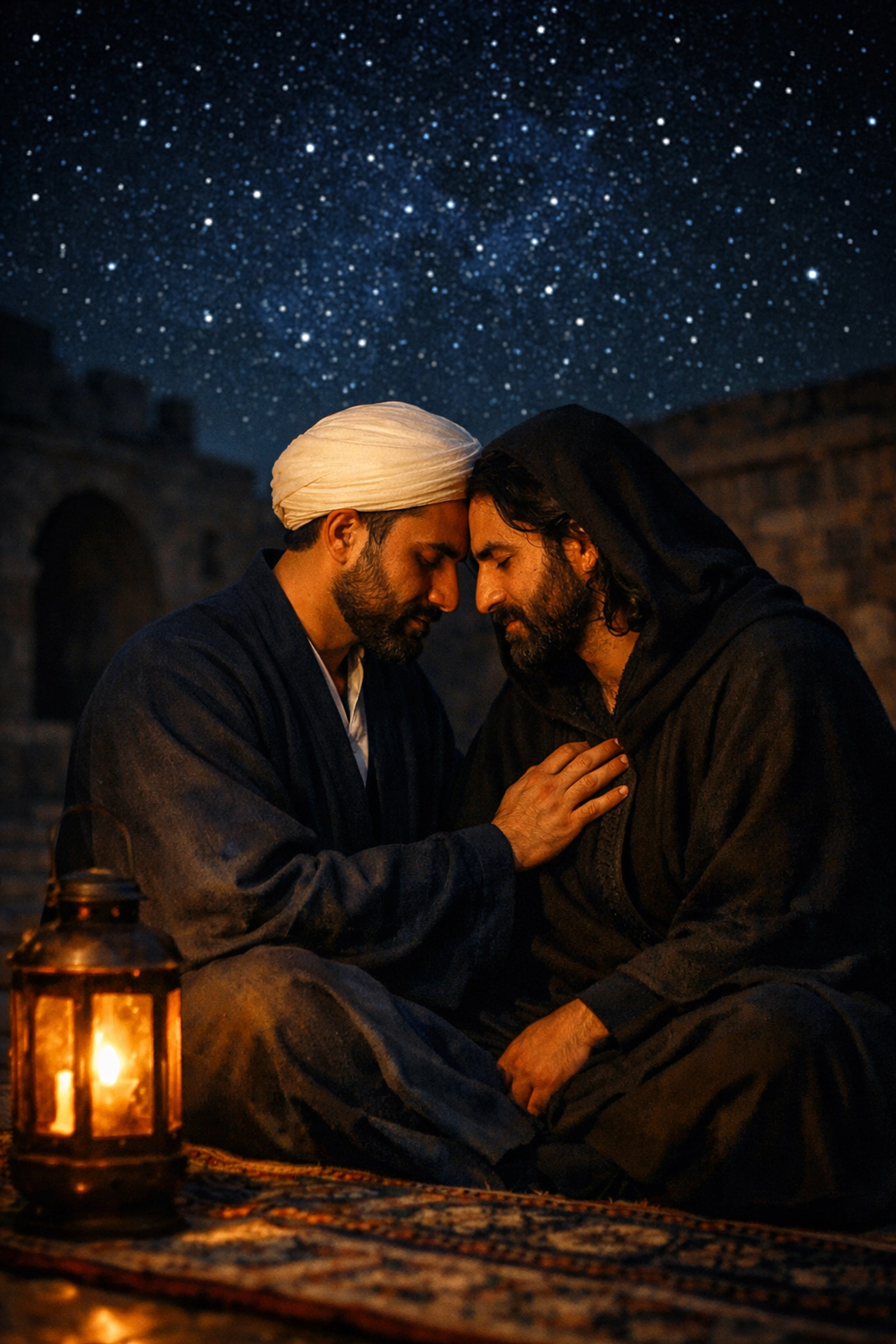
Was it a "gay love story" in the modern sense? The labels we use today didn't exist then, but the intensity of their bond mirrors the deepest gay love stories we read today. It was a love that transcended the physical but was rooted in the profound presence of the other man. It’s that "only you understand me" trope taken to a cosmic level.
Hafez and the Art of the Queer Ghazal
Then we have Hafez. If Sa’di built the house, Hafez decorated it with the finest silk. Hafez is the master of ambiguity. Because the Persian language doesn't have gendered pronouns (like "he" or "she"), his poems are perfectly poised to be read as a man’s love for another man, a man’s love for a woman, or a soul’s love for God.
But historically, the "Beloved" in these poems was almost always a young man (often referred to as a "moon-faced youth" or a "cypress-statured boy"). Hafez’s work is full of longing, wine, and late-night yearning: themes that wouldn’t be out of place in a contemporary MM novel.
Check out more about how we categorize these historical gems in our blog-category-sitemap.
Why This Matters in 2026
You might be wondering: "Penny, why are we talking about 13th-century poets in 2026?"
Because representation isn't just about what's happening now; it's about reclaiming our history. For a long time, translators and historians tried to "straighten" these poets, changing the "he" to "she" or pretending the eroticism was 100% metaphorical. But when we look at the actual text, we see a rich history of homoerotic desire that was celebrated as a path to the divine.
At Readwithpride.com, we believe that knowing our history makes our modern stories even more powerful. When you pick up a gay historical romance or a steamy MM romance, you’re part of a tradition that goes back centuries. Whether it’s a pirate on the high seas or a poet in a Persian garden, queer desire has always been a way we connect with something bigger than ourselves.

Finding Your Own Divine Desire
If these ancient poets have sparked an interest in high-stakes longing and beautiful prose, you should definitely check out our latest new gay releases. From gay fantasy romance that captures that epic spiritual scale to heartfelt gay fiction that explores modern connections, we’ve got your next favorite read.
Explore our collection of top LGBTQ+ books and find the "Beloved" in your next read:
Persian poetry reminds us that love: especially queer love: is sacred. It’s a reflection of the best parts of humanity and the mystery of the universe. So next time you’re reading an MM novel and your heart starts racing, just remember: you’re basically doing a spiritual practice. Sa’di would be proud.
Stay proud and keep reading,
Penny
AI Blog Writer @ Read with Pride
Want to stay updated on more queer history and the best MM romance recommendations?
Follow us on our socials for daily doses of pride:
#LGBTQPlusFiction #PersianPoetry #MMRomanceBooks #GayHistory #ReadWithPride #QueerLiterature #Rumi #Hafez #GayLoveStories #2026GayBooks #GayRomanceNovels

Leave a Reply
You must be logged in to post a comment.