

readwithpride.com
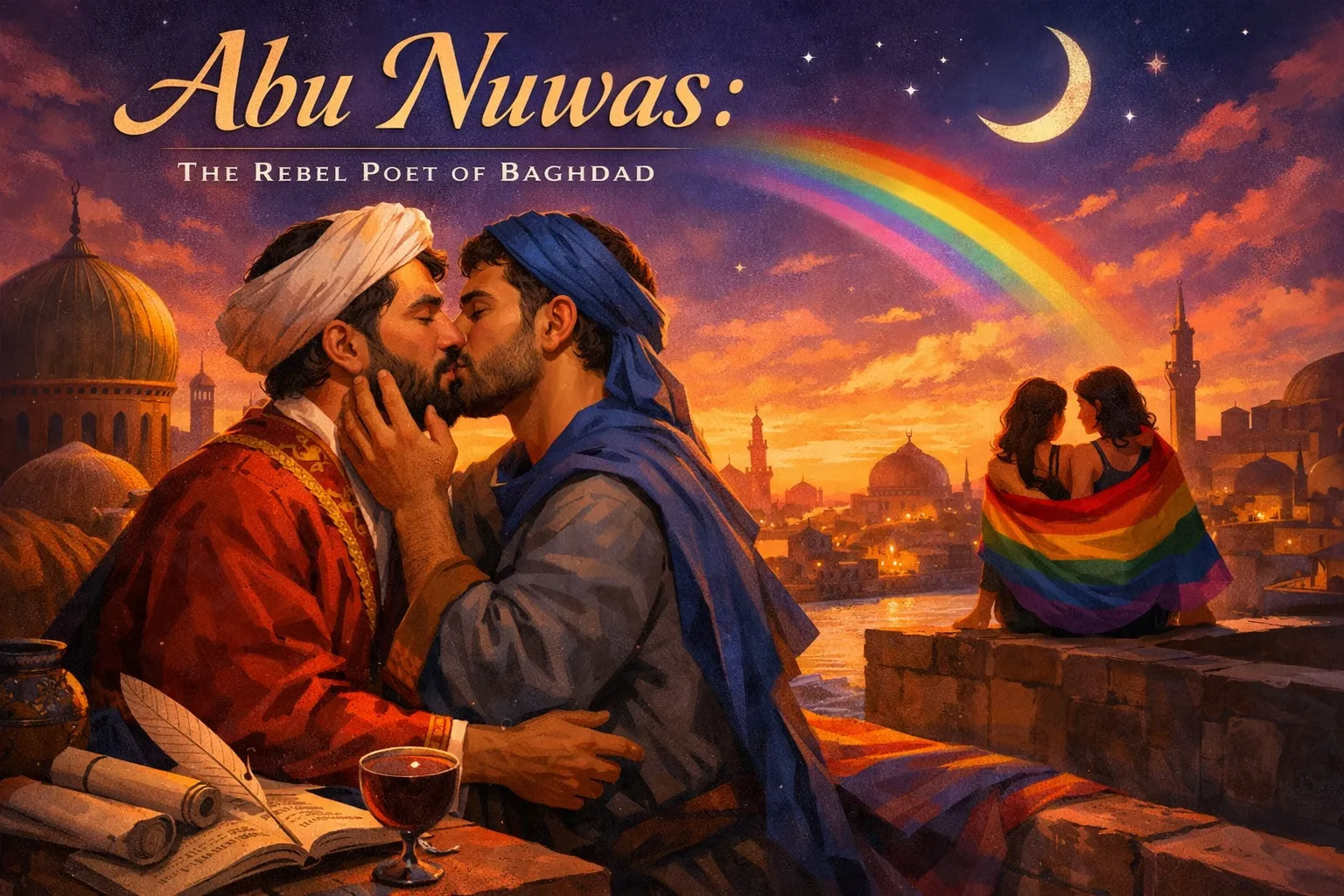
When we think about the history of queer literature, our minds often jump to Oscar Wilde’s trials in Victorian London or the hushed whispers of the Bloomsbury Group. But if we wind the clock back over a thousand years to the golden age of Baghdad, we find a figure so bold, so unapologetic, and so incredibly "out" that he makes modern rockstars look tame.
Enter Abu Nuwas.
He wasn’t just a poet; he was a cultural earthquake. Living in the heart of the Abbasid Caliphate during the late 8th and early 9th centuries, Abu Nuwas became the "Bad Boy" of Arabic literature. At Read with Pride, we’re obsessed with uncovering the roots of our stories, and honestly, if you’re a fan of gay historical romance or MM romance books, you owe a debt of gratitude to this wine-drinking, boy-chasing rebel.
The Man Who Said "No" to Camels
To understand why Abu Nuwas was such a disruptor, you have to understand the "vibe" of Arabic poetry before he arrived. Traditionally, poets were expected to write qasidas, long, formal odes that usually started with the poet standing in the desert, weeping over the ruins of an old campsite and talking about his camel.
Abu Nuwas had zero time for that.
Born around 756 AD to a Persian mother and an Arab father, he grew up in a world that was rapidly shifting from desert tribalism to urban sophistication. When he moved to Baghdad, then the most glittering, cosmopolitan city on Earth, he basically told the literary establishment: "Keep your camels; I’ve got a wine cellar and a date."
He famously mocked the traditionalists in his verses, essentially asking why anyone would want to cry over a pile of stones in the desert when they could be in a lush garden in Baghdad with a cold drink and a beautiful man. This wasn't just a style choice; it was a revolution. He was moving literature away from the past and into the messy, sensual, and very queer present.
The "Khamriyyat": Wine, Wit, and Wickedness
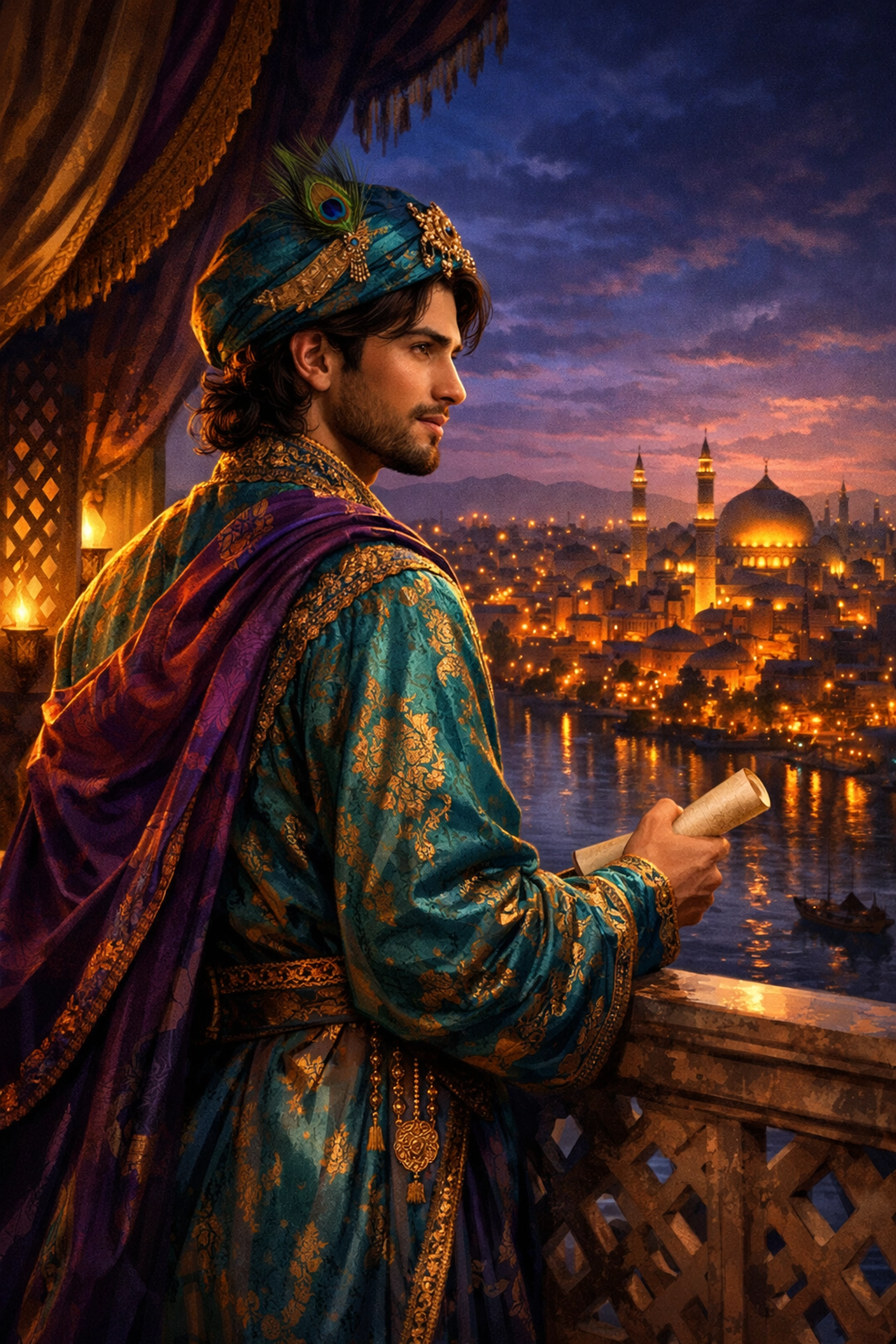
Abu Nuwas is perhaps most famous for his Khamriyyat, or wine poetry. In a society where Islamic law generally prohibited alcohol, Abu Nuwas didn’t just drink, he celebrated it. He described the color of the wine, the way it shimmered in the glass, and the atmosphere of the secret taverns where the elite and the outcasts mingled.
But for Abu Nuwas, the wine was rarely just about the buzz. It was about the setting. His poems are filled with scenes of late-night revelry where the boundaries of gender and social status blurred. He wrote about the "cup-bearers", often young, handsome men who served the wine, with a level of thirst that would fit right in on a modern gay romance Twitter thread.
He wasn't interested in metaphors or "spiritual" wine (though later Sufi poets would try to claim his work was all symbolic). No, Abu Nuwas was talking about the real deal. He wanted the hangover, the laughter, and the heat of a crowded room.
The Original Master of "MM Romance"
While his wine poems were scandalous, his Mudhakkarat: homoerotic poetry: was truly groundbreaking. Abu Nuwas didn’t hide his attraction to men behind vague pronouns or flowery riddles. He was direct, witty, and often incredibly graphic.
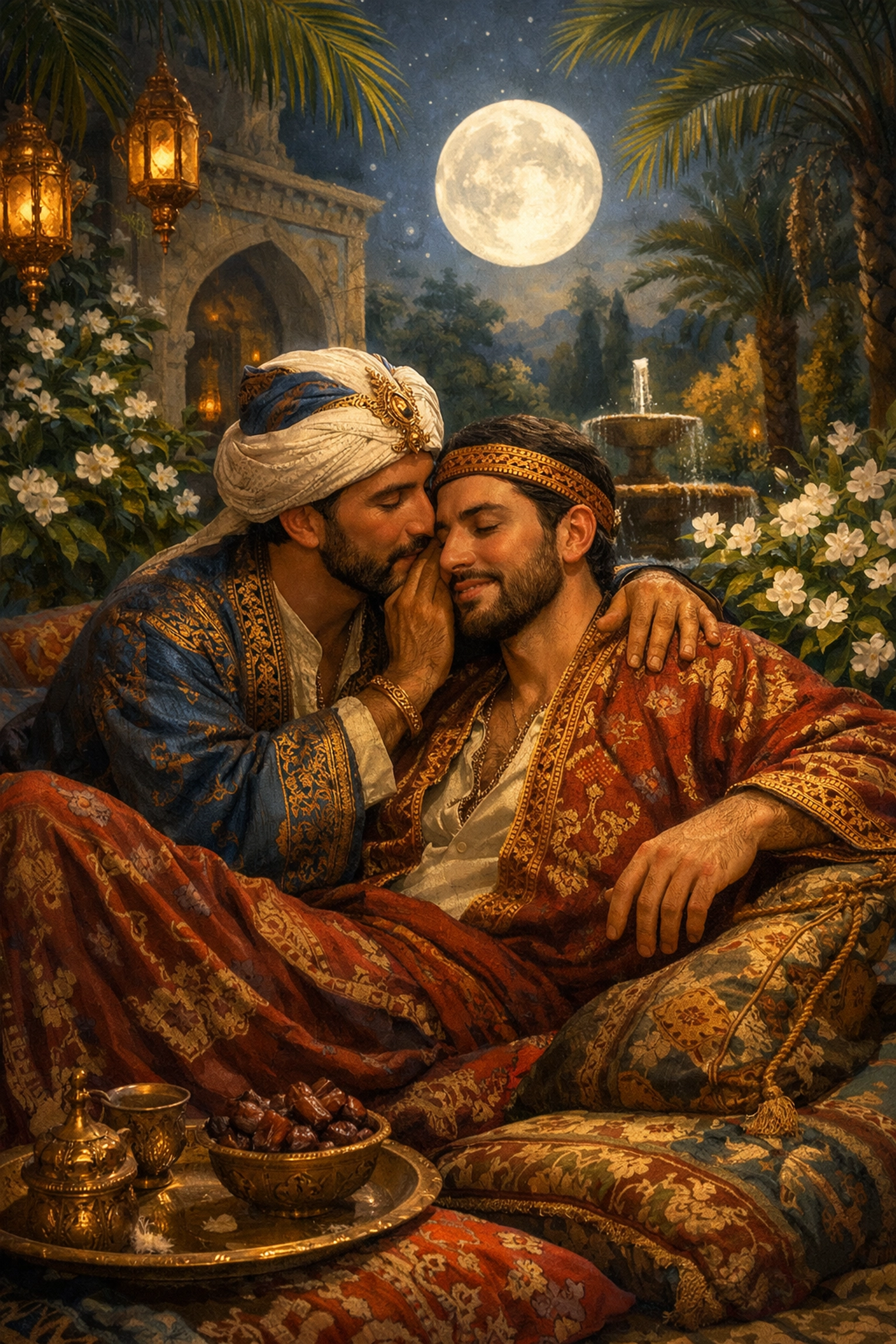
In the world of gay fiction, we often look for representation that feels authentic. Abu Nuwas provided that in spades over a millennium ago. He wrote about the "peach fuzz" on a young man’s cheek, the sparkle in a lover’s eye, and the intense physical desire he felt for the "boys of Baghdad."
He lived in a time when the Abbasid elite practiced a form of "don't ask, don't tell" that was leaning heavily toward "don't care." While official religious doctrine was strict, the reality in the courts of the Caliphs was much more fluid. Abu Nuwas took advantage of this fluidity to carve out a space for queer desire in the highest echelons of art.
If you browse our historical romance collection, you’ll see how authors today struggle to depict the balance between societal pressure and personal passion. Abu Nuwas didn’t struggle; he just wrote it all down and handed it to the Caliph.
Court Scandals and the Party Prince
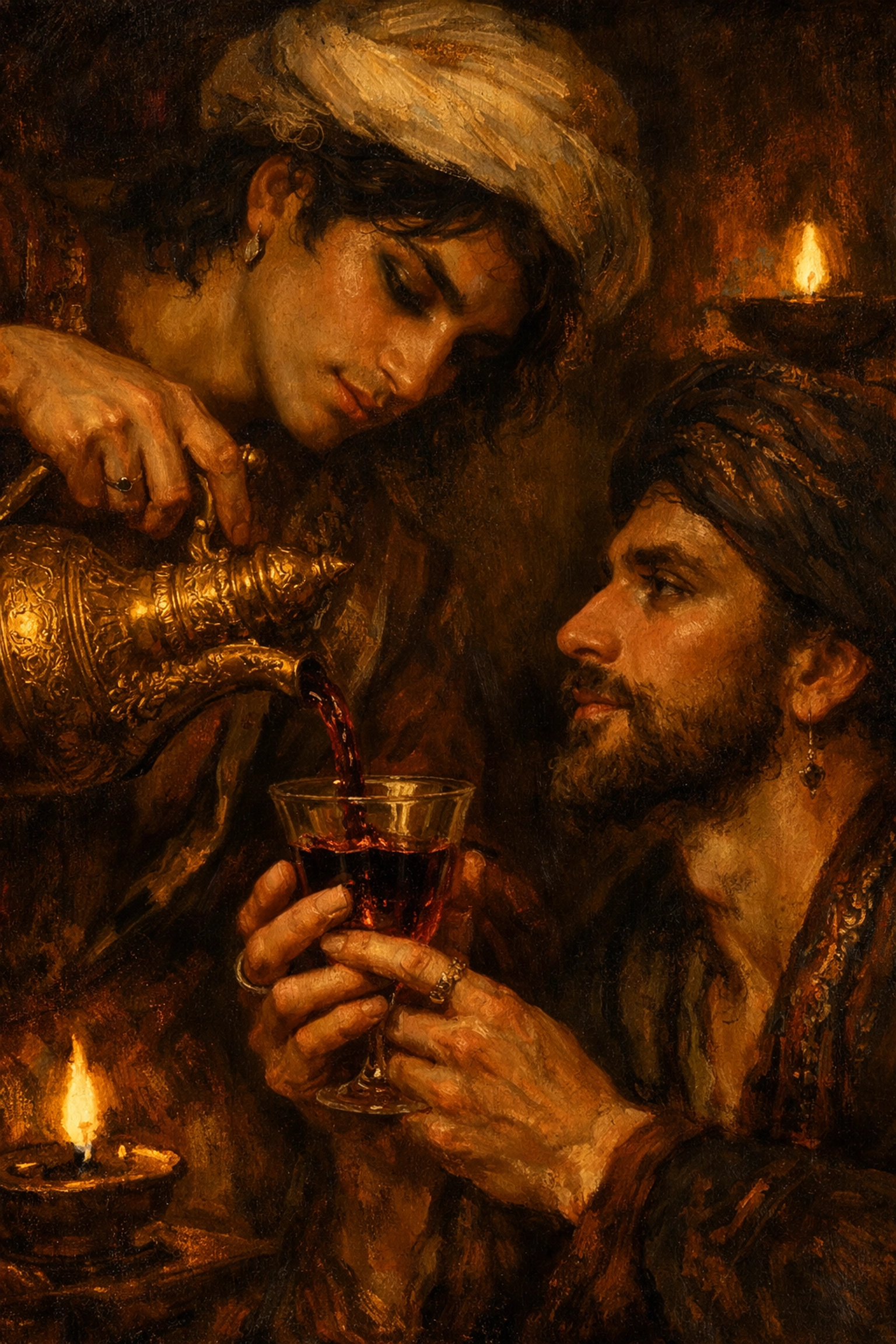
Abu Nuwas wasn't just some guy writing in a basement. He was a celebrity. He eventually became the court poet and "companion in revelry" for Caliph al-Amin.
Now, if Abu Nuwas was the bad boy, al-Amin was the chaotic prince. Al-Amin was known for his love of parties, his massive collection of eunuchs, and his general lack of interest in actually running an empire. Together, they were a disaster for the treasury but a dream for the arts.
The relationship between the Caliph and the poet is the stuff of a top-tier gay adventure romance. Imagine the scene: the most powerful man in the world and his favorite poet, drinking forbidden wine in a palace garden, surrounded by poets and musicians, while the orthodox guards outside tried to look the other way.
However, life wasn’t all rose petals and wine. Abu Nuwas was thrown in jail more than once when the authorities (or the Caliph’s more conservative father, Harun al-Rashid) decided he had gone too far. He was the master of the "backhanded apology": writing a poem that supposedly repented for his sins while actually just describing them in even more delicious detail.
Why Abu Nuwas Matters in 2026
You might be wondering: "Penny, why are we talking about an 8th-century poet on a site for LGBTQ+ ebooks?"
The answer is simple: because our history is longer and richer than we are often told. In a world where some claim that being queer is a "Western import" to the Middle East, Abu Nuwas stands as a towering, wine-soaked rebuttal. He is proof that queer joy, queer desire, and queer rebellion are woven into the very fabric of human history.
At Readwithpride.com, we believe that every time someone picks up a new gay release in 2026, they are continuing a conversation that Abu Nuwas started in the streets of Baghdad. Whether it's a steamy MM romance or a heartfelt gay fiction novel, the themes remain the same: the search for connection, the defiance of rigid norms, and the celebration of beauty in all its forms.
His work also reminds us of the power of the written word. Abu Nuwas's poetry survived because it was too good to suppress. Even when later editors tried to scrub his "naughtier" verses from the records, the fans kept them alive. People recognized their own desires in his lines, and they refused to let them go.
Exploring the Legacy
If you’re looking to dive deeper into the world of queer history and fiction, we’ve got you covered. From gay historical romance that explores different eras to contemporary MM novels that capture the modern queer experience, there’s a whole world of stories waiting for you.
Check out some of our curated lists:
- Top 10 Historical Gay Love Stories
- The Best Action-Adventure MM Romance
- Must-Read Queer Literature and Fiction
Abu Nuwas might have died over a thousand years ago (around 814 AD), but his spirit is very much alive. He teaches us that being yourself is the ultimate act of rebellion, and that there is no better way to spend a life than in the pursuit of art, love, and perhaps a very good glass of wine.
So, next time you settle in with one of your favorite popular gay books, raise a virtual glass to the Father of the Locks of Hair. He paved the way so we could read with pride today.

Join the Conversation
What's your favorite era for gay historical romance? Do you prefer the grit of the ancient world or the elegance of the 20th century? Let us know on social media!
Follow us for more queer history and book recs:
- Facebook: Read with Pride
- X (Twitter): @Read_With_Pride
- Instagram: @read.withpride
Don't forget to check out our latest releases: Readwithpride.com Store
#GayHistory #AbuNuwas #QueerLiterature #ReadWithPride #MMRomance #LGBTQBooks #BaghdadHistory #GayFiction2026 #HistoricalRomance #QueerIcons

Leave a Reply
You must be logged in to post a comment.