

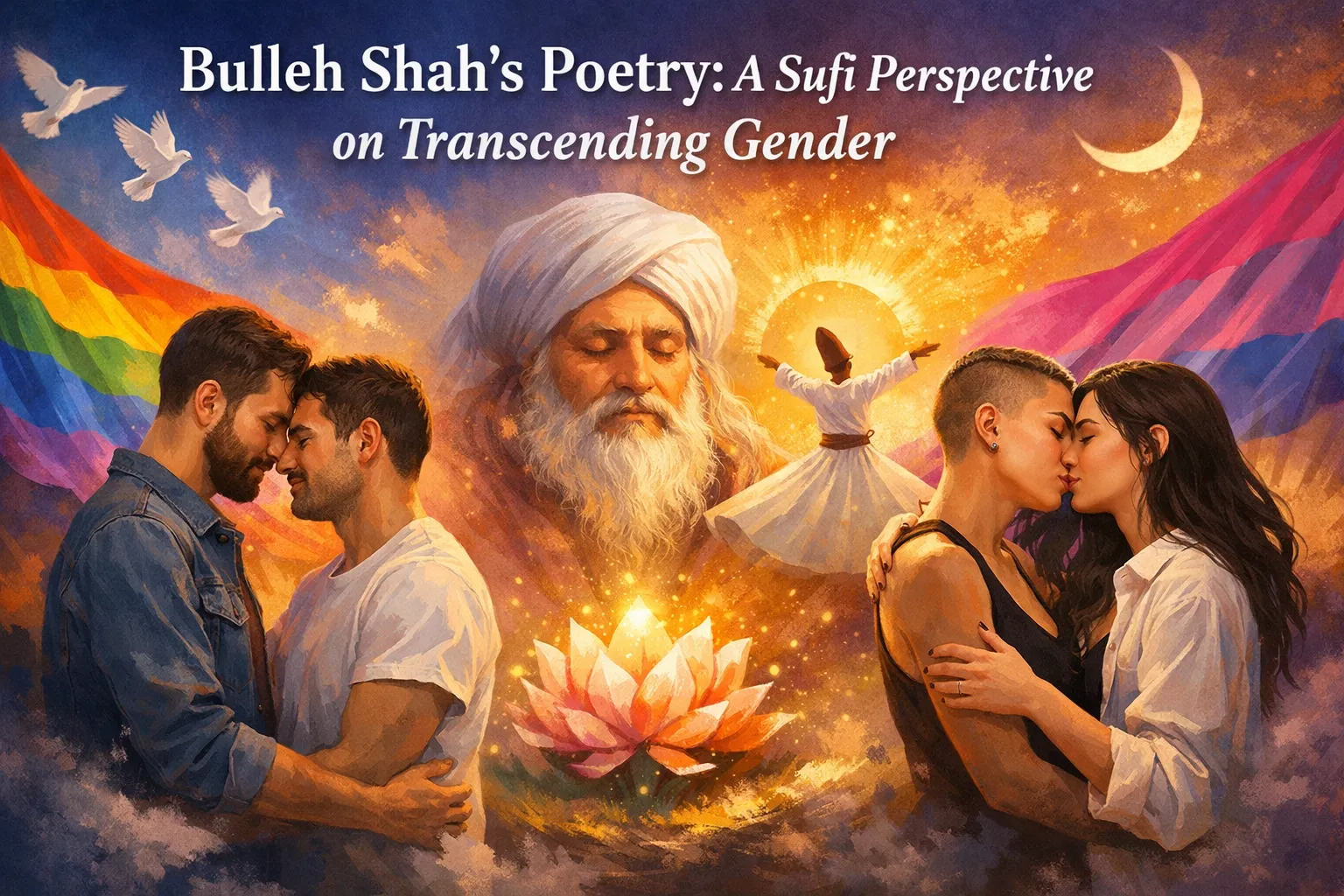
readwithpride.com
If you’ve ever felt like you didn’t quite fit into the neat little boxes society tries to shove you into, you’re in good company. Long before we had terms like "non-binary," "genderfluid," or "queer fiction," there was a man in the 18th century causing a massive stir in the Punjab region of what is now Pakistan. His name was Bulleh Shah, and he was the ultimate rebel of his time.
At Read with Pride, we’re all about stories that break boundaries, whether they are modern MM romance books or historical accounts of people who lived their truth against all odds. Today, we’re diving deep into the soul-stirring world of Sufi poetry to see how Bulleh Shah didn’t just challenge the religious elite; he challenged the very concept of "self" and gender.
The OG Rebel: Who Was Bulleh Shah?
Bulleh Shah (1680–1757) wasn’t interested in the status quo. Born into a high-caste family, he shocked everyone by choosing a spiritual guide, Shah Inayat Qadiri, who was a lowly vegetable farmer. This wasn’t just a career choice; it was a middle finger to the rigid class systems of the time.
In the world of gay historical romance, we often talk about the bravery it takes to love across social divides. Bulleh Shah lived that struggle. His poetry, written in the local Punjabi language rather than the elite Persian, was for the people. It was raw, unfiltered, and deeply subversive. He spent his life being called a heretic, but today, his words are the heartbeat of South Asian spirituality.
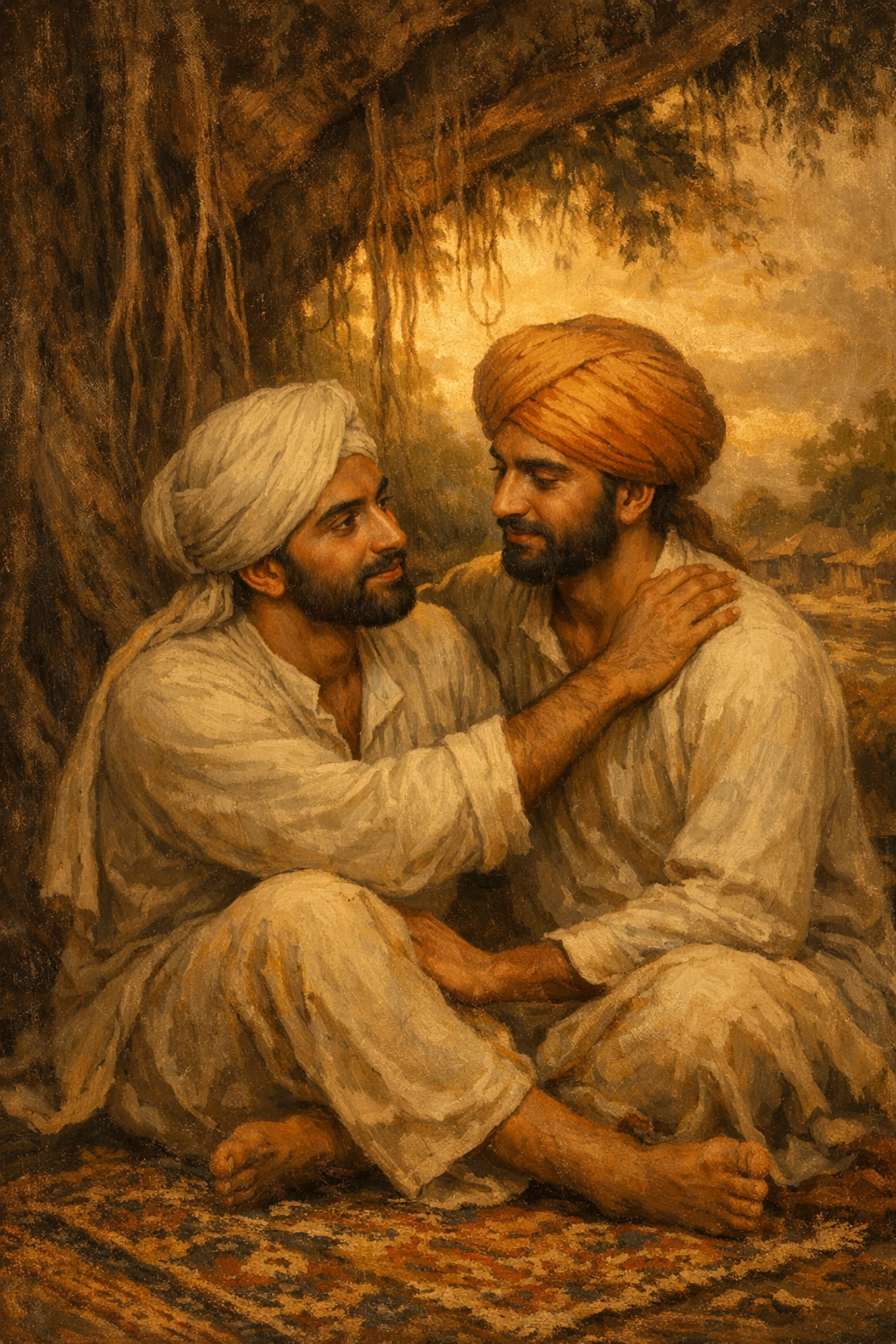
"Bulleya Ki Jaana Main Kaun": The Anthem of Identity
If there’s one poem that captures the essence of transcending identity, it’s Bulleya Ki Jaana Main Kaun (Bulleh, who knows who I am?). In this masterpiece, he systematically strips away every label society uses to define a person.
He writes:
"Not a believer inside the mosque, nor a pagan disciple of false rites… Not Moses, nor Pharaoh… Not in the holy Vedas, nor in books of wine and riot."
For the LGBTQ+ community in 2026, these lines hit differently. When we talk about queer fiction and the search for identity, we often find ourselves stuck between how the world sees us and who we actually are. Bulleh Shah took it a step further. He wasn’t just saying "I’m not this religion" or "I’m not that social class." He was saying that the "I" doesn't exist in the way we think it does.
In the context of gender, Bulleh Shah’s philosophy suggests that the soul has no gender. If the ultimate goal is union with the Divine (the Beloved), then the physical vessel, the male or female body, is just a temporary costume. This is a vibe we see a lot in gay fantasy romance, where characters often shift shapes or transcend physical limitations to find their true soulmate.
The Beloved and the Feminine Voice
One of the most fascinating aspects of Sufi poetry, and Bulleh Shah’s work in particular, is the use of the feminine voice. In the tradition of Kafi poetry, the seeker (the poet) often takes on the persona of a longing bride or a woman pining for her lover (God/the Guru).
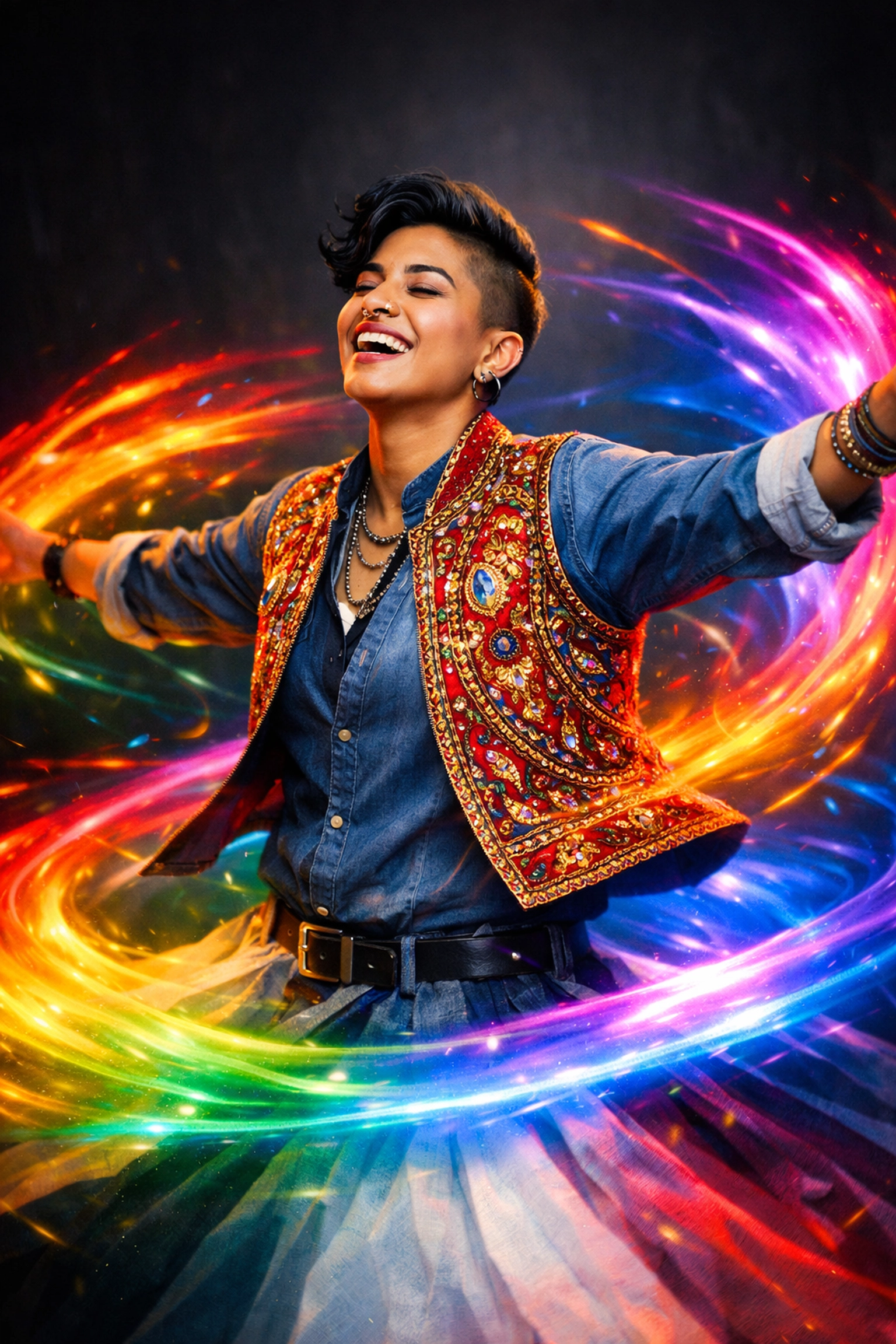
Bulleh Shah didn't just write these words; he lived them. There is a famous story about a time when Bulleh Shah upset his teacher, Shah Inayat. To win back his master’s favor, Bulleh Shah didn't offer a traditional apology. Instead, he dressed in women’s clothes, put on ghungroos (dancing bells), and danced in the streets like a "kanjari" (a derogatory term for a female dancer).
He abandoned his dignity, his male privilege, and his social standing to show his devotion. For Bulleh Shah, love meant being "ruined" in the eyes of the world. This level of devotion is something we often explore in emotional MM books, that moment where you stop caring about what the neighbors think and just follow your heart.
Transcending the Binary in 2026
Why are we talking about an 18th-century poet on a site dedicated to LGBTQ+ ebooks and gay love stories? Because Bulleh Shah’s work provides a spiritual framework for what many of us feel today.
In a world that is still often hostile to LGBTQ+ individuals, especially in parts of the Middle East and South Asia, Bulleh Shah offers a "digital sanctuary" of the mind. He reminds us that the "truth" (Haqiqat) isn't found in the laws of men or the strictures of the "Shariat" (Path). It’s found in the "Marfat" (Union), where all distinctions disappear.
When you read gay novels or MM contemporary stories at Readwithpride.com, you’re participating in a long tradition of human beings trying to find connection beyond the rules. Bulleh Shah would have been the first person to tell you that love is the only law that matters.
Bulleh Shah and the "Enemies to Lovers" Trope?
Okay, hear me out. If we look at Bulleh Shah’s relationship with the religious orthodoxy of his time, it’s the ultimate "enemies to lovers" setup: except the "lover" is the Divine Truth and the "enemy" is the ego-driven religious establishment.
He mocked the priests who spent all day reading books but had no love in their hearts. He wrote:
"You have read thousands of books, but have you ever tried to read yourself?"
This focus on self-awareness is central to the best MM romance of 2026. The most compelling characters are the ones who have to unlearn everything society taught them to finally accept who they love. Whether it’s a gay psychological thriller or a heartfelt gay fiction piece, the journey is always about stripping away the lies to find the core truth.
Why Representation Matters in Literature
At Read with Pride, we believe that representation isn't just about seeing people like us in modern settings; it's about reclaiming our history. Bulleh Shah’s legacy is a reminder that queer-coded themes and the subversion of gender norms aren't "Western imports." They have been part of the fabric of the East for centuries.
If you’re looking for stories that challenge the norm, check out our blog-category-sitemap1.xml for more deep dives into queer history and literature. Or, if you want to support authors who are writing the next generation of inclusive stories, visit our store.
The Power of the Unconventional
Bulleh Shah’s poetry celebrates unconventional love. He didn't care for the "halal" or "haram" of the heart. He saw the Divine in everyone: regardless of their gender or background. This radical inclusivity is what we strive for in the LGBTQ+ romance genre today.
We want stories that make us feel seen. We want gay romance books that don't just stop at a "happily ever after" but actually explore what it means to live authentically in a world that wants you to be someone else.

Final Thoughts: Finding Bulleh in Your Bookshelf
The next time you pick up one of the new gay releases of 2026 or browse through popular gay books, think about Bulleh Shah. Think about the man who danced in the streets to prove that love is bigger than gender.
His verses are a bridge between the past and the future. They tell us that it’s okay to not know "who I am" in the eyes of society, as long as you know who you are in the eyes of Love.
Stay authentic, stay curious, and keep reading with pride.
Want to dive deeper into the world of inclusive publishing?
Check out these resources:
- Publishing with Pride: Our Platform
- The Royalties Revolution: Keep Your Profits
- Amazon for Discovery, Readwithpride for the Soul
Follow us for more queer lit and history:
#BullehShah #QueerHistory #SufiPoetry #ReadWithPride #LGBTQBooks #MMRomance #GenderTranscendance #SouthAsianQueer #GayLiterature #LoveIsLove #2026Books #MMRomanceBooks #GayRomanceNovels #QueerFiction

Leave a Reply
You must be logged in to post a comment.