

readwithpride.com
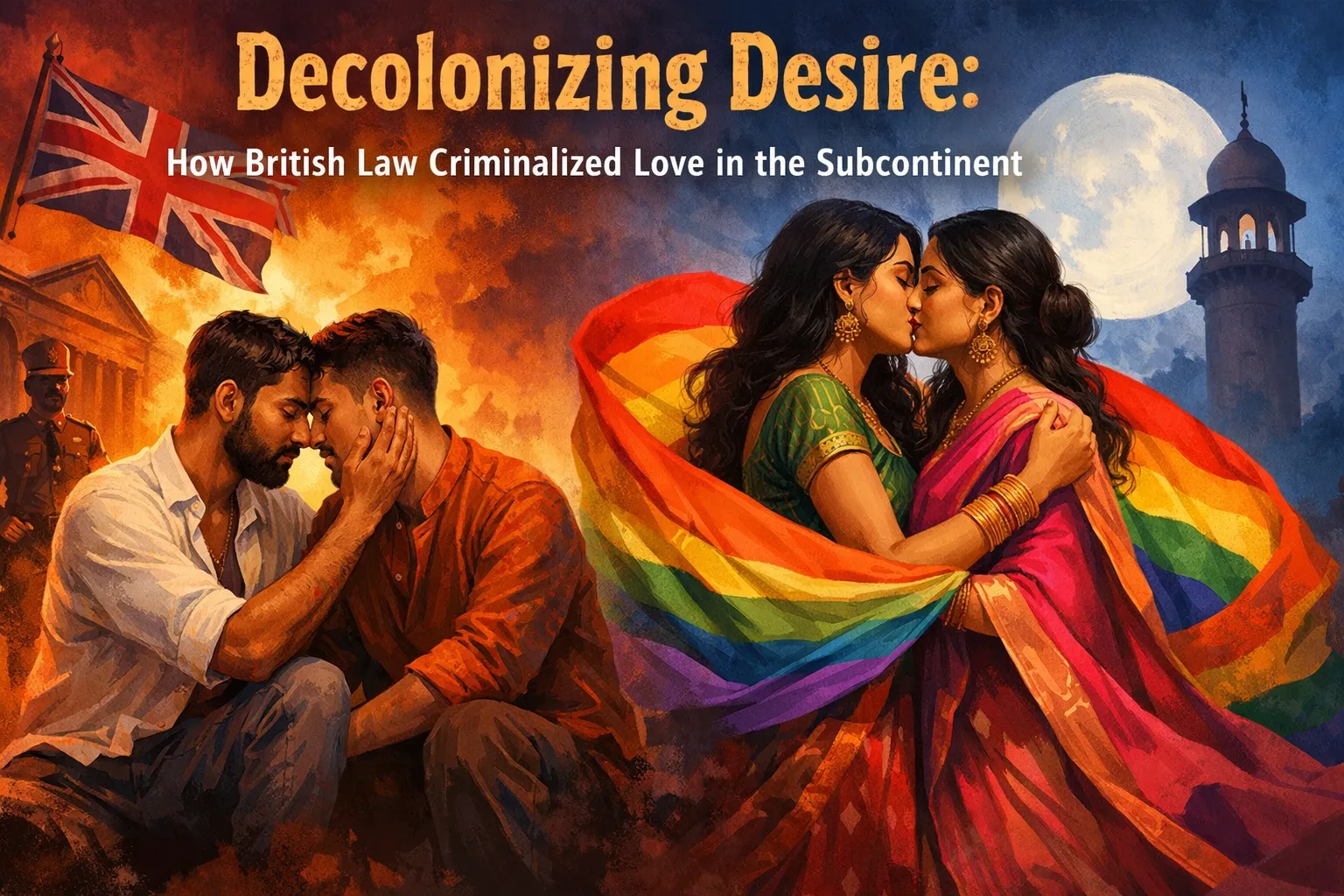
If you’ve ever dived into the world of gay historical romance, you know that the past is often painted as a buttoned-up, "don’t ask, don’t tell" kind of place. But if we look at the history of the Indian Subcontinent: encompassing modern-day Pakistan, India, and Bangladesh: the story is a lot more colorful, and a lot more complicated, than the history books usually let on.
For centuries, the region was a tapestry of fluid identities and diverse expressions of love. Then, the British arrived with their stiff upper lips and even stiffer legal codes. Today at Read with Pride, we’re pulling back the curtain on how colonial rule didn’t just occupy land; it tried to occupy the heart, too.
The Pre-Colonial "Vibe Check": Fluidity as the Norm
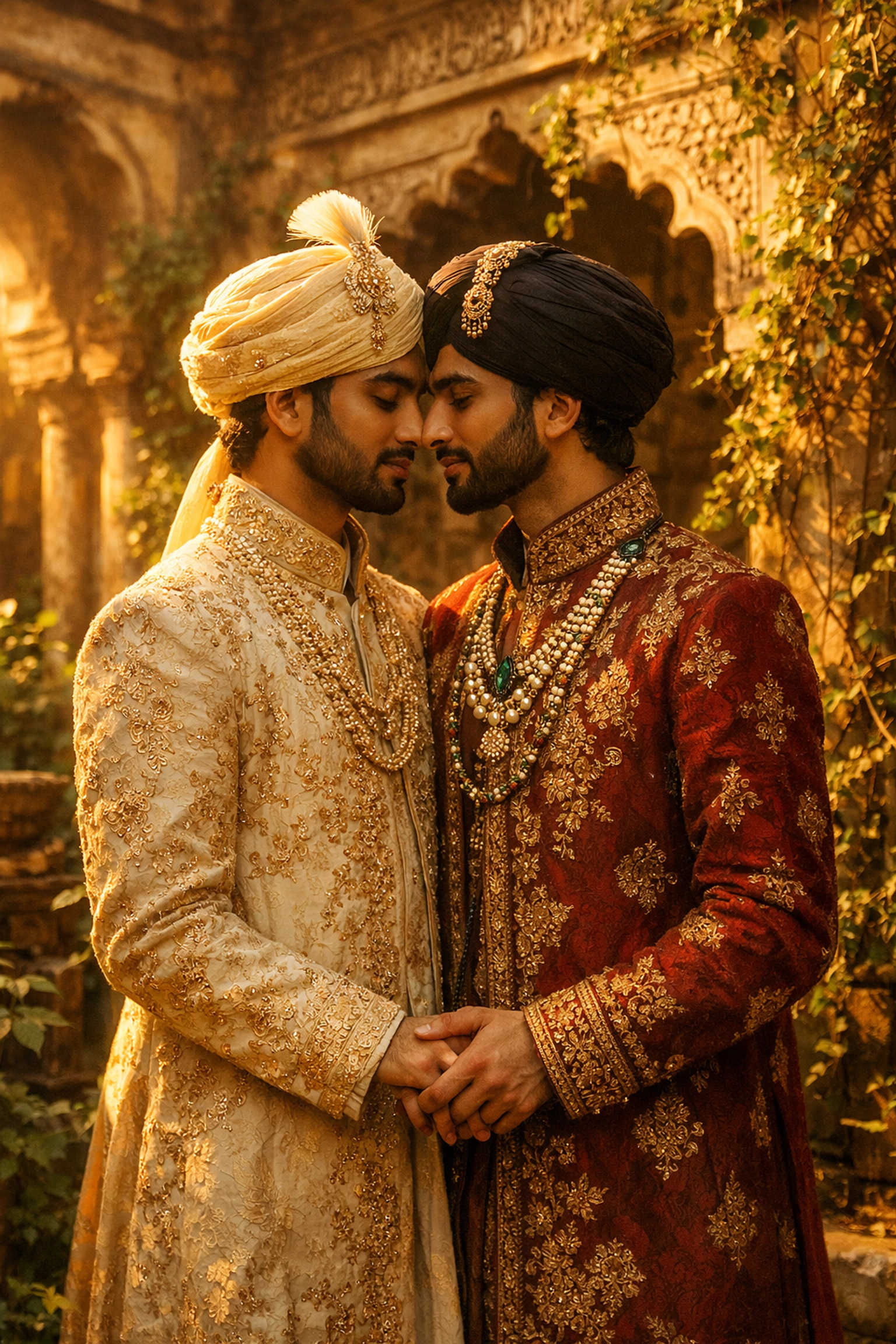
Before we talk about the laws that broke things, we have to talk about what things looked like before. In the Mughal courts and the bustling streets of Lahore and Delhi, sexuality wasn't the rigid, "check-one-box" system we see today.
Sufi poetry was: and is: famous for its blurred lines between divine love and earthly desire. Poets often wrote about the "beloved" in ways that were intentionally ambiguous, celebrating the beauty of young men with a level of frankness that would make a Victorian grandmother faint. The hijra community (transgender and non-binary individuals) held specific social and spiritual roles, often serving as guardians of the zanana (women’s quarters) or advisors to royalty.
In short, while it wasn't a modern LGBTQ+ utopia, there was a level of social integration and indigenous understanding of "different" desires that didn't require a prison sentence.
Enter the British: Henry VIII’s Long Shadow
The shift didn't happen by accident. It was imported. To understand why love was criminalized in Pakistan and the rest of the subcontinent, we have to go back to 1533 and a guy named King Henry VIII.
Long before he was busy ghosting his wives, Henry VIII enacted the Buggery Act of 1533. This law made sexual relations between two men a crime punishable by death, describing it as "detestable and abominable." For the British, this wasn't just about law; it was about "Christian morality."
Fast forward to the 1800s. The British Empire was expanding, and they wanted a standardized legal system to keep their "subjects" in line. They didn't just want your spices and your silk; they wanted to "civilize" your bedroom.
Section 377: The Legal Virus
In 1860, the British introduced the Indian Penal Code (IPC), drafted largely by Thomas Babington Macaulay. Deep within its pages sat the infamous Section 377.
The law stated: "Whoever voluntarily has carnal intercourse against the order of nature with any man, woman or animal, shall be punished with imprisonment for life…"
Notice the phrase "against the order of nature." This wasn't a local concept. This was a purely Western, Victorian imposition. The British administrators were terrified that their soldiers and administrators, far from home and the watchful eyes of their wives, would "succumb" to local customs and engage in "unnatural" acts.
By labeling these acts as "unnatural," Section 377 did three very damaging things:
- It conflated consent with crime: It didn't matter if two men loved each other and were consenting adults. The law treated their love as equivalent to violence.
- It criminalized identities: While the law technically targeted "acts," it was used to target people. It allowed the police to harass anyone who didn't fit the Victorian mold of masculinity or femininity.
- It erased history: By making queer life illegal, it forced centuries of indigenous culture into the shadows.
The Erasure of the Hijra Community
One of the most heart-breaking aspects of this colonial "moral cleanup" was the targeting of the hijra community. Under the Criminal Tribes Act of 1871, the British essentially labeled entire communities: including transgender people: as "hereditary criminals."
They were placed under constant surveillance, denied the right to own property, and treated as a "stain" on the empire’s reputation. This colonial trauma is something the community in Pakistan and India is still fighting to heal from today. If you're looking for queer fiction that explores these themes of resilience, our blog-category-sitemap has plenty of recommendations.

Pakistan: The Modern Struggle for Reclamation
When the partition happened in 1947, Pakistan (and India) inherited the British legal system. This means that Section 377 stayed on the books. In Pakistan, the law remains a tool of the state, though its application fluctuates.
However, the story isn't just one of oppression. It's one of incredible bravery.
- 2018 Transgender Rights: Pakistan passed the Transgender Persons (Protection of Rights) Act, one of the most progressive pieces of legislation for trans rights in the world at the time. It allowed people to self-identify their gender on official documents.
- The Backlash: Since 2022, there has been a significant conservative pushback against this act, highlighting the ongoing tug-of-war between indigenous progress and colonial-era "moral" hang-ups.
For many queer Pakistanis today, life is a delicate dance between "digital sanctuaries" (dating apps and private social groups) and a public life that requires a certain level of performance. But the art, the music, and the gay love stories coming out of the underground scene are as vibrant as ever.
Why We Need Gay Historical Romance
You might wonder, "Penny, why are we talking about 160-year-old laws on a site about MM romance books?"
Because stories are how we decolonize our minds.
When we read gay historical romance set in the subcontinent, or MM historical romance that dares to portray queer joy in the face of colonial oppression, we are reclaiming a narrative that was stolen from us. We are saying that our presence in these lands isn't a "Western import": the homophobia was the import. Our love has always been here.
If you’re looking to support authors who are telling these stories, check out our ebook_author-sitemap to discover new voices bringing these hidden histories to light.

Finding Joy in the Shadows
In 2026, the landscape of LGBTQ+ rights in the Middle East and South Asia is a mix of shadow and light. While legal hurdles remain, the "Generation Z" and "Generation Alpha" of the region are more connected than ever. They are using literature, art, and the internet to build bridges that Section 377 tried to burn.
At Read with Pride, we believe that every gay novel and queer love story is a brick in the wall of progress. Whether it’s a steamy MM romance or a heartfelt gay fiction piece about finding home, these stories remind us that the "order of nature" is actually much wider and more beautiful than the British ever imagined.
Join the Movement
We’re more than just a Publisher; we’re a community. If you want to stay updated on the latest 2026 gay books, or if you're looking for that perfect slow burn MM romance to get lost in, we’ve got you covered.
- Explore our Product Categories for your next favorite read.
- Check out the latest releases at Read with Pride Store.
- Follow our journey on Instagram and X (Twitter).
- Join the conversation on Facebook.
The British tried to write us out of history, but the ink they used wasn't permanent. Our stories are still being written.
Keep reading. Keep loving. Read with pride.
#LGBTQHistory #Section377 #DecolonizeDesire #MMRomance #GayHistoricalRomance #ReadWithPride #QueerSouthAsia #PakistanPride #GayFiction #MMBooks2026

Leave a Reply
You must be logged in to post a comment.