

readwithpride.com
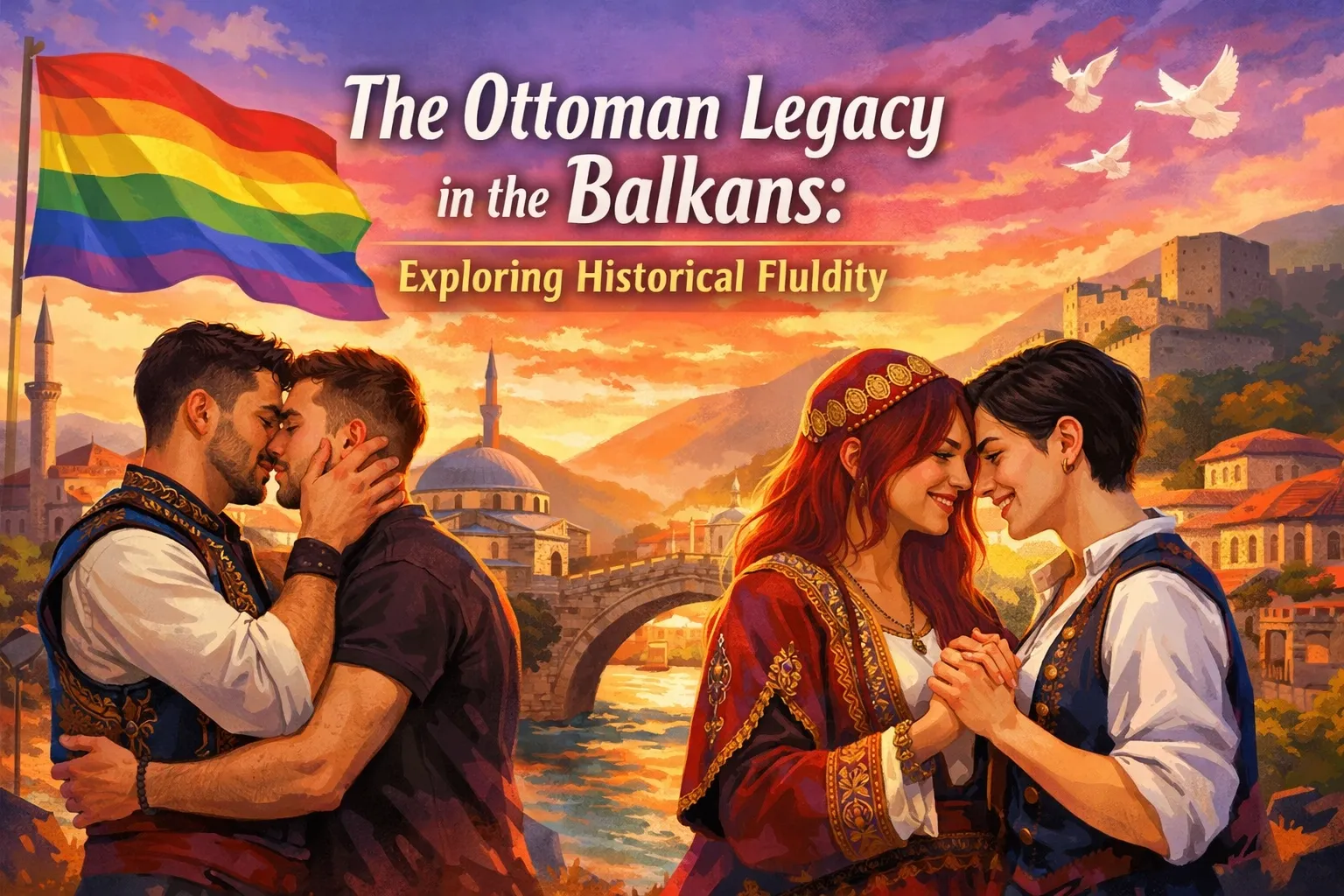
When we talk about queer history, our minds usually drift toward the Stonewall Inn or the hidden salons of 1920s Paris. But if you’re looking for a history that is as complex, dramatic, and deeply fluid as your favorite MM historical romance, you need to look East. Specifically, toward the Balkans and the long, lingering shadow of the Ottoman Empire.
For nearly 500 years, the Ottoman Empire held sway over a massive chunk of Southeast Europe. From the mountains of Montenegro to the sun-drenched coasts of Greece and the bustling streets of Sarajevo, the Ottomans didn't just bring architecture and coffee; they brought a social structure that viewed male intimacy through a lens that might surprise modern readers.
At Read with Pride, we’re all about uncovering the stories that history books tried to erase. So, let’s spill the tea on the Ottoman legacy and how it shaped the "fluidity" of the Balkans.
Beyond the Binary: The Ottoman Social Fabric
To understand gay life in the historical Balkans, we have to throw out our modern Western boxes. Back then, it wasn't necessarily about "being gay" as a fixed identity; it was about roles, power, and: let’s be honest: a lot of poetic pining.
While Western Europe was busy under the thumb of strict religious dogmas that would eventually lead to the Victorian era's peak repression, the Ottoman Empire was operating on a different wavelength. In 1858, the Ottoman Empire actually decriminalized "sodomy" as part of the Tanzimat reforms. To put that in perspective: that was over a century before many Western countries even thought about it.
The Hamam and the Köçek: Spaces of Desire
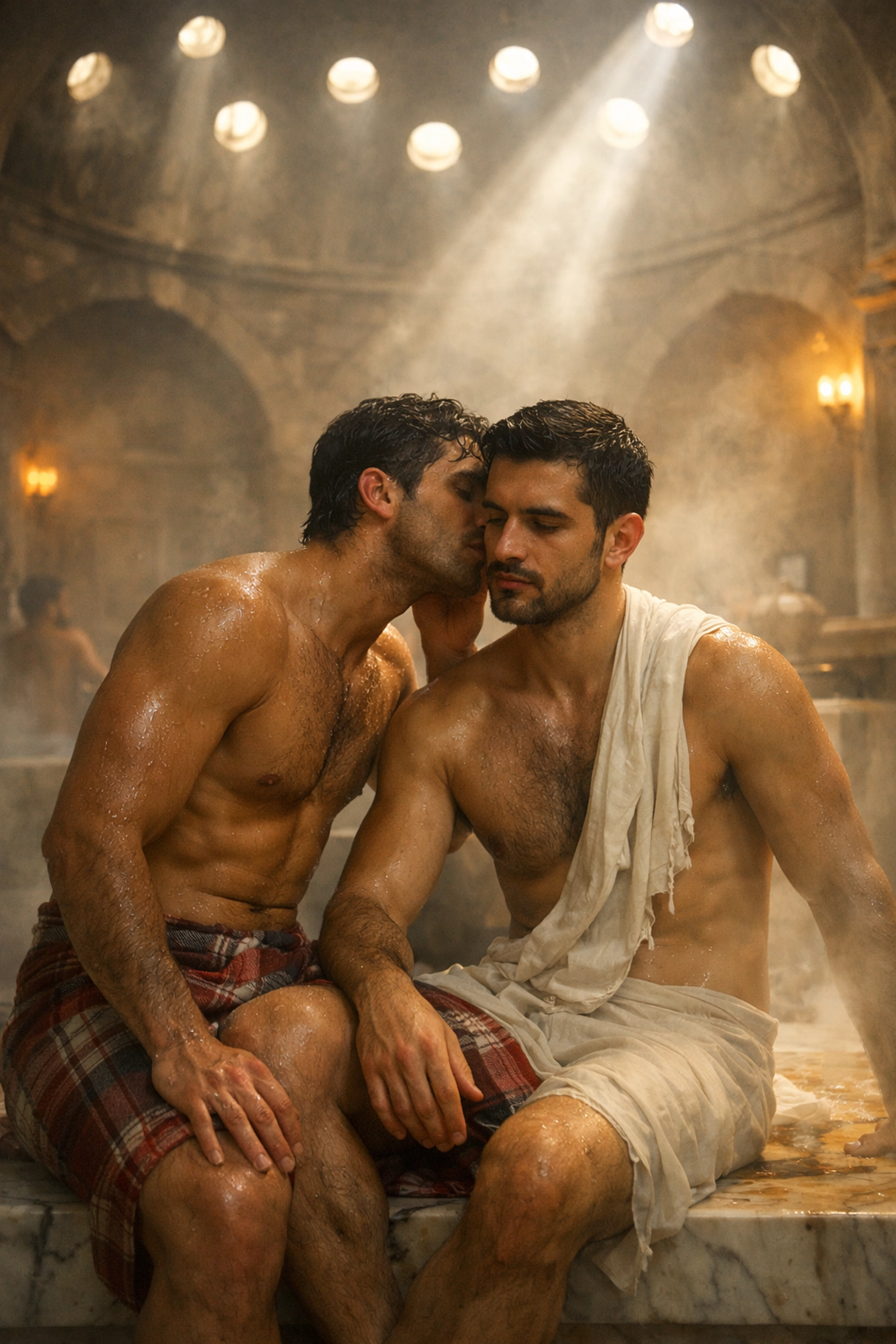
If you’ve ever read a steamy MM romance, you know that setting is everything. In the Ottoman Balkans, the hamam (the public bathhouse) was the ultimate "third space." It wasn't just for scrubbing down; it was a social hub where the lines of class and, often, the strict separation of the sexes blurred.
Then there were the köçek. These were young male dancers, often recruited from non-Muslim populations (including many from the Balkan regions), who performed with a feminine grace that captivated audiences. They were the pop stars of their day, celebrated in poetry and art. While the köçek tradition eventually faded as the Empire tried to "Westernize" and look more "respectable" to European eyes, they remain a symbol of a time when gender and attraction weren't quite so black and white.
The Great Shift: Nationalism and the "Closet"
So, what happened? If things were so fluid, why is the modern Balkan landscape often seen as a challenging place for the LGBTQ+ community?
As the Ottoman Empire began to crumble in the late 19th and early 20th centuries, a new wave of nationalism took over. Groups like the Balkan League (Serbia, Bulgaria, Greece, and Montenegro) fought for independence, and with that independence came a desire to define themselves against their former rulers.
Unfortunately, "modernity" at the time was defined by Western European standards: which were deeply homophobic. The fluidity of the Ottoman era was rebranded as "Oriental decadence" or "foreign corruption." To be a strong, independent nation, the logic went, you had to adhere to the strict, patriarchal family values of the West. This shift effectively pushed queer life into the shadows, creating the "closet" as we know it today.
Connecting the Dots: Poland, the Baltics, and Ukraine
While the Ottoman influence was strongest in the south, the broader region of Eastern Europe shares a similar struggle between indigenous traditions and imposed "moral" standards.
In Poland and the Baltic states, queer history is often a story of resistance against both religious conservatism and the later shadow of Soviet occupation. Much like the Balkans, these regions had their own periods of relative openness that were later suppressed by political shifts. In Ukraine, the fight for LGBTQ+ rights today is inextricably linked to the fight for a European, democratic future: showing that queer liberation and national identity don't have to be enemies.
Why We Need More Balkan MM Historical Romance
As fans of gay books and MM romance books, we know that fiction is often the best way to reclaim history. There is a massive, untapped goldmine of stories in the Ottoman Balkans. Imagine:
- An enemies-to-lovers MM romance between a local Balkan rebel and an Ottoman official.
- A slow burn set in the hidden corners of a 17th-century Sarajevo marketplace.
- A forbidden love story involving a köçek dancer navigating the dangers of the royal court.
These aren't just fantasies; they are grounded in the real, fluid history of a region that has seen it all. We need more LGBTQ+ fiction that explores these nuances, moving away from the "Western-only" narrative of gay history.
The Best Way to Explore the History? Read!
The journey to understanding gay life in the Balkans and Eastern Europe is ongoing. At Read with Pride, we are constantly looking for queer authors and MM authors who are willing to dive into these complex histories. Whether you're looking for gay historical romance that takes you to new lands or steamy MM romance that challenges your perspective, we've got you covered.
Check out some of our curated lists to find your next obsession:
- Explore our Historical Romance category for stories that bridge the gap between the past and present.
- Browse our full collection of LGBTQ+ ebooks to find the latest releases for 2026.
- Support independent creators like Dick Ferguson who are bringing diverse voices to the forefront of gay literature.
Final Thoughts: The Legacy Lives On
The Ottoman legacy in the Balkans reminds us that history isn't a straight line toward "progress." Sometimes, the past was more open-minded than the present. By exploring the historical fluidity of male intimacy in the Balkans, we can better understand the roots of today's struggles and celebrate the enduring spirit of the LGBTQ+ community in the region.
The Balkans, Poland, the Baltics, and Ukraine all have stories worth telling. Stories of love, bravery, and the refusal to be erased. Let’s keep reading, keep writing, and keep making history.
Don't forget to follow us on social media to stay updated on the latest 2026 gay books and new gay releases:
#ReadWithPride #MMRomance #GayHistory #BalkanQueer #LGBTQBooks #HistoricalRomance #GayFiction #QueerLiterature #2026Books
For more recommendations, check out our sitemaps or head over to the Read with Pride homepage to start your next adventure!

Leave a Reply
You must be logged in to post a comment.