

readwithpride.com
What a “molly house” actually was (and why it mattered)
If you’ve ever wished you could time-travel back to a queer bar with good gossip, questionable dancing, and a strong “found family” vibe, congrats, your brain just reinvented the molly house.
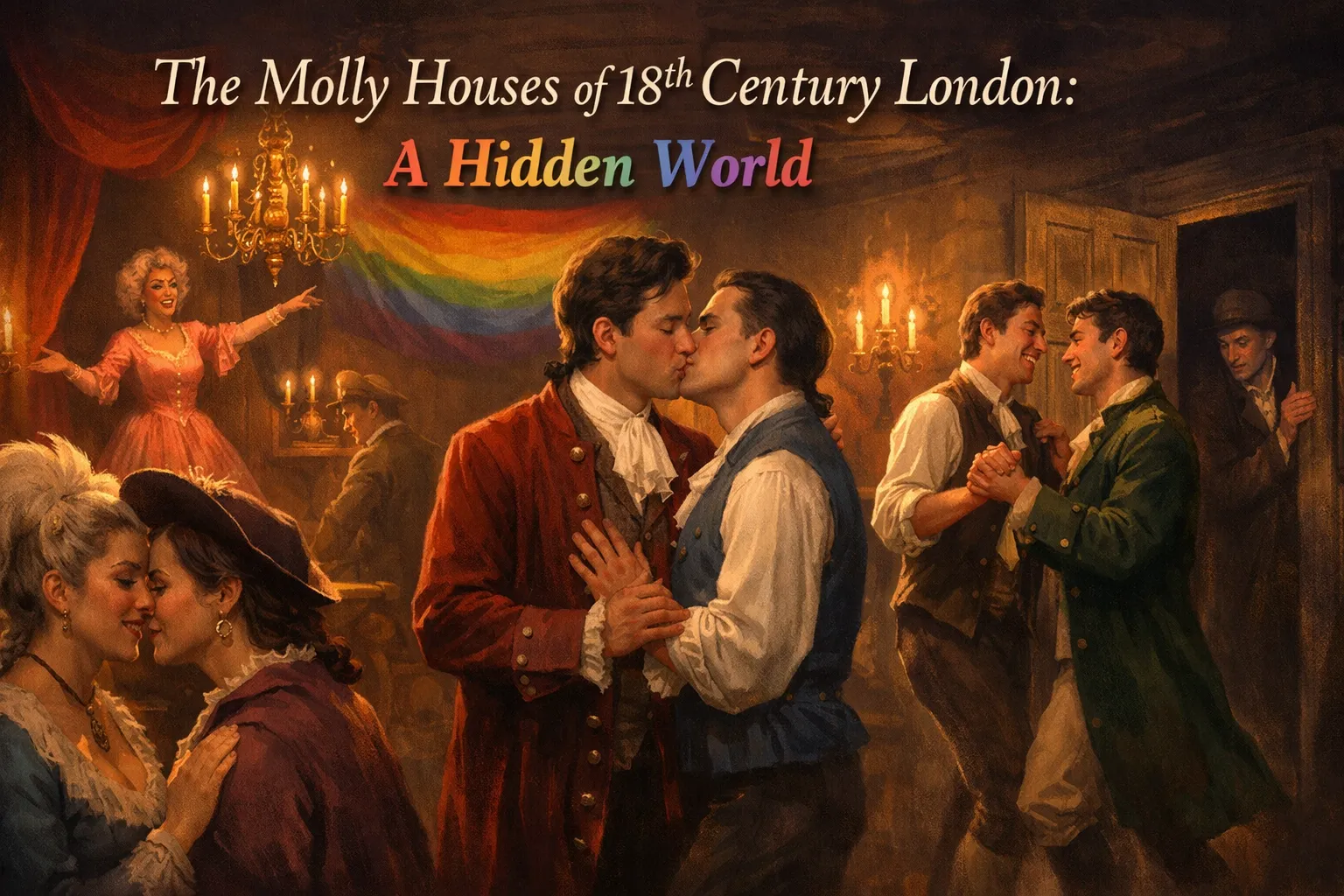
In 18th-century London, molly houses were private rooms in coffeehouses, taverns, and alehouses where men could meet other men to drink, flirt, dance, socialize, and sometimes hook up. That last part wasn’t just scandalous. It was illegal, and prosecution could be brutal, up to and including the death penalty under the laws and norms of the time.
That’s what makes molly houses so important: they weren’t just places to have sex in secret. They were early, messy, resilient versions of what we’d now call gay spaces, places where identity, community, and connection could exist even when the outside world was hostile. If you write or read gay romance novels or MM romance books, this is the historical DNA of the “hidden club,” “secret meeting,” and “safe haven” trope.
London’s queer map: where molly houses popped up
Molly houses weren’t sprinkled randomly across London like queer confetti. They clustered in areas already associated with nightlife, trade, and “vice” (aka anywhere people were minding their own business a bit too loudly).
Researchers often point to hotspots around:
- Covent Garden
- Moorfields
- Holborn
- Lincoln’s Inn
- The Royal Exchange
- Pockets around Whitechapel
By the 1720s, London had a population somewhere around 750,000, and historians estimate there were a dozen or more molly houses operating. One comparison that really lands: that’s like having the equivalent cultural presence of hundreds of gay clubs in a later big-city boom era. Not bad for a community living under constant threat.
If you’re a reader who loves settings that feel real, this matters: London wasn’t just “a place where queer people existed.” It was a place where queer people organized their social lives, developed shared language, and built recognizable micro-cultures, quietly, cleverly, and sometimes right under everyone’s powdered wigs.
Inside the molly house: community, performance, and chosen names
So what happened inside?
A lot of the same things that happen in LGBTQ+ spaces now, minus the Spotify playlist and the rainbow LED signs.
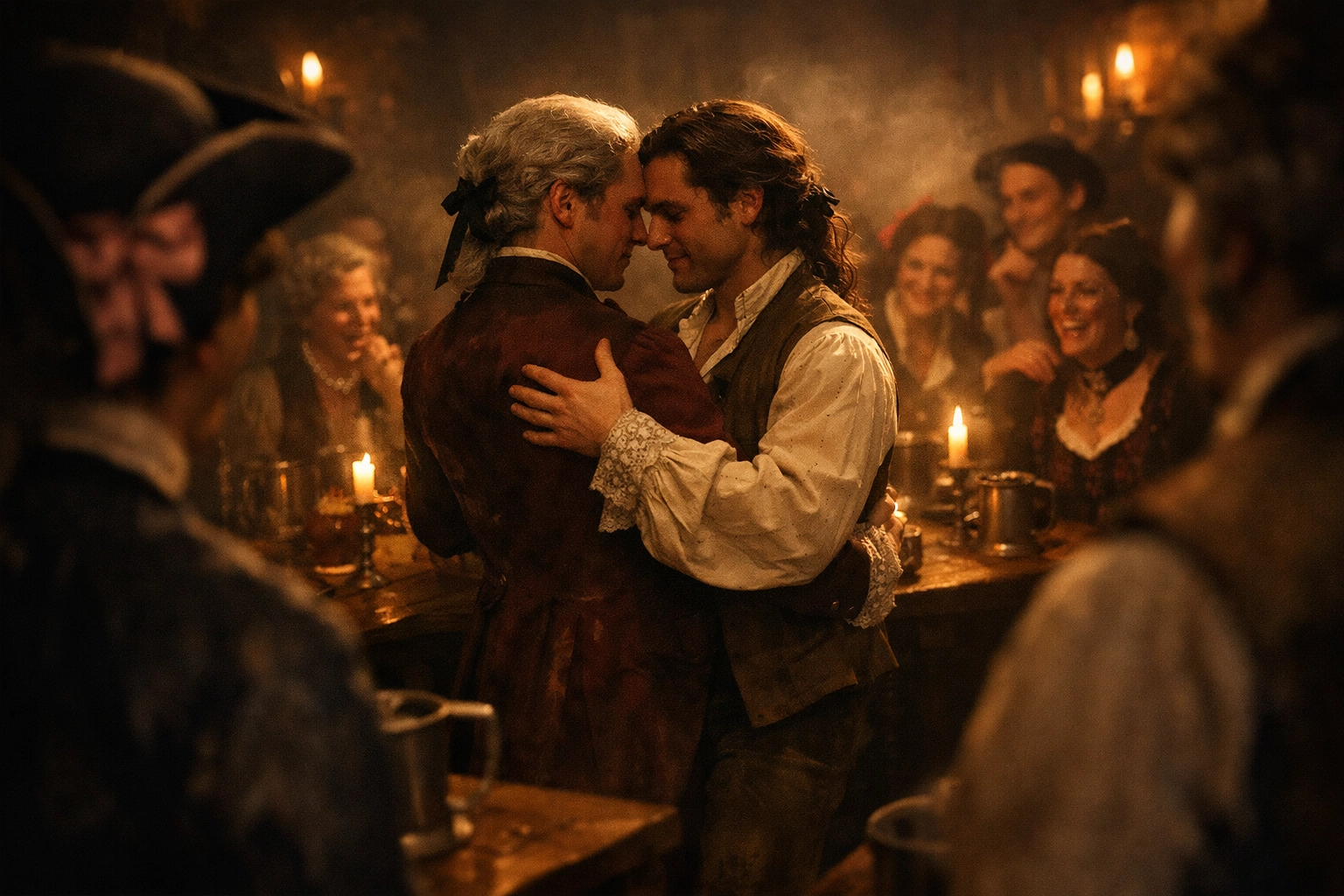
In many molly houses, men:
- drank and smoked
- danced (yes, danced)
- traded gossip, flirtation, and jokes
- formed friendships and relationships
- adopted nicknames or “christened” names
- sometimes took on feminine personas as part of the subculture
That last point deserves extra care: we can’t neatly map 18th-century categories onto modern identities, and we shouldn’t try. But we can say that molly-house culture made room for gender play and role performance in a way that felt meaningful to the people inside those rooms.
For MM romance readers, this is basically catnip: secret names, coded language, flirtation under pressure, a tight-knit community that can either protect you or betray you… It’s giving slow burn, it’s giving forced proximity, it’s giving “I can only be myself when the door is locked.”
“Marriage rooms” and queer commitment before legal recognition
One of the most fascinating (and honestly, tender) details from molly house history is the idea of “chapels” or “marrying rooms.”
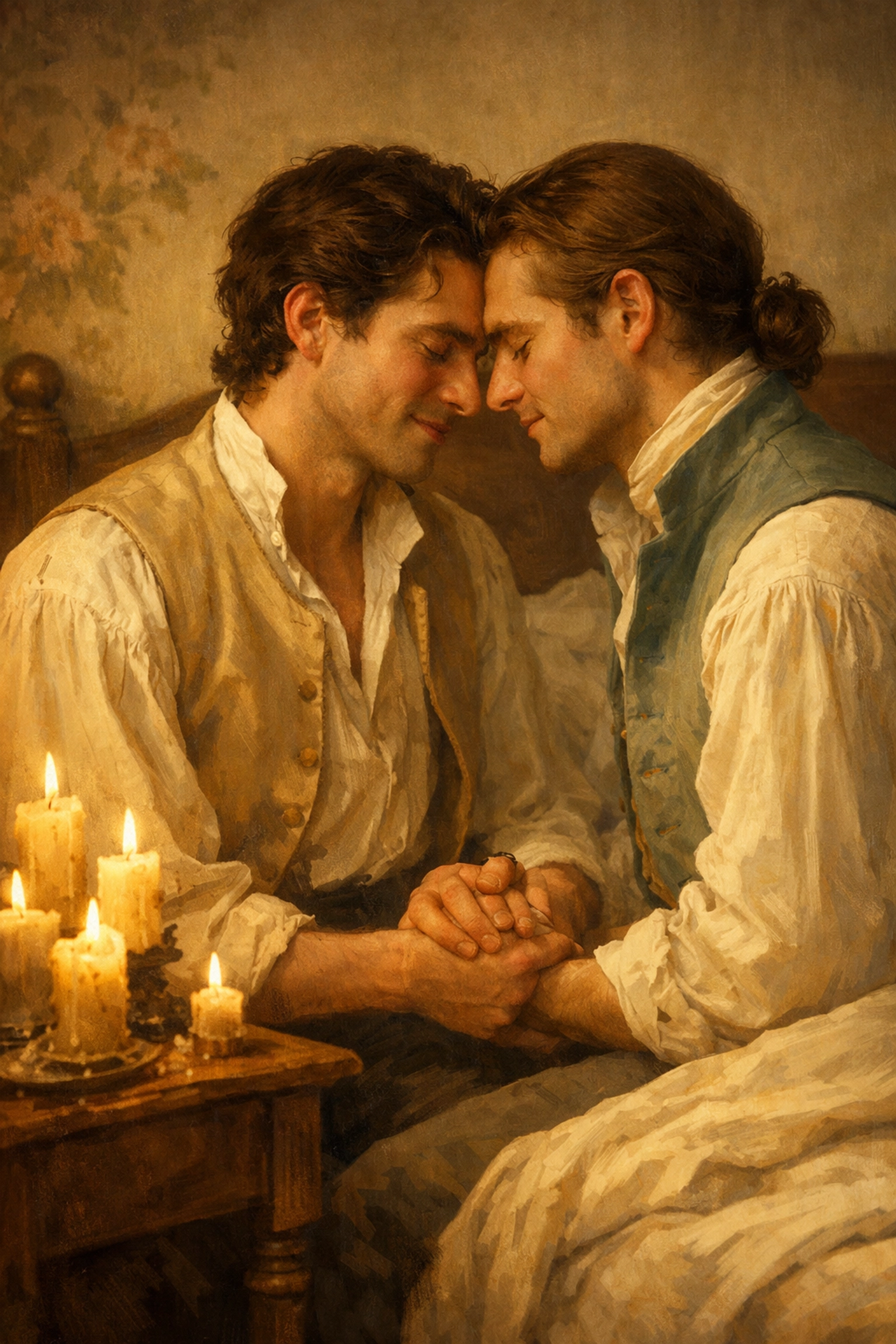
Some establishments reportedly had spaces where couples could perform a kind of commitment ceremony, a social ritual that mirrored marriage even though the law would never recognize it. Think less “church wedding” and more “we’re claiming each other in the only way we can.”
In at least one famous case, there were reports of staff helping maintain privacy and setting up rooms with beds. Whether every story is perfectly accurate isn’t the point, what matters is what these stories reveal: a community imagining partnership and romance even when the world insisted their love didn’t count.
If you’re hunting for inspiration for gay historical romance or craving historical MM romance novels, this is one of the clearest roots of a modern trope: love existing anyway. Not as a tragedy-only narrative, but as a stubborn insistence on joy.
Mother Clap’s: the most famous molly house (and why the name still hits)
When people talk about molly houses, Mother Clap’s is usually the headline.
It was operated by Margaret Clap in Holborn, and accounts describe it as large, able to host dozens of men in a single night. Imagine the social gravity of that: a place big enough to be widely known within the community, a hub where newcomers could find connection, and regulars could feel something like belonging.
But being well-known also made it vulnerable.
In 1726, Mother Clap’s was raided. The fallout was devastating. Records and reports describe arrests and prosecutions, and several men connected to the raid were eventually executed at Tyburn.
It’s hard to sit with this history because it’s so direct: queer joy existed, queer community existed, and the state (plus moral vigilantes) tried to crush it publicly as a warning.
And yet, the fact we’re talking about Mother Clap’s now means something survived. Names. Stories. Evidence. A trail of lives that refused to be erased.
Raids, entrapment, and the “Reformation of Manners” problem
Molly houses weren’t discovered by accident like “oops, we stumbled into the gay tavern.” They were actively targeted.
A major driver of persecution came from groups like the Societies for the Reformation of Manners, who aimed to police behavior they considered immoral. They pushed prosecutions, encouraged informants, and supported a climate where entrapment could thrive.
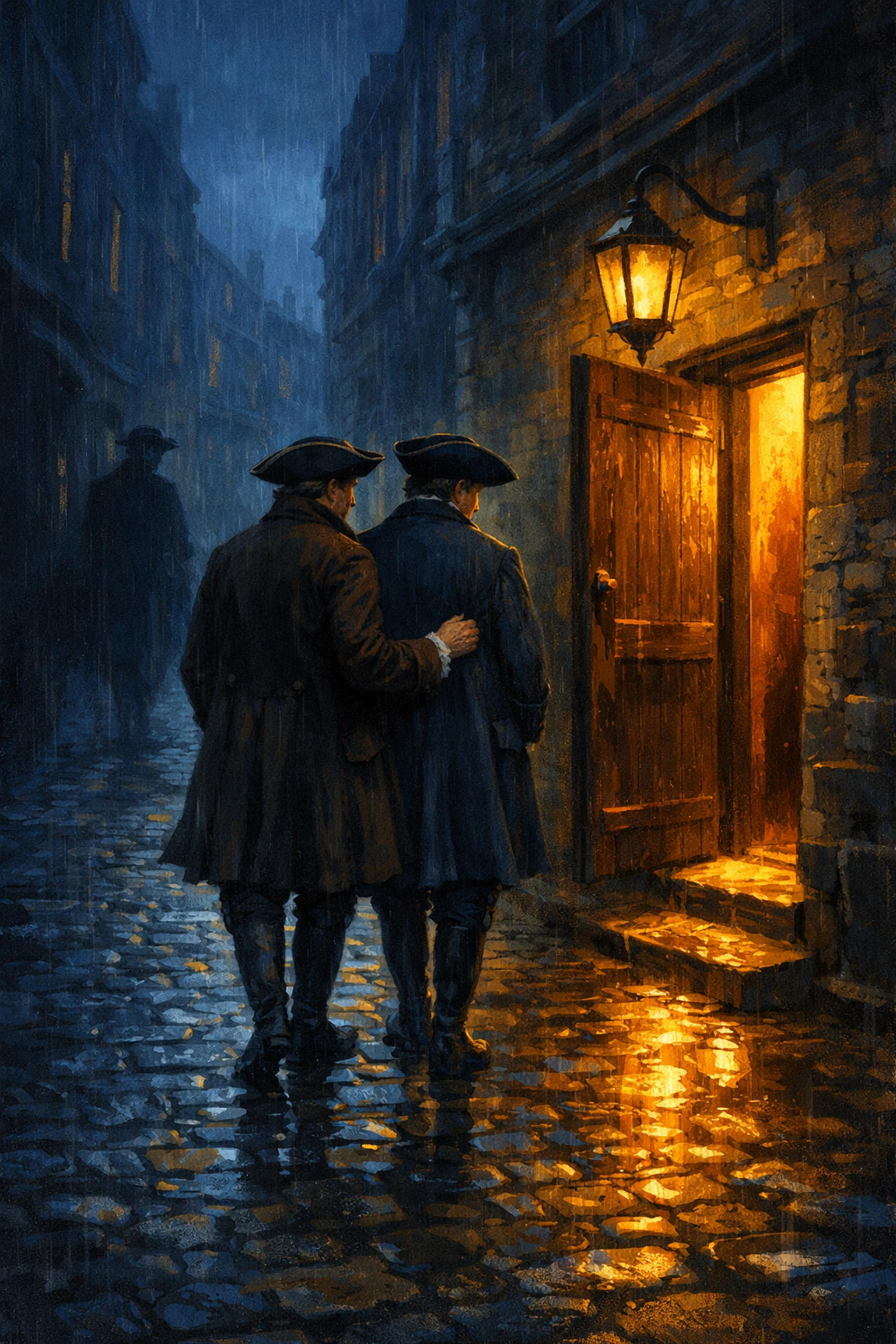
Accounts mention agents provocateurs infiltrating molly houses to gather evidence. That meant even stepping into a room could be a gamble. Was the friendly stranger flirting with you… or building a case?
For anyone who reads gay fiction (especially darker historicals), this adds a sharp edge to the setting. The stakes weren’t metaphorical. A romance arc didn’t just risk heartbreak, it risked court, prison, or death.
And still, people went. That’s not recklessness; it’s the human need for connection.
The “hidden world” wasn’t small, it was organized
A common modern misconception is that queer life in history was isolated: a few lonely souls, each thinking they were the only one. Molly houses blow that myth up completely.
What we see in the record, often through trial documents and newspapers (because surveillance leaves paperwork), is evidence of:
- recurring meeting places
- recognizable social rituals
- networks of patrons and regulars
- a shared vocabulary and culture
- forms of mutual support (and sometimes drama, because humans)
This is why molly houses matter beyond the sensational headlines. They show a community, not just a crime in the eyes of the law.
And for readers of MM romance books, it’s a reminder that queer love stories in historical settings don’t need to be “unrealistic” to include connection, friendship circles, and lively queer spaces. The spaces existed. The joy existed. The danger did too.
From molly houses to modern gay spaces: what carried forward
No, an 18th-century tavern back room isn’t the same as a 2026 queer bar in Soho or a Pride week club night in Manchester. But you can draw a line: crooked, interrupted, but real: between then and now.
Here’s what molly houses gave us that still shows up in modern LGBTQ+ life:
- Chosen community: that “these are my people” feeling
- Codes and signals: discreet ways to find safety and connection
- Rituals of belonging: names, roles, in-jokes, regular nights
- A sense of place: not just “I exist,” but “I exist here with others”
- Queer storytelling fuel: the raw material of romance, survival, and wit
And honestly? The vibe of “we made a home in a world that didn’t want us to” is exactly why gay romance novels hit so hard: especially historical ones.
Reading it through romance-tinted glasses (because of course we are)
Let’s talk tropes. Because if you’re here from Read with Pride / Readwithpride, you’re probably at least a little romance-brained (complimentary).
Molly house history naturally leans into long-tail keywords readers search for every day, like:
1) Forbidden romance / love under threat
Perfect for readers who like high stakes without needing a fantasy war. The danger is social, legal, and immediate.
2) Forced proximity (MM historical romance edition)
Shared rooms, shared networks, limited safe places. If two men keep ending up in the same “safe” tavern back room? That’s forced proximity with a side of candle smoke.
3) Slow burn with coded flirting
When saying the wrong thing could ruin your life, you don’t exactly jump to “wanna be my boyfriend?” It’s glances, signals, testing the waters, and building trust.
4) Found family / queer community hub
Molly houses were social ecosystems. There are regulars. There’s drama. There’s the older figure who looks out for people. There’s the newcomer who doesn’t know the rules yet. Tell me that isn’t a series setup.
5) Secret identity / double life
Daytime respectability, nighttime truth. This is prime gay literature tension and a classic backbone for queer fiction.
If you’re looking for your next read, browse LGBTQ+ ebooks and MM romance books at readwithpride.com: especially if you’re into historical settings and big feelings.
“Spicy” without being sloppy: writing intimacy in a historical setting
A quick note for readers who specifically want spicy MM romance recommendations vibes: molly house history is often discussed through legal records, which can be clinical, hostile, or sensational. Romance: good romance: does something different.
It re-centers the people.
If you’re reading historical MM romance novels, the best ones tend to balance:
- the real constraints of the era (danger, secrecy, limited vocabulary)
- the emotional truth (desire, tenderness, fear, hope)
- the community texture (who knows, who helps, who judges)
- intimacy that feels earned, not just “we’re horny in a wig shop”
And if you’re writing it? A helpful trick is to treat the molly house like a character: it has moods, regulars, rules, and a sense of protection that can vanish in a second.
A respectful reality check: what we know (and why the sources are tricky)
Most surviving detail about molly houses comes from court proceedings, pamphlets, and newspapers, often produced after raids. That means the record is biased toward scandal, moral panic, and punishment.
So when we read about molly houses, we’re often peering through a keyhole held by people who didn’t wish them well.
Still, even hostile sources can’t fully hide what they’re describing: people gathering, building networks, forming relationships, and creating spaces that feel unmistakably queer.
If anything, it’s a reminder that queer history is often reconstructed from fragments: and that makes preserving and sharing LGBTQ+ stories today (including through gay novels, gay fiction, and LGBTQ+ fiction) feel even more important.
If you want more queer history + MM romance energy
We’re always building out new reads, tropes, and niche recs for the community: whether you’re into MM contemporary, gay historical romance, or you’re hunting for the Best MM romance books of 2026 vibe.
- Home + latest: readwithpride.com
- Find us on Facebook: https://www.facebook.com/profile.php?id=61586883027069
- Follow on X: https://x.com/Read_With_Pride
- Follow on Instagram: https://www.instagram.com/read.withpride/
Hashtags
#ReadWithPride #Readwithpride #MMRomanceBooks #GayRomanceNovels #GayHistoricalRomance #MMHistoricalRomance #QueerHistory #LGBTQEbooks #GayBooks #QueerFiction #GayRomance #MMRomance #GayLoveStories #ForcedProximity #SlowBurn #FoundFamily #BestMMRomanceBooks2026

Leave a Reply
You must be logged in to post a comment.