

readwithpride.com
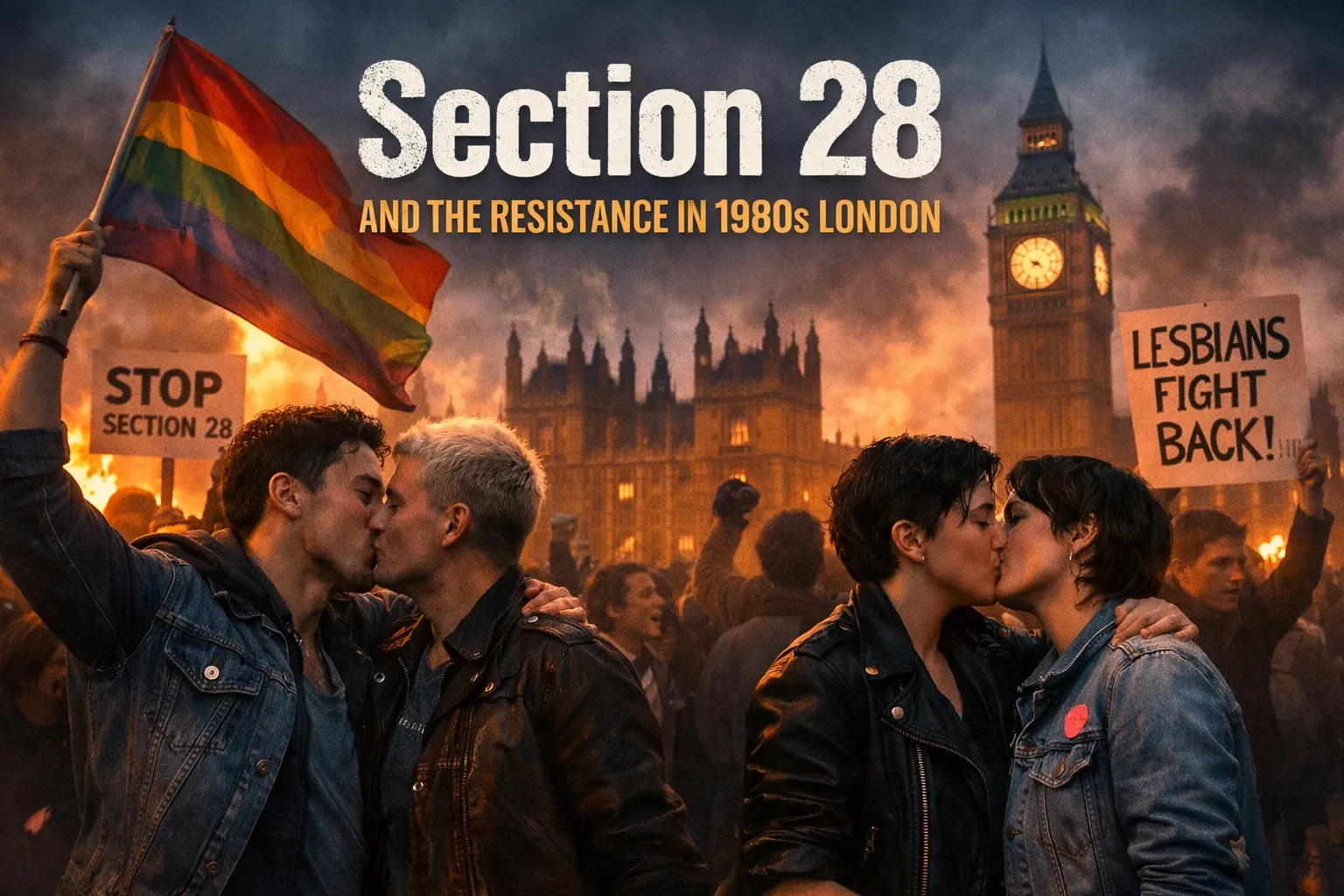
Section 28 didn’t just “happen” in the UK like a weird bureaucratic weather event. It was a deliberate political choice, aimed at making LGBTQ+ lives feel shameful, unspeakable, and, crucially, un-teachable. And in 1980s London, where queer communities were already fighting on multiple fronts (hello, tabloids and the AIDS crisis), it landed like a brick through a window.
But if Section 28 was meant to silence people, London’s response proved something important: queer communities don’t do quiet when the stakes are survival.
This post digs into what Section 28 actually said, what it did to teachers and students in real life, and how the protest movement, especially in London, refused to let queer people be erased. And because we’re Read with Pride, we’ll also talk about why this era keeps showing up in queer fiction today, including the kind of emotional grit that makes historical MM romance novels hit so hard.
What Section 28 actually said (and why the wording mattered)
Section 28 was introduced under Margaret Thatcher’s government and came into effect on 24 May 1988. It amended the Local Government Act 1986 and told local authorities they must not:
- “intentionally promote homosexuality”
- or “promote the teaching in any maintained school of the acceptability of homosexuality as a pretended family relationship.”
That phrase, “pretended family relationship”, wasn’t an accident. It was designed to frame queer relationships as fake, unsafe, and inappropriate for young people to even know exist. It also gave schools and councils a vague threat to hang over anything remotely affirming: a library book, a poster, a support group, a teacher answering a student honestly.
And the vagueness was the point. Section 28 didn’t need to prosecute masses of teachers to do damage. It just needed enough fear to make everyone self-censor.
The immediate impact in London schools: fear, silence, and self-censorship
One of the cruelest myths about Section 28 is that it “only” targeted local authorities and didn’t technically criminalise individuals. In practice, it reshaped how adults behaved around kids, especially in schools, because careers, reputations, and funding were on the line.
Teachers: “Can I even answer this?”
Even before the law fully took effect, teachers were already getting the message: don’t touch the topic. For LGBTQ+ teachers, the pressure doubled. Being out could be seen as “promotion.” Even acknowledging a same-sex relationship could be interpreted as encouraging it.
So what happened? A lot of teachers did what people do when laws are unclear and the tabloids are loud: they played it safe.
- Sex education became narrower and more heteronormative
- Anti-bullying policies often avoided naming homophobia directly
- Resources with LGBTQ+ characters quietly disappeared
- Staff hesitated to intervene when slurs were “just banter”
Not because every teacher believed the rhetoric, but because the law made support feel risky.
Students: “If nobody says the word, maybe I don’t exist”
Students felt that silence like a physical thing.
If you were queer (or questioning) in an 80s London school, Section 28 didn’t just deny you information. It denied you language. And when you don’t have language, it’s harder to ask for help. Harder to imagine a future. Easier to believe you’re the only one.
Even students who weren’t LGBTQ+ learned something poisonous too: that queerness was too “inappropriate” to discuss. That it didn’t belong in classrooms, books, or normal life. That being gay was something adults whispered about, not something you could grow up into safely.
And this is the part that often gets skipped: Section 28 didn’t only target queer kids. It trained entire generations in discomfort.
London’s protest movement: “You will not erase us”
Resistance didn’t politely wait for permission.
Across the UK there were major demonstrations, including a huge one in Manchester in early 1988 that drew tens of thousands. But London became a symbolic centre of direct action, because it was the seat of government and because London’s queer community had long experience organising under pressure.
Some protests were unforgettable, partly because they were smart: they understood media.
The night before it came into force: spectacle with a purpose
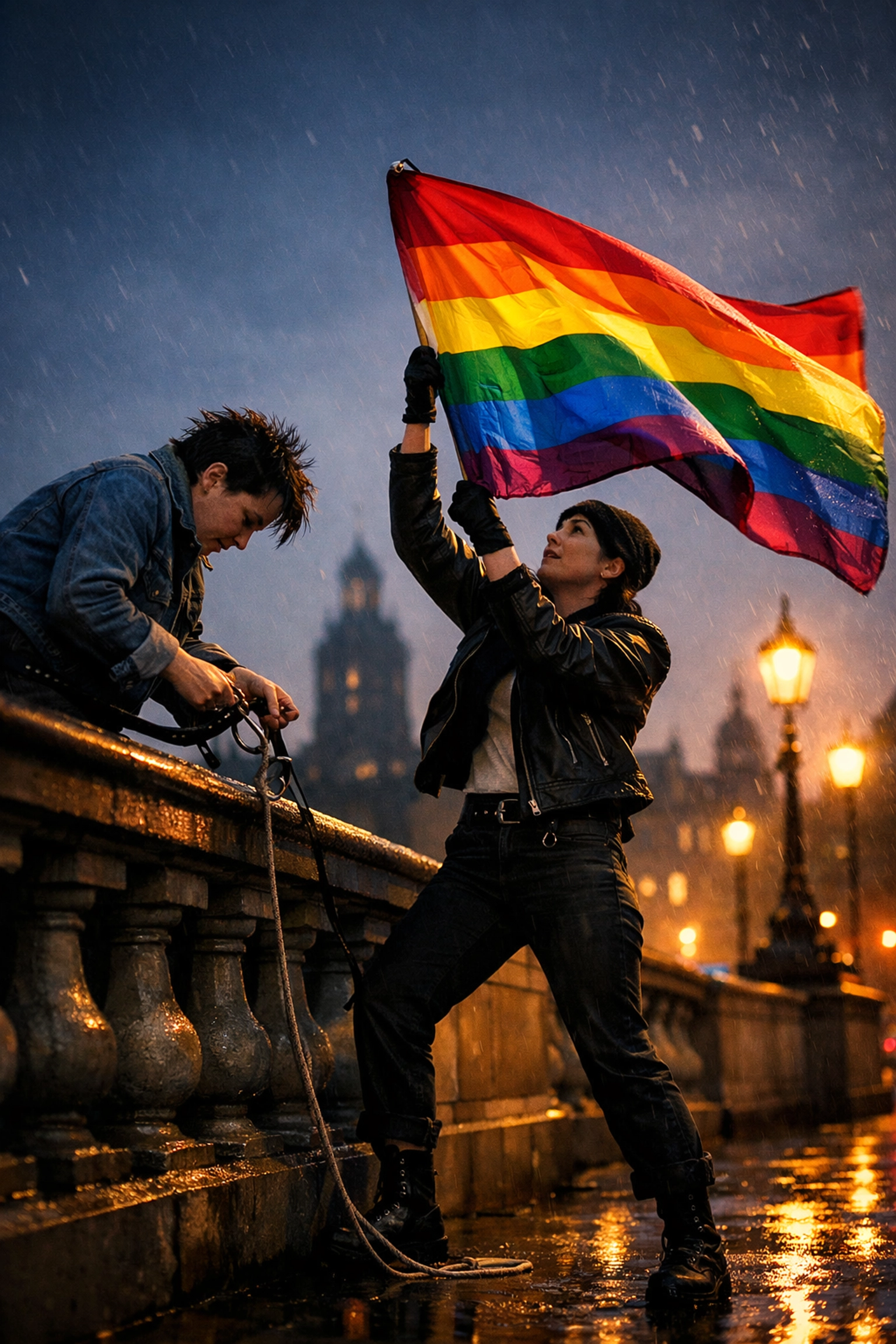
Right before Section 28 took effect, lesbian activists staged dramatic protests including:
- abseiling into Parliament
- interrupting the BBC’s Six O’Clock News, including chaining themselves to the set
If that sounds “too much” to some people, that’s kind of the point. When the system is trying to erase you, being visible becomes a survival tactic.
This wasn’t just theatre. It was activism built on a clear message: queer people are not a “debate topic.” We are here, we are watching, and we are organising.
Why London specifically mattered: community infrastructure and cultural power
London in the 1980s had a dense network of LGBTQ+ spaces, pubs, clubs, community groups, bookshops, helplines, and informal mutual aid. This mattered because movements don’t run on vibes alone. They run on infrastructure.
London also had cultural power: press, TV, publishing, theatre. When London protested, the story travelled. When London artists spoke, it shifted mainstream conversation (even when it annoyed the living daylight out of politicians).
Section 28 tried to treat “promotion” like a contagious disease. London’s queer communities answered: if you’re scared of us being talked about, you already know we’re real.
From fear to organised defence: the birth of a new rights strategy
Section 28 didn’t just create protest. It created strategy.
In London, a small group met at Sir Ian McKellen’s home in Limehouse to plan how to stop future legislative attacks on LGBTQ+ people. That meeting helped lead to the creation of a dedicated advocacy organisation that would become one of the most recognisable names in UK LGBTQ+ rights.
You can trace a straight line from Section 28’s harm to the rise of more coordinated, policy-literate queer activism: fundraising, lobbying, public education, media rebuttals. It wasn’t enough to be right, you had to be organised.
That shift matters because it shows something about queer history that doesn’t get said enough: oppression can force communities into sharper, smarter solidarity.
The long tail: what Section 28 did to culture, books, and “what’s allowed” to be written
One of the quietest tragedies of Section 28 is the art and information that never made it to young people. Libraries and schools became anxious spaces. The question wasn’t “Is this book good?” but “Could this cause trouble?”
Queer books weren’t always banned outright; they were often simply not purchased, not displayed, not recommended, not defended.
So yes, Section 28 is about law. But it’s also about access:
- access to stories
- access to role models
- access to the idea that a queer life can be ordinary, happy, and real
That’s why, decades later, queer readers still feel a jolt of emotion when they find affirming gay romance novels and MM romance books. Not because romance is “escapism,” but because romance is proof of existence. A love story is a statement: we get futures too.
Why this era hits so hard in historical MM romance novels
If you read queer fiction, you’ll notice the 1980s UK shows up again and again, especially in historical MM romance novels and emotionally intense queer fiction. It’s not just the aesthetic (although, yes, the music was iconic). It’s the stakes.
The 80s give writers a built-in pressure cooker:
- love and tenderness under political hostility
- community solidarity under threat
- secrecy that isn’t cute: it’s necessary
- moments of joy that feel hard-won
And because Section 28 specifically targeted schools and young people, it also creates a backdrop for stories about identity, mentorship, and first love: with real consequences.
Trope spotlight: grumpy x sunshine in a world that’s not safe
If you love grumpy x sunshine MM romance ebooks, this period practically writes itself.
- The “grumpy” character often isn’t mean: he’s cautious, traumatised, or tired of fighting.
- The “sunshine” character isn’t naive: he’s determined to be visible anyway.
- The romance becomes a negotiation between safety and freedom.
That dynamic mirrors the real emotional politics of the time: how do you keep your heart open when the law is telling everyone you’re not supposed to exist?
And when those characters finally choose each other: publicly, privately, however they can: it lands with that extra gut-punch of historical truth.
If you’re building your next reading list of queer fiction and romance, start at readwithpride.com and explore what we’re curating across LGBTQ+ ebooks, gay books, and trope-forward M/M books.
“It wasn’t enforced much” is not the defence people think it is
You’ll sometimes hear a claim that Section 28 “didn’t actually result in many prosecutions,” as if that means it wasn’t a big deal.
But harm isn’t only measured in court cases. Section 28 worked through:
- fear of complaints
- fear of tabloids
- fear of job loss
- fear of being labelled a threat to children
It chilled speech. It narrowed education. It made vulnerable kids more isolated. And it taught adults to hesitate at the exact moment they should have been protective.
The legacy is visible even now in how people argue about LGBTQ+ inclusion in schools: often using the same recycled panic, just with updated buzzwords.
The repeal (and what it can’t undo)
Section 28 was repealed in Scotland in 2000 and in England and Wales in 2003. That repeal mattered. It was necessary. But repeal doesn’t time-travel.
It doesn’t give back:
- the teachers who stayed closeted
- the students who never heard the words they needed
- the books that never made it to shelves
- the support groups that shut down preemptively
What it does give us is a clear lesson: rights can be rolled back when people get complacent or when politics turns minorities into moral panic props.
That’s why remembering Section 28 isn’t just nostalgia or history-nerd territory. It’s part of staying alert.
Reading as resistance: why queer stories matter (still)
One of the most satisfying middle fingers to Section 28 is how much queer storytelling exists now: loudly, proudly, and with zero apologies.
Whether you’re into:
- slow burn MM romance books
- enemies to lovers MM romance
- grumpy x sunshine MM romance ebooks
- or gay historical romance that digs into UK queer history
…every time a queer reader finds a book that makes them feel seen, that’s a quiet victory.
At Read with Pride, we’re here for that. We’re building space for LGBTQ+ fiction, gay romance novels, and community-driven recommendations: because stories don’t just entertain. They connect people.
Find more LGBTQ+ ebooks and queer reading guides at readwithpride.com:
- Home: https://readwithpride.com
- Blog index/sitemap (for deep dives and categories): https://readwithpride.com/blog_post-sitemap1.xml
Follow along for new posts, releases, and reading recs:
- Facebook: https://www.facebook.com/profile.php?id=61586883027069
- X: https://x.com/Read_With_Pride
- Instagram: https://www.instagram.com/read.withpride/
Hashtags
#Section28 #LGBTQHistory #QueerLondon #UKGayHistory #LGBTQBooks #MMRomanceBooks #GayRomanceNovels #HistoricalMMRomance #GrumpySunshine #ReadWithPride #Readwithpride #QueerFiction #GayBooks #LGBTQeBooks #GayRomance #MMRomanceEbooks

0 thoughts on “Section 28 and the Resistance in 1980s London”
Leave a Reply
You must be logged in to post a comment.