
readwithpride.com
Capel Street energy: why one bar became a nerve center
If you’ve ever ended up on Capel Street on a weekend, half “just one drink,” half “how is it 2am already?”, you’ll get it. Dublin nightlife has always been about more than pints. It’s about people finding their people.
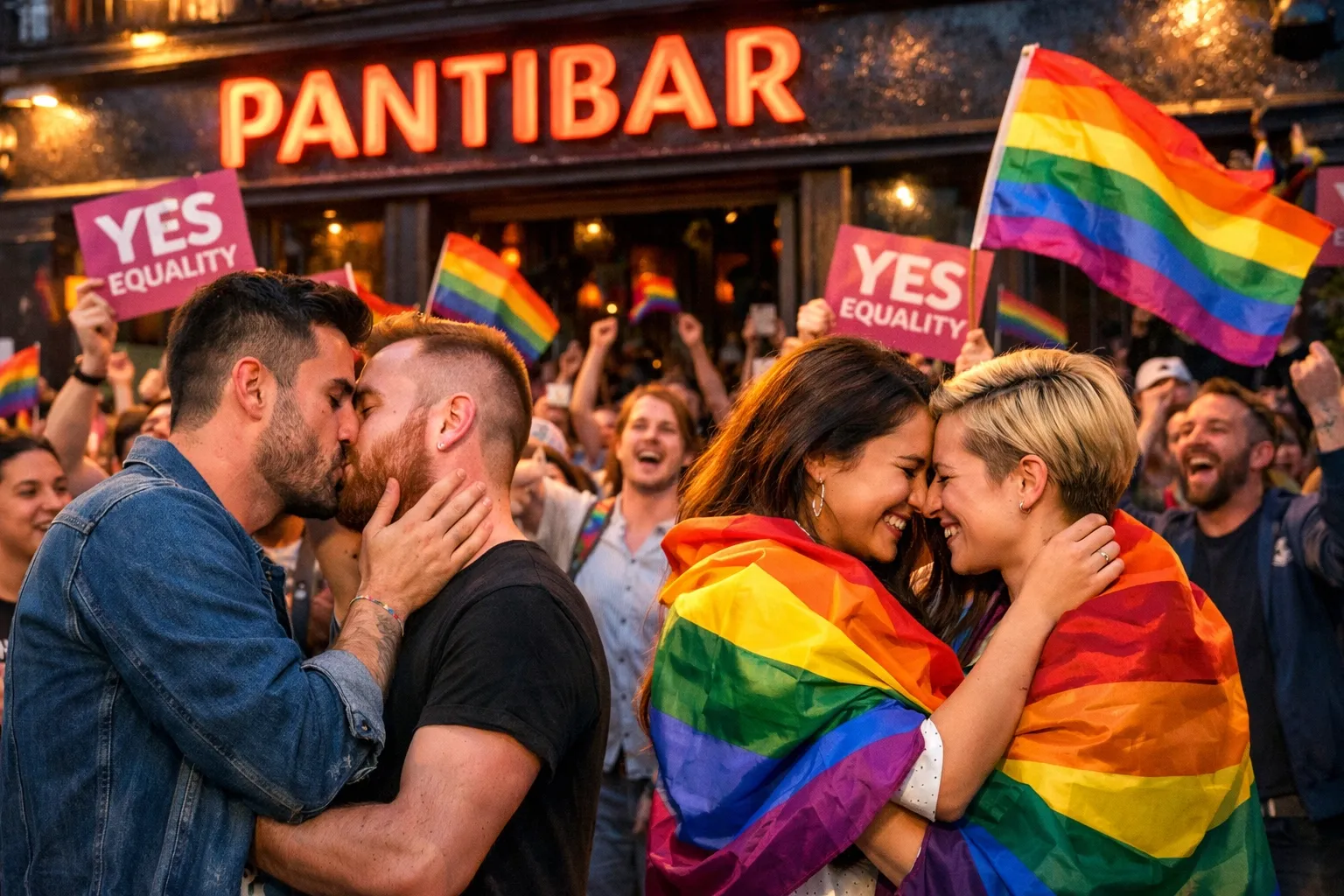
PantiBar sits right in that tradition. It’s been described as a major fixture of Dublin’s LGBTQ+ scene (and often called one of the biggest gay bars in Ireland), but the important bit isn’t the size. It’s the vibe: open, loud, welcoming, political without being preachy, and deeply community-minded in that very Irish way, where you can take the mick while still taking the moment seriously.
In the run-up to the 2015 marriage equality referendum, that mattered. A lot. Because movements aren’t built only in courtrooms and campaign offices. They’re built where people gather, talk, argue, cry, flirt, plan, and hype each other up to do the scary thing: be visible.
Before 2015: a quick, real look at what “progress” cost
It’s easy, especially from the comfy distance of “post-referendum Ireland”, to act like change was inevitable. It wasn’t. The 2015 vote landed after decades of pressure, setbacks, and ordinary people doing extraordinary emotional labour.
A few truths that shaped the fight:
- Visibility came with consequences. For years, being out in Ireland could mean losing work, housing, family, safety, or simply your peace.
- Queer spaces were lifelines. Bars, clubs, and community venues weren’t just for partying; they were where you could exist without translating yourself.
- Public opinion didn’t shift by magic. It shifted because people shared stories at kitchen tables, in local papers, on doorsteps, in workplaces, and yes, in packed bars where the courage felt contagious.
By the time the referendum campaign rolled around, the community wasn’t starting from scratch. It was standing on a lot of hard-won ground.
The 2015 referendum: what made it different
On May 22, 2015, Ireland voted 62% in favour of same-sex marriage. That number is famous now, but what made the moment historic wasn’t just the outcome, it was the method.
This wasn’t legislation quietly passed somewhere behind a podium. It was a public vote. That meant queer people and our allies had to persuade neighbours, coworkers, relatives, classmates, actual humans with complicated beliefs and messy feelings.
And it also meant:
- The conversation was everywhere (in a good way and a deeply exhausting way).
- People who’d never spoken about LGBTQ+ rights suddenly had opinions… loudly.
- Campaigning required storytelling, patience, humour, and resilience.
- Support felt personal, because it was personal.
Dublin’s queer scene, especially the places where people felt safe enough to be loud, helped set the emotional tone: hopeful, defiant, and very “we’re not asking for permission to be ourselves.”
PantiBar as a community engine (not just a dance floor)
When we talk about PantiBar’s role, it’s less “this venue organised X official initiative” and more “this venue helped people keep showing up.” During a campaign that asked a minority group to make its case to the entire country, spaces that offered relief and solidarity were strategic.
Here’s what queer venues often do during high-stakes moments, whether they put it on a poster or not:
- Information travels fast. Where to canvass, how to register, what to say on a doorstep, which talking points land, which ones backfire.
- People process emotions out loud. Hope, anxiety, anger, grief, joy, being able to vent with people who get it keeps burnout from swallowing you.
- Social courage spreads. It’s easier to take a risk when you’re surrounded by others doing the same.
- Visibility becomes normalised. When a bar is full of queer joy, the idea of queer family life stops sounding abstract. It becomes obvious.
Dublin had other queer spaces too (and deserves credit for the broader ecosystem), but PantiBar became one of the best-known symbols of that energy, part celebration, part rallying point.
The Dublin scene in 2015: glitter, graft, and genuine conversations
The “vibrant Dublin scene” wasn’t just a tourism tagline. It was a social network that ran on chosen family and last-minute plans:
- drag nights that turned into political chats
- pre-drinks that became “okay, who’s canvassing tomorrow?”
- group selfies that quietly told closeted friends: you’re not alone
- those big, loud laughs that mask fear, and then dissolve it
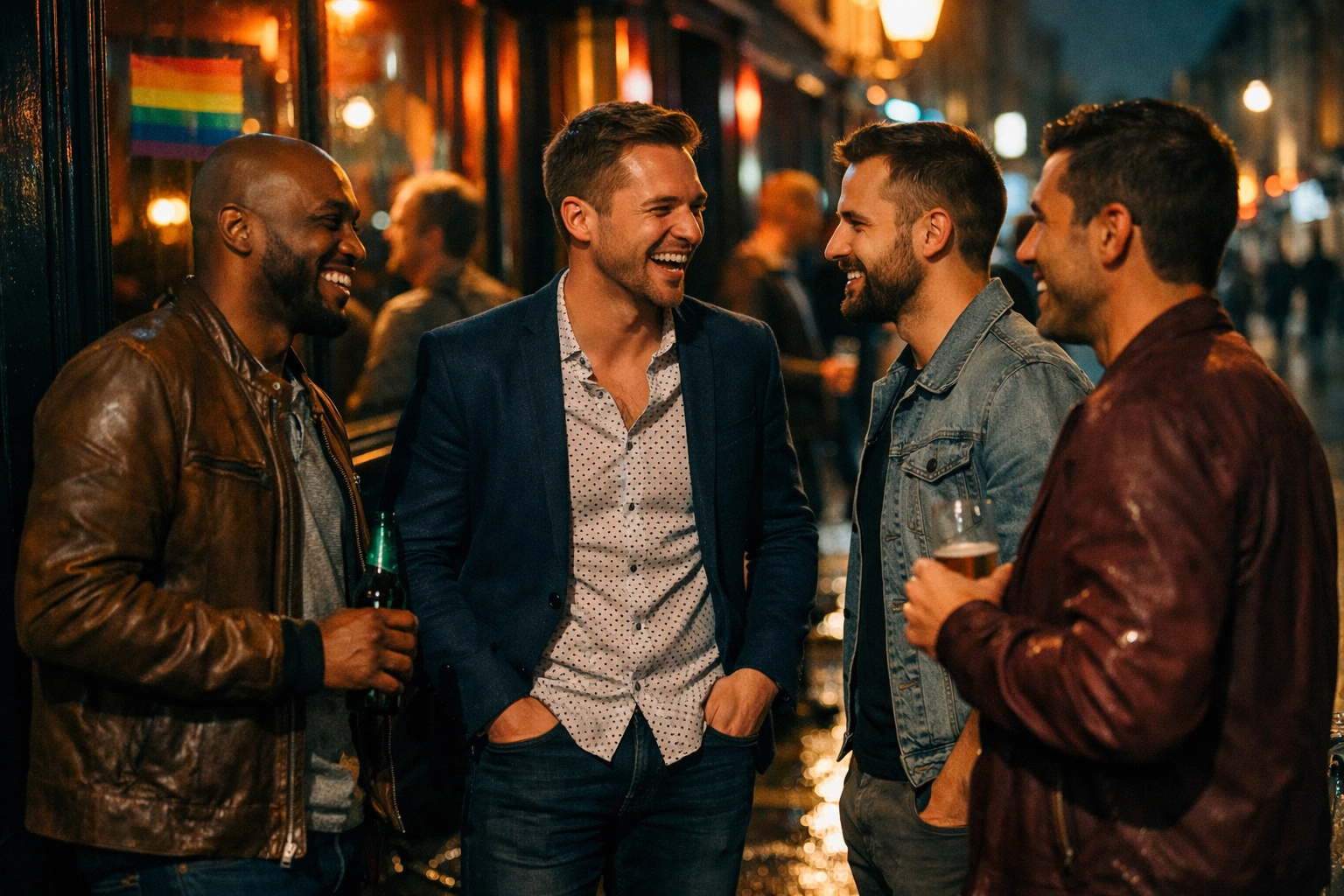
There’s a reason queer nightlife matters during political campaigns: it’s one of the few places where queer people can be fully human, messy, flirty, complicated, romantic, anxious, loud. Not a debate topic. Not a headline. Just people.
And that humanity is persuasive. It’s hard to keep believing “those people are different” when “those people” are your coworker, your cousin, your neighbour, or the person who always makes sure you get home safe after a night out.
What the referendum shifted (and what it didn’t)
Marriage equality was a massive win, and it changed daily life in practical ways: legal security, social recognition, family protections, and the simple dignity of being treated as real.
But it didn’t magically solve everything. Ireland, like everywhere, still has:
- uneven acceptance depending on region, age, and community
- ongoing fights around healthcare, trans rights, and inclusive education
- the lingering impact of shame culture (which doesn’t evaporate overnight)
So if you’re reading this and thinking, “Cool, they won, end of story”, nope. It’s a chapter. A beautiful one. But not the final page.
From real-life wins to romance tropes: why this story hits MM readers hard
Let’s talk about the reading side, because this is Read with Pride (and yes, we’re going there).
A public vote on your right to love? That’s not just politics. That’s a high-stakes emotional setting, exactly the kind of pressure cooker that makes MM romance books hit harder. The 2015 referendum era contains all the ingredients that romance readers devour:
- Found family: campaign crews, bar regulars, chosen siblings who steady you.
- Slow burn: years of longing, fear, timing, and “maybe later.”
- Forced proximity: canvassing together, late nights, shared lifts home, accidental confessions.
- Second chances: old flames reconnecting when the world finally shifts.
- Public vs private self: the tension between being out in the bar and guarded at work.
And if you’ve ever had a bisexual awakening, Dublin’s scene is basically the perfect backdrop. There’s something about a room full of unapologetic queer joy that flips a switch in your brain like: Oh. That’s what I am. That’s what I want.
The “bisexual awakening” thread (and why it’s not just a trope)
A lot of people realised or accepted their sexuality later than they “thought they were supposed to.” In a city where the referendum conversation made queerness visible at every level, it makes sense that plenty of folks started asking themselves new questions, quietly at first, then all at once.
In romance terms, that can look like:
- a character who’s always dated women but can’t stop thinking about him
- a guy who’s “not like that” until the first kiss lands like truth
- the relief (and terror) of finally naming it
If you’re looking to build your TBR around that vibe, keep an eye out for stories tagged with bisexual awakening mm romance for adults, especially ones that don’t treat bisexuality as a phase, a twist, or a punchline.
The fake dating angle: when politics meets feelings
One of the most satisfying romance setups that fits the referendum era like a glove: fake dating.
Why? Because campaigns are public. People are watched. Families ask questions. Towns talk. Coworkers speculate. A “pretend boyfriend” can be a shield… until it becomes a problem… because the feelings are real now.
If you like your romance with humour, tenderness, and a side of “oh no, we accidentally fell in love,” you’re probably already searching for mm fake dating romance recommendations. And honestly, a Dublin setting, with a bustling bar scene and a country in the middle of a cultural pivot, makes that trope feel grounded rather than gimmicky.
Fake dating works best when:
- the characters have something to lose (and something to prove)
- the line between performance and truth gets blurry fast
- the community around them sees what they can’t admit yet
Basically: delicious.
Reading the moment: what to pick up if you want that Dublin-referendum vibe
We’re not doing a massive listicle here (save that for another post), but if you want your next read to echo the emotional beats of 2015 Ireland, look for gay romance novels and MM romance books with these specifics:
- Contemporary Irish MM romance (small city / big feelings)
- Activism or campaign setting (door-knocking, community organising)
- Coming out later in life (especially bi-awakening arcs)
- Found family + nightlife (club/bar scenes that feel lived-in)
- Soft-but-strong heroes (emotionally intelligent men, please and thanks)
And if you want to browse queer fiction and LGBTQ+ ebooks without fighting an algorithm that thinks your love story is “adult content” in the bad way, start at readwithpride.com. It’s built for queer readers, queer joy, and the full range of heat levels, without the pearl-clutching.
You can also explore site navigation via the blog sitemap if you’re hunting for specific niches:
https://readwithpride.com/blog_post-sitemap1.xml
Why queer venues still matter (even when marriage is “sorted”)
Some people love to say, “Do we still need gay bars?” and the answer is: yes, for a bunch of reasons that have nothing to do with nostalgia.
Queer venues are:
- entry points for people who are questioning
- meeting places for community organising
- safety valves when politics gets hostile again
- cultural incubators (drag, art, comedy, music)
- living proof that we exist: happily
And they remind us that legal equality and lived equality aren’t the same thing. Rights can be rolled back. Community has to be maintained.
PantiBar’s symbolic role in the marriage equality era is a reminder that the “serious” work and the “fun” work are often the same work: keeping people connected enough to keep going.
If you’re visiting Dublin now: a respectful little guide to showing up
If you’re travelling to Dublin and you want to experience the scene in a way that feels good (not gawky), here’s the vibe:
- Tip performers. Drag is art and labour.
- Mind your questions. Curiosity is fine; interrogations aren’t.
- Be sound. The Irish social rule that solves most problems.
- Bring your whole self: then let others do the same.
And if the night sparks a “wait… am I bi?” moment? Congrats. Welcome. We have books.
Keep up with Read with Pride (and more queer stories worth your time)
Read with pride. Read boldly. Read the stories that would’ve helped you when you were younger: and the stories that fit who you are now.
- Home: https://readwithpride.com
- Instagram: https://www.instagram.com/read.withpride/
- X: https://x.com/Read_With_Pride
- Facebook: https://www.facebook.com/profile.php?id=61586883027069
Hashtags
#ReadWithPride #Readwithpride #Dublin #Ireland #MarriageEquality #LGBTQHistory #QueerIreland #MMRomanceBooks #GayRomanceNovels #QueerFiction #LGBTQEbooks #FakeDating #BisexualAwakening #FoundFamily #SlowBurn #BestMMRomanceBooksOf2026

Leave a Reply
You must be logged in to post a comment.