readwithpride.com
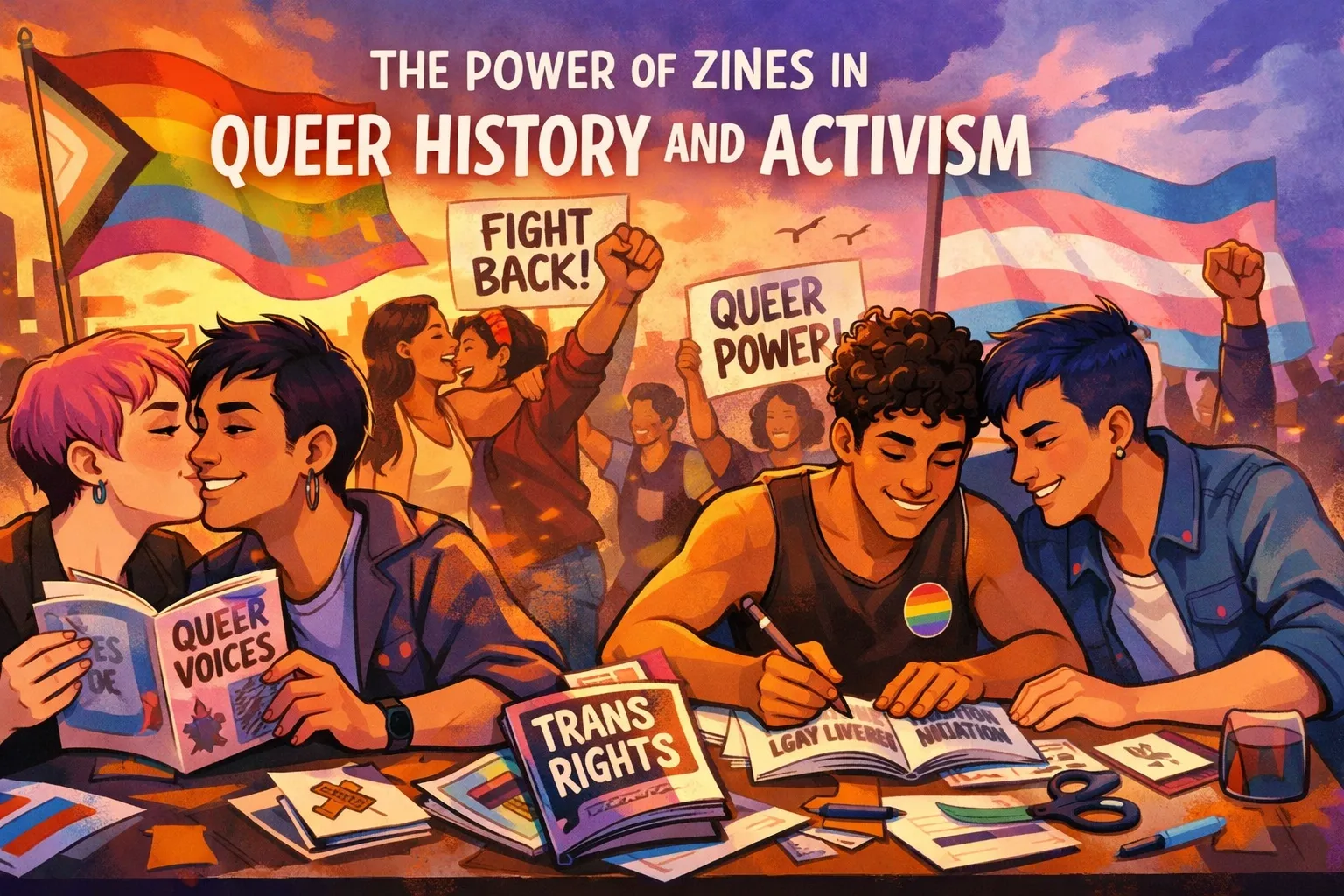
Long before we had TikTok aesthetics, "BookTok" recommendations, or even the convenience of LGBTQ+ ebooks, the queer community was busy in the back of copy shops, late at night, smelling like toner and rebellion. We’re talking about zines.
If you’ve ever felt like mainstream media just didn't get it, or if you've ever scoured the internet for that one specific "enemies to lovers MM romance" trope that feels authentic to your soul, you are participating in a tradition that started with staples and recycled paper. Zines weren't just "little magazines"; they were lifelines. They were the original social media, the original "cancel culture" (against bigots), and the original home for queer fiction.
At Read with Pride, we’re obsessed with the history of how our stories get told. So, let’s take a dive into the messy, beautiful, ink-stained history of queer zines and why they still matter in 2026.
What on Earth is a Zine, Anyway?
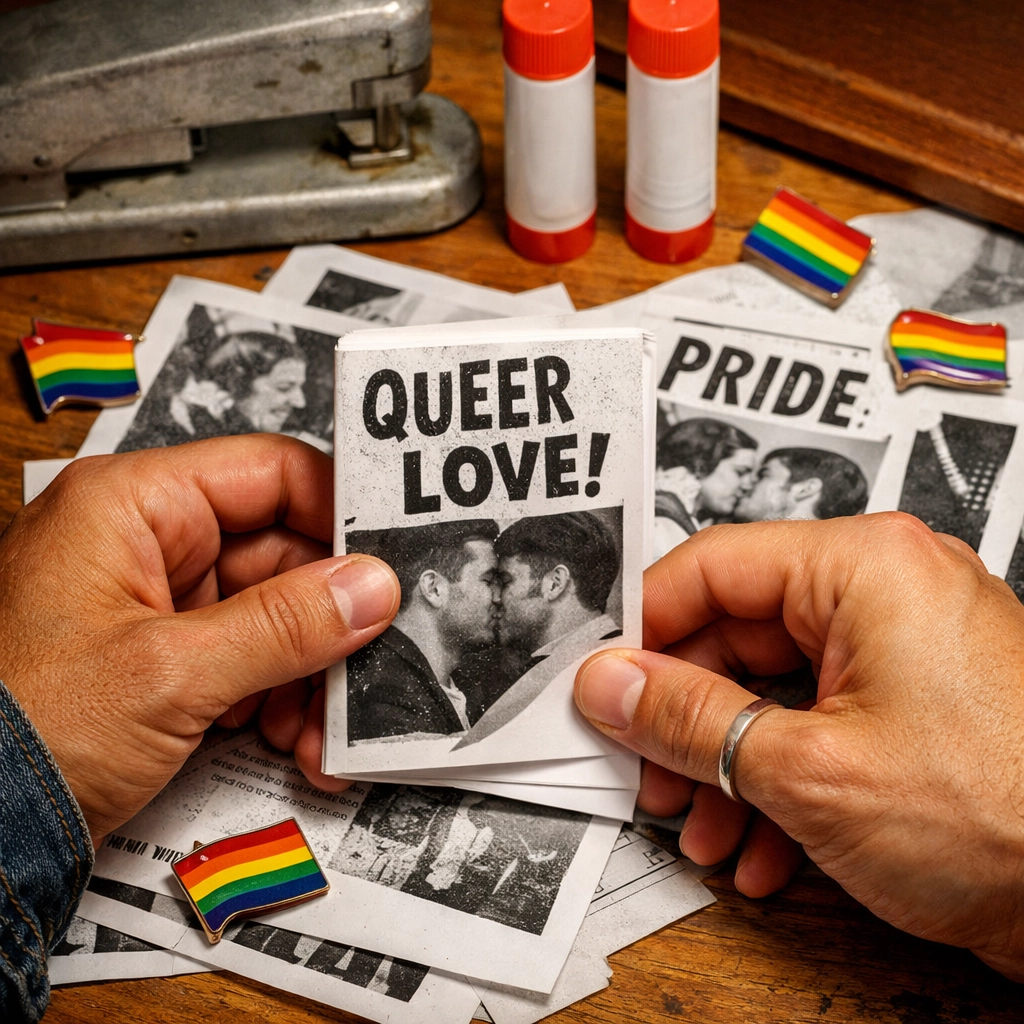
For the uninitiated, a zine (derived from "fanzine" or "magazine") is a DIY, self-published work. Usually, they were produced on a photocopier, folded by hand, and distributed through the mail or at underground shows.
In the mid-20th century, if you wanted to read a gay love story, you usually had to look for "pulp fiction" where the characters inevitably died at the end (the "Bury Your Gays" trope is ancient, friends). Mainstream publishers wouldn't touch authentic LGBTQ+ content with a ten-foot pole. So, queer folk did what we do best: we made our own.
The 1940s: The Secret Mother of Queer Publishing
Most people think zines started with the punk movement in the 70s. But queer history says: Hold my drink.
In 1947, a woman using the pseudonym "Lisa Ben" (an anagram for "lesbian") created Vice Versa in Los Angeles. She typed it out on her work computer (brave!) and used carbon paper to make nine copies at a time. It was North America’s first lesbian zine. It featured reviews of books with queer themes, short stories, and letters.
Lisa Ben wasn't looking for fame; she was looking for community. She was tired of the isolation. Vice Versa proved that there was a hungry audience for gay literature decades before the internet made finding your "tribe" as easy as a Google search.
The 80s and 90s: Zines as Survival Tools
When the AIDS epidemic hit in the 1980s, the mainstream media and the government were worse than silent: they were hostile. Information was scarce, and stigma was everywhere.
This is where the power of zines shifted from community-building to literal survival. Activist groups used zines to spread life-saving information about healthcare, safe sex, and legal rights.
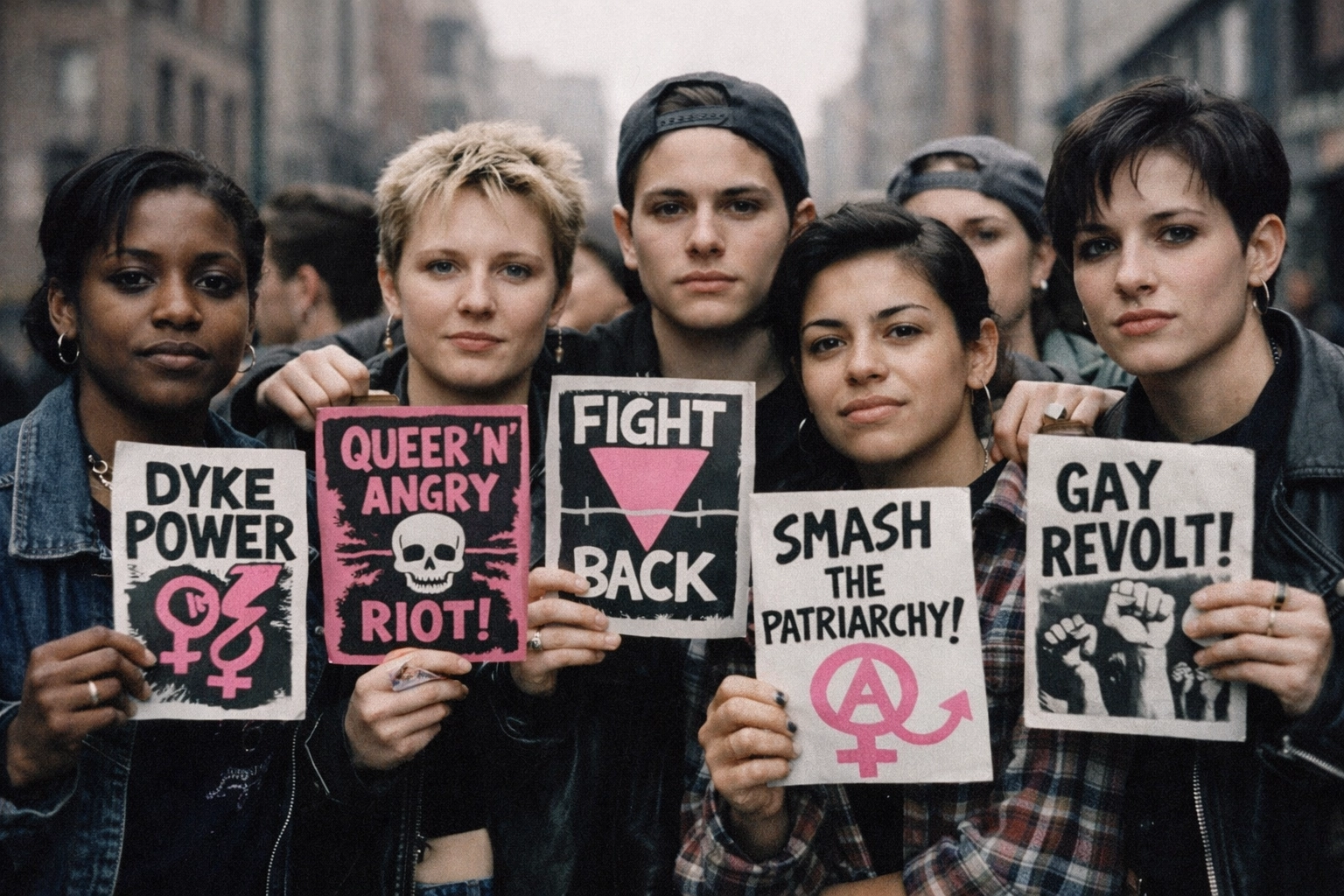
Publications like Queers Read This (distributed at the 1990 Pride march in New York) were loud, angry, and unapologetic. They rejected the idea of "blending in" or respectability politics. They didn't want to be "tolerated"; they wanted to be free.
Zines like Sex Panic! and YELL Zine provided peer-led education when the school systems refused to. They were the precursors to the inclusive sex-ed and the diverse gay romance books we see today. They proved that our stories aren't just entertainment: they are political statements.
Queercore: When Punk Met Pride
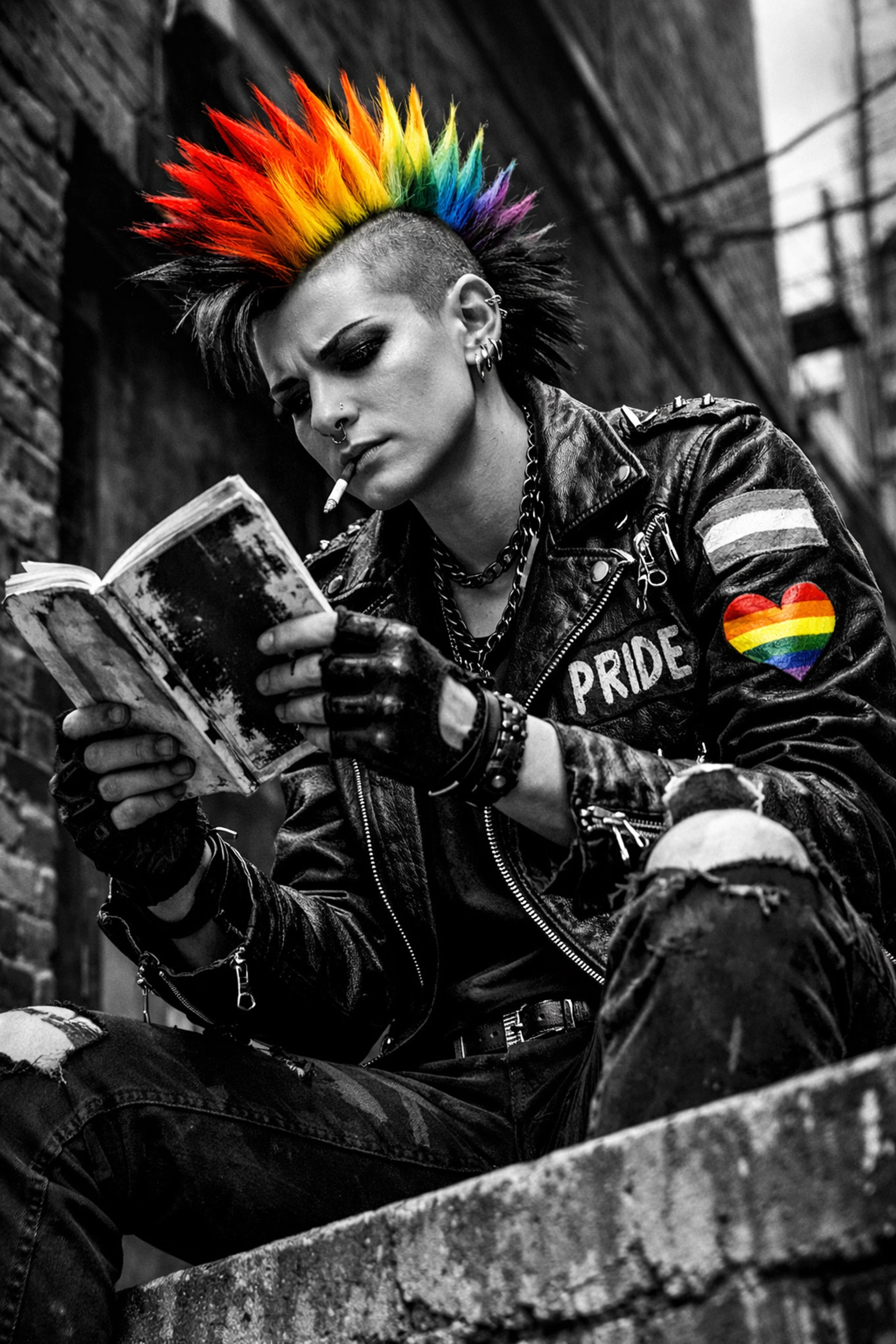
By the late 80s and early 90s, the "Queercore" movement exploded. This was the intersection of punk rock and queerness. If you think modern MM romance books can be steamy and radical, you should have seen these zines.
Queercore zines were a middle finger to both the homophobic "straight" punk scene and the "sanitized" mainstream gay scene. They were messy. They featured collage art, radical manifestos, and raw stories of gay love. They celebrated gender non-conformity long before it was a "trend."
This DIY spirit is the direct ancestor of today’s indie author movement. When you buy a self-published gay novel or a niche MM contemporary romance, you’re supporting that same "do it yourself because no one else will" energy.
From Staples to Ebooks: The 2026 Landscape
So, why are we talking about 1990 in 2026? Because the digital age has changed the format, but the heart remains the same.
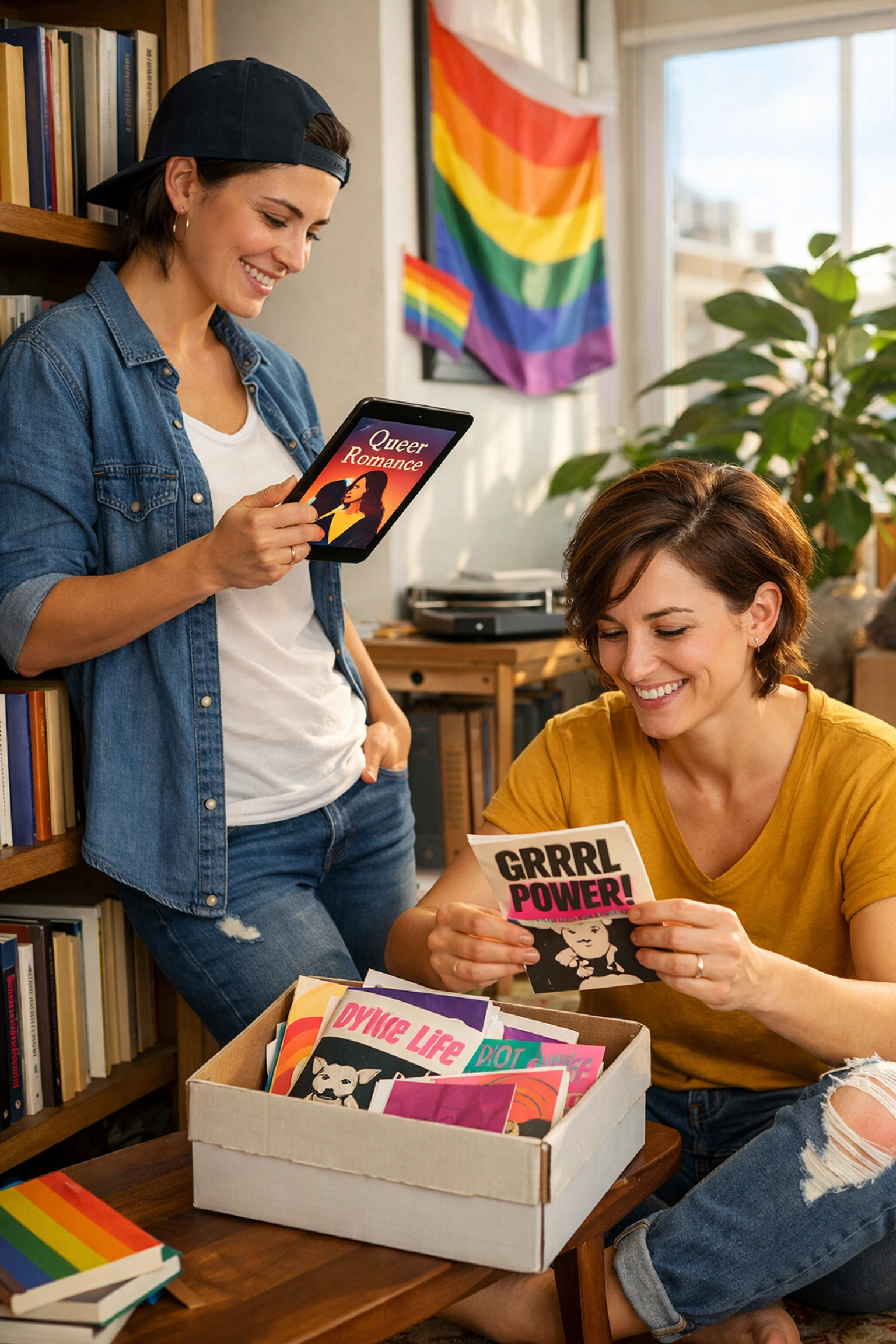
Today, we have LGBTQ+ Kindle books and massive digital platforms, but the spirit of the zine lives on in:
- Webcomics: DIY visual storytelling that bypasses traditional gatekeepers.
- Indie Publishing: Authors writing "taboo" or highly specific tropes (like the "forced proximity" or "slow burn" MM historical romance we all love) that big publishers might find too "risky."
- Social Media Communities: Our Instagram and TikTok spaces are essentially digital zines: curated, community-driven, and authentic.
Why You Should Care About Zines Today
If you’re a fan of best MM romance or you're always looking for new gay releases, understanding zine history helps you appreciate the freedom we have now. We no longer have to hide in the back of a copy shop to read a story where the gay guy gets the happy ending.
But zines also remind us that we shouldn't rely on "The Algorithm" to feed us our culture. There is something powerful about a physical (or digital) space that isn't owned by a massive corporation.
How to channel your inner Zine Maker in 2026:
- Support Indie Authors: Buy that steamy MM romance from a small press or a self-published author.
- Write Reviews: Your blog post or "BookTok" review is a modern-day zine entry. You are helping others find the representation they need.
- Create Your Own: Got a story about a gay spy romance or a gay thriller? Write it. Don't wait for permission.
The Connection to Read with Pride
At Readwithpride.com, we see ourselves as a continuation of this legacy. Whether we’re highlighting top LGBTQ+ books or discussing the best MM romance books of 2026, our goal is the same as Lisa Ben’s in 1947: to make sure you never feel alone in your reading journey.
We love a good emotional MM book as much as the next person, but we also love the history that paved the way for us to read these stories openly. The "Power of Zines" wasn't in the paper; it was in the people who refused to be silenced.
So next time you’re scrolling through your gay eBooks, take a second to thank the punks and the poets who spent their rent money on toner and staples just so we could have a voice.
Join the Community
Want to stay updated on the latest 2026 gay books, gay book recommendations, and queer history?
- Follow us on Instagram: Read with Pride Instagram
- Check us out on Facebook: Read with Pride Facebook
- Catch our updates on X: Read with Pride X
Let’s keep the DIY spirit alive. Read with pride, write with pride, and never let anyone tell you your story doesn't matter.
#LGBTQBooks #QueerHistory #ZineCulture #MMRomance #ReadWithPride #GayLiterature #IndieAuthors #QueerArt #2026Books #GayRomanceNovels

Leave a Reply
You must be logged in to post a comment.