

readwithpride.com
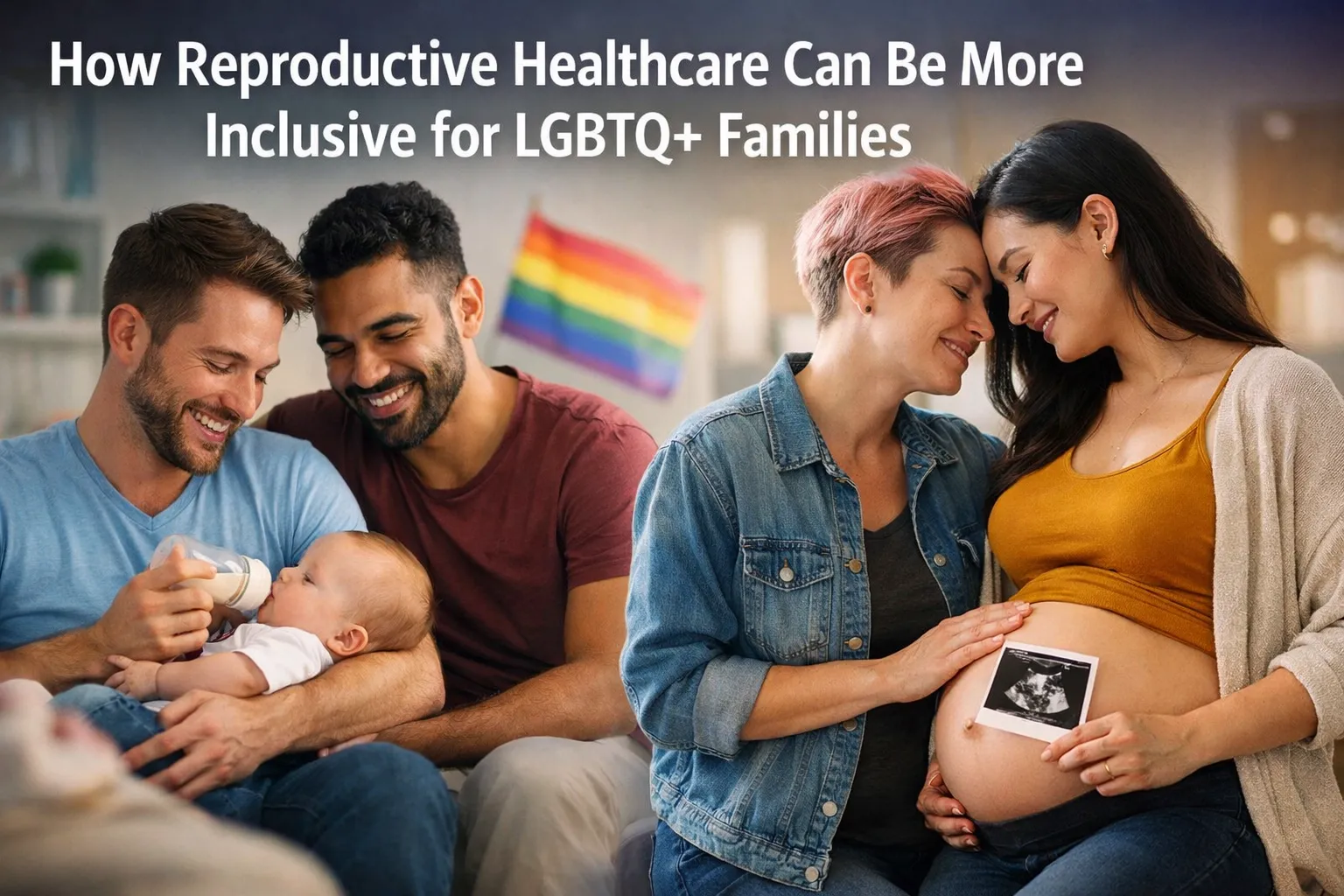
Let’s be real for a second: for most of the LGBTQ+ community, the "birds and the bees" talk was always a bit… complicated. While our straight counterparts might accidentally stumble into parenthood after a particularly good bottle of wine, for us, building a family is a deliberate, often expensive, and occasionally exhausting marathon. Whether you’re dreaming of a gay love story that ends with a nursery or you're deep into the "what if" stage of your journey, the path to parenthood should be paved with support, not systemic roadblocks.
In 2026, we’ve seen massive strides in queer visibility. Our MM romance books and gay novels are finally reflecting the reality of queer parenting, moving past the trauma and into the joy of "found family." But while literature is evolving, reproductive healthcare sometimes feels like it’s stuck in a 1950s sitcom. If we want to see more real-life happy endings, reproductive healthcare needs to get a serious inclusive makeover.
The "Hetero-Norm" Headache: Identifying the Barriers
Right now, many queer folks walk into fertility clinics and immediately feel like they’ve entered a space that wasn't built for them. The barriers aren't always a "No LGBTQ+ Allowed" sign on the door: it's more subtle, and honestly, more annoying than that.
The biggest hurdle is fragmentation. Often, we have to go to one place for hormone health, another for legal counsel, and a third for the actual fertility procedures. Then there’s the discrimination. It’s the "look" from a nurse who doesn't understand why two men need a surrogate, or the intake form that only has boxes for "Mother" and "Father."
These heteronormative assumptions are exhausting. When a provider assumes a patient doesn't need STI testing because they’re in a "same-sex marriage," or assumes a trans man doesn't need a Pap smear, it’s not just awkward: it’s bad medicine. This fragmentation and lack of cultural competency can lead to "gatekeeping," where we feel we have to prove our worthiness to be parents just to get the care we need.

1. Language Matters: Beyond the Binary
If a clinic wants to be inclusive, the first thing they need to fix is their vocabulary. "Mother" and "Father" are beautiful roles, but they don't cover the full spectrum of our community. Inclusive reproductive healthcare starts with patient-centered practices that use respectful questioning.
Instead of asking "Who is the mother?" clinics should be asking "Who is the gestational parent?" or "Who is the intended parent?" Forms should represent all sexual orientations and gender identities. When a provider uses your correct pronouns and validates your family structure from the jump, the anxiety levels drop significantly. This isn't just "woke" fluff; it’s about creating a safe clinical environment where patients feel comfortable sharing vital health information.
2. Staff Training: From the Front Desk to the Doctor
Inclusivity isn't a "one-and-done" workshop. It needs to be woven into the fabric of the entire clinic. Research shows that LGBTQ+ patients often face the most friction at the reception desk. If the person checking you in is confused by your legal paperwork or uses the wrong name (deadnaming), the trust is broken before you even see a specialist.
Comprehensive staff training should cover:
- The nuances of queer family building (co-IVF, surrogacy, donor eggs/sperm).
- The specific needs of trans and non-binary patients.
- The intersectionality of race, disability, and queerness in healthcare.
- How to handle legal documents for non-traditional family structures.
3. Visible Pride: Creating a Safe Space
You know that feeling when you walk into a bookstore and see a Read with Pride display? You instantly feel at home. Clinics can do the same. A visible LGBTQ+ presence: whether it's inclusive posters, brochures specifically for trans families, or a simple Pride sticker on the door: sends a message: You are safe here. We see you.
It’s about making the invisible visible. When a clinic has materials that show two dads, or a trans woman exploring fertility preservation, it tells the patient that the provider has actually thought about their existence.

4. Integrated Care: The All-in-One Approach
In a perfect world, reproductive healthcare wouldn't just be about "making babies." It would be a holistic hub. The best clinics: the ones we call "Equality Leaders": partner with specialists to offer:
- Fertility Preservation: Especially vital for transgender patients before they start gender-affirming hormone therapy.
- Legal Support: Navigating second-parent adoption or surrogacy contracts is a legal minefield. Clinics that provide or refer to specialized legal counsel are worth their weight in gold.
- STI and HIV Care: Integrated testing that is non-judgmental and inclusive of all sexual practices.
- Mental Health Services: Family building is stressful. Having a therapist on hand who understands the specific pressures of being a queer parent is a game-changer.
Some pioneers, like RMA of New York, are already doing this by partnering with centers for transgender medicine and surgery. This ensures that the fertility specialists actually understand the transgender experience rather than just guessing.
5. Bridging the Gap Between Science and Story
At Readwithpride.com, we believe that stories change the world. When you read a heartfelt gay fiction novel or a steamy MM romance, you're seeing a blueprint for what's possible. Our authors are increasingly writing about the "domestic bliss" trope: gay couples navigating the messy, beautiful reality of diapers and 3 AM feedings.
These stories are important because they normalize our families. When reproductive healthcare is inclusive, it supports the reality of these stories. It turns the "fantasy" of a queer family into a lived reality. Whether you’re into gay historical romance or the latest 2026 gay books, we all want to see ourselves represented: not just on the page, but in the doctor’s office.

The Checklist for an Inclusive Clinic
If you're looking for a provider or if you're a healthcare worker looking to level up, here’s a quick checklist of what inclusive care looks like:
- Gender-Neutral Bathrooms: A small but significant signal of safety.
- Inclusive Forms: Options for "Partner," "Gestational Parent," and "Intended Parent."
- Diverse Marketing: Do their social media and website show families that look like yours?
- Knowledge of Trans Health: Do they understand how HRT affects fertility?
- Transparent Pricing: Queer family building is often "out-of-pocket." Clear, upfront costs and financing options for LGBTQ+ families are essential.
Final Thoughts: Reading Our Own Happy Endings
Inclusive reproductive healthcare is about more than just biology; it’s about dignity. It’s about ensuring that every person in the LGBTQ+ community has the right to build a family without being subjected to a "trauma porn" narrative or systemic bias.
As we continue to celebrate LGBTQ+ ebooks and the incredible queer authors who give us hope, let’s also advocate for a world where our healthcare is as authentic and affirming as our favorite novels.
Building a family is one of the most vulnerable things a person can do. We deserve to do it in a space that respects our identity, honors our partners, and celebrates our joy. So, here’s to the future: to the 2026 gay books that will tell the stories of the kids we’re raising today, and to the inclusive clinics that are helping us write those chapters.
Stay proud, stay informed, and keep reading.
Connect with us for more queer content:
- Follow us on Facebook
- Join the conversation on X
- See our latest favorites on Instagram
- Explore our full catalog at Readwithpride.com
#ReadWithPride #LGBTQFamily #InclusiveHealthcare #QueerParenthood #GayRomanceBooks #MMRomance #TransJoy #FamilyBuilding #2026Reading #GayFiction #GayBooks

Leave a Reply
You must be logged in to post a comment.