

readwithpride.com
Let’s be real: as queer people, we’ve always had to build our own tables when the mainstream wouldn’t give us a seat. Long before TikTok subcultures and Instagram carousels, there was the zine. Pronounced “zeen” (like magazine, but cooler and cheaper), these little self-published booklets have been the lifeblood of LGBTQ+ resistance, art, and connection for decades.
In a world where algorithms decide which gay love stories you see and corporate publishers act as gatekeepers to gay fiction, zines are the ultimate "f*ck you" to the status quo. They are raw, they are unfiltered, and they are 100% yours. Whether you want to review the best MM romance books of 2026, share your poetry, or document your local community's history, starting a queer zine is a rite of passage.
At Readwithpride.com, we’re all about getting queer voices out there. So, if you’re ready to trade your screen for a stapler, here is your definitive 2026 guide to DIY queer publishing.
Why Zines Matter for the LGBTQ+ Community
Why bother with paper and ink when you can just post a thread on X? Because the internet is ephemeral, and zines are forever. Zines offer a safe haven from digital surveillance and the "sanitized" versions of our lives that social media often demands.
Historically, zines allowed trans and queer folks to share healthcare tips, protest routes, and underground art without fear of corporate censorship. Today, they serve as a physical archive of our joy. When you hold a zine, you’re holding someone’s actual heart and soul: no ads, no "suggested content," just pure queer expression. It’s the same energy we look for in heartfelt gay fiction; it’s about authenticity.
Step 1: Finding Your "Why" and Your Theme
Before you start hacking away at a glue stick, what do you want to say? The beauty of a zine is that it can be about anything. Some of the most popular queer zine themes for 2026 include:
- Perzines (Personal Zines): Your diary, but public. Your coming out story, your dating disasters, or your journey with gender.
- Fanzines: Are you obsessed with enemies to lovers MM romance? Do you have strong opinions on M/M books that everyone else loves? A fanzine is the perfect place for deep dives.
- Political/Social: Organizing a local protest? Creating a guide to queer-friendly spaces in your city?
- Art & Poetry: A curated collection of your sketches, photography, or verse.
If you’re stuck on how to develop your ideas, check out our guide on 7 mistakes you’re making with LGBTQ+ character development to help refine your narrative voice.
Step 2: Gathering Your Supplies (The Low-Tech Way)
You don't need a degree in graphic design or a fancy MacBook to make a zine. In fact, the more "scrappy" it looks, the better. Here’s your basic kit:
- Paper: Standard A4 or letter size is the classic choice.
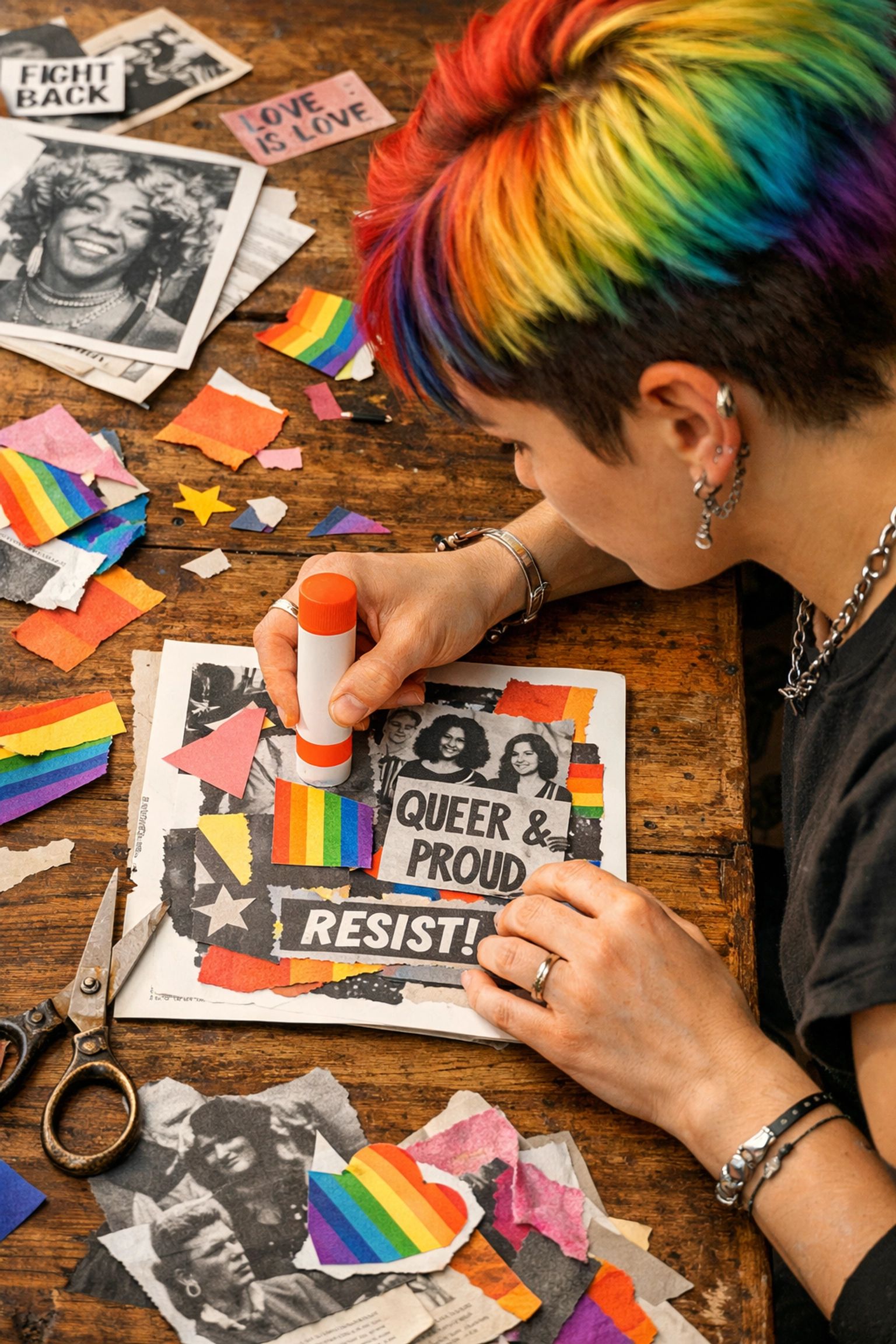
- Scissors & Glue: The "cut and paste" aesthetic is a zine staple.
- Pens & Markers: High-contrast black ink works best for photocopying.
- A Long-Arm Stapler: This is the holy grail. It allows you to staple the center fold of your booklet. If you don't have one, you can use a regular stapler and a bit of cardboard: Google the "cardboard hack," it's a lifesaver.
- A Master Copy: This is the original version of your zine that you’ll take to the copier.
Step 3: Layout and Content Generation
This is where the magic happens. You’re the editor, the author, and the designer. If you’re writing about gay romance novels, maybe include a "spice rating" or a "trope checklist." If you’re into gay historical romance, you could include "found" vintage photos of queer couples from the public domain.
The 8-Page Mini Zine:
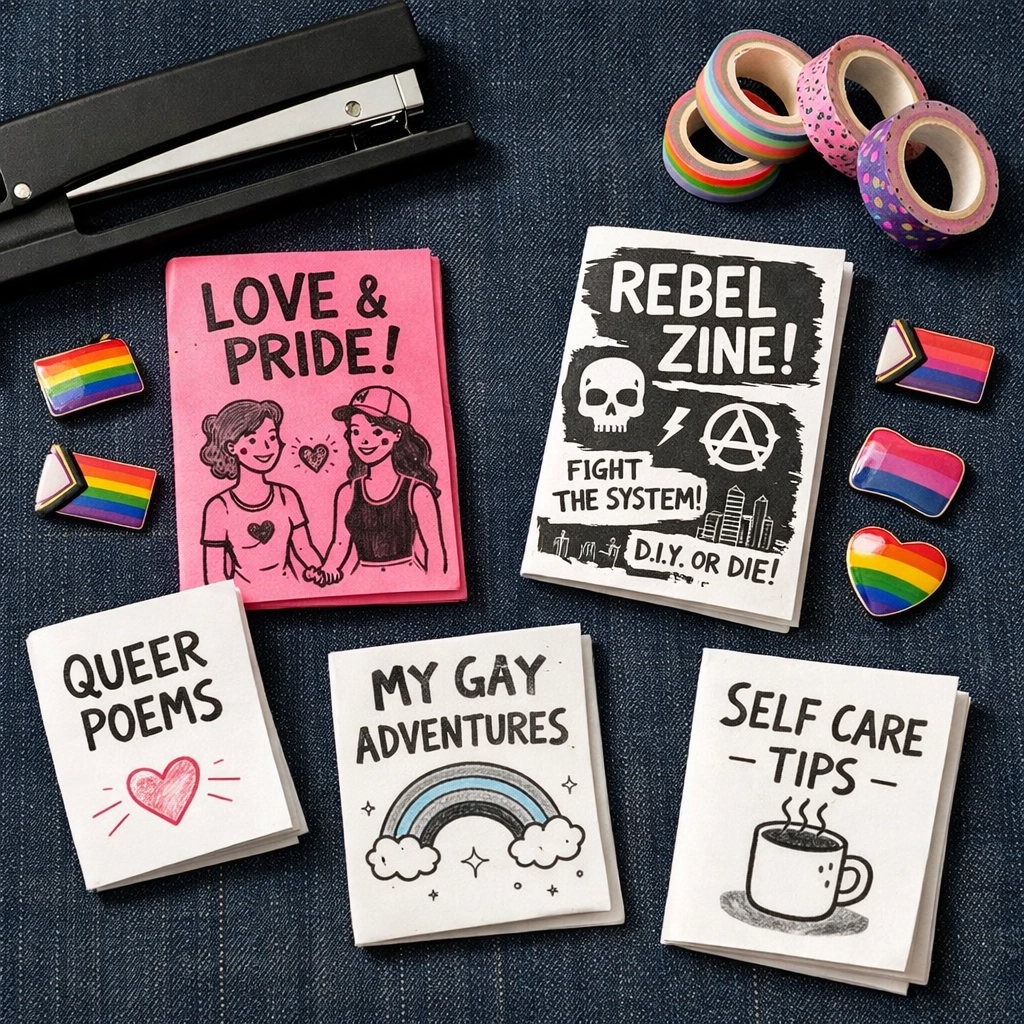
For beginners, the "one-sheet" zine is a great starting point. You take one piece of paper, fold it in a specific way, make one cut, and boom: you have an 8-page booklet without needing any staples. It’s perfect for quick manifestos or a "Best of 2026 gay books" listicle.
The "Analog" Layout:
Don’t be afraid to literally tape things down. Cut out words from magazines, print out screenshots of your favorite LGBTQ+ ebooks, and hand-write your captions. This tactile feel is exactly what makes zines stand out against the polished world of popular gay books.
Step 4: Printing and Reproduction
Once your master copy is finished, it’s time to head to the local library or a print shop. There is something deeply nostalgic and queer about standing over a photocopier at 10 PM.
- Black and White: Most zines are B&W because it’s cheap and iconic. High contrast is your friend.
- Paper Stock: If you’re feeling fancy, use colored paper for the cover. Neon pink or lavender are always solid choices for the community.
- Batch Size: Start small! Print 20-30 copies. You can always print more if it takes off.
Step 5: Distribution – Getting Your Zine into Queer Hands
A zine sitting in your bedroom is just a diary. A zine in a stranger’s hand is a movement. Here’s how to distribute your work in 2026:
- Zine Fests: Look for local DIY festivals. They are incredible places to meet other queer authors and swap work.
- Queer Bookstores: Many independent shops have a zine shelf. They might take your work on "consignment" (they pay you when it sells).
- Guerrilla Distribution: Leave a few copies in a queer cafe, a gender-neutral bathroom, or tucked inside a mainstream gay romance book at a big-chain library.
- Distros: A "distro" is a small-scale distributor that sells zines online. They are the "indie publishers" of the zine world.
- Online Presence: Mention your zine on your social media. Share snippets on Instagram or X.
If your zine starts to feel like a full-blown novel, you might want to look into more formal publishing options. Check out what we do at Readwithpride.com's store to see how indie writers are moving from DIY to digital.
Tips for a Successful Queer Zine
- Don’t Aim for Perfection: Smudges, slightly crooked text, and handwritten typos are part of the charm. It shows a human made this.
- Include a Contact Page: Give people a way to reach you. An anonymous email or a PO Box is great for building community.
- Credit Your Sources: If you’re using someone else’s art or quoting a specific MM romance author, give them a shout-out.
- Collaborate: Some of the best zines are "split zines," where two people contribute half the content. It’s like a literary "chosen family" project.
Digital Zines (Ezines)
While we love the smell of toner in the morning, digital zines are a great way to reach a global audience. You can create a PDF and host it on your own site or platforms like Itch.io. If you’re focusing on LGBTQ+ Kindle books or gay eBooks, a digital zine can act as a companion piece to your longer works.
For those who are already writing long-form, you might find that your zine content actually works well as a lead-in to a full book. We’ve seen many MM novels start as short, punchy zine entries. If you're looking for inspiration on how to transition from short-form to a full-length story, read about why genre-bending MM romance is the next big thing.
Final Thoughts: Just Start Folding
The most important step in starting a queer zine is to actually start. Don't wait for a better printer or a "more important" topic. Your voice, exactly as it is right now, is enough.
In the 1990s, zines saved lives by providing information about the AIDS crisis that the government wouldn't share. In the 2020s, they are saving our sanity by providing a space away from the noise of the internet. Whether you’re writing about steamy MM romance, trans rights, or your favorite vegan recipes, you are participating in a beautiful, messy, radical tradition.
So grab your scissors, find a photocopier, and let’s see what you’ve got.
Visit us at Readwithpride.com for more tips on queer storytelling and to find your next favorite read.
#LGBTQBooks #QueerZines #DIYPublishing #ReadWithPride #MMRomance #GayFiction #ZineCulture #QueerAuthors #2026GayBooks #SmallPress

Leave a Reply
You must be logged in to post a comment.