

readwithpride.com
We’ve all seen the trope in our favorite MM romance books: the brooding protagonist takes his partner home, the parents are chilly, there’s a dramatic confrontation at dinner, and by the final chapter, everyone is hugging over a turkey dinner. It’s a classic "disapproving family" arc that keeps us turning pages. But in the real world, the one we’re living in here in 2026, the "happily ever after" with biological parents isn’t always a guarantee.
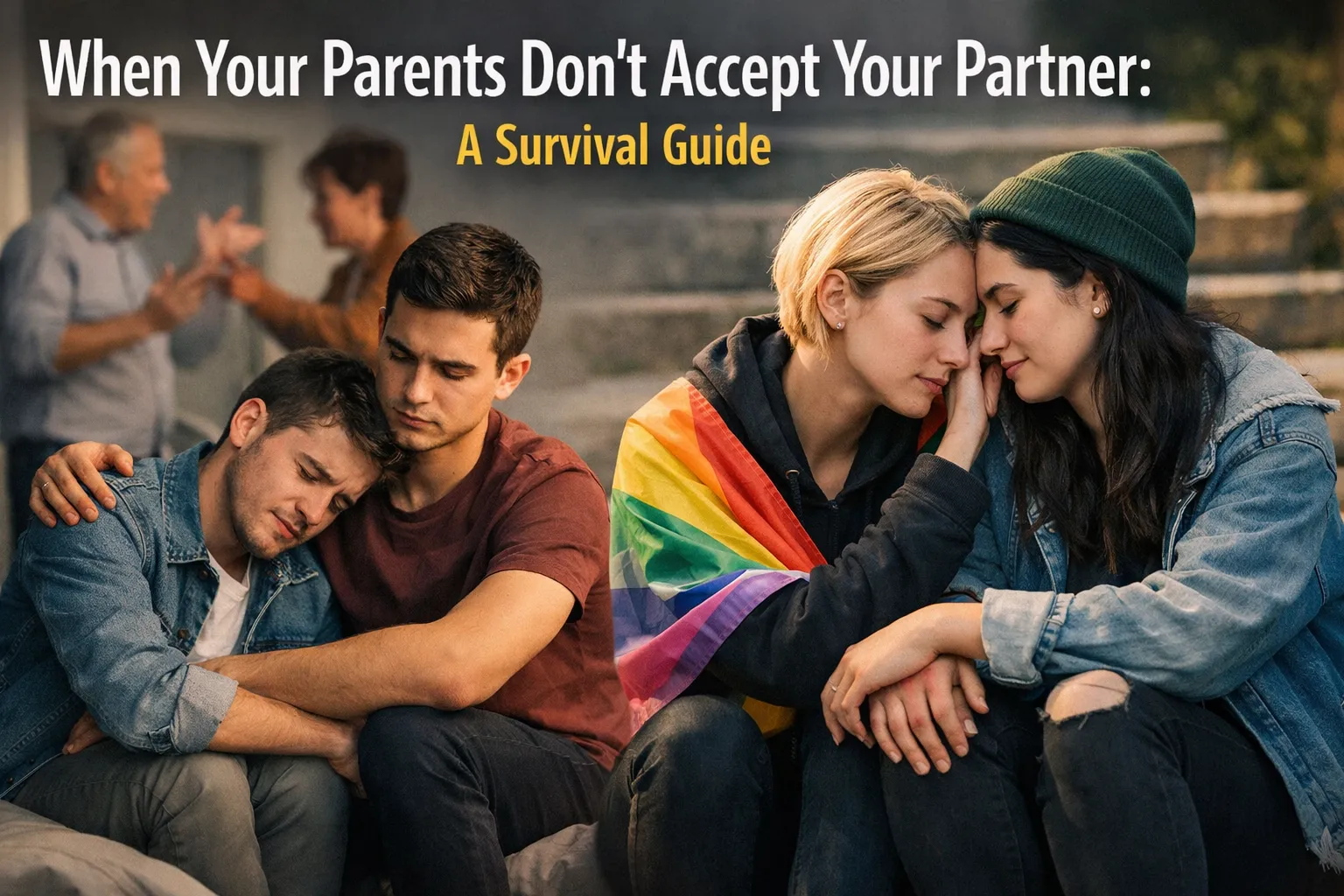
When your parents don’t accept your partner, it’s not just an awkward Sunday brunch. It’s an emotional minefield that tests your loyalty, your mental health, and the foundation of your relationship. At Read with Pride, we believe in the power of stories, but we also believe in the power of standing your ground. Here is your authentic survival guide for navigating the "Meet the Parents" nightmare when the parents refuse to play nice.
1. The Reality Check: Is it Them, or is it Them?
Before you go full "Romeo and Romeo" against the world, take a breath and evaluate the situation. There are two very different types of disapproval.
Type A: The Behavioral Concern. Sometimes, parents see red flags we miss because we’re wearing those sparkly new-relationship goggles. If your parents are worried because your partner is disrespectful, unreliable, or unkind to you, that’s not necessarily about your queer identity, that’s about your well-being.
Type B: The Fundamental Disapproval. This is the one we see far too often. This is the disapproval rooted in homophobia, transphobia, or a refusal to let go of a heteronormative "plan" they had for your life. If they hate your partner simply because they exist as your queer partner, that is a "them" problem, not a "you" problem.
Knowing which one you’re dealing with is the first step in deciding whether to build a bridge or a wall. If it's Type B, it's time to realize that no amount of "being perfect" will win them over. You can't perform your way into acceptance.

2. The Unified Front: Talk to Your Partner First
Your partner is the person actually being rejected here, and that hurts. A lot. Before you try to fix your parents, you need to check in with your person.
Don't minimize the situation. Saying "Oh, that’s just how they are" is a fast track to resentment. Instead, have an honest conversation. Ask them:
- How much does my parents' opinion actually matter to you?
- What are your hard boundaries for the next family gathering?
- Do you feel supported by me when they make "those" comments?
In the world of gay romance novels, the hero always stands up for his man. In 2026, you need to do the same. If your partner feels like you’re a "team," they can handle a lot more than if they feel like you’re trying to keep the peace at their expense. You are a unit now. Act like it.
3. Setting the "No-Fly Zone" (Boundaries)
Boundaries aren't meant to punish your parents; they are meant to protect your peace. If your biological family is being toxic toward your partner, you have to be the one to set the rules.
Clear communication is key. You might say: "I love you both, but I will not sit at a table where my partner is disrespected. If you make derogatory comments or ignore them, we will leave."
And here is the hard part: You actually have to leave. If you stay after they break the boundary, you’re telling them that your partner’s dignity has a price. You don't have to be mean about it. You can be the "calm in the storm." A simple, "It seems like today isn't a good day for this. We’re going to head out. Let’s try again when things are calmer," goes a long way.
For more on navigating complex relationships and identity, check out our blog category sitemap for deeper dives into queer life.

4. The Holiday Survival Guide: To Go or Not To Go?
Holidays are the final boss of parental disapproval. The pressure to "just get through it for the sake of the family" is immense. But ask yourself: At what cost?
If your parents invite you but "prefer" you don't bring your partner, the answer is a hard no. In 2026, we aren't hiding our love in the coat closet. Acceptance is a package deal. If your partner isn't welcome, your presence shouldn't be either.
However, if you do go as a couple, have an exit strategy.
- Drive separately: Don't get trapped if things go south.
- The "Safe Word": Have a code word with your partner that means "Get me out of here in the next five minutes."
- Limit the time: You don't have to stay for the whole weekend. A two-hour lunch is plenty.
5. Finding Solace in Queer Fiction
Sometimes, the weight of real-world rejection is too much. That’s why we turn to gay love stories and MM romance books. They remind us that we aren't alone and that our love is worth fighting for. Whether it's a genre-bending MM romance or a classic gay historical romance, seeing our struggles reflected on the page is healing.
If you’re feeling drained, take a break. Curl up with one of the top LGBTQ+ books of the year and let yourself escape into a world where the good guys always win.

6. The Magic of Chosen Family
If your biological parents continue to refuse your partner, remember that you have a choice. You can't choose your blood, but you can choose your family.
The LGBTQ+ community has survived for decades by building "Chosen Families": groups of friends, mentors, and fellow queers who love us exactly as we are. If your parents’ house feels like a cold museum where you have to hide your true self, stop trying to live there. Build a home with people who celebrate your relationship instead of merely "tolerating" it.
Your chosen family won't roll their eyes when you hold hands. They won't "forget" to include your partner in the Christmas card. They will be the ones cheering the loudest for your love.
7. When to Walk Away
It’s a painful thought, but sometimes the healthiest thing you can do is take a long-term break from your parents. If the disapproval is impacting your mental health or causing a rift in your relationship that you can't bridge, it’s okay to step back.
This isn't necessarily "forever," but it is "for now." You deserve a life filled with joy and gay romance, not constant defense. Your primary responsibility is to the life you are building today, not the one your parents imagined for you twenty years ago.

Final Thoughts
Navigating parental disapproval is one of the hardest things a queer person can do. It requires the strength of a hero in an MM fantasy novel and the patience of a saint. But remember: your happiness is not a bargaining chip. You are allowed to love who you love, and you are allowed to protect that love from anyone who tries to diminish it: even if they share your DNA.
Stay authentic, stay proud, and keep reading. Your story is still being written, and you are the one holding the pen.
For the latest in gay fiction and new gay releases for 2026, visit us at Readwithpride.com. We’re here to celebrate your stories, every single day.
#LGBTQ #ReadWithPride #MMRomance #GayRomance #ChosenFamily #QueerSurvival #GayBooks2026 #LoveIsLove #LGBTQSupport
Check out more of our stories and updates on our social channels:

Leave a Reply
You must be logged in to post a comment.