

readwithpride.com
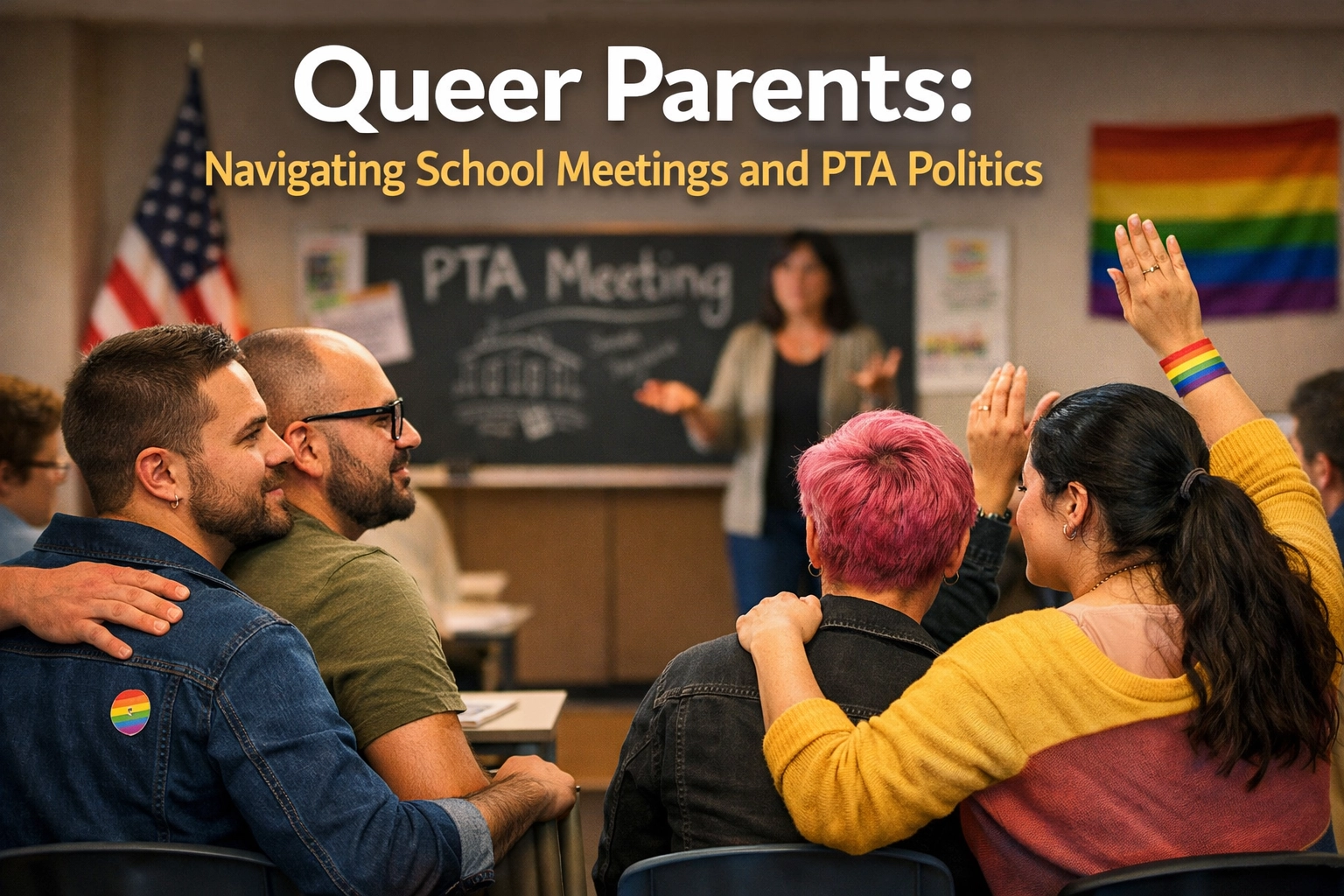
Let’s be real: the first day of school isn't just stressful for the kids. For queer parents, it’s often the start of a year-long marathon of "coming out" to teachers, administrators, and that one over-caffeinated parent in the carpool lane. Whether you’re a two-dad household, a trans-parent family, or a beautifully blended queer unit, navigating the school system requires a mix of diplomacy, advocacy, and a very thick skin.
At Read with Pride, we’re all about stories. But the story you write within your child's school district is just as important as the queer fiction you read to them at night. From surviving the "Mother-Son Dance" drama to making sure the PTA forms don’t leave you feeling invisible, here is your survival guide for navigating school meetings and PTA politics with grace, wit, and a whole lot of pride.
The Preemptive Strike: Setting the Stage Before the First Bell
You don't want the first time a teacher hears about your family to be during a panicked phone call about a playground scuffle. Proactive communication is your best friend.
Schedule the "Vibe Check" Meeting
Before the school year kicks into high gear, try to schedule a brief, friendly meeting with your child’s teacher. Think of it as a preemptive strike against awkwardness. This isn't about being "difficult"; it’s about providing the teacher with the tools they need to be inclusive.
- Define the vocabulary: Does your child call you "Papa" and "Dad"? "Mama" and "Mommie"? Make it clear so the teacher doesn't accidentally default to "Go home and tell your mom…"
- The "Nuclear" Option: Remind them that the "nuclear family" isn't the only model. Suggest they use words like "guardians" or "grown-ups at home" during classroom instructions.
- Be the Resource: Educators are often overworked. If you come in with a "How can I help you make this classroom inclusive?" attitude rather than a "Here is a list of things you're doing wrong" vibe, you’ll win allies much faster.

PTA Politics: Claiming Your Seat at the Table
The Parent-Teacher Association (PTA) can sometimes feel like a scene out of a psychological thriller, lots of passive-aggressive emails and intense debates over the quality of bake-sale brownies. However, for LGBTQ+ parents, the PTA is where the real power lies.
By the Numbers: We Show Up
Interestingly, research shows that LGBTQ+ parents are actually more engaged in school life than the general population. While about 77% of all K-12 parents attend back-to-school nights, a staggering 94% of queer parents show up. We also join the PTA at nearly double the national rate.
Why? Because we know that visibility is protection. When you are the one organizing the silent auction or chaperoning the field trip, it becomes much harder for people to treat your family as an "issue" or a "debate." You aren't a concept; you're the person who brought the best gluten-free snacks.
Navigating the "Uncomfortable" Principal
A study found that 1 in 6 school principals believe LGBTQ+ parents would feel uncomfortable participating in school life. Sometimes, that "uncomfortability" is a projection of their own biases. By stepping into these spaces, even when it feels a bit like walking into a lion's den, you are actively dismantling those assumptions.
- Bring a Wing-Man (or Woman): If the PTA feels cliquey, find one "ally" parent. Having someone to sit with during meetings makes the environment feel less hostile.
- Focus on the Kids: At the end of the day, PTA politics should be about the students. If you keep the focus on "How does this benefit the kids?", it’s much harder for anyone to play identity politics against you.

Advocacy Without the Emotional Burnout
One of the hardest parts of being a queer parent in the school system is the feeling that you have to be an "educator" for everyone else. It’s exhausting to constantly have to explain why a certain book or policy is exclusionary.
The Power of the Library
One of the most effective ways to advocate is through the school library. In 2026, we’ve seen a rise in book challenges, but we’ve also seen a massive surge in the popularity of LGBTQ+ ebooks and inclusive literature.
Suggest that the school library stocks titles that reflect diverse family structures. You don’t have to demand a "Gay History" month (though that would be cool); you can simply advocate for stories where queer characters exist without it being a "problem" novel.
- Pro Tip: If the school budget is tight, offer to donate a few inclusive titles. It’s hard for a school to say no to free, high-quality books. Check out our latest gay romance books or contemporary fiction for ideas on what modern representation looks like.
Forms and Formalities
Check the school’s paperwork. Do the forms still ask for "Mother" and "Father"? Advocate for a simple change to "Parent 1" and "Parent 2" or "Legal Guardians." It’s a small technicality that makes a massive difference in feeling seen.
Your Child’s Perspective: Let Them Lead
As much as we want to be "Mama Bear" or "Papa Bear," we have to remember that our kids are the ones who have to live in the classroom every day.
- The Comfort Conversation: Ask your child how they want you to handle things. Do they want you to be the "out and proud" parent who brings a rainbow cake to the social, or would they prefer you to keep it low-key?
- Controlling the Narrative: Empower your child with the language to talk about their family. If a kid asks, "Why do you have two dads?", your child should have a simple, confident answer ready: "Because I'm lucky!" or "That’s just how my family is."

Finding Your "Chosen" School Family
Navigating the school system can be isolating if you’re the only queer family in the district. This is where your community comes in.
Build an Online and Offline Village
Connect with other LGBTQ+ parents through local groups or online forums. Sharing "war stories" about a particularly difficult PTA meeting can be incredibly cathartic. It also helps to exchange notes on which teachers are allies and which ones might need a little more "education."
While you’re busy being a superstar advocate, don't forget to take care of yourself. When the school drama gets too loud, there’s nothing like disappearing into a steamy MM romance or a gay fantasy romance to recharge your batteries. You can’t pour from an empty cup, and sometimes "self-care" means ignoring the PTA group chat for an hour to read your favorite 2026 gay books.
Conclusion: You Belong There
The most important thing to remember is that you have a right to be in that school meeting. You have a right to be in that PTA. Your child deserves to see their parents taking an active, respected role in their education.
By showing up, speaking out, and refusing to be sidelined by outdated "nuclear family" politics, you aren't just helping your own child: you’re making the school a safer, more inclusive place for the next queer family that walks through those doors.
Keep reading, keep showing up, and always Read with Pride.
Join the Conversation
How do you handle school meetings? Have you successfully changed a school policy? Let us know on our socials!
Follow us for more tips and queer lit updates:
- Facebook: Read with Pride on Facebook
- Twitter/X: @Read_With_Pride
- Instagram: @read.withpride
Explore More on Readwithpride.com:
- Top MM Romance Books of 2026
- How to Fix LGBTQ+ Character Development
- The Latest Queer Fiction Releases
#LGBTQParents #QueerParenting #PTAPolitics #InclusivityInSchools #ReadWithPride #GayRomanceBooks #QueerFiction #SchoolAdvocacy #ModernFamily #MMRomance2026

Leave a Reply
You must be logged in to post a comment.