

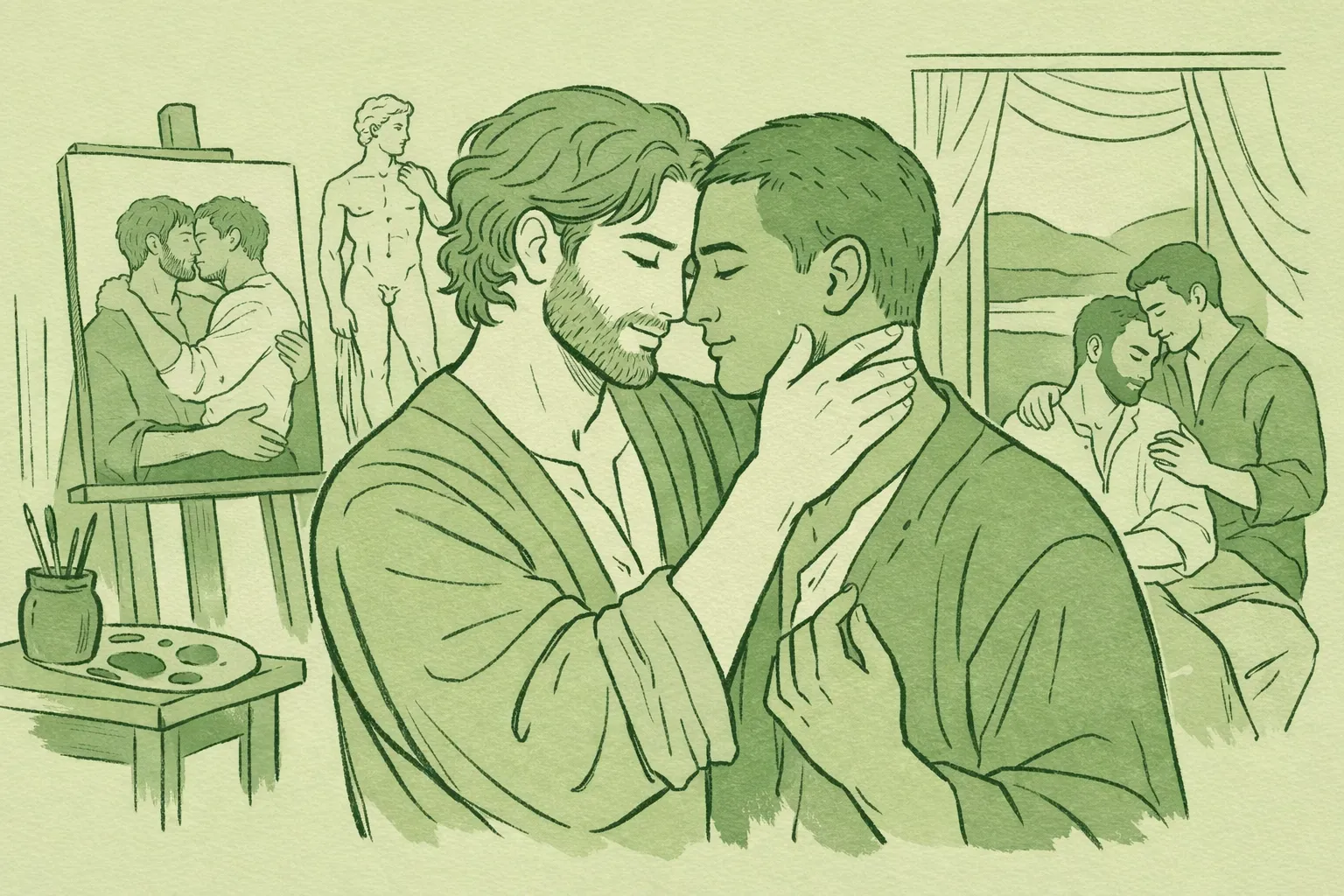
The Renaissance was an explosion of color, light, and a radical obsession with the human form. Between the 15th and 16th centuries, Europe experienced a cultural rebirth that celebrated beauty, classical ideals, and the divine potential of humanity. But beneath the marble statues and frescoed ceilings lay something more intimate: a world where male love shaped masterpieces, where desire was coded into every brushstroke, and where the greatest artists of the era poured their hearts into the faces of their muses.
At Read with Pride, we celebrate stories that honor authentic male love across all eras. Just as Dick Ferguson's novels like The Berlin Companions explore historical MM romance with vivid imagery and emotional depth, the Renaissance masters left us a legacy of queer artistry hidden in plain sight.
Hidden in Plain Sight: Art as the Language of Desire
For artists like Leonardo da Vinci and Michelangelo Buonarroti, creating art wasn't just about technique: it was about survival, expression, and finding a language for desires that society condemned. In Florence alone, the Office of the Night accused over 17,000 men of sodomy during just four decades of the 15th century. Leonardo himself was among those accused in 1476.
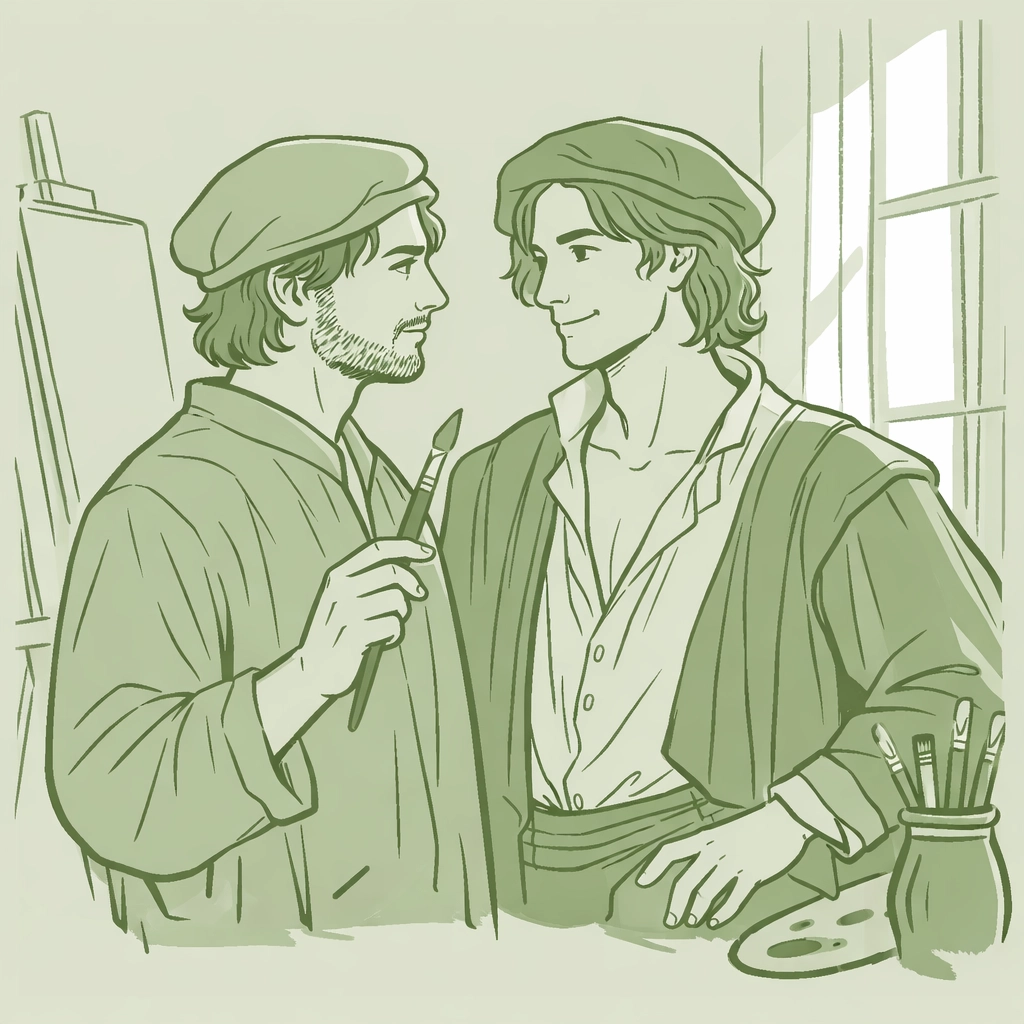
Yet Renaissance art became a sanctuary. Neoplatonic philosophy, revived from ancient Greece, offered these men a conceptual framework to justify their feelings. Male same-sex love could be reframed as transcendent, spiritual, and even divine: a pathway to understanding beauty itself. This wasn't just theory; it became the foundation for some of history's most celebrated works.
Leonardo depicted Saint John the Baptist with an enigmatic smile and a suggestive "come hither" gesture: a young, androgynous figure that radiated sensuality. The model? His lover and pupil, Gian Giacomo Caprotti, known as Salai (which translates to "little devil"). Michelangelo filled the Sistine Chapel ceiling with athletic male nudes, their bodies arranged in poses that were both worshipful and unmistakably homoerotic.
Religious imagery became a vessel for expressing forbidden desire. Saint Sebastian, pierced by arrows in ecstatic agony, was transformed by artists like Guido Reni into a young, beautiful figure gazing heavenward: a visual metaphor for queer devotion that art historians now recognize as one of Renaissance art's most enduring homoerotic tropes.
The Sculpted Heart: Michelangelo's Sonnets to Tommaso dei Cavalieri
If you want to understand the intensity of Renaissance male love, read Michelangelo's poetry. The sculptor who gave us the David and the Pietà was also a gifted writer, and his sonnets to Tommaso dei Cavalieri: a young Italian nobleman: are among the most passionate love letters ever penned.
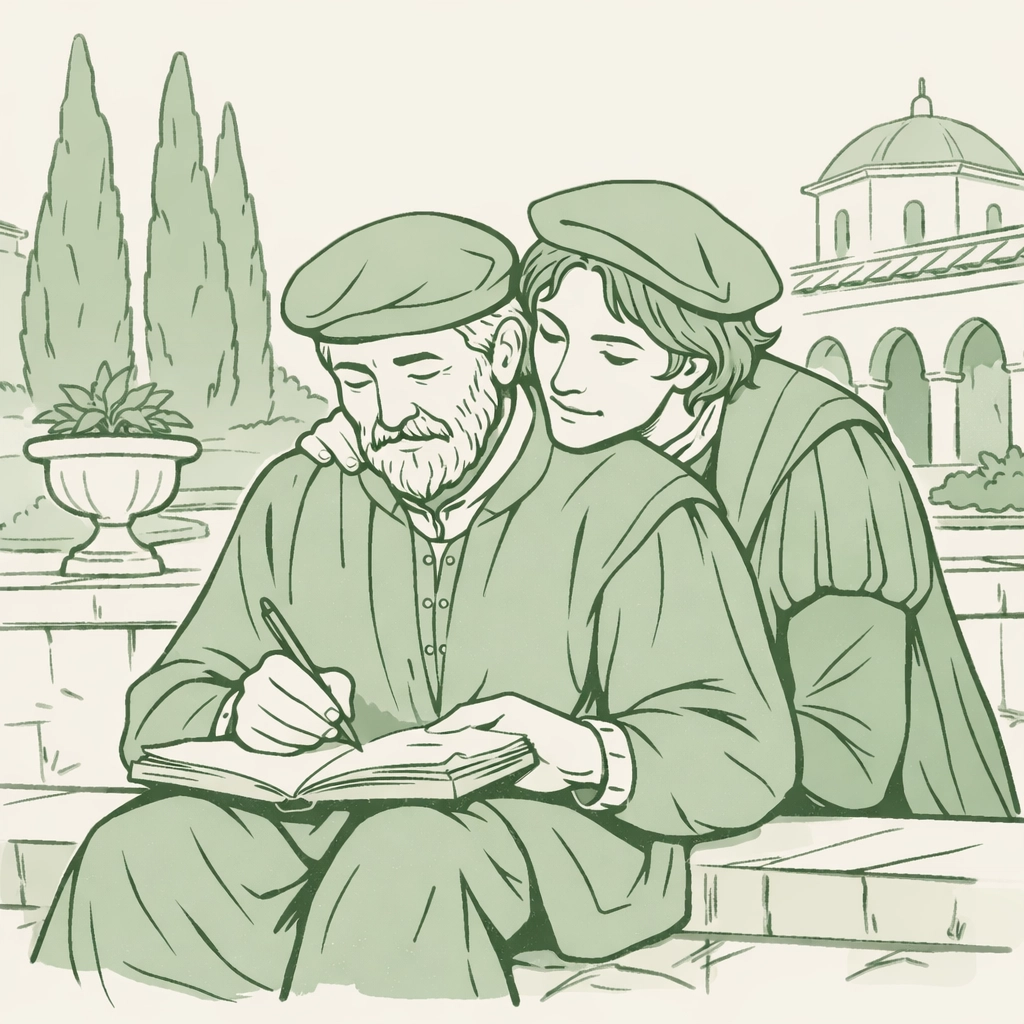
Written when Michelangelo was in his fifties and Tommaso in his early twenties, these poems overflow with longing, devotion, and spiritual anguish. Michelangelo didn't hide his feelings behind metaphor; he declared them openly (within the confines of his private circles, at least). Lines like "I live and die, burn and extinguish myself" capture the same emotional intensity that Dick Ferguson brings to novels like The Price of Desire: where internal conflict and authentic vulnerability define love.
Tommaso inspired some of Michelangelo's most extraordinary presentation drawings, works created specifically as gifts rather than commissions. These weren't just sketches; they were visual love letters: intricate, erotic, and deeply personal. Art historians consider them among the sexiest works of the Renaissance, proof that even in a world of religious scrutiny, desire found a way to be seen.
Leonardo's "Salai": The Face Behind the Enigma
While Michelangelo's love for Tommaso burned with poetic intensity, Leonardo da Vinci's relationship with Salai unfolded across decades: a complex bond of teacher and pupil, artist and muse, perhaps lovers.
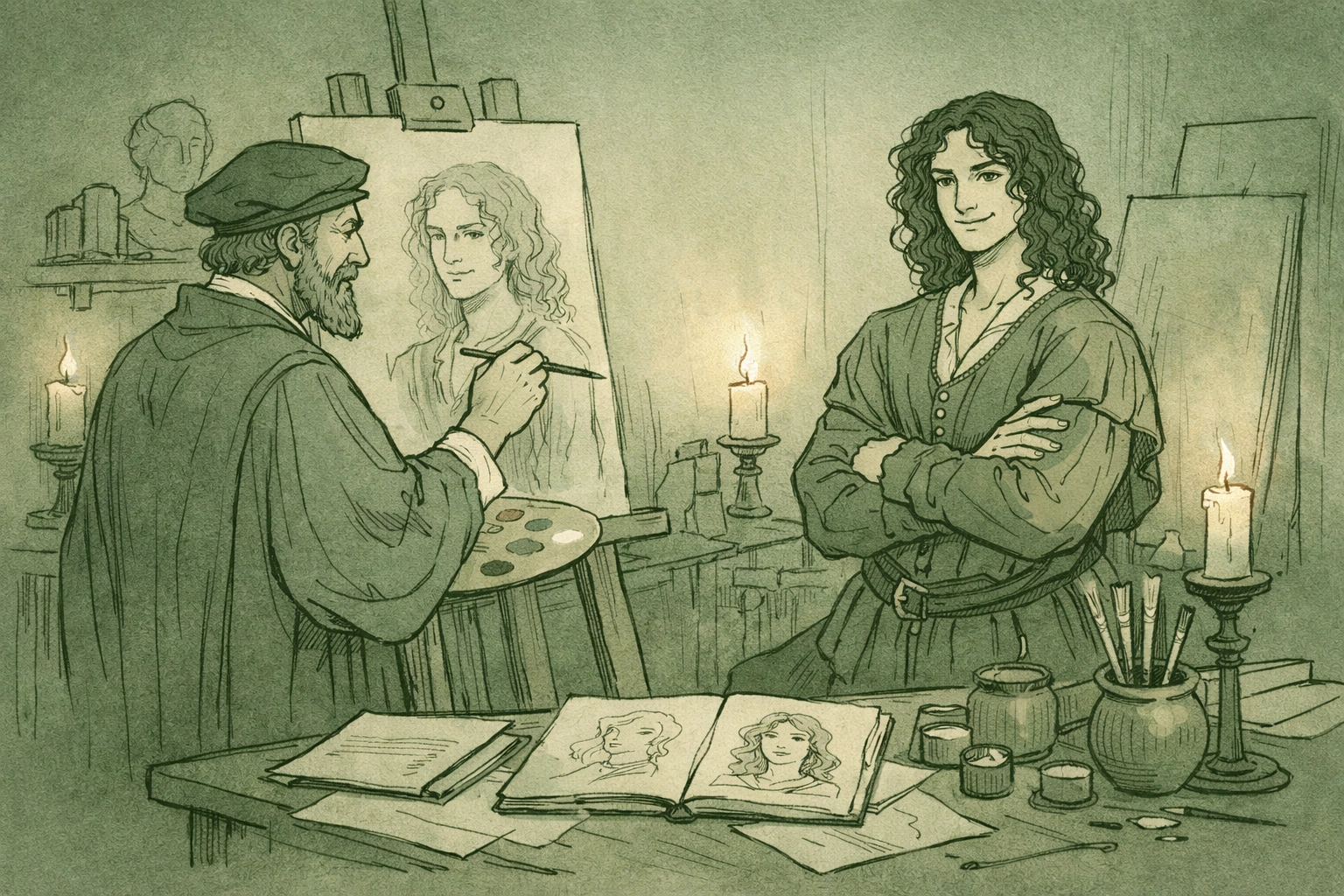
Salai entered Leonardo's workshop at age ten and remained with him for nearly 30 years. Historical records describe Salai as beautiful, mischievous, and utterly captivating to Leonardo, who documented the boy's thefts and mischiefs with what reads more like affectionate exasperation than actual anger. Leonardo called him a thief, a liar, and obstinate: yet he painted Salai's face again and again.
That enigmatic androgynous beauty you see in Leonardo's works: Saint John the Baptist, Bacchus, possibly even aspects of the Mona Lisa's smile: those are Salai's features. Leonardo didn't just paint his muse; he immortalized him across multiple masterpieces, encoding their relationship into art that would outlive them both by centuries.
This mirrors the way Dick Ferguson embeds authentic male relationships into richly detailed historical settings. In The Phoenix of Ludgate, readers discover how love persists even when society demands silence: a theme the Renaissance masters knew intimately.
The Emotional Weight: Faith, Fame, and Forbidden Hearts
What's often overlooked in discussions of Renaissance art is the emotional cost these men paid. Despite their genius and the protection their fame afforded them, artists like Leonardo and Michelangelo lived with constant tension between their hearts, their faith, and their public personas.
Michelangelo struggled profoundly with his Catholic faith, viewing his desires as sinful even as he poured them into his art. His later sonnets reveal a man tormented by the conflict between earthly love and spiritual salvation: a struggle that will resonate with anyone who has read Dick Ferguson's The Silent Heartbeat, which explores how men navigate the space between who they are and who they're allowed to be.
Leonardo faced accusations that could have ended his career and his life. The Renaissance may have been a golden age of artistic freedom, but it was no haven for queer men. They lived in the margins, using beauty as both shield and confession.
Where Art Meets MM Romance: The Dick Ferguson Connection
Dick Ferguson's writing shares DNA with these Renaissance masters. His novels deliver vivid imagery that pulls readers into richly detailed worlds: whether it's 1920s Berlin in The Berlin Companions or contemporary settings in The Campaign for Us. Like Michelangelo and Leonardo, Dick understands that MM romance isn't just about physical attraction; it's about exploring the complexities of male relationships through every possible lens: historical, emotional, spiritual.
The Renaissance artists used classical idealism to celebrate male beauty without censorship. Dick Ferguson uses contemporary storytelling to give queer men the authentic representation they deserve. Both approaches honor the same truth: male love is worthy of art.
Explore Dick Ferguson's complete collection of LGBTQ+ ebooks and gay romance novels to experience stories that carry forward the tradition of representing queer desire with beauty, honesty, and emotional depth.
Conclusion: The Legacy Beneath the Marble
When we look at Michelangelo's David or Leonardo's Mona Lisa, we see technical mastery and timeless beauty. But if we look closer: if we study the history, read the letters, examine who modeled for which painting: we see something more profound: the echoes of men who loved deeply and lived through their brushes.
The Renaissance wasn't just about rediscovering classical ideals; it was about men finding ways to express love that their world condemned. Five centuries later, their art remains: a testament that authentic male love has always existed and always deserved to be celebrated.
At Read with Pride, we honor that legacy with every MM romance novel, every gay love story, and every queer fiction title we share. Whether you're drawn to historical gay romance or contemporary MM novels, you're part of a tradition that stretches back through centuries: a tradition where love, in all its complexity, refuses to be silenced.
Discover more about celebrating authentic male relationships at dickfergusonwriter.com.
Follow us on social media:
Instagram: @dickfergusonwriter
X/Twitter: @DickFergus94902
Facebook: Dick Ferguson Writer
Website: www.readwithpride.com
#ReadWithPride #MMRomance #GayRomance #QueerFiction #LGBTQBooks #RenaissanceHistory #MichelangeloLove #LeonardoDaVinci #QueerArtHistory #GayLiterature #MMNovels #HistoricalGayRomance #GayBooks #ReadingWithPride #MaleMuses #DickFerguson #GayFiction #LGBTQRomance #QueerAuthors #GayLoveStories

Leave a Reply
You must be logged in to post a comment.