

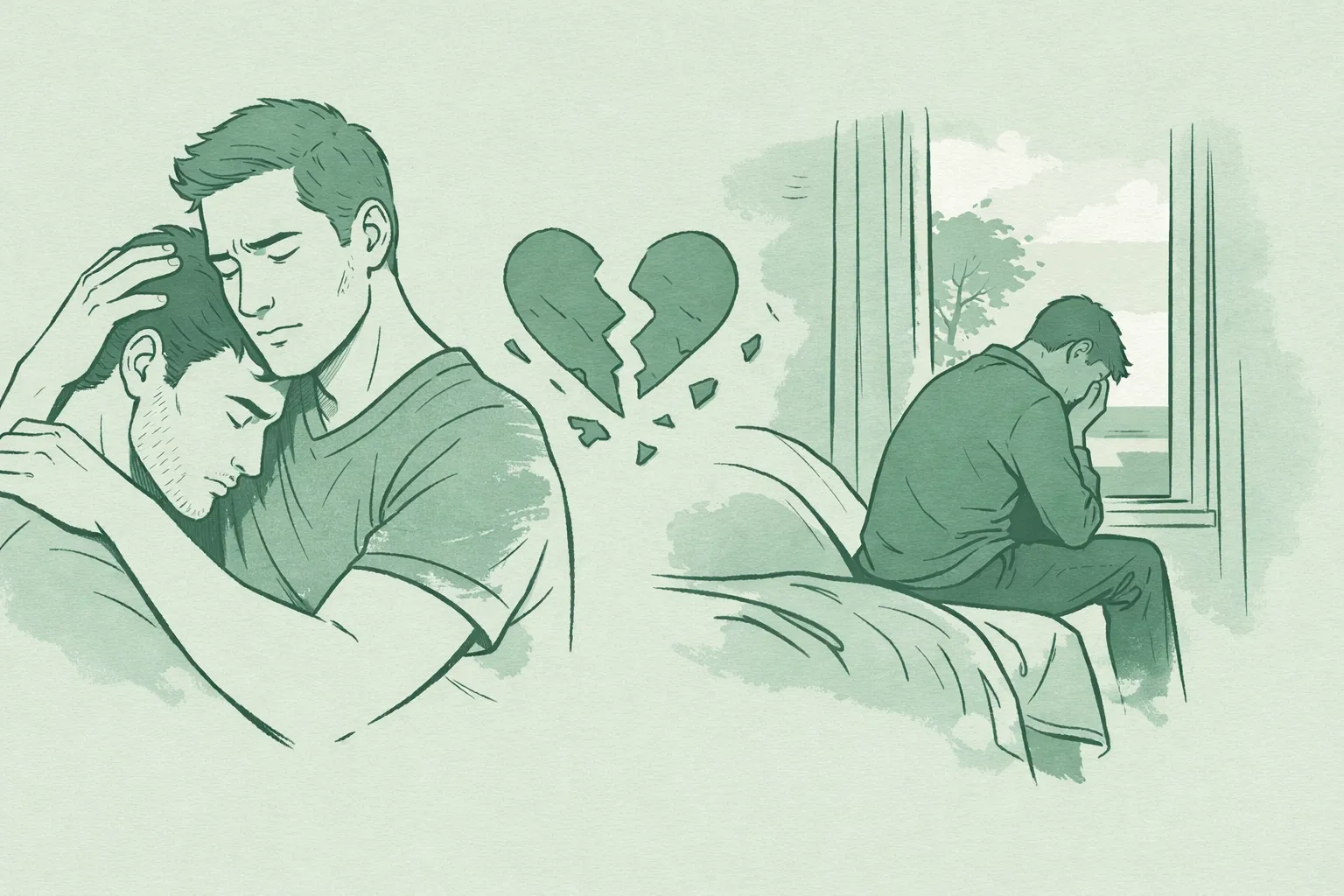
Writing a heartbreak isn't just about the words on the page; it's about the physical weight of the silence after a door closes. It's the cold coffee cup sitting on the counter three hours past dawn. It's the specific angle of afternoon light cutting across an empty bed, illuminating dust particles that float like abandoned promises.
In MM romance and LGBTQ+ fiction, emotional intensity isn't a luxury: it's the foundation. Dick Ferguson understands this implicitly. His work doesn't just tell you a character is hurting; it makes you feel the fracture in your own chest. This is the craft of heartbreak, and it's worth dissecting.
Sensory Immersion: Making Pain Tangible
The human experience of heartbreak lives in our bodies before it reaches our minds. Dick Ferguson's approach to vivid imagery and lyrical prose creates what we might call "sensory memory": the reader doesn't just understand the character's pain, they experience it.

Consider the difference between these two sentences:
"Marcus was devastated when James left."
versus
"Marcus stood at the kitchen counter, his fingers wrapped around a mug that had gone cold hours ago. The apartment still smelled like James: cedar and bergamot: but the silence had teeth now."
The second example engages multiple senses: touch (the cold mug), smell (cedar and bergamot), and even transforms silence into something physical. This is how Dick Ferguson operates in books like The Silent Heartbeat and Velvet Nights and Broken Dreams: by anchoring emotion in the tangible world.
The smell of someone's cologne lingering on a pillowcase. The specific creak of a floorboard that now sounds wrong without two sets of footsteps. The taste of wine that used to be celebratory and now just tastes bitter. These details aren't decorative: they're the architecture of authentic grief.
The Internal Journey: Mapping the Authentic Struggle
Here's where craft separates amateur writing from the kind of gay fiction that stays with readers long after the final page. It's easy to write "he was sad." It's exponentially harder to map the visceral feeling of unworthiness, the terror of vulnerability, the way shame and longing can coexist in the same breath.
Dick Ferguson's profound empathy allows him to chart these internal landscapes with precision. In his storytelling, a character doesn't just experience heartbreak: they wrestle with the specific flavour of their pain. Is it the betrayal that cuts deepest? The loss of future possibilities? The shattering of self-image?

The emotionally invested reader: the person who seeks out MM romance and gay love stories precisely because they crave this depth: recognizes when an author is willing to dig into these uncomfortable truths. They can tell the difference between surface-level angst and the kind of authentic internal struggle that makes characters feel like real people.
This requires the writer to ask difficult questions: Why does this heartbreak hit this character in this specific way? What past wounds does it reopen? What fears does it confirm? What illusions does it destroy?
In The Berlin Companions, the heartbreak isn't just about lost love: it's about the collision between duty and desire, between survival and authenticity. The pain is multi-layered, and that's what makes it resonate.
Empathy as a Tool: Getting Under the Skin
The research on writing craft confirms what Dick Ferguson demonstrates in his work: if you aren't moved by the emotional vulnerability in your writing, your readers won't be either. This is where empathy becomes technique.
Empathy in writing isn't just understanding what a character feels: it's the willingness to inhabit that feeling long enough to translate it accurately. It means sitting with discomfort. It means allowing yourself to access memories of your own heartbreaks, your own moments of devastating vulnerability, and channeling that emotional truth into fictional experiences.
For writers creating queer fiction and gay romantic fiction, this empathy extends beyond individual pain to collective experience. The heartbreak of loving someone in a world that doesn't always celebrate that love. The specific ache of closeted longing. The complexity of relationships that must be hidden or explained or defended.
Dick Ferguson's characters carry this weight authentically. They're not just dealing with relationship heartbreak: they're navigating identity, belonging, and the courage it takes to be seen.
Crafting the "Ugly" Moments: Thematic Boldness
One of the most challenging aspects of writing heartbreak is the temptation to make it pretty. To romanticize the pain, to skip over the unglamorous parts, to reach for healing before the wound has been fully examined.

But real heartbreak is messy. It's crying in grocery store aisles. It's drunk-texting at 2 AM and immediately regretting it. It's the pathetic bargaining, the anger that feels too big for your body, the numbness that scares you more than the pain did.
Dick Ferguson's thematically bold approach means he doesn't flinch from these moments. His gay novels include the ugly crying, the moments of weakness, the times when characters make poor decisions because their judgment is clouded by grief. This isn't melodrama: it's honesty.
The best MM fiction recognizes that heartbreak doesn't follow a neat arc. It circles back. It ambushes you three weeks later when you're doing fine, thank you very much, and then suddenly you're not fine at all because you heard a song or saw someone with the same haircut or realized you've started saying "I" instead of "we."
The Emotional Intensity Scale: Calibration Matters
Not all heartbreak is created equal, and skilled writers understand how to calibrate emotional intensity. A minor disappointment shouldn't receive the same weight as discovering a betrayal or watching someone you love walk away forever.
Dick Ferguson demonstrates this calibration throughout his catalogue. Compare the emotional register in The Melody of Silence to The Price of Desire: both books deal with loss and longing, but the intensity is matched to the stakes of each story.
This is where technique meets artistry. Short, fragmented sentences convey shock and immediate pain: He's gone. Just… gone. Longer, flowing sentences create the melancholy of reflection, the way memory softens and distorts with time.
The rhythm of your prose becomes part of the emotional experience. Paragraph breaks can represent emotional fractures. White space on the page can echo the emptiness a character feels.
Point of View: Choosing Your Emotional Lens
Sometimes showing heartbreak directly: staying tight in the grieving character's perspective: creates maximum impact. Other times, revealing that pain through another character's eyes deepens the effect, allowing readers to feel both the protagonist's anguish and an observer's helpless witnessing of it.
In MM romance specifically, this technique can be powerful when showing how a partner responds to their lover's pain. The ache of wanting to fix what you can't fix. The guilt of being the source of someone else's suffering. The terrifying realization that love isn't always enough.
Writing as Survival: The Author's Journey
Here's a truth about writing heartbreak with this level of intensity: it costs something. Drawing from personal experience, from your own catalogue of loss and longing, requires emotional bravery. Dick Ferguson's work carries this authentic weight because it's clear he's willing to go to those difficult places.
For writers of LGBTQ+ fiction and gay literature, this can mean revisiting not just romantic heartbreak but the specific pain of coming out, of rejection, of loving yourself when the world sends mixed messages about your worth. It means channeling experiences that may not be fully healed.
This is why many writers developing their craft in MM fiction need what researchers call "lifelines": ways to navigate emotional intensity without drowning in it. Taking breaks between intense scenes. Reminding yourself that fiction provides both catharsis and distance. Using the writing itself as the therapeutic outlet it was always meant to be.
The Bridge Between Author and Reader
Ultimately, heartbreak in fiction is a bridge. When it's written with depth, precision, and unflinching honesty, it creates that powerful connection between storyteller and audience that defines the best gay romance books and queer fiction.
Readers of Dick Ferguson's work aren't looking for surface-level entertainment: they're seeking emotional truth. They want the affirmation that comes from seeing their own experiences reflected with dignity. They want the catharsis of surviving fictional heartbreak alongside characters who feel real.
This is the anatomy of a heartbreak: it's sensory detail that makes pain tangible, internal landscapes mapped with empathy, ugly moments rendered honestly, and emotional intensity calibrated to serve the story. It's the willingness to dig deep, to be vulnerable on the page, to trust that readers will meet you in that difficult space.
We don't just read heartbreak; we survive it alongside the characters. And in that survival, we find something resembling grace.
Explore more emotionally intense MM romance and gay fiction at Read with Pride and discover Dick Ferguson's complete collection at dickfergusonwriter.com.
Follow us on social media for daily updates on new releases, writing insights, and the best in LGBTQ+ literature:
📸 Instagram: @dickfergusonwriter
🐦 X/Twitter: @DickFergus94902
📘 Facebook: Dick Ferguson Writer
🌈 Read with Pride
#MMRomance #GayFiction #WritingCraft #LGBTQBooks #ReadWithPride #GayRomance #QueerFiction #EmotionalIntensity #GayLiterature #MMBooks #GayNovels #LGBTQFiction #GayAuthors #ReadingWithPride #HeartbreakFiction #GayLoveStories #MMNovels #ContemporaryRomance #WritersOnWriting #LiteraryProse

Leave a Reply
You must be logged in to post a comment.