

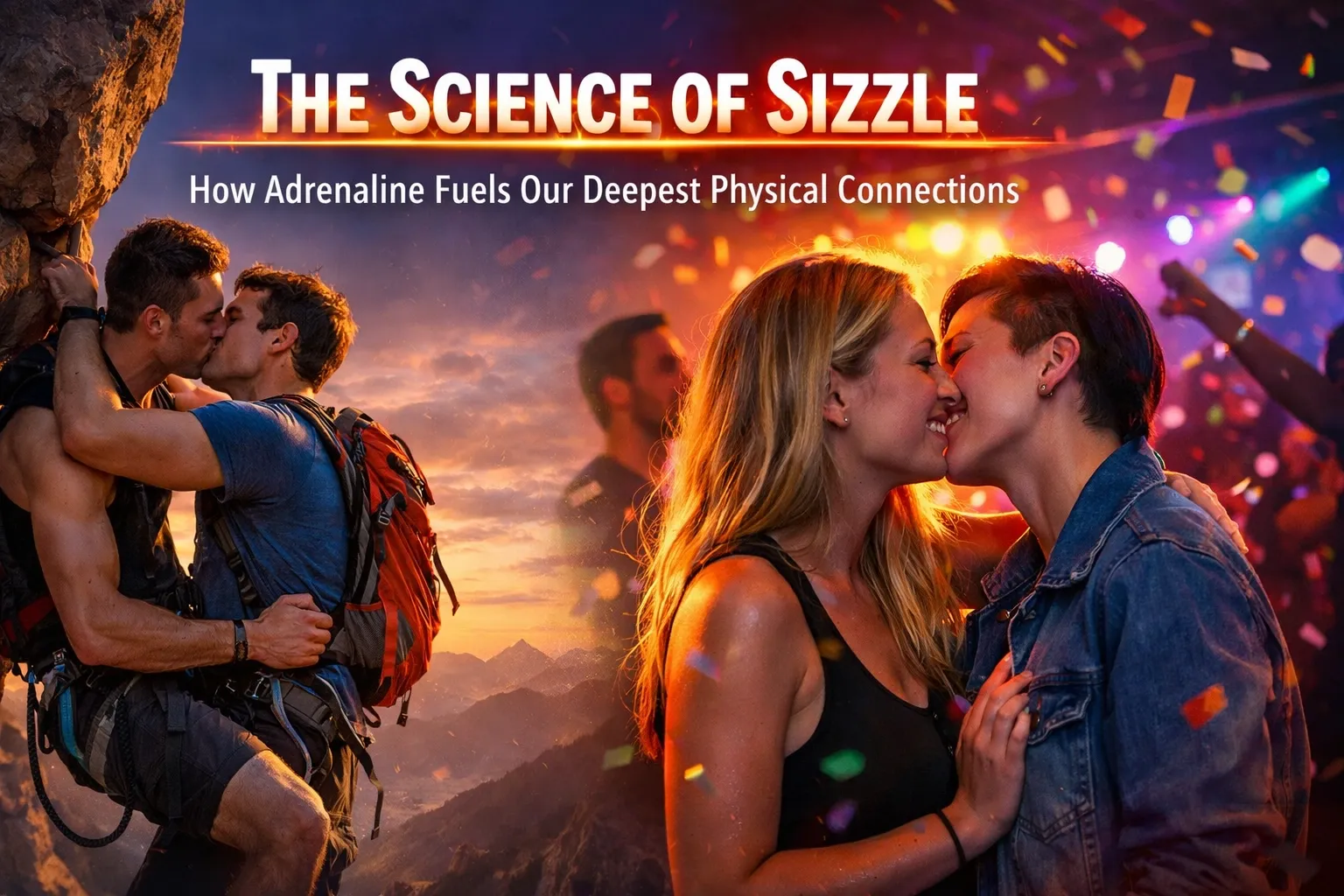
Ever wonder why the hottest scenes in MM romance happen when the stakes are highest? Why that chase sequence leads to a steamy makeout session, or why two guys trapped in a dangerous situation suddenly can't keep their hands off each other?
Turns out, it's not just good storytelling, it's science, baby. 🧪🔥
Welcome to the fascinating world where fight-or-flight meets fight-or-flirt, where your racing heart doesn't know the difference between terror and temptation, and where the best gay romance books tap into a very real psychological phenomenon that's been making us hot and bothered since the dawn of humanity.
Let's get nerdy about why danger makes us so damn attractive.
The Misattribution of Arousal: When Your Brain Gets Its Wires Crossed
Here's the thing about your brain: it's incredibly sophisticated, but sometimes it's also a bit of an idiot.
When you're in a high-stakes situation, whether you're running from danger, standing at the edge of a cliff, or confronting someone who makes your pulse race, your body floods with adrenaline. Your heart pounds. Your palms get sweaty. Your cheeks flush. You feel electric.

Now here's where it gets interesting: those physical sensations? They're identical to what happens when you're sexually attracted to someone.
Scientists call this misattribution of arousal, and it's the psychological phenomenon where your brain essentially goes, "Hmm, heart racing, sweaty palms, flushed face… must be attracted to this person!" when really, you might just be terrified, excited, or physically exerted.
Your brain is reading the physiological symptoms and slapping the nearest emotional label on them. And when there's an attractive guy standing next to you while you're experiencing that rush? Well, congratulations, you've just convinced yourself you're very into him.
The Suspension Bridge Study: Where It All Began
Back in 1973, psychologists Donald Dutton and Arthur Aron conducted what might be the most romantically dangerous experiment in research history. They took men to two different bridges in British Columbia: one was a scary, swaying suspension bridge 450 feet above a rocky canyon, and the other was a solid, low, completely boring bridge.
A woman approached the men on each bridge and asked them to complete a questionnaire. At the end, she gave them her phone number "in case they had questions."
The results? The guys who crossed the scary bridge rated the woman as significantly more attractive and were way more likely to call her later. The ones on the safe bridge? Meh. Not so much.
The conclusion: fear-induced arousal was being misattributed as sexual attraction. Their racing hearts from the scary bridge made them think they were more attracted to her than they actually were.
It's Not Just Bridges: The Science Keeps Getting Spicier
Researchers love this stuff (as they should, it's fascinating), so they kept testing it in different scenarios:
The Roller Coaster Study (2003): After riding an intense roller coaster, participants rated photographs of strangers as more attractive and date-worthy. The adrenaline rush from the ride transferred directly to their perception of attractiveness.
The Exercise Study (2011): Researchers found a significant positive correlation (that's nerd-speak for "yes, this totally works") between adrenaline levels and attraction. The more amped up people were from physical activity, the more attractive they found others.
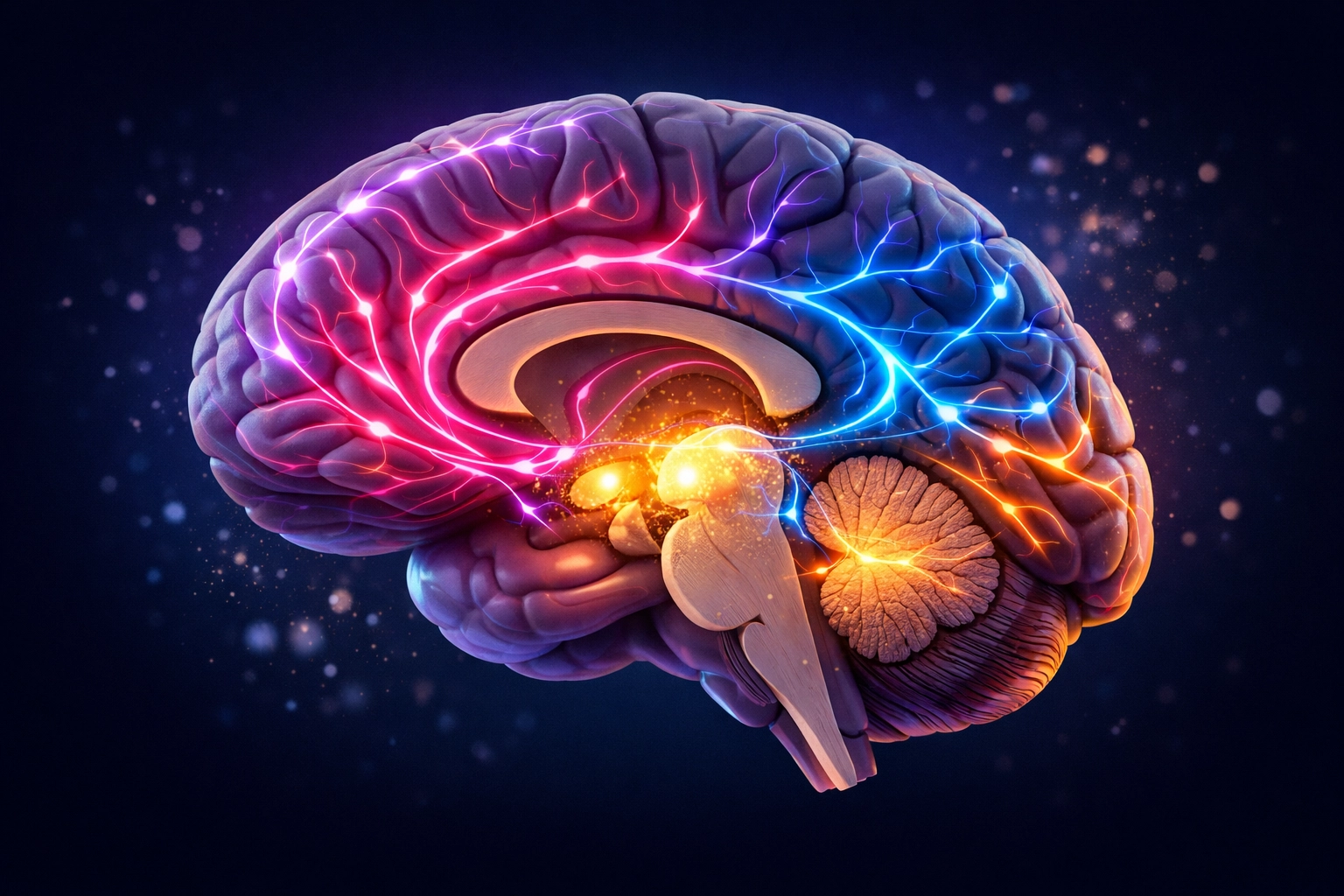
The pattern is clear: anything that gets your adrenaline pumping can make the people around you seem hotter. And in the world of spicy MM romance? This is storytelling gold.
What's Actually Happening in Your Body
Let's break down the chemistry (the literal kind, not just the romantic tension):
When you're in an exciting or dangerous situation, your body releases a cocktail of stress hormones:
- Adrenaline (the star of our show)
- Norepinephrine (keeps you alert and ready)
- Cortisol (manages your stress response)
These trigger unmistakable physical responses: increased heart rate, rapid breathing, dilated pupils, flushed skin, and yes, sweaty palms.
Meanwhile, actual sexual attraction triggers its own hormone party:
- Dopamine (the pleasure chemical)
- Norepinephrine (alertness and excitement)
- Adrenaline (hello again!)
Notice the overlap? Your brain certainly does. And when key brain regions like the nucleus accumbens and ventral tegmental area get involved in processing these signals, the lines between "I'm terrified" and "I'm incredibly turned on" get very blurry.
From Psychology Lab to MM Romance: How Authors Nail This Phenomenon
The best gay romance books don't just throw characters into dangerous situations for plot convenience: they're tapping into this very real psychological phenomenon.
Think about your favorite high-stakes MM romance moments:
- Two spies forced to share a hiding spot while enemies search for them
- Rivals competing in an extreme sport who can't stop thinking about each other
- Characters who fight side-by-side and then can't keep their hands off each other afterward

These aren't just tropes: they're scientifically-backed scenarios where attraction would naturally intensify. The danger creates genuine physiological arousal that the characters (and readers) interpret as sexual tension. It's authentic, it's powerful, and it works.
When you're reading MM romance books from Read with Pride, you're experiencing the literary version of that suspension bridge study: the adrenaline from the plot tension enhances your emotional investment in the characters' connection.
Danger-Bonding: When Shared Risk Creates Real Connection
Here's the beautiful part: this isn't just about tricking your brain into temporary attraction. The connections formed during high-stakes situations can evolve into genuine, lasting bonds.
When two people face danger together, they're:
- Experiencing vulnerability simultaneously
- Relying on each other for safety or success
- Creating intense shared memories
- Flooding their systems with bonding hormones
This is why "danger-bonding" is such a powerful concept in both real life and fiction. The heightened emotional state creates an accelerated intimacy: characters (or people) get to know each other's true selves when the stakes are high and the masks come off.
It's the difference between small talk over coffee and fighting for your lives back-to-back. One creates casual acquaintance; the other creates connection.
The Fight-or-Flirt Response in Action
So what does this mean for your favorite gay romance novels? Everything.
Authors who understand this phenomenon know how to use it effectively:
Physical challenges: Rock climbing scenes, intense workouts together, competitive sports: anything that gets the adrenaline pumping while keeping characters in close proximity.
Actual danger: Chase sequences, survival scenarios, protective situations where one character risks himself for another.
High-stakes emotional confrontations: Arguments that raise the heart rate just as effectively as physical danger, creating that same physiological arousal that can flip into attraction.
Near-miss moments: The relief after danger passes creates its own emotional intensity: and that's when the best kiss scenes happen.
The Real-World Application
This science doesn't just apply to fiction. Understanding the adrenaline-attraction connection has practical implications:
For dating: Want to create chemistry? Choose activities that naturally elevate adrenaline: rock climbing, escape rooms, theme parks, even watching thriller movies together. The shared excitement can genuinely enhance connection.
For relationships: Long-term couples can benefit from regularly engaging in exciting activities together. That adrenaline rush can reignite attraction and create new positive associations with your partner.
For understanding yourself: Recognizing when your attraction might be intensified by circumstance doesn't make it less real: it just makes you more aware of how your brain works.
Why We Love High-Stakes MM Romance
As readers of spicy MM romance, we're drawn to these stories because they mirror something deeply true about human (and specifically male) psychology. The combination of danger, vulnerability, and attraction creates an intoxicating mix that feels both thrilling and authentic.
When we read about characters whose attraction intensifies under pressure, we're not just suspending disbelief: we're recognizing a truth about how connection actually works. The racing hearts, the flushed faces, the inability to think clearly around each other when danger strikes? That's not just romance novel magic. That's neuroscience.
And honestly? That makes it even hotter.
Ready to experience the science of sizzle firsthand? Check out our collection of high-stakes MM romance at Read with Pride where danger-bonding and adrenaline-fueled attraction are always on the menu. 🔥
Stay connected with us:
This is part 4 of The High-Stakes Series. Catch up on the previous posts or stay tuned for more deep dives into what makes MM romance so irresistible!
#MMRomance #GayRomanceBooks #SpicyMMRomance #ReadWithPride #LGBTQBooks #GayFiction #RomanceScience #AdrenalineAndAttraction #HighStakesRomance #MMBooks #QueerFiction #GayRomanceNovels #BookishScience #RomancePsychology #MMRomanceBooks #LGBTQRomance #GayBooks #PrideReading

Leave a Reply
You must be logged in to post a comment.