

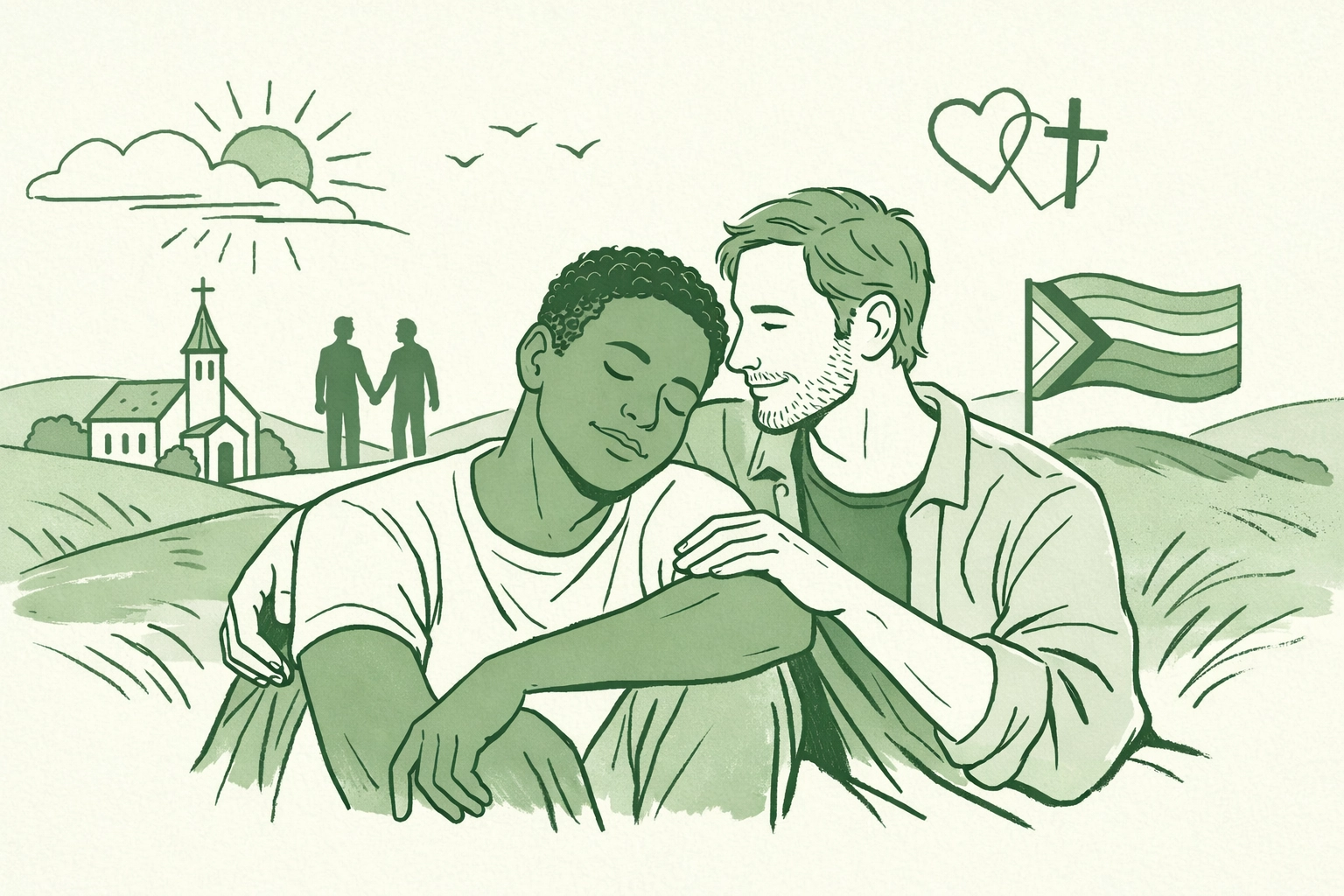
Navigating the intersection of faith and queer identity can feel like trying to read a map where the roads keep shifting. For many in our community, especially those of us who love diving deep into emotional MM books and heartfelt gay fiction, the internal conflict between spirituality and sexuality is a familiar trope: but in real life, the angst doesn't always resolve by the final chapter.
Whether you are a gay man trying to reconcile your upbringing with your truth, or an ally looking to support a loved one, finding harmony is possible. At Read with Pride, we believe that every story matters, and your personal narrative of faith is no exception.
Before we dive into the steps of reconciling faith, we have to start with understanding the breadth of our community. As part of our commitment to education, we are beginning today’s guide with a crucial foundation for empathy: understanding the identities that often go overlooked.
A Guide to Understanding Asexuality and Aromanticism for Allies
To be a truly empathetic reader and a supportive ally, we have to recognize that the LGBTQ+ spectrum is vast. While many of our favorite MM romance novels focus on intense physical and emotional attraction, there is a beautiful segment of our community that experiences attraction differently.
Asexuality (Ace) refers to people who experience little to no sexual attraction to others. Aromanticism (Aro) refers to those who experience little to no romantic attraction.
Why does this matter when talking about faith? Because religious spaces often hyper-focus on "traditional" marriage and procreation. For Ace and Aro individuals, this pressure can be doubly isolating. Allies should know:
- Asexuality is a spectrum. Some Ace people enjoy physical touch; others don't.
- Aromanticism is not a "fear of commitment." It is a valid orientation of the heart.
- Validation is the best gift you can give.
By broadening our understanding of these identities, we cultivate the empathy needed to navigate the complex world of faith and queerness. Now, let’s look at how to walk that path when your spirit and your identity feel at odds.

Step 1: Embrace Self-Acceptance and Affirm Your Worth
The first step is the hardest but the most vital: you have to believe, in your core, that your identity is not a mistake. In many gay love stories, the "coming out" moment is the climax. In real life, the "coming in" to yourself: accepting that you are deserving of love and respect exactly as you are: is the real victory.
Many queer people of faith deal with "religious trauma" or internalised homophobia because of exclusionary doctrines. To move past this, start exploring inclusive interpretations of spirituality. Look for the themes of compassion, justice, and unconditional love that exist in almost every major faith tradition. Your worth isn't negotiated by a congregation; it is inherent. When you pick up LGBTQ+ eBooks that feature characters finding their strength, let that be a mirror for your own journey.
Step 2: Reflect on Your Personal Values
What does spirituality actually mean to you? Is it the ritual? The community? The connection to something greater than yourself?
Find harmony by stripping away the "shoulds" and focusing on the "is." Reflection is a unique process. In the same way we analyze the motivations of a protagonist in a gay psychological thriller, you need to analyze your own heart.
- Which parts of your faith bring you peace?
- Which parts feel like a heavy weight?
- How can you align your identity with your personal moral compass?
Remember, there is no single "right" way to be a queer person of faith. Your rituals can be personal, and your revelations can happen in the quiet of your own room just as easily as in a cathedral.

Step 3: Balance Your Beliefs with Others’ Perspectives
One of the toughest parts of being "out" in a religious context is encountering people who don't understand: or don't want to. To protect your peace, you must learn to respect that others have their own viewpoints without letting those viewpoints diminish your reality.
This is a high-angst situation, much like the tension in a gay spy romance where the stakes are life and death. While their words might hurt, your truth remains your truth. You can hold firm to your identity even when those around you are stuck in a different chapter. Healing begins when you realize you don't need everyone’s permission to exist authentically.
Step 4: Seek Out Affirming Community
Isolation is the enemy of growth. Many gay men feel like they have to choose: the "gay scene" or the "church scene." But you don't have to choose. There are vibrant, loving spaces where both identities coexist.
Organizations like Beloved Arise, Q Christian Fellowship, and GayChurch.org are incredible resources. Finding a community: whether it’s a local inclusive parish or an online gay book club that discusses spiritual themes: provides the "minority stress" relief we all need. There is nothing more transformative than walking into a room (or a Zoom call) and being told: "We see all of you, and all of you is welcome."

Step 5: Pursue Professional and Spiritual Support
You don't have to do this alone. If the weight of reconciling your faith and your identity feels like too much, it might be time to call in the professionals.
An LGBTQ+-affirming therapist can help you process religious trauma and build a holistic self-concept. Similarly, a spiritual mentor who has walked this path before can offer insights that you won't find in a standard theology book. This is about building your own "found family," a theme we see so often in MM contemporary fiction. Surround yourself with people who understand both the language of the spirit and the language of the queer experience.
Why Your Story Matters
At eBooks by Dick Ferguson, we see the power of story every day. Whether it's a steamy MM romance or a gay historical romance, these books show us that love is the ultimate truth. If you’re looking for a story that touches on deep personal growth and the complexity of identity, check out our latest releases in the Read with Pride store.
You are the author of your own life. Faith and queerness aren't two separate books on a shelf; they are different chapters in the same incredible novel. Read your life with pride.
Join the Conversation
How have you navigated your faith and identity? Let us know in the comments or join our community on social media!
Follow us for more queer book talk and identity guides:
- Instagram: https://www.instagram.com/dickfergusonwriter
- X (Twitter): https://www.x.com/DickFergus94902
- Facebook: https://www.facebook.com/profile.php?id=61572869844598
- Website: www.readwithpride.com
Shop the Collection:
Visit our curated selection of gay eBooks and MM romance books at https://readwithpride.com/e-book-store/dickfergusonwriter/.
#ReadWithPride #QueerFaith #MMRomance #LGBTQBooks #GayLiterature #AsexualityAwareness #GayFiction #FaithAndIdentity #Writewithpride #2026GayBooks
Daily Proactive Blog Post Options for Dick Ferguson:
- Title: The "Grumpy/Sunshine" Trope: Why We Can't Get Enough of Opposites Attracting in MM Romance. (A deep dive into why this specific dynamic works so well in gay contemporary romance).
- Title: Hidden Histories: The Real-Life Inspirations Behind Gay Historical Romance. (Exploring the true stories of gay men in history that inspire today’s MM novels).
- Title: Building Tension: How to Write (and Read) the Perfect Slow-Burn Gay Love Story. (Tips for readers looking for high-angst, emotional depth over instant gratification).

Leave a Reply
You must be logged in to post a comment.