

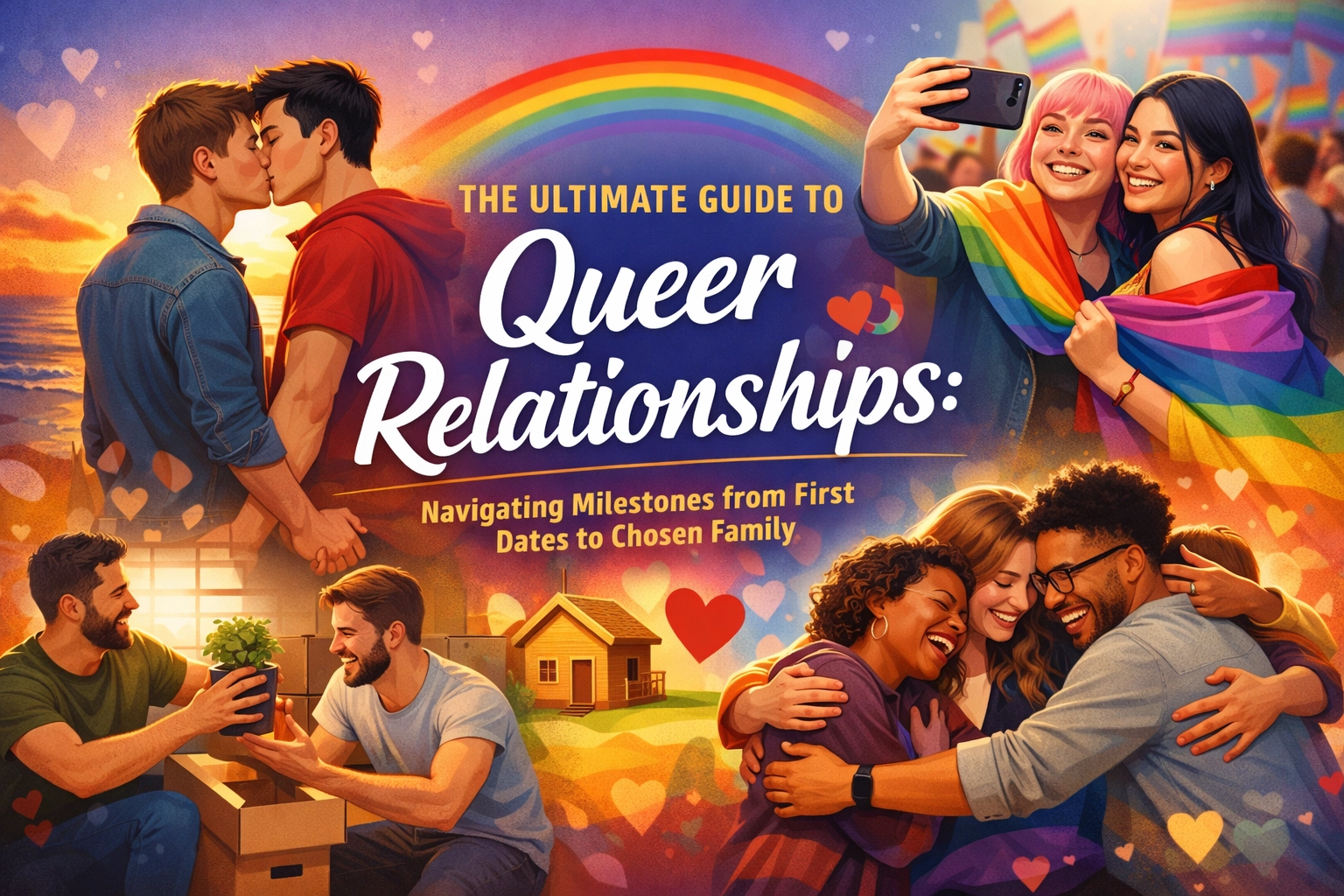
readwithpride.com
Let’s be real: the standard "heteronormative script" for relationships: dating, engagement, marriage, 2.5 kids, and a mortgage: doesn't always fit the vibrant, complex reality of queer life. Whether you’re a gold-star lesbian, a bi guy navigating his first MM romance, or a non-binary person exploring polyamory, our milestones often look a little different. And honestly? That’s what makes them beautiful.
As we navigate 2026, the landscape of queer relationships is more diverse than ever. At Read with Pride, we spend our days immersed in gay romance novels and queer fiction, and we’ve noticed that the most "happily ever after" stories aren't just about the wedding: they’re about the journey from that awkward first Grindr message to building a life with a chosen family.
In this guide, we’re breaking down the stages of queer love, the dynamics that make us unique, and how the themes we love in MM romance books mirror our actual lives.
The "Second Adolescence" and Early Spark
For many in the LGBTQ+ community, our "firsts" happen a little later. While our straight peers were figuring out hand-holding in middle school, many of us were still in the closet. This leads to what researchers call "Second Queer Adolescence": a time, often in our 20s or 30s, where we finally get to experience the giddy, messy, and sometimes dramatic early stages of dating.
The Initiation Phase
According to the McWhirter/Mattison model, the first year is the "Blending" phase. This is the honeymoon period where you’re high on limerence (that romantic obsession that feels like a drug). In gay novels, this is the "insta-love" trope or the high-heat steamy MM romance where the chemistry is undeniable.
Common milestones here include:
- The First Date: Whether it’s coffee or a bar, it’s the transition from a screen to reality.
- The Sex & Health Talk: Unlike the "wait and see" approach often seen in straight media, queer couples often navigate discussions about HIV/STI status and protection much earlier, prioritizing community health and transparency.
- The Friend "Vibe Check": Introducing a partner to your inner circle within the first few weeks is common. In queer culture, our friends are our gatekeepers.

The "U-Haul" and the Nesting Phase (Years 1–3)
We’ve all heard the joke: What does a lesbian bring on a second date? A U-Haul. While it’s a funny stereotype, there’s a grain of truth in the way queer couples often fast-track domesticity.
Once the initial "Blending" phase settles, you enter Nesting. This is where the "us against the world" feeling shifts into "who is doing the dishes?"
In MM romance books, this is often captured through the forced proximity trope. When characters are stuck together, they have to move past the surface-level attraction and deal with each other’s quirks. In real life, this is a major milestone. Moving in together isn't just about saving on rent; it’s about creating a safe haven: a queer space where you can be 100% yourselves without the performance required by the outside world.
If you're currently in this stage, you might find yourself browsing our store listing for a new gay contemporary romance to read together on the couch. It’s the peak of domestic bliss.
Navigating Dynamics: Monogamy vs. Polyamory
One of the most authentic parts of queer relationships is our willingness to question the status quo. In 2026, the conversation around relationship structures is more open than ever.
Monogamy
Many queer couples find deep fulfillment in traditional monogamy. It provides a sense of security and exclusivity that is a milestone in itself: the "DTA" (Define the Agreement) talk where you decide to close the loop.
Ethical Non-Monogamy (ENM) and Polyamory
Conversely, many in our community embrace ENM or polyamory. This might involve "monogamish" arrangements, triads, or kitchen-table polyamory. The milestone here isn't "exclusivity," but rather "radical transparency."
In queer fiction, we’re seeing a rise in MM romance that explores these dynamics authentically, moving away from "cheating" tropes and toward "negotiation and consent" tropes. If you have questions about how these dynamics work in the community, our questions section is a great place to see what others are discussing.
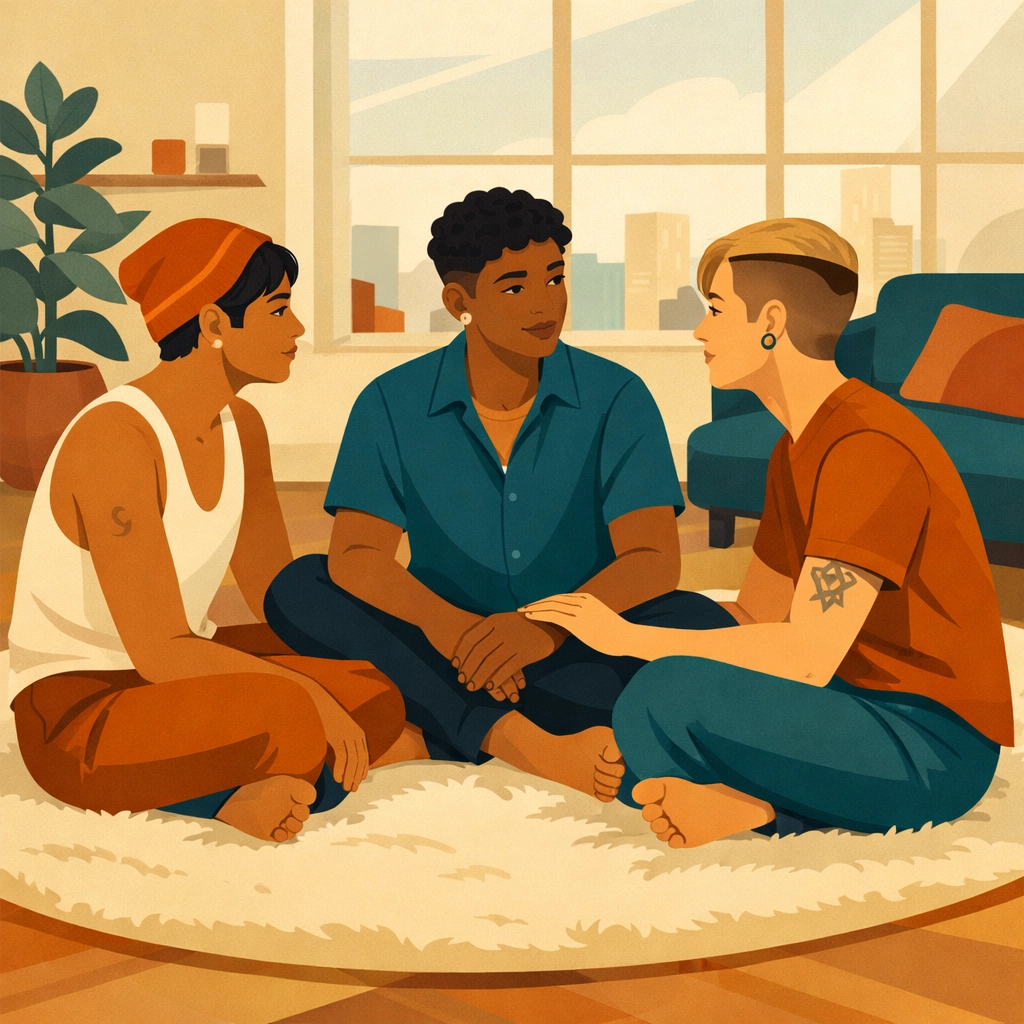
Maintaining Independence and Deepening Trust (Years 3–10)
If you survive the "Nesting" phase, you hit the "Maintaining" and "Collaborating" stages. This is where the real work happens.
Research shows that around year three to five, partners start to reclaim their individual identities. You’ve been a "we" for so long that you need to remember how to be an "I." This isn't a sign of trouble; it’s a milestone of health.
Key transitions during this decade include:
- Career Support: Being the "rock" while your partner navigates a promotion or a career change.
- Conflict Resolution: Moving past the "enemies to lovers" fire and into the "best friends who also have great sex" stability.
- Long-Term Agreements: Revisiting your relationship boundaries. Just because you were monogamous in Year 2 doesn't mean you can't discuss opening up in Year 7, or vice versa.
This is the era of the slow burn. It’s not about the flash; it’s about the heat that stays consistent over a long period.
The Ultimate Milestone: Chosen Family
For many LGBTQ+ people, the concept of "family" is complicated. While many are lucky to have supportive biological families, others face rejection. This is why Chosen Family is perhaps the most significant milestone in a queer relationship.
Integrating your partner into your chosen family: and vice versa: is a sacred act. It’s about building a web of support that includes exes-turned-best-friends, "drag mothers," and the community you’ve built at your local queer bookstore or through a gay book club.
In MM historical romance, we often see this through the lens of "found family" in secret clubs or underground societies. In 2026, we see it in the way we spend holidays, the way we show up for each other in hospital rooms, and the way we co-parent or co-habitat with friends.

Why We Love Relationship Tropes in Queer Fiction
At Readwithpride.com, we believe that reading MM romance and queer authors helps us process our own relationship milestones. Whether you’re reading a gay fantasy romance or a gay psychological thriller, the underlying emotional beats often reflect our real-life struggles:
- Enemies to Lovers: Mirrors the tension of dating someone from a different part of the community or with different values.
- Forced Proximity: Mirrors the "U-Haul" phase.
- Friends to Lovers: Mirrors the transition from the "Chosen Family" circle into a romantic partnership.
If you’re an author writing these stories, don't forget to check out our e-book seller dashboard to share your work with a community that truly gets it.
Conclusion: Every Timeline is Valid
Whether you’re celebrating your first month or your twentieth year, your relationship milestones are yours to define. There is no "right" way to be queer, and there is no "correct" speed for a gay love story.
From the first nervous "Hi" to the comfort of a decades-long partnership, every stage deserves to be celebrated: and maybe even written into a book.
Want to dive deeper into more stories about queer love? Check out our latest releases or join the conversation on our social media channels. Let’s keep building a world where every queer story is heard and every milestone is honored.
Stay connected with the community:
- Follow us on Facebook
- Catch our updates on X (Twitter)
- See the latest book aesthetic on Instagram
#queerrelationships #MMromance #gayromance #LGBTQbooks #chosenfamily #relationshipmilestones #readwithpride #gayfiction #MMromancebooks2026 #queerauthors

Leave a Reply
You must be logged in to post a comment.