

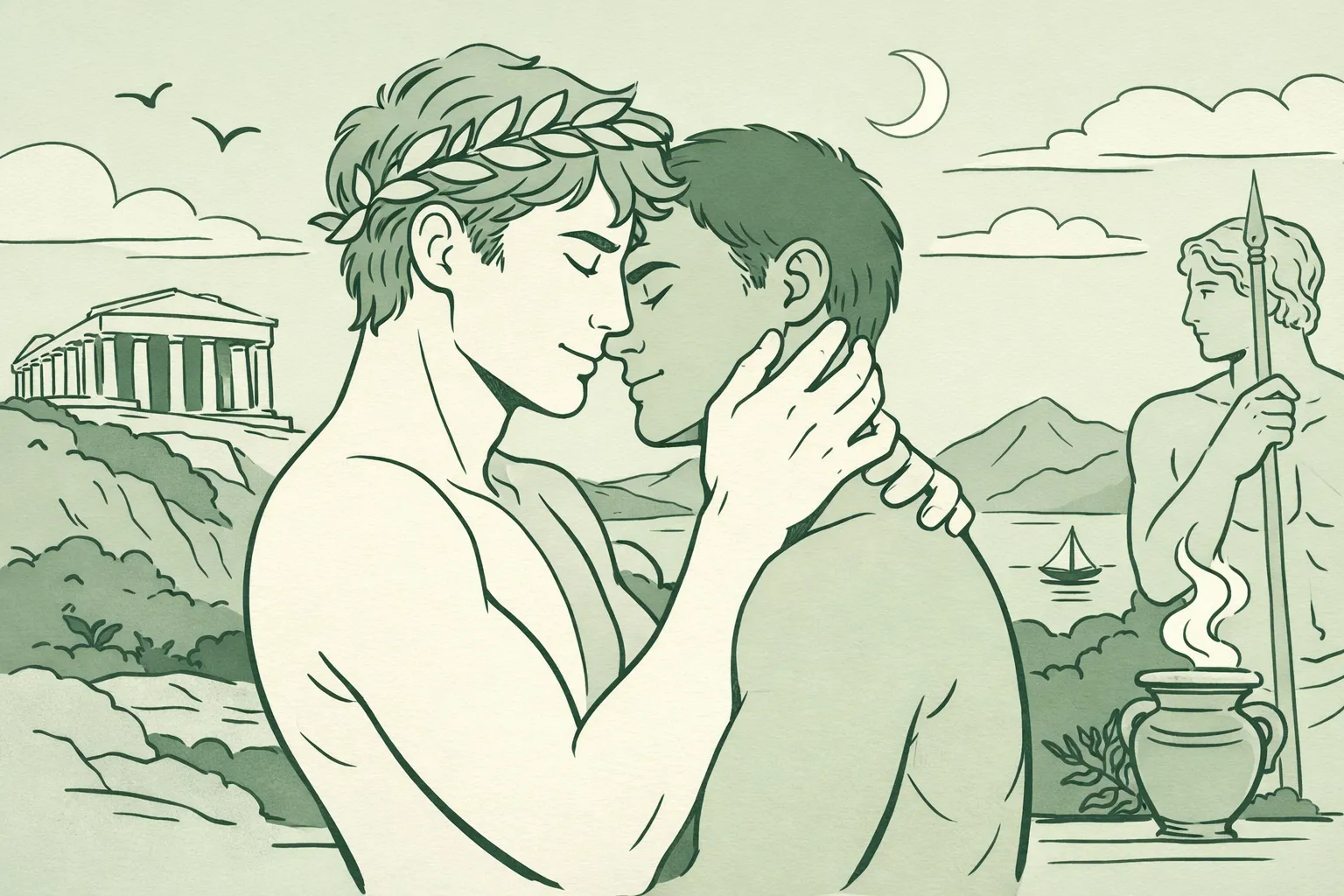
Some addictions come in bottles. Others in marble.
For centuries, the Greeks understood what modern psychology is only beginning to articulate: beauty can be as intoxicating as any substance. It overwhelms rational thought, hijacks the reward system, and leaves the mind captive to desire. The ancient philosophers warned that beauty could drive someone "out of their wits, beyond social and ethical norms, and often to their ruin." They weren't being dramatic. They were observing the human condition.
This is the story of a man who discovered that the perfect male form: carved in imagination from Greek marble: became his most dangerous compulsion.
The First Hit: Michelangelo's David
It started innocuously enough. A museum visit. Florence. The Galleria dell'Accademia. Standing before Michelangelo's David, he felt something shift inside his chest. The 17-foot marble figure wasn't just impressive: it was devastating. Every muscle perfectly rendered, the contrapposto stance creating that subtle S-curve through the torso, the face both vulnerable and defiant.
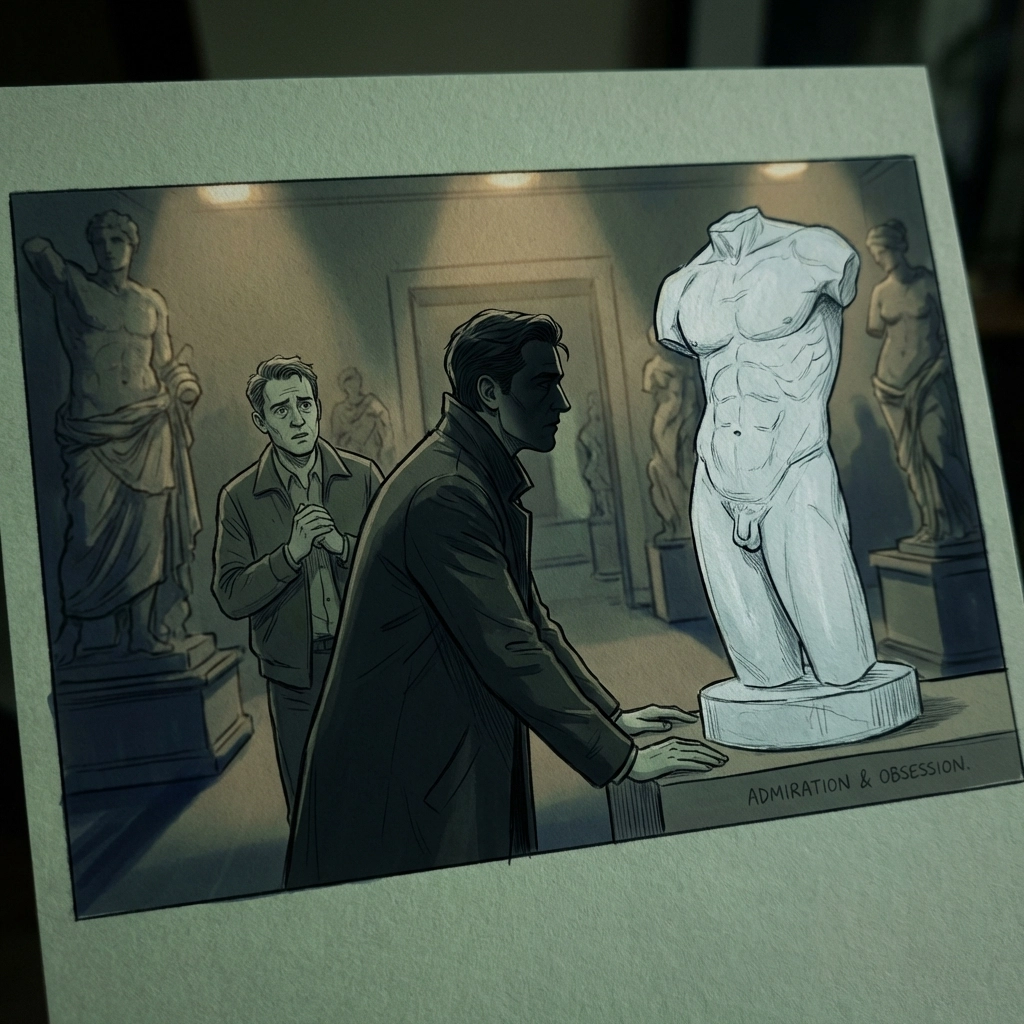
He stood there for forty minutes, longer than appropriate, longer than comfortable. Other tourists shuffled past, took their photos, moved on. He couldn't. Because he'd found something he didn't know he was searching for: an impossible standard that would haunt every encounter afterward.
The sculpture became a drug. Not metaphorically. Literally. His brain had found its substance of choice.
The Addiction Cycle: Chasing Marble Gods
Gay romance often celebrates the discovery of connection, the beauty of two men finding each other against the odds. But what happens when beauty itself becomes the obstacle? When the aesthetic ideal overshadows the person underneath?
He began seeking out men who reminded him of those statues. The angular jaw. The defined clavicle. The way light caught the hollow beneath the cheekbone. Each encounter promised that transcendent moment he'd felt in Florence: that sensation of standing before something divine.
But bodies aren't marble. They sweat. They age. They speak and have opinions and morning breath. The perfection he craved existed only in stone, only in the frozen moment before motion, before life complicated the ideal.
The cycle became predictable:
The Hunt: Hours scrolling through profiles, seeking that particular configuration of features. The aquiline nose. The Mediterranean complexion. The body that might have modeled for Praxiteles.
The Chase: The intoxicating pursuit. The messages carefully crafted to intrigue. The anticipation building like a chemical reaction in his bloodstream.
The Capture: The moment they met. Those first few seconds where reality either matched fantasy or shattered it. The adrenaline surge when it matched. The dopamine flood when they kissed.
The Comedown: Hours or days later, when the high faded. When he noticed the imperfections: not because they were flaws, but because they proved these men weren't marble. They were human. Disappointingly, frustratingly human.
The Withdrawal: The hollow ache. The restlessness. The need to hunt again.
The Psychology of Aesthetic Addiction
Plato considered beauty "the Idea above all other Ideas," synthesizing it with the divine. He wasn't wrong about its power: he was wrong about its location. Beauty doesn't exist in an ethereal realm of perfect forms. It exists in the space between perception and desire, in the neural pathways that reward us for seeking symmetry and health indicators in potential mates.
But when that reward system misfires, when the dopamine surge becomes the goal rather than the byproduct, addiction takes root.
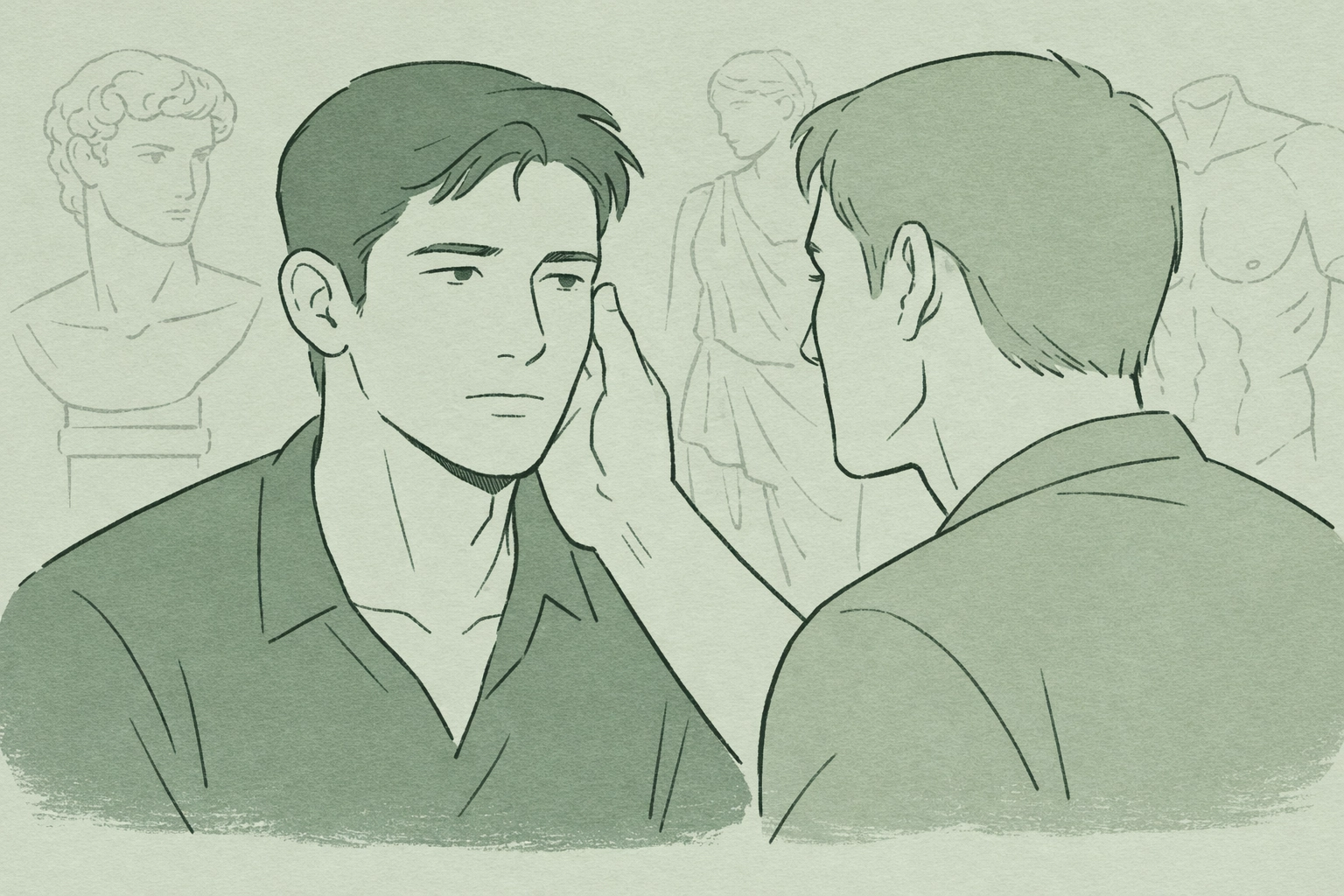
MM romance at its best explores the complexity of male-to-male desire: the vulnerability, the intensity, the way two men navigate intimacy in a world that hasn't always made space for them. But aesthetic addiction strips away that complexity. It reduces a person to component parts: jawline, physique, the way their body approximates an impossible ideal.
The psychological MM romance that interested him was never about connection. It was about possession. About capturing beauty and holding it still, forcing it back into marble. The "searing hate" and "possessive jealousy" emerged not from love but from disappointment: from the inevitable realization that living men refuse to remain statues.
The Italian Sojourn: When Geography Enables Obsession
He moved to Rome for six months. Ostensibly for work. Actually, to be closer to the source.
Rome and Florence became his hunting grounds. Cities where every piazza held another marble god, where museum collections reinforced his addiction, where the gay fiction he'd read about passionate Italian encounters seemed within reach.

The men he met there: sculptors, art students, museum guides: understood classical beauty intellectually but lived comfortably in their human bodies. They found his intensity flattering at first, then unsettling, then exhausting.
"You don't see me," one said after three weeks. "You see what you want me to be."
He was right. Every date was a casting call. Every kiss was an audition. Every intimate moment was measured against an impossible standard: Antinous emerging from the bathwater, Doryphoros mid-stride, Apollo eternally young.
The addiction deepened. What started as appreciation curdled into compulsion. He couldn't pass a statue without that familiar chemical surge. Couldn't meet an attractive man without immediately cataloging how they failed to match the ideal.
The Crash: When Beauty Becomes Prison
Six months in Italy became eight, then twelve. His work suffered. Friendships frayed. He stopped answering calls from family, stopped maintaining connections with anyone who might pull him out of the spiral.
LGBTQ+ ebooks like those in Dick Ferguson's collection often explore themes of self-destruction and redemption. Stories where characters hit bottom before finding their way back. But reality doesn't always provide narrative arcs. Sometimes the bottom is just where you live now.
He found himself standing in the Capitoline Museums at 3 AM during a special overnight viewing, alone with the statue of the Dying Gaul. The wounded warrior, captured in his final moment, still achingly beautiful even in death. Or perhaps because of it. Beauty preserved at its peak, never allowed to decay.
That's when the realization hit: he'd been chasing death. Not literal death, but the death of time, of change, of the messy human reality that makes real gay love stories possible.
Marble doesn't age. Doesn't disappoint. Doesn't leave. Doesn't grow or change or challenge you. It's safe precisely because it's lifeless.
The Withdrawal: Choosing Life Over Perfection
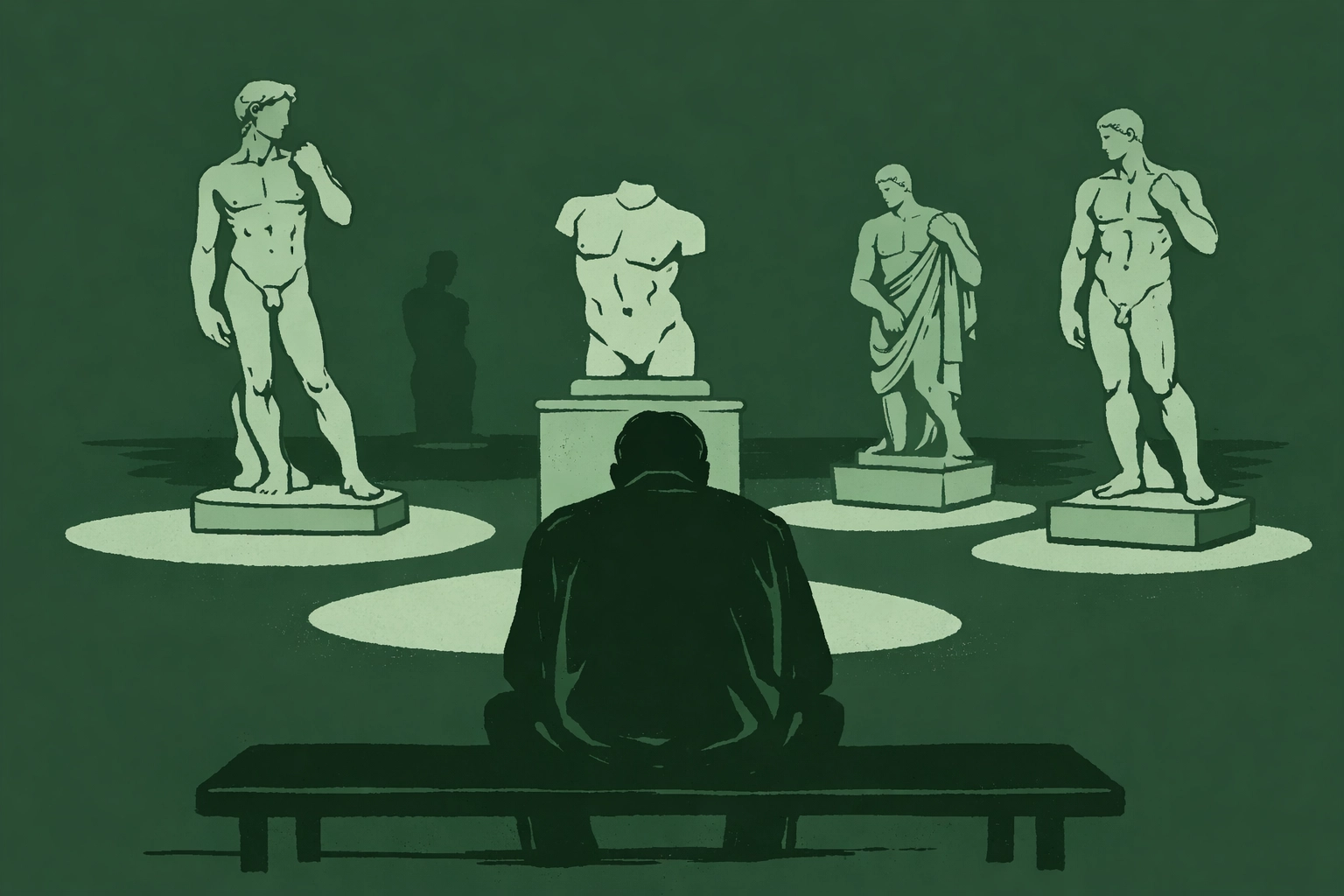
Recovery from aesthetic addiction doesn't happen in museums. He left Rome. Left the statues. Deleted the apps designed for hunting perfection.
The withdrawal was physical. Actual cravings. Dreams of marble corridors. Waking up with that hollow ache, reaching for his phone to scroll through profiles, then remembering he'd promised himself not to.
MM romance books in the Dick Ferguson collection, particularly The Price of Desire, explore what happens when desire becomes destructive. When wanting consumes the wanting. Those stories offered something he'd forgotten existed: characters who chose connection over compulsion, who valued presence over perfection.
Slowly, incrementally, he began to see people again instead of approximations. Began to value the way a smile changed a face over whether that face matched classical proportions. Began to understand that gay romance worth having requires seeing the other person, not projecting onto them.
The Ongoing Journey: Beauty Without Bondage
Recovery isn't linear. Some days he still catches himself measuring a man's profile against Michelangelo's sketches. Still feels that pull toward the impossible ideal.
But he's learning to recognize it for what it is: not appreciation of beauty, but an attempt to escape intimacy. The statues can't reject you. Can't see your flaws. Can't demand you show up as yourself rather than as the person you wish you were.
Real queer fiction, real gay novels worth reading, explore this tension between idealization and reality. Between the fantasy of perfect love and the messy, difficult, rewarding work of actual relationship. Velvet Nights and Broken Dreams captures this beautifully: the way fantasy can sustain us temporarily but ultimately keeps us from the very connection we claim to want.
The Greeks were right about beauty's power. They just didn't have the language to describe addiction, to explain how the brain's reward system can turn appreciation into compulsion, pleasure into prison.
He's still learning to see beauty without being consumed by it. To admire without needing to possess. To let living, changing, imperfect men be exactly that: imperfect and alive and worth knowing precisely because they're not marble.
Some days are easier than others. But he's learning. Slowly. One imperfect moment at a time.
Explore more psychological depth in MM romance at Read with Pride and discover Dick Ferguson's complete collection of intense, character-driven gay fiction.
Follow us on social media:
- Instagram: @dickfergusonwriter
- X/Twitter: @DickFergus94902
- Facebook: Dick Ferguson Writer
#MMRomance #GayFiction #ReadWithPride #PsychologicalRomance #LGBTQBooks #GayRomanceBooks #QueerFiction #MaleBeauty #AestheticAddiction #GreekArt #IntenseLove #DickFerguson #GayNovels #MMFiction #ReadingWithPride #GayLoveStories #LGBTQLiterature #GayContemporaryRomance #EmotionalMMBooks #GayBookClub

Leave a Reply
You must be logged in to post a comment.