

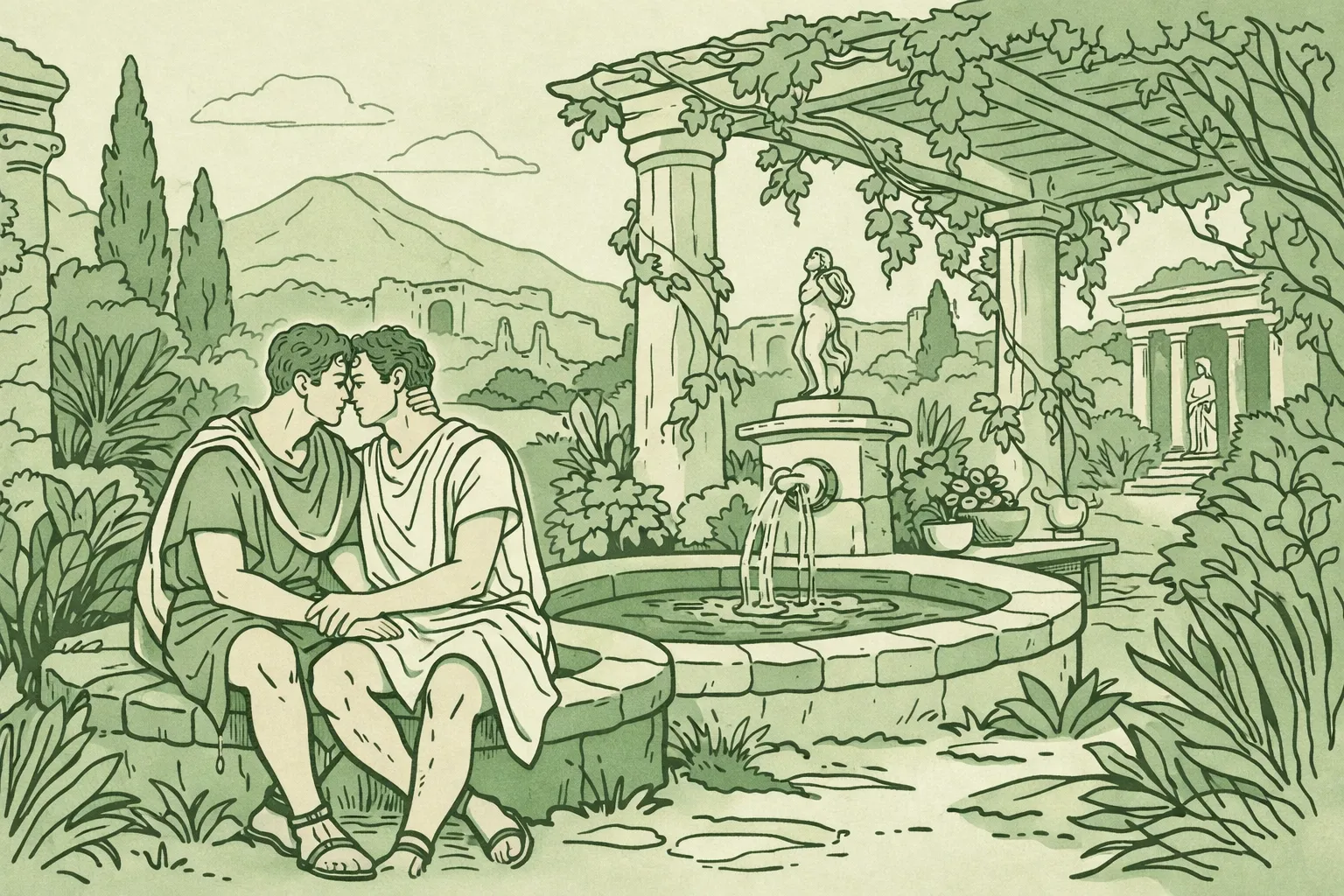
DISCOVER ANCIENT LGBTQ+ HISTORY IN FICTION. Explore gay historical romance and MM fiction that brings forgotten stories to life. Visit Read with Pride for authentic queer fiction celebrating love across centuries.
A Villa Among the Roses
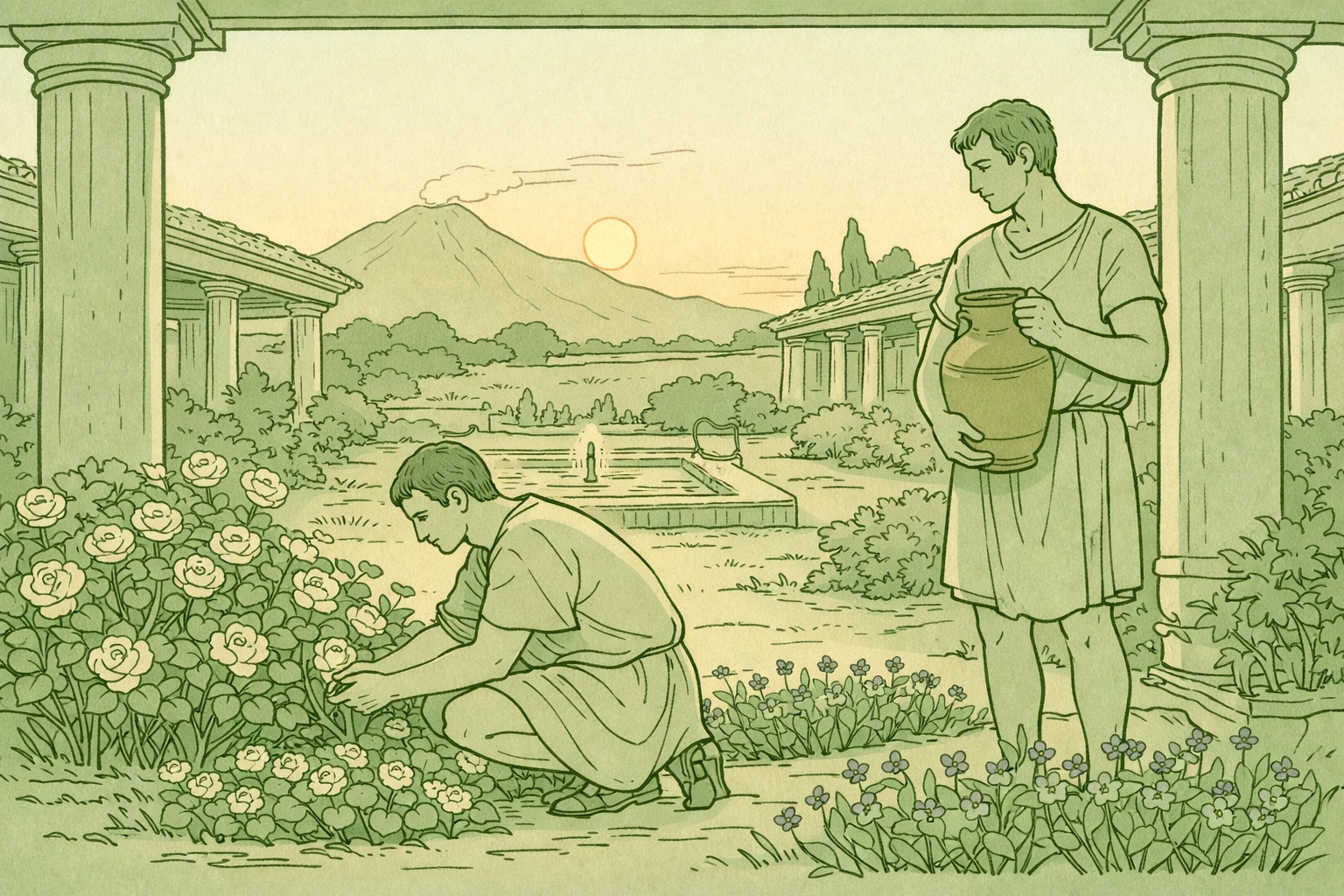
In 79 CE, beneath Mount Vesuvius's watchful shadow, Marcus Lucius Severus tended his garden with practiced hands. The villa's peristyle bloomed with roses: thousands of them: their perfume mingling with ruscus, violets, and cherry blossoms. This was more than agricultural necessity. This was home.
Archaeological evidence from Pompeii reveals over 400 orchards and gardens, spaces where Romans cultivated both commerce and beauty. The recently restored Garden of Hercules, dating to the third century B.C.E., demonstrates how these spaces functioned as productive perfumeries while offering shaded alcoves for intimate dining and reflection.
Marcus, a former centurion whose military service ended with an injury to his sword arm, had purchased this modest villa with his pension. His companion, Titus Flavius, a Greek-educated scholar who transcribed legal documents for Pompeii's merchant class, shared both the property deed and the household management. Roman law recognized such arrangements without demanding explanation.
The Boy in the Atrium
Ten-year-old Gaius arrived three years prior: orphaned when his parents perished in a shipwreck off Neapolis. The child's maternal uncle, overwhelmed with six children of his own, approached Marcus at the forum. "You have space. Resources. No family obligations."
What the uncle meant, without stating it plainly, was understood. Two men maintaining a household together were often entrusted with wards, particularly boys requiring education and discipline. Roman society's practical flexibility allowed such arrangements to exist within its rigid legal structures.
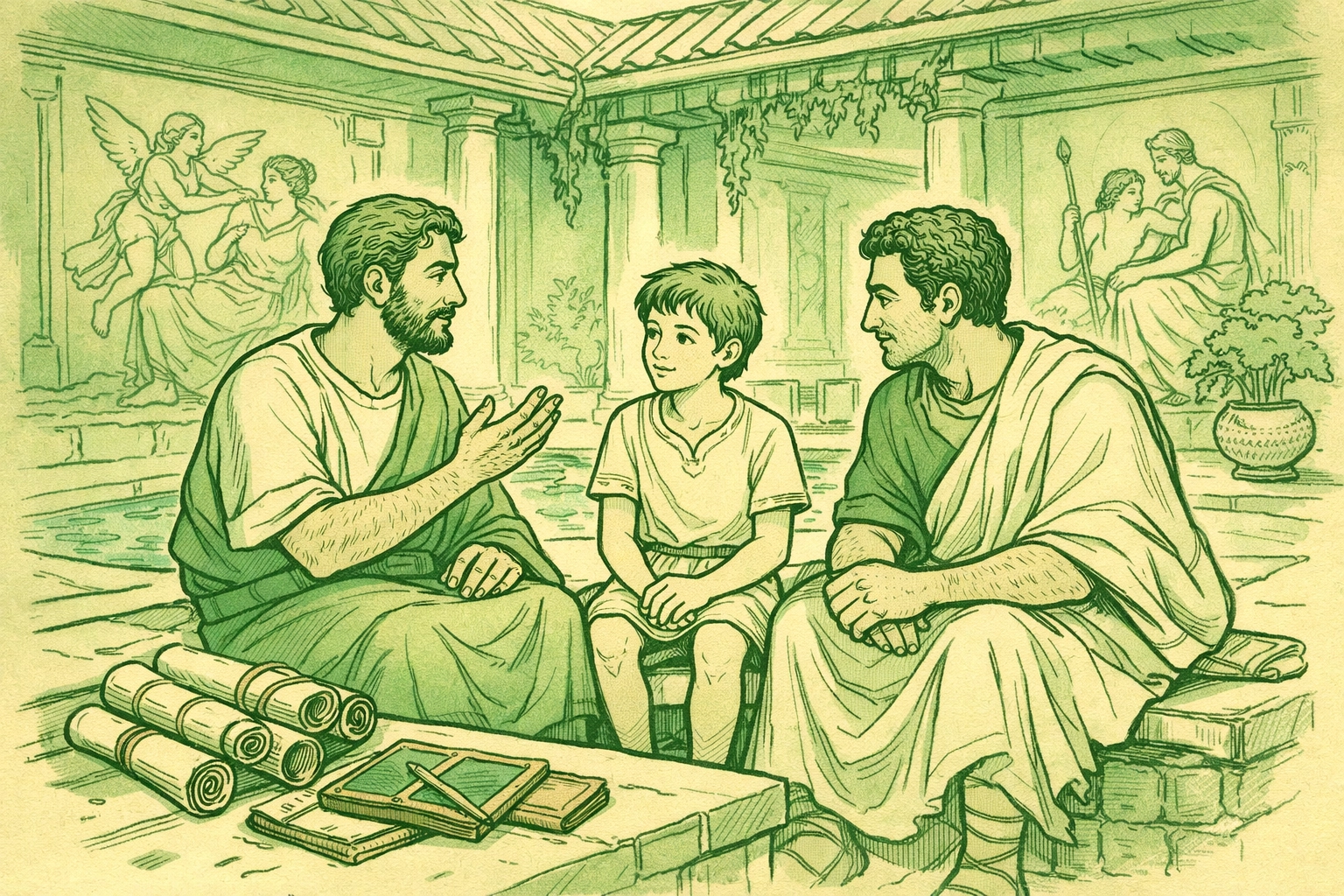
Titus took responsibility for Gaius's education: Greek, rhetoric, mathematics. Marcus taught the boy practical skills: how to prune vines, read weather patterns, identify quality wool in the marketplace. Together, they created structure. Routine. Something neither man had anticipated wanting.
The villa's frescoes depicted mythological scenes: Apollo and Hyacinthus, Achilles and Patroclus. Ancient narratives understood by educated Romans as celebrations of profound male bonds. These weren't hidden images requiring coded interpretation. They adorned dining rooms where guests reclined.
Perfume, Commerce, and Daily Life
EXPLORE MORE GAY HISTORICAL ROMANCE. The Berlin Companions and The Phoenix of Ludgate offer powerful LGBTQ+ fiction set in pivotal historical moments. Shop the full collection at dickfergusonwriter.com.
Marcus's garden produced rose essence sold to perfumers across Campania. Small terracotta containers lined the storage room: evidence later discovered by archaeologists proving Pompeii's gardens served commercial functions. An enslaved worker named Demetrius managed the irrigation system, pouring water through wall openings that channeled moisture through carefully designed beds.
The garden's entrance bore an inscription: "Cras Credo": "Tomorrow we will have credit." A merchant's optimism carved in stone.
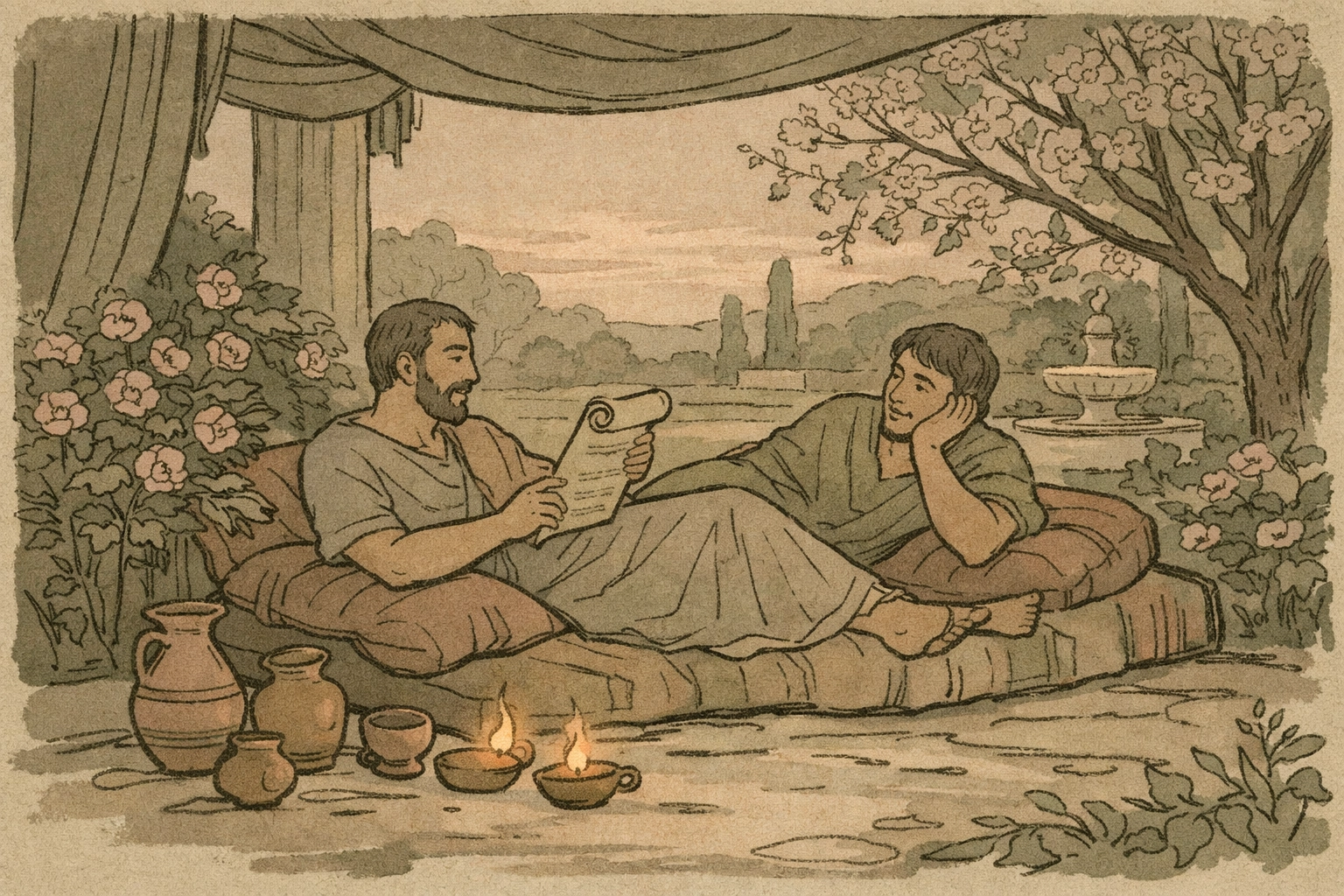
Evenings found the three of them: Marcus, Titus, and Gaius: reclining in the garden's shaded alcove. Marcus would discuss the day's harvest. Titus would read aloud from scrolls borrowed from Pompeii's public libraries. Gaius, initially shy and withdrawn, gradually began asking questions, laughing at Titus's dramatic recitations, helping Marcus inspect rose bushes for aphids.
Ancient Bonds Without Modern Labels
Roman culture recognized varying forms of male intimacy without the categorical definitions imposed by later societies. Military comrades shared tents and property. Scholars formed lifelong partnerships centered on intellectual companionship. Wealthy citizens maintained multiple household arrangements governed by practical considerations rather than religious doctrine.
Marcus and Titus's relationship existed within these established patterns. Whether their bond included physical intimacy remained their private concern: Roman law focused on public conduct, inheritance rights, and household management. What mattered legally was that both men fulfilled their civic obligations: maintaining property, contributing to local commerce, and raising the next generation.
Gaius called them both "uncle": a term encompassing respect, affection, and the reality that neither man claimed paternal authority in the strictly legal sense. Yet the boy thrived under their combined guidance in ways his blood relatives couldn't have provided.
The Garden as Sanctuary
SUBSCRIBE FOR EXCLUSIVE CONTENT. Join the Read with Pride community for new gay releases, recommendations, and access to free gay romance samplers. Discover MM romance books that honor authentic LGBTQ+ experiences.
Villa gardens in Pompeii served as extensions of interior living spaces. The peristyle's columns framed views of cultivated beauty. Fountains provided cooling sounds during Campania's hot summers. Small shrines honored household gods: in Marcus's garden, a modest temple to Hercules, protector of travelers and those who built new lives from adversity.
Titus kept detailed records of the garden's productivity: dates when roses bloomed most profusely, which vine cuttings produced superior grapes, seasonal variations in violet yields. These practical notations filled wax tablets stacked in the tablinum. Modern archaeologists would later find similar documentation preserved in Pompeii's ruins: evidence of meticulous Roman recordkeeping.
Gaius learned both men's skills. He could calculate profit margins on rose essence sales and identify the difference between Pliny's thirty-two rose varieties by scent alone. This dual education: practical and intellectual: prepared him for success in Pompeii's competitive merchant society.
August 79 CE
Mount Vesuvius had rumbled for days. Minor earthquakes rattled amphorae in storage rooms. Most Pompeians ignored the warnings: tremors were common in Campania.
Marcus checked his roses obsessively that final week, noting in conversation with Titus that the blooms seemed particularly vibrant. "As if they know," he said, then laughed at his own superstition.
Gaius had begun studying with a rhetoric teacher in the forum, returning each afternoon with new arguments about philosophy, politics, and whether Homer's heroes truly embodied virtue. Titus encouraged these debates. Marcus listened, occasionally interjecting practical counterpoints that made the boy refine his reasoning.
The villa's frescoes would eventually be preserved beneath layers of volcanic ash: Apollo's eternal pursuit of Hyacinthus frozen in pigment, Achilles's grief for Patroclus captured in ochre and cinnabar. Archaeological excavations centuries later would reveal these images alongside garden impressions, irrigation channels, and small terracotta vessels still bearing traces of rose essence.
What Remains Beneath the Ash
FIND YOUR NEXT EMOTIONAL MM BOOK. Explore heartfelt gay fiction and award-winning gay fiction that examines love, family, and survival. Top LGBTQ+ books available now at dickfergusonwriter.com.
The archaeological record preserves structures, artifacts, and organic impressions. It cannot capture conversations in garden alcoves, the weight of a boy's trust gradually given, or two men building something neither had language to fully define.
Roman society's pragmatic flexibility allowed Marcus and Titus to create family without requiring justification. They weren't radical outliers: similar households existed throughout the empire. What made them remarkable was the care they brought to daily choices: which scrolls to read aloud, how to explain business ethics to an orphaned child, when to harvest roses for maximum perfume yield.
Pompeii's preserved gardens reveal how Romans integrated beauty with function, creating spaces where life's essential activities: work, education, rest, connection: occurred in proximity to cultivated nature. The Garden of Hercules, restored with its thousands of roses, offers modern visitors a sensory link to that lost world.
Marcus's villa remains beneath volcanic deposits, its exact location unknown to contemporary archaeology. But the pattern it represents: men forming households, raising children, maintaining productive gardens: appears repeatedly in Pompeii's excavated structures. These weren't anomalies. They were variations within Roman society's complex social fabric.
Stories That Deserve Telling
GAY HISTORICAL ROMANCE | MM FICTION | LGBTQ+ EBOOKS
Ancient history contains countless narratives erased by later categorical thinking. Roman sources document male partnerships, household arrangements, and child-rearing practices that resist simple classification. Fiction allows us to inhabit these spaces with nuance, exploring emotional truths that legal documents and property records can only suggest.
Discover more authentic queer fiction at Read with Pride – your destination for MM romance, gay novels, and LGBTQ+ literature that honors diverse experiences across history and contemporary settings.
SHOP NOW: eBooks by Dick Ferguson features gay romance books, MM contemporary stories, and historical romance that brings forgotten voices forward.
Follow us on social media for daily recommendations, new releases, and LGBTQ+ reading community:
📱 Instagram: @dickfergusonwriter
🐦 X/Twitter: @DickFergus94902
📘 Facebook: Dick Ferguson Writer
🌈 Website: www.readwithpride.com
#ReadWithPride #MMRomance #GayHistoricalRomance #LGBTQBooks #GayFiction #QueerFiction #AncientRome #PompeiiHistory #MMHistoricalRomance #GayRomanceBooks #LGBTQLiterature #GayNovels #HistoricalMMRomance #ReadingWithPride #GayBookClub #DickFerguson #AuthenticQueerStories #GayHistoryFiction

Leave a Reply
You must be logged in to post a comment.