

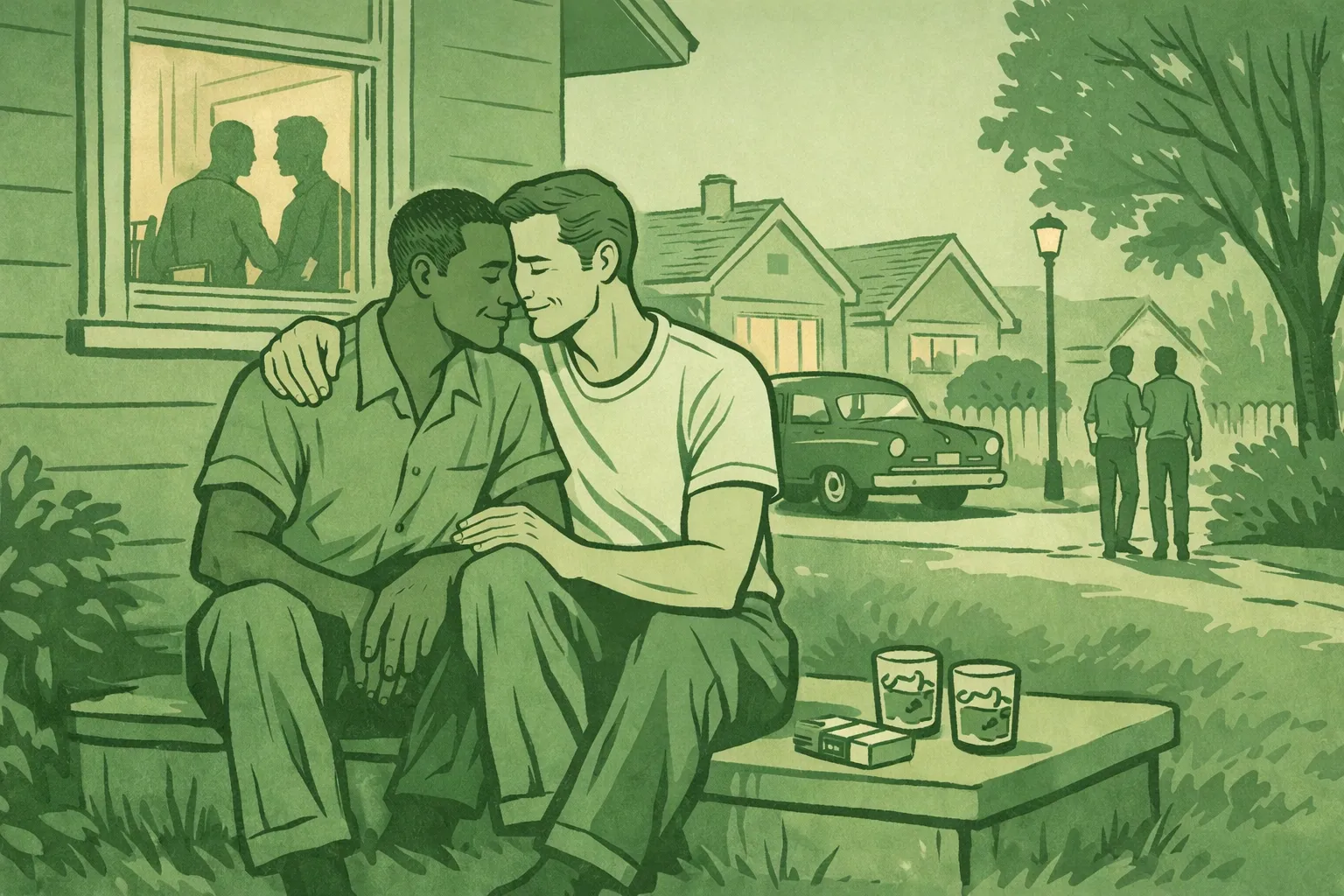
SPECIAL OFFER: Explore Historical MM Romance at ReadWithPride.com
Discover authentic gay historical romance and LGBTQ+ fiction that brings forgotten stories to light. Visit ReadWithPride.com for curated MM romance books exploring love across decades.
Behind White Picket Fences: The Reality of 1950s Gay Families
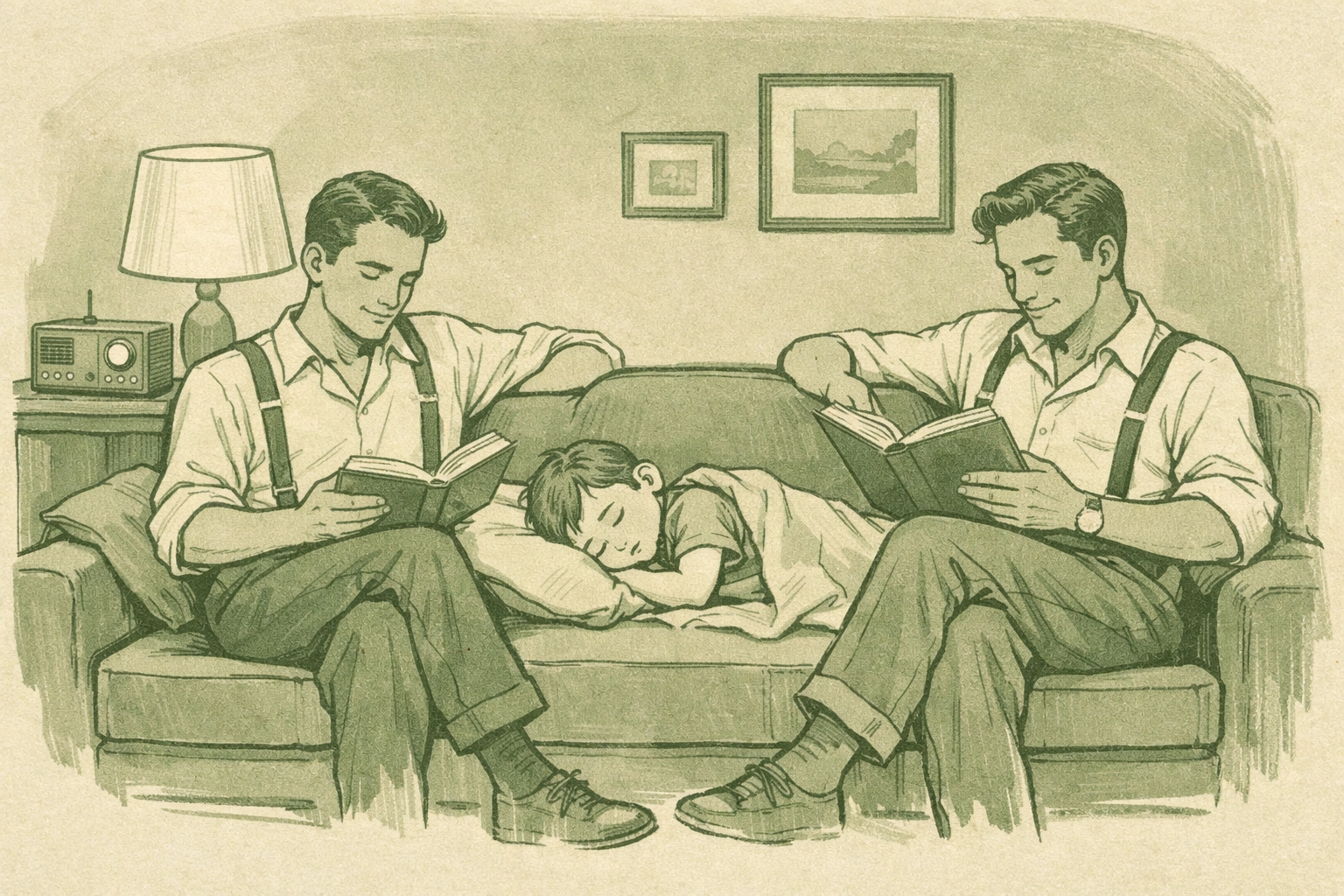
Picture Maple Street, 1955. Manicured lawns. Station wagons. The Hendersons hosting their monthly bridge club. And at number 47, two "confirmed bachelors" raising young Tommy after his parents' tragic accident. To the neighbors, they're just George and Frank: the dedicated uncles. The real story? A love that dared not speak its name, hidden in plain sight behind suburban respectability.
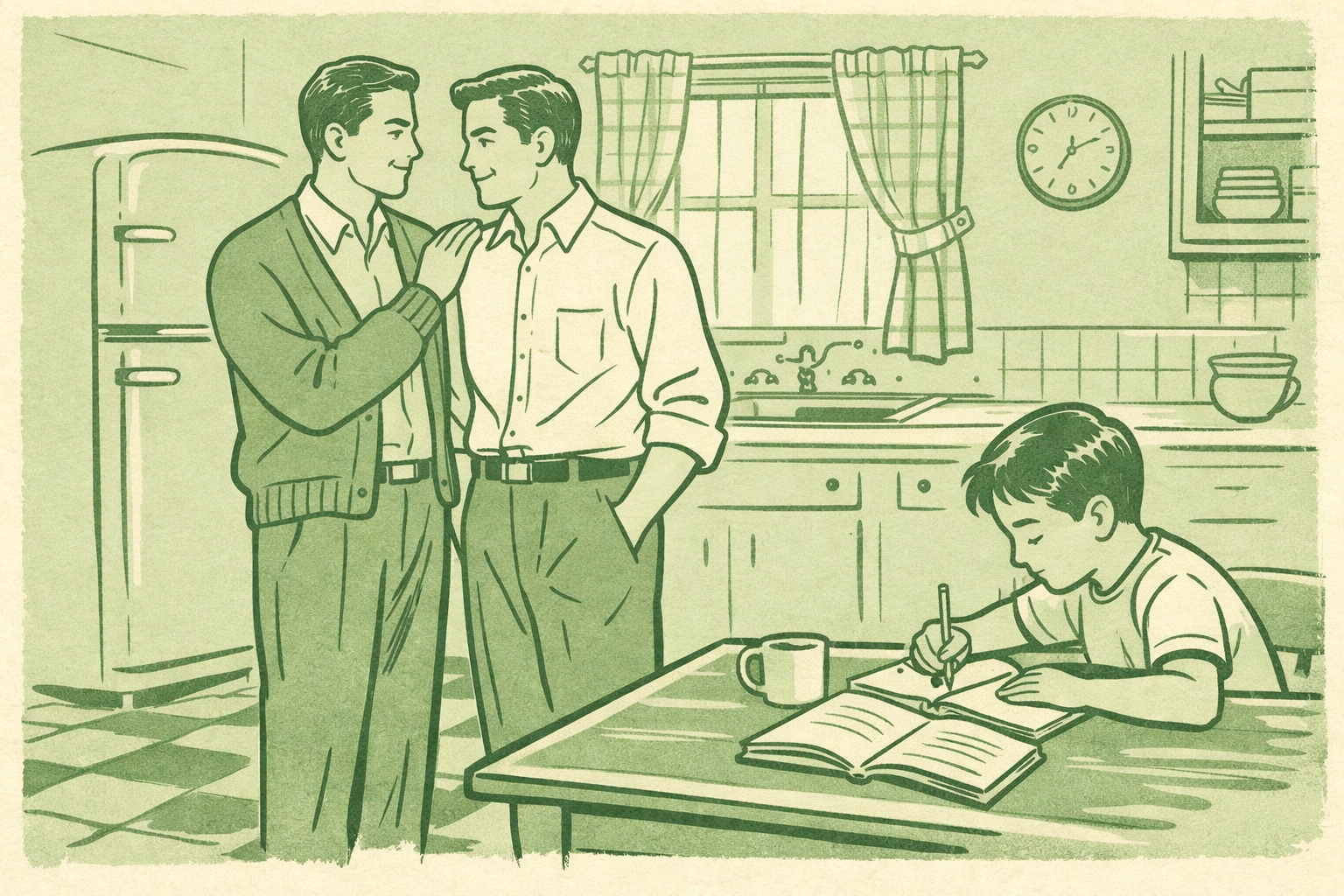
This wasn't fiction. Across America, gay families existed in the shadows of post-war conformity, creating lives together while navigating a world that criminalized their very existence. The 1950s represented both opportunity and danger for LGBTQ+ people: suburbia's expansion offered privacy, but McCarthyism's "Lavender Scare" made visibility potentially deadly.
The Language of Coded Lives
Confirmed bachelor. Spinster. Roommates. Close companions.
These weren't just polite euphemisms: they were survival tactics. In 1955, homosexuality was illegal in every U.S. state. The American Psychiatric Association classified it as a mental disorder. Being exposed meant losing employment, housing, custody rights, and often freedom itself.
Yet gay men and lesbians created families. They raised children: nephews, nieces, children of deceased siblings or friends. They built homes together, shared finances, celebrated holidays, and loved deeply. The key was presentation: separate bedrooms for show, careful pronouns in public, and plausible cover stories always at the ready.
Historical Context: When Love Was Criminal
Explore more authentic historical LGBTQ+ narratives at dickfergusonwriter.com/collections/all.
The 1950s gay experience defied simplicity. While cities like San Francisco and New York harbored nascent gay communities in specific neighborhoods, suburban and rural gay people often lived in profound isolation. Many married heterosexually to maintain social standing while maintaining secret relationships on the side. Others, like our fictional "uncles," found creative ways to cohabitate.
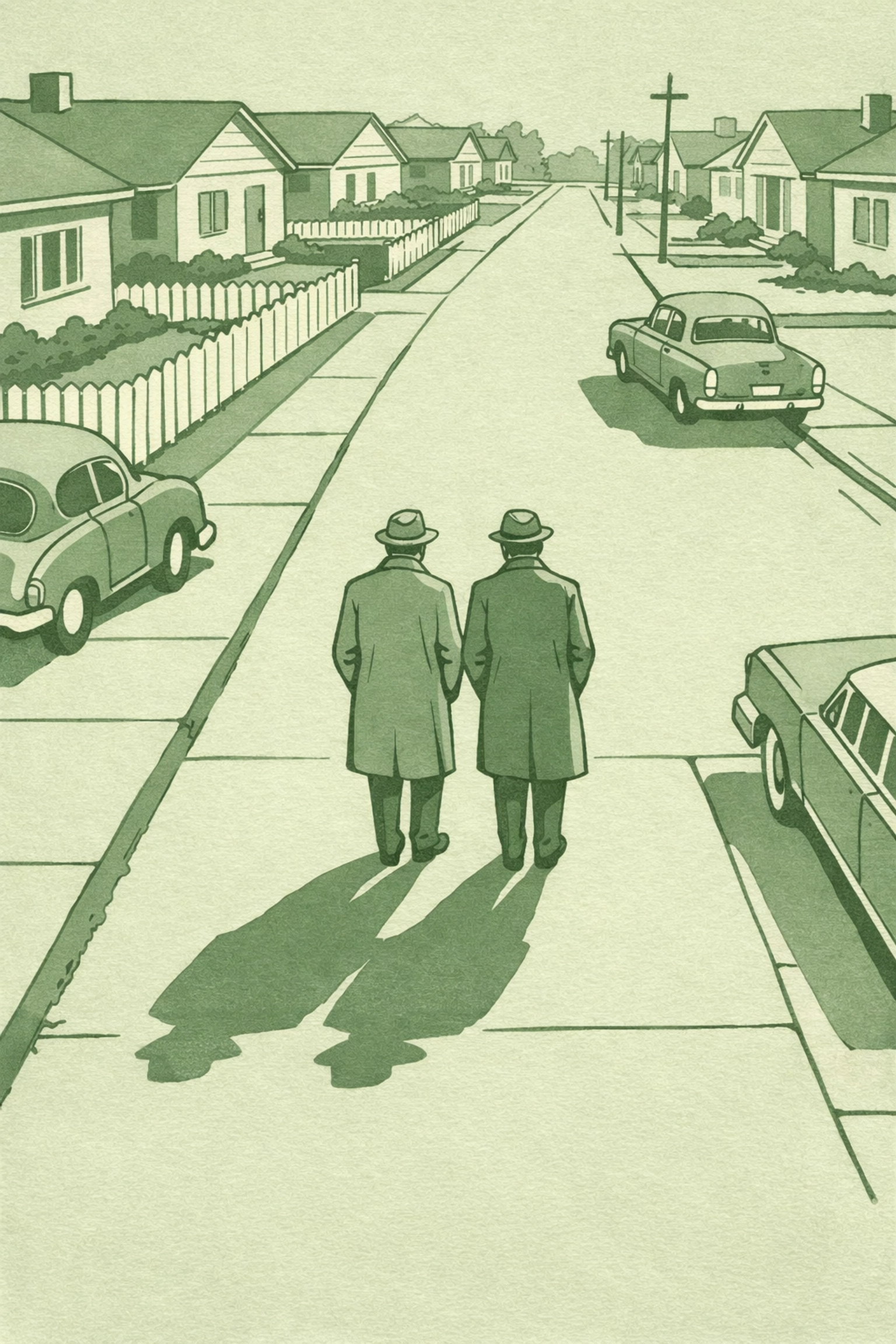
Police entrapment was common. Vice squads targeted gay bars, parks, and known gathering places. Publications like The Mattachine Review and ONE Magazine: early gay literature advocating for rights: were considered obscene material, with distributors facing prosecution.
Against this backdrop, raising children required extraordinary courage. Custody could be revoked instantly if sexual orientation was discovered. Teachers, social workers, and neighbors became potential threats. Yet these families persisted, often providing children with more love and stability than many traditional households.
The Performance of Normalcy
Daily life meant constant performance. George might mention "dating" a woman at the office during neighborhood barbecues. Frank would discuss plans to "eventually settle down" with the right girl. Their actual relationship: the quiet intimacy of shared coffee before work, the comfort of reading side by side each evening: remained invisible to everyone outside their walls.
Children raised in these households often understood the truth intuitively, even when nothing was explicitly stated. They learned early to protect the family secret, to code-switch between home truths and public narratives. Many grew up to become fierce advocates for LGBTQ+ rights, having witnessed firsthand the cost of enforced invisibility.
Discover character-driven MM romance exploring hidden relationships: The Berlin Companions: historical fiction that honors love behind closed doors.
Gay Families Throughout History: Before Suburbia
The 1950s didn't invent closeted gay families: it merely perfected the facade. Throughout history, same-sex couples have raised children across cultures:
-
Ancient Rome and Greece: Same-sex relationships existed alongside child-rearing, particularly among aristocracy. Adoption and guardianship provided legal frameworks for family creation.
-
Medieval Europe: "Sworn brothers" or "wedded brothers" ceremonies created lifelong bonds between men, sometimes including shared households and children from prior marriages or taken as wards.
-
19th Century Boston Marriages: While primarily documented among women, these committed partnerships often included child-rearing, particularly of nieces, nephews, or adopted children.
-
Harlem Renaissance: The 1920s-30s saw relatively open gay and lesbian relationships within Black artistic communities, with some couples raising children together.
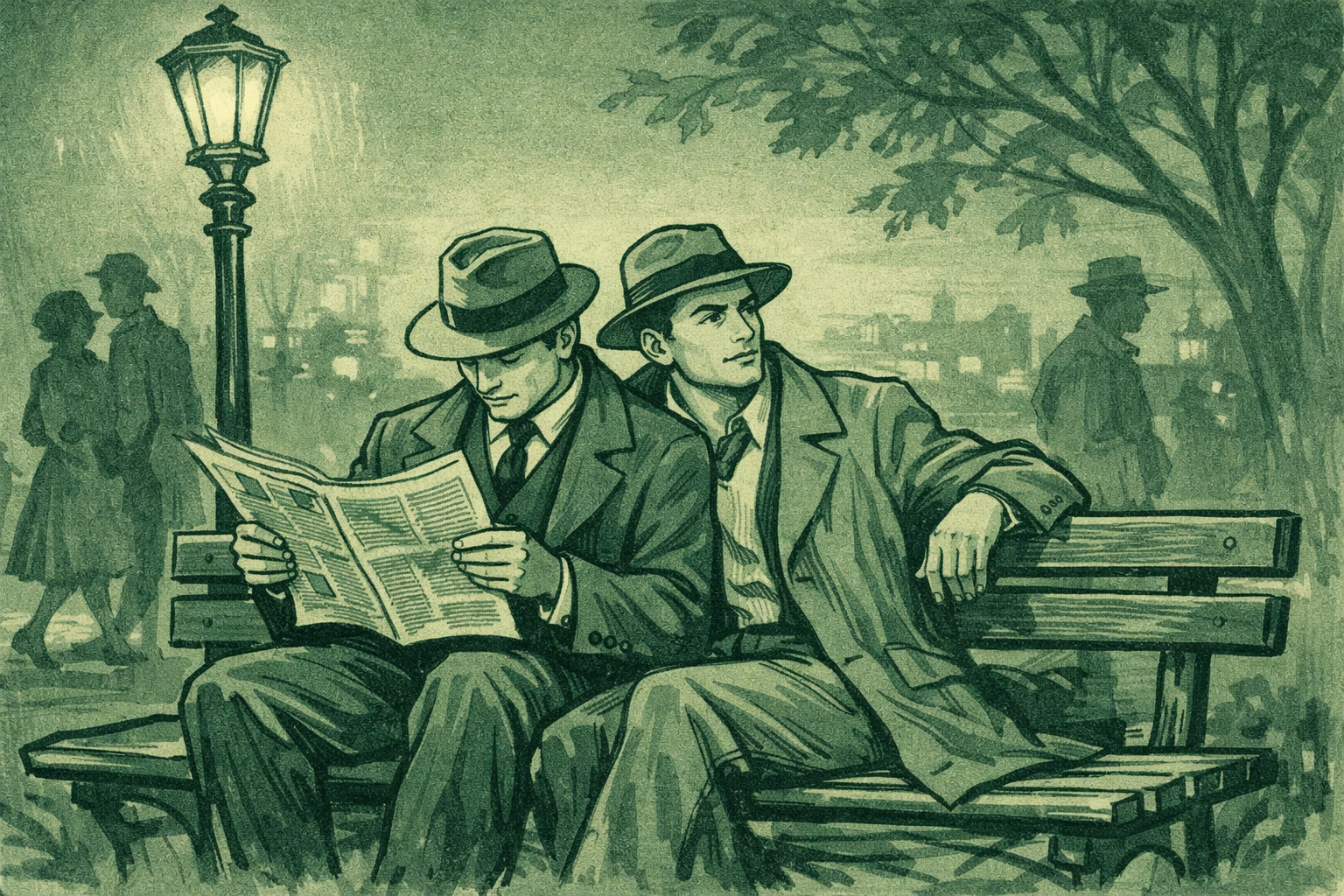
The difference in the 1950s was scale and suburbanization. Post-war housing developments created new possibilities for privacy while simultaneously enforcing stricter social conformity. The contradiction was profound: more physical space to build private lives, but more intense surveillance of those lives.
The Psychological Toll: Love and Fear
Read emotionally complex gay fiction at dickfergusonwriter.com: stories honoring the full spectrum of queer experience.
Living double lives extracted enormous psychological costs. Depression, anxiety, and substance abuse were common among closeted gay people. The constant vigilance: monitoring word choice, physical proximity, emotional expression: created chronic stress.
Yet many thrived. They found joy in small freedoms: a genuine smile across the dinner table, a gentle touch when no one was watching, the profound satisfaction of raising a child together. These families created rich emotional worlds within their walls, even if those worlds remained invisible to outsiders.
The children, too, paid prices. Some felt isolated, unable to discuss their home life with friends. Others became protective, hyperaware of their guardians' vulnerability. Many carried guilt about the secrecy they had to maintain.
Modern Echoes and Historical Recovery
Today's LGBTQ+ families exist in dramatically different circumstances: legal marriage, adoption rights, workplace protections (though these remain under threat in many regions). Yet the 1950s experience still resonates. Older LGBTQ+ people carry those memories. Some never came out, maintaining their "bachelor" identities into old age. Others finally claimed their truths after decades of hiding.
Historical recovery matters. Documenting these hidden families challenges the narrative that gay family life is somehow "new" or "experimental." These families have always existed. They've always loved, sacrificed, and endured. What's new is visibility and legal recognition: not the families themselves.
Explore contemporary and historical MM romance that honors this legacy: ReadWithPride.com features diverse LGBTQ+ ebooks celebrating queer families past and present.
Why These Stories Matter Now
Fiction exploring 1950s closeted family life serves multiple purposes:
1. Historical Documentation: When official records erased LGBTQ+ people, stories preserve memory.
2. Empathy Building: Understanding past struggles contextualizes ongoing rights battles.
3. Community Connection: Older and younger LGBTQ+ generations find common ground through shared history.
4. Literary Complexity: The tension between authentic feeling and forced performance creates compelling character depth.
The "uncles" of Maple Street represent thousands of real people who built lives in shadows. Their story: simultaneously heartbreaking and triumphant: deserves recognition.
Additional Reading: MM Historical Romance
Discover more gay historical romance and queer fiction exploring hidden relationships:
Browse the complete collection of MM novels and LGBTQ+ literature at dickfergusonwriter.com/collections/all.
Conclusion: Remembering with Pride
The white picket fences of 1950s suburbia hid countless secrets: some tragic, some redemptive, all achingly human. The men who lived as "uncles" and "roommates" while building families together demonstrated quiet heroism. They loved fully in a world that demanded their invisibility.
Today's gay romance books and MM fiction honor that legacy, bringing these stories from shadows into light. Every gay love story set in earlier eras connects contemporary readers to a longer, deeper history of queer resilience.
Visit ReadWithPride.com for curated LGBTQ+ ebooks, gay novels, and MM romance celebrating authentic queer experience across decades.
Follow us on social media:
Instagram: @dickfergusonwriter
X/Twitter: @DickFergus94902
Facebook: Dick Ferguson Writer
Website: ReadWithPride.com
#ReadWithPride #ReadingWithPride #GayHistoricalRomance #MMRomance #GayFiction #LGBTQBooks #1950sHistory #GayFamilies #QueerHistory #MMHistoricalRomance #GayLiterature #ClosetedLove #SuburbanSecrets #GayNovels #QueerFiction #LGBTQFiction #MMBooks #GayRomanceBooks #HistoricalMMRomance #GayAuthors #WriteWithPride

Leave a Reply
You must be logged in to post a comment.