

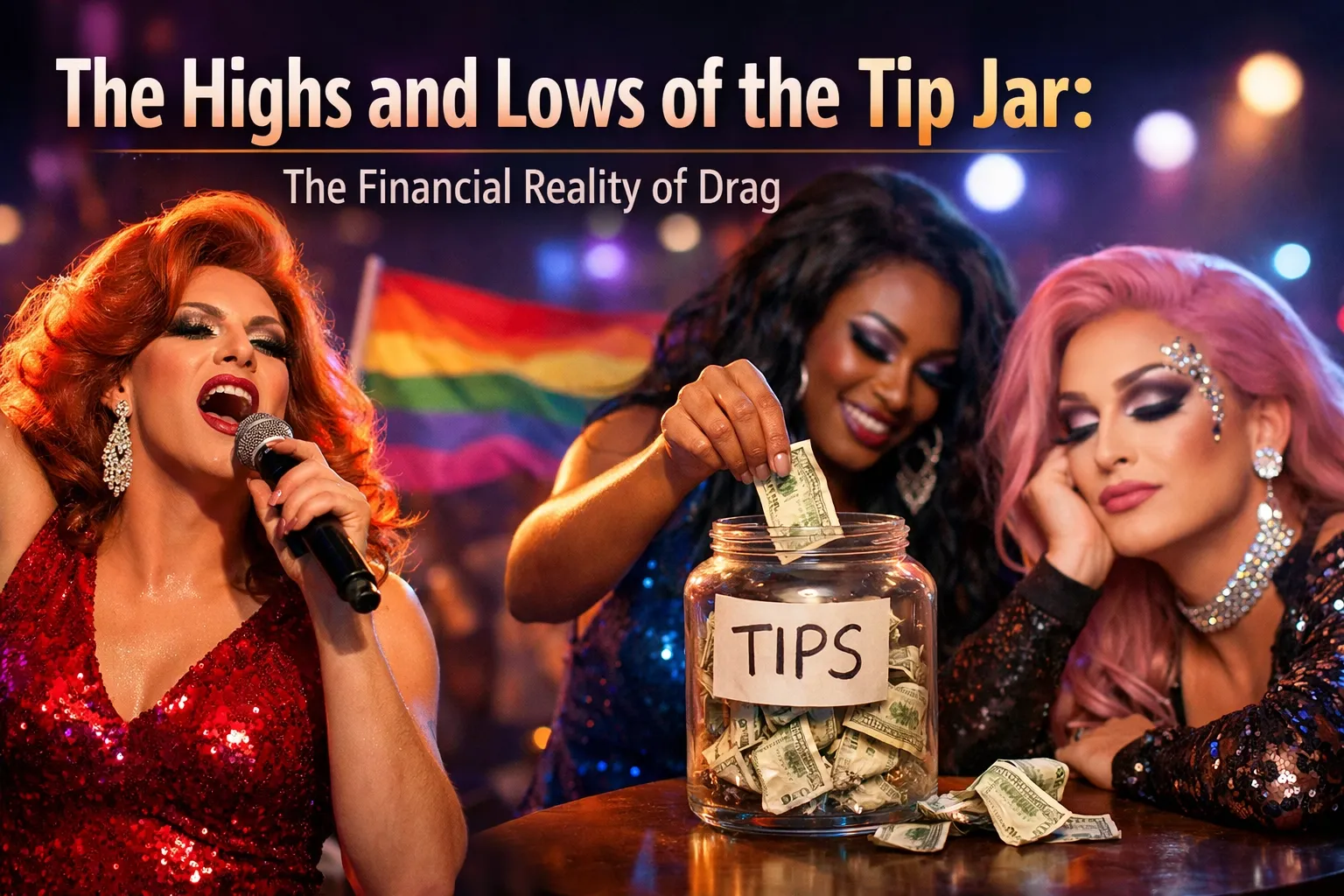
Let's talk about something most people don't see when they're mesmerized by a queen death-dropping in eight-inch heels: the math. Yeah, honey, the math. Because behind every flawless contour and crystallized corset is a spreadsheet that would make your accountant weep.
Welcome to the fifth installment of our "Life as a Drag Queen" series, where we're pulling back the sequined curtain on the financial reality of making money in drag. Spoiler alert: nobody's retiring to a yacht anytime soon.
The Base Pay Reality Check
Here's the tea that most drag performers won't spill on Instagram: the average club booking pays between $75 and $200 per performance. Some nights you might scrape together $300 if you're established and the venue's feeling generous. Other nights? Fifty bucks and a drink ticket.
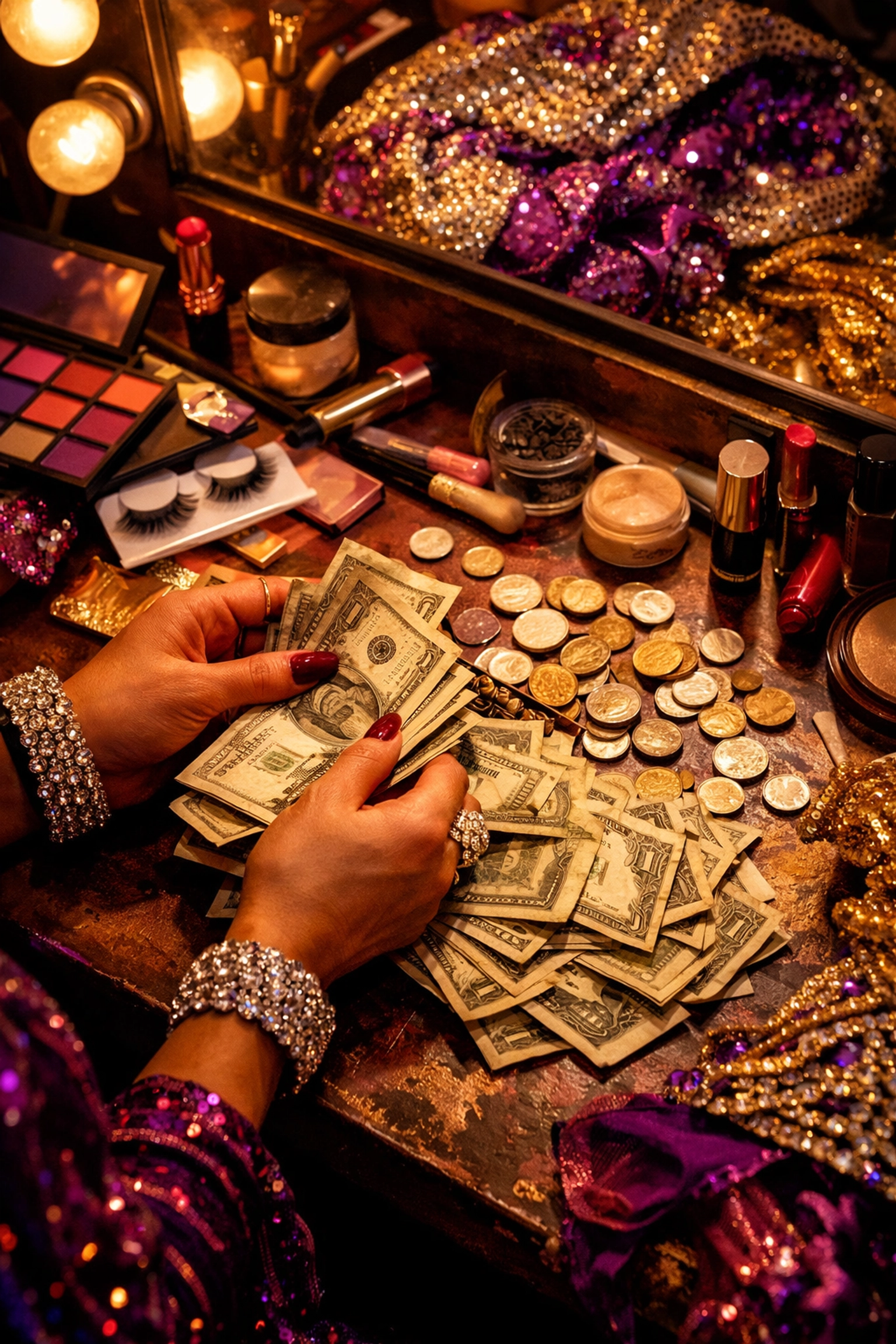
Only about 25% of drag queens actually make a full-time living from their art. The rest? They're serving you glamour at 11 PM after serving customers at Starbucks at 8 AM. That's the hustle behind the highlight, and it's as real as the glue holding down those lace fronts.
One drag performer put it bluntly: "Nobody's getting rich doing drag. That's the unfortunate reality." And yet, we keep painting our faces and padding our hips because this art form gets under your skin like rhinestone glue under your fingernails: impossible to fully remove.
When the Dollar Bills Rain (Or Don't)
Tips are where the real drama happens. A good night? Tips can double or even triple your booking fee. That's the high: when audience members are stuffing bills into your waistband faster than you can lip-sync, when every split earns you another twenty, when someone slips you a hundred just because your performance made them feel something.
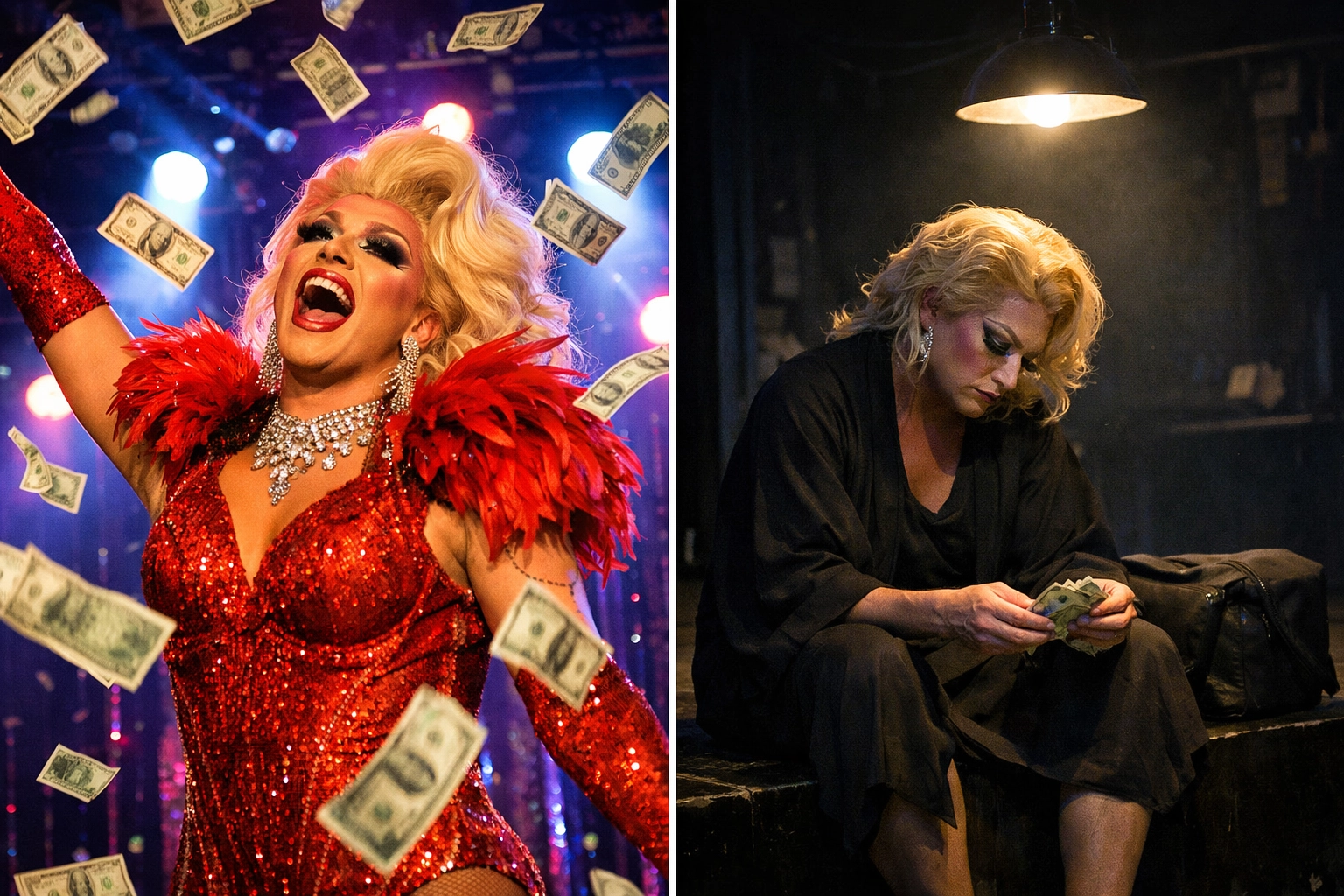
But let's talk about the flip side. The low. That soul-crushing Tuesday night when there are more queens backstage than people in the audience. When you've spent three hours getting ready, performed your heart out to a Beyoncé track, and walked away with exactly seventeen dollars in singles. When your tip jar has more crumpled receipts than actual cash.
Latrice Royale, before becoming a "RuPaul's Drag Race" icon, once earned just $50 on a good night in tips alone. She performed multiple shows daily, depending entirely on audience generosity to make rent and buy groceries. That's not ancient history: that's the current reality for countless drag performers hustling in clubs across the globe.
The emotional weight of those slow nights? Crushing. You start questioning everything. Is your performance not good enough? Did you pick the wrong song? Should you have gone with the other wig? And all the while, the bills: the actual bills that need paying, not the ones you're hoping will land on stage: keep stacking up.
The Price Tag of "Looking This Good"
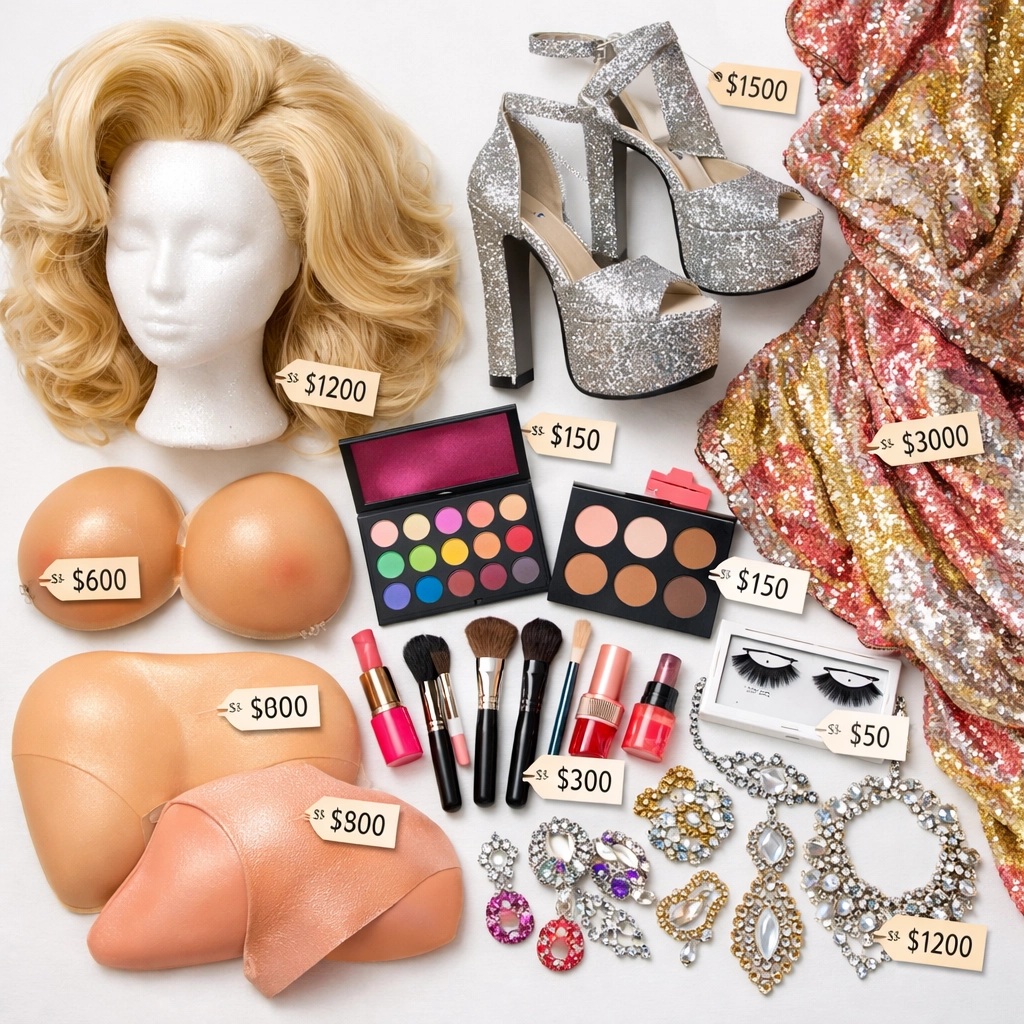
Want to know a secret? That queen who looks like she stepped off a magazine cover probably spent the equivalent of a used car to achieve that look. Let's break down the cost of drag:
Wigs: A decent human hair wig runs $200-$500. Most queens own at least five. That's a conservative $1,000-$2,500 just in hair you don't grow.
Custom gowns: Entry-level custom pieces start around $300. High-end pageant gowns? Try $1,000-$3,000. Each.
Shoes: Platform heels that won't break your ankle cost $80-$200 a pair. And you need multiple pairs because sequins and pleather don't match everything.
Makeup: Professional-grade cosmetics aren't cheap. Between foundation (you need a lot to cover a beard shadow), setting powders, eyeshadows, lashes, and lip products, you're looking at hundreds every few months.
Padding and shapewear: Creating those curves? That's another $100-$300.
Accessories: Jewelry, clutches, tights, gloves, hair accessories: the little things that complete a look add up fast.
Annual operational costs for a working drag queen easily hit $10,000 or more. And that's before factoring in travel to gigs, promotional materials, photography sessions for social media, or that emergency wig repair when someone steps on your lace front backstage.
The Booking Fee vs. Expenses Math That Doesn't Add Up
Here's where it gets grim. You book a gig for $150. Sounds decent, right? But then:
- You drove 45 minutes to the venue: $15 in gas
- You bought a new bodysuit because the theme is "underwater fantasy": $60
- You needed emergency lashes because yours fell off during rehearsal: $8
- You grabbed dinner because you're performing at 11 PM: $12
Congratulations, your $150 gig just netted you $55. And you still have to tip out the sound person, the host, and possibly the venue coordinator. Now you're down to $40 for four hours of work, not counting the three hours you spent getting ready.
The economics literally don't work unless you're strategic, diversified, and a little bit lucky. Successful performers build multiple revenue streams: private events, virtual shows, merchandise, social media sponsorships, and teaching workshops. They become brands, not just performers.
The Bigger Picture: A Shrinking Landscape
Between 2002 and 2023, over 45% of gay clubs in the U.S. closed their doors. That's not just sad: that's a catastrophic loss of performance venues and income opportunities. Fewer clubs mean fewer gigs mean fewer queens who can make this work financially.
Economic pressures have tightened audiences' wallets too. When people are worried about their own bills, they have less discretionary income for tickets, tips, and cocktails. It's a squeeze from every direction.
The Path Forward: Hustle Meets Heart
So how do queens make it work? The same way the LGBTQ+ community has always survived: through creativity, resilience, and refusing to let the world dictate what's possible.
Smart performers diversify. They host karaoke nights (which can pay £8,000 or about $10,000 for high-end corporate events). They create YouTube content. They sell custom merchandise. They book private parties where the pay is better and the tips flow more freely.
Appearing on shows like "RuPaul's Drag Race" can transform a career, raising booking fees from $185 to $620 or more overnight. But that success requires surviving the show's preparation costs first: some contestants take out second mortgages to afford enough looks.
Most queens maintain day jobs while building their drag careers, creating a sustainable long-term path. It requires being smart, strategic, and finding ways to stand out in an increasingly crowded field.
The Bottom Line (Pun Intended)
The financial reality of drag isn't pretty, but it's real. For every viral moment of a queen making it rain on stage, there are a hundred Tuesday nights where the tips barely cover cab fare home. For every custom gown that photographs beautifully, there's a maxed-out credit card and a payment plan.
But here's the thing about drag performers: they don't do this for the money. They do it for the art, the expression, the community, and that indescribable feeling when a performance connects with an audience. The money? That's just what makes the magic sustainable.
At Read with Pride, we celebrate the stories that don't always make the spotlight: the real, raw, authentic experiences of the LGBTQ+ community. Whether it's drag queen tips and struggles or the intimate narratives in our collection of MM romance books and queer fiction, we're here for the truth behind the glamour.
This is LGBTQ performance art in its rawest form: expensive, exhausting, emotionally turbulent, and absolutely worth it.
Stay tuned for Story #6 in our "Life as a Drag Queen" series, where we'll explore the relationship between drag and activism: when sequins become statements.
Follow us for more authentic LGBTQ+ stories:
#DragQueen #DragLife #LGBTQCommunity #QueerArt #DragPerformance #ReadWithPride #LGBTQStories #DragCulture #MakingMoneyInDrag #CostOfDrag #DragQueenTips #PerformanceArt #QueerPride #AuthenticStories #LGBTQFiction #MMRomance #QueerReads2026

Leave a Reply
You must be logged in to post a comment.