

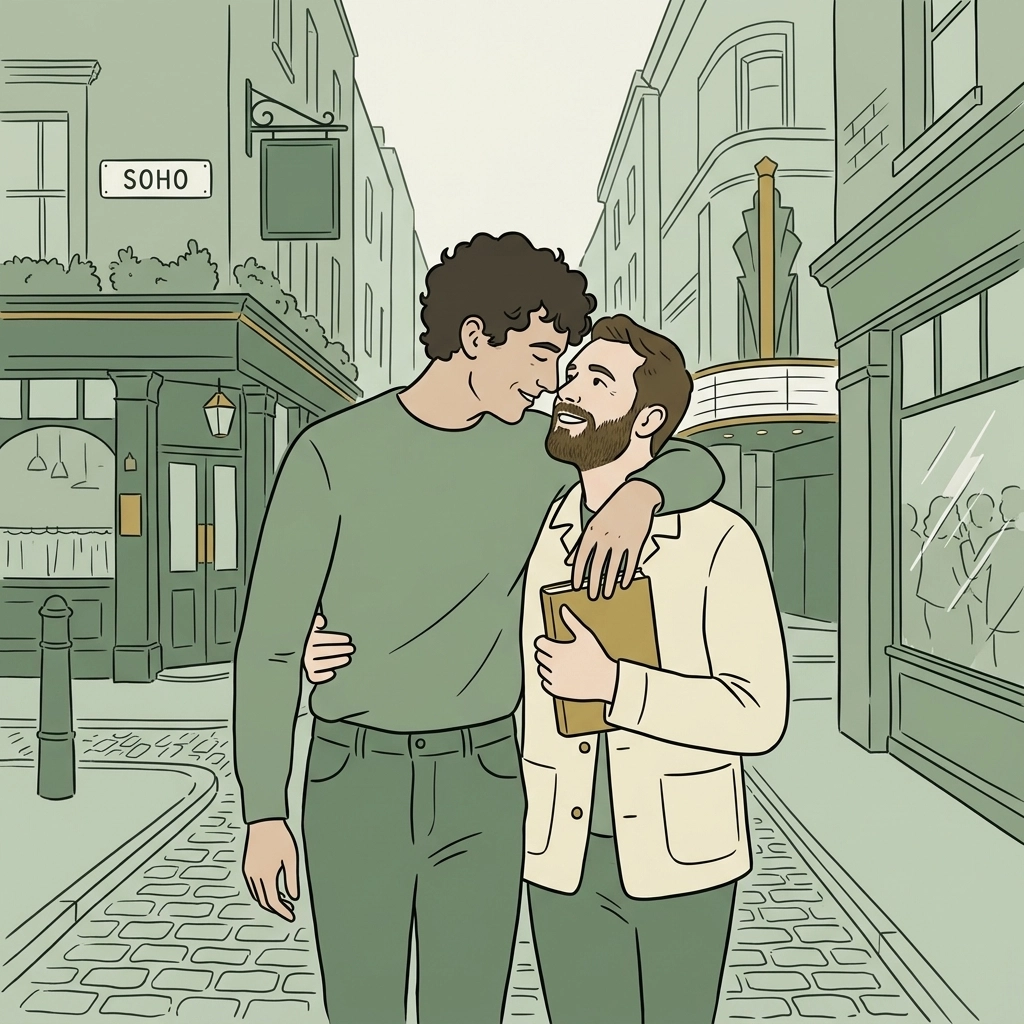
If you’ve ever walked down Old Compton Street on a Friday night, you know the vibe. The neon lights, the laughter spilling out of crowded pubs, and that unmistakable feeling of being exactly where you belong. Soho isn’t just a district in London; for many of us in the LGBTQ+ community, it’s the spiritual home of our history and our stories.
At Read with Pride, we’re obsessed with how history shapes the MM romance and gay fiction we love today. But before we dive into the grit and glamour of Soho’s past, we want to take a moment to look at a part of our community that is often overlooked in the hustle and bustle of city nightlife.
A Guide to Understanding Asexuality and Aromanticism for Allies
As we explore the vibrant, often highly sexualized history of Soho, it’s vital to remember that the "A" in LGBTQIA+ stands for Asexual and Aromantic. Being an ally means understanding that not every queer story follows the same path of sexual attraction or romantic desire.
Asexuality (Ace) refers to people who experience little to no sexual attraction to others. It’s a spectrum! Some folks might experience attraction only under specific circumstances (demisexual), while others feel none at all.
Aromanticism (Aro) refers to those who experience little to no romantic attraction.
In the world of MM novels and queer fiction, we are seeing a beautiful rise in "Ace-spec" characters. Understanding these identities helps us become better allies and more empathetic readers. Just because a character in one of our gay love stories isn't looking for a bedroom scene doesn't mean their journey is any less valid or "queer." True Readwithpride values mean celebrating the full spectrum of how we love: or don't love: and how we relate to one another.

Now, with that inclusive lens, let’s travel back in time to where it all began. Here are 10 things you absolutely should know about the iconic Soho scene.
1. The Roots Go Deeper Than You Think
While we often think of the "gay village" as a modern invention, Soho has been a hub for queer activity for centuries. Back in the 1600s and 1700s, Soho already had a reputation. It was a place where men would meet other men, navigating a dangerous world of secret signals and hidden gatherings. Even then, the narrow alleyways provided a level of anonymity that the rest of London couldn’t offer.
2. The Cave of the Golden Calf (1912)
Long before the modern dance floor, there was the Cave of the Golden Calf. Tucked away below a draper’s shop on Heddon Street, this avant-garde club is widely considered the first modern gay bar. It was a place of "gaiety" and performance that predated the dedicated queer venues we see today. It was a space where the rules of society didn't apply, and creativity: and queer identity: could flourish.
3. The Shadow of Oscar Wilde
You can't talk about gay literature or Soho history without mentioning Oscar Wilde. His 1895 trials didn't just end in tragedy; they pulled the curtain back on Soho's secret life. The trials revealed Wilde's frequent visits to places like Kettner’s restaurant, where he dined with young men, and his connections to the local scene. For the public, it was a scandal; for history, it was proof of a thriving, resilient community.
4. The Trocadero Long Bar
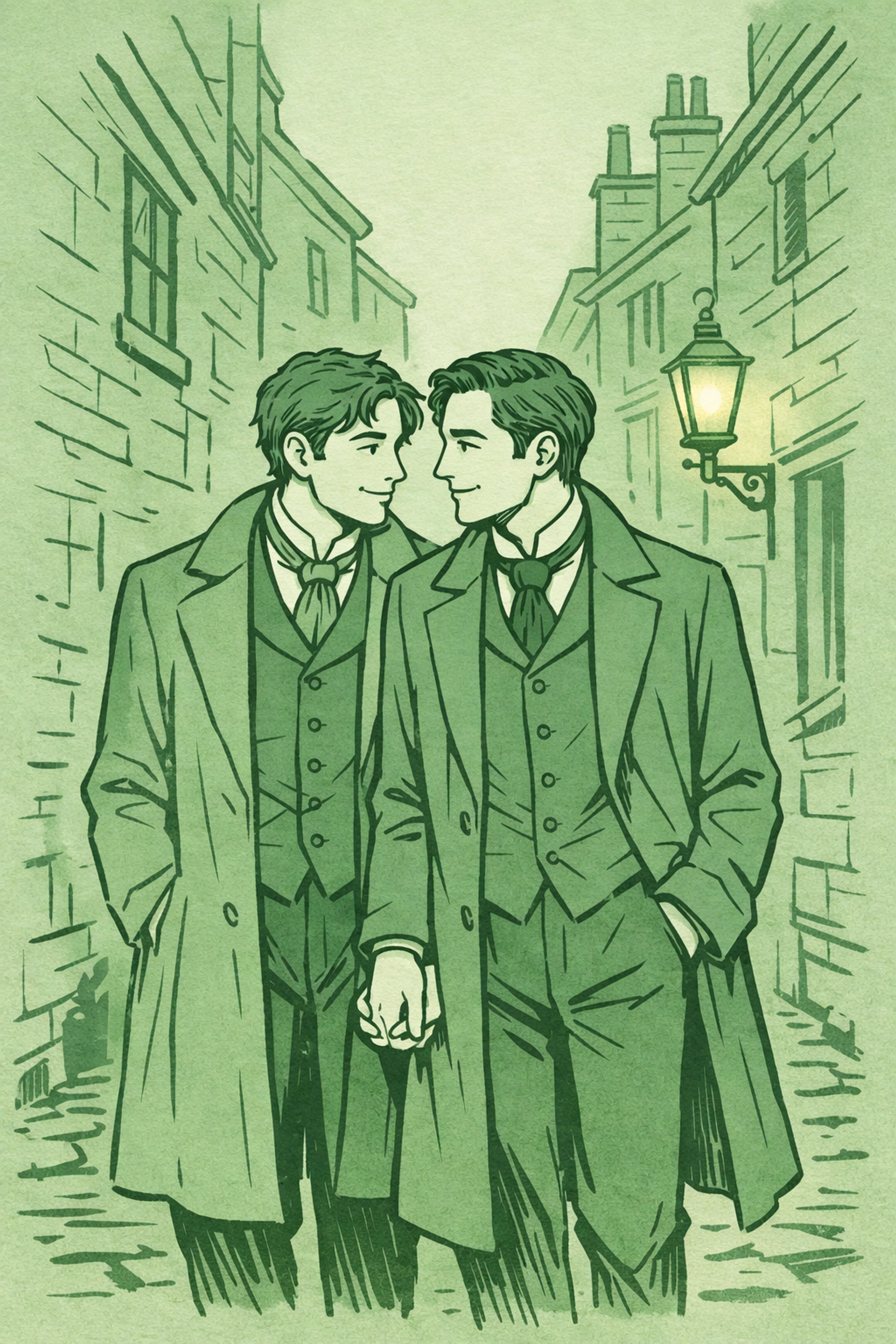
Opened in 1896, the Trocadero Long Bar became a legendary meeting point. Located right on the corner of Shaftesbury Avenue and Piccadilly Circus, it was technically a "gentlemen-only" establishment. However, it quickly became famous: or "notorious," depending on who you asked: for being the place to find a homosexual liaison. It was a high-stakes game of meeting eyes over a gin and tonic.
5. WWII and the Underground Shift
War changes everything. During World War II, the intense policing of "public morality" forced London’s queer culture even deeper underground. While some bars like the City of Quebec (near Marble Arch) emerged during the 1940s, Soho’s scene became a series of whispered passwords and members-only basements. It was a time of high angst: a theme we see reflected in many gay historical romance novels today.
6. The Exile to Earl's Court
Believe it or not, Soho wasn't always the undisputed king of the scene. In the post-war years, gentrification and police crackdowns actually pushed many LGBTQ+ people out of Central London. They headed west to Earl's Court, where the rents were cheaper and the atmosphere was slightly more relaxed. For a few decades, Soho's queer prominence actually faded.
7. The 1980s Revival
The Soho we know and love today really took flight in the 80s. With the opening of Heaven in 1979, the energy shifted back to the center. By 1986, the Swiss Tavern was transformed into Comptons of Soho, which remains a cornerstone of the community. Venues like The Village and The Yard followed, cementing Soho as London’s premier gay destination. This era of MM contemporary life was built on the defiance of a generation facing the AIDS crisis.
8. An Unlikely Ally: Westminster Council
In a strange twist of fate, the "cleanup" of Soho helped the gay scene grow. In 1987, the Tory-run council began a massive crackdown on the heterosexual sex industry (the "red light" shops). As these premises were emptied, they became available for new businesses. Gay entrepreneurs stepped in, turning former adult bookstores and peep shows into the vibrant cafes and bars that define the area today.
9. The Admiral Duncan Bombing (1999)
History isn't always bright lights. In 1999, a neo-Nazi targeted the Admiral Duncan pub with a nail bomb. It was a devastating attack that killed three people and injured dozens more. But the aftermath showed the world the strength of the Soho community. Instead of retreating in fear, the community held a massive vigil in Old Compton Street. This moment of resilience solidified Soho as the symbolic heart of London’s LGBTQ+ community.
10. The Threat of the Modern World
Today, Soho faces a new challenge: gentrification. Projects like the Elizabeth line have led to the demolition of historic spots like The Ghetto and the Astoria. Iconic spaces like First Out, London's first queer cafe, are gone. As luxury flats and chain restaurants move in, the battle to keep Soho "queer" is more important than ever.
Why We Write About It
At eBooks by Dick Ferguson, we believe that knowing our history makes our stories better. When you read a gay thriller or an MM fantasy set in London, you’re reading the echoes of these real-life struggles and triumphs.
Whether you’re looking for popular gay books, award-winning gay fiction, or the latest 2026 gay books, we invite you to explore stories that honor this legacy. Our MM romance books aren't just about the "happily ever after": they’re about the journey of finding home in a world that hasn't always been welcoming.
Check out our full collection of LGBTQ+ ebooks and support independent gay authors who are keeping these stories alive.
Explore the Store: Read with Pride – Dick Ferguson Collection
Follow us on social media for more queer history and book recommendations:
- Instagram: https://www.instagram.com/dickfergusonwriter
- X (Twitter): https://www.x.com/DickFergus94902
- Facebook: https://www.facebook.com/profile.php?id=61572869844598
- Website: www.readwithpride.com
#ReadWithPride #LGBTQBooks #MMRomance #GayHistory #SohoLondon #QueerFiction #GayFiction #MMNovels #WriteWithPride #ReadingWithPride
Dick, here are three blog post options for tomorrow:
- The Rise of the "Grumpy x Sunshine" Trope in MM Romance: Why we can't get enough of polar opposites.
- Forgotten Pioneers: 5 Gay Authors from the 1920s you need to add to your TBR list.
- From Page to Screen: Why MM books are finally getting the high-budget adaptations they deserve.

Leave a Reply
You must be logged in to post a comment.