

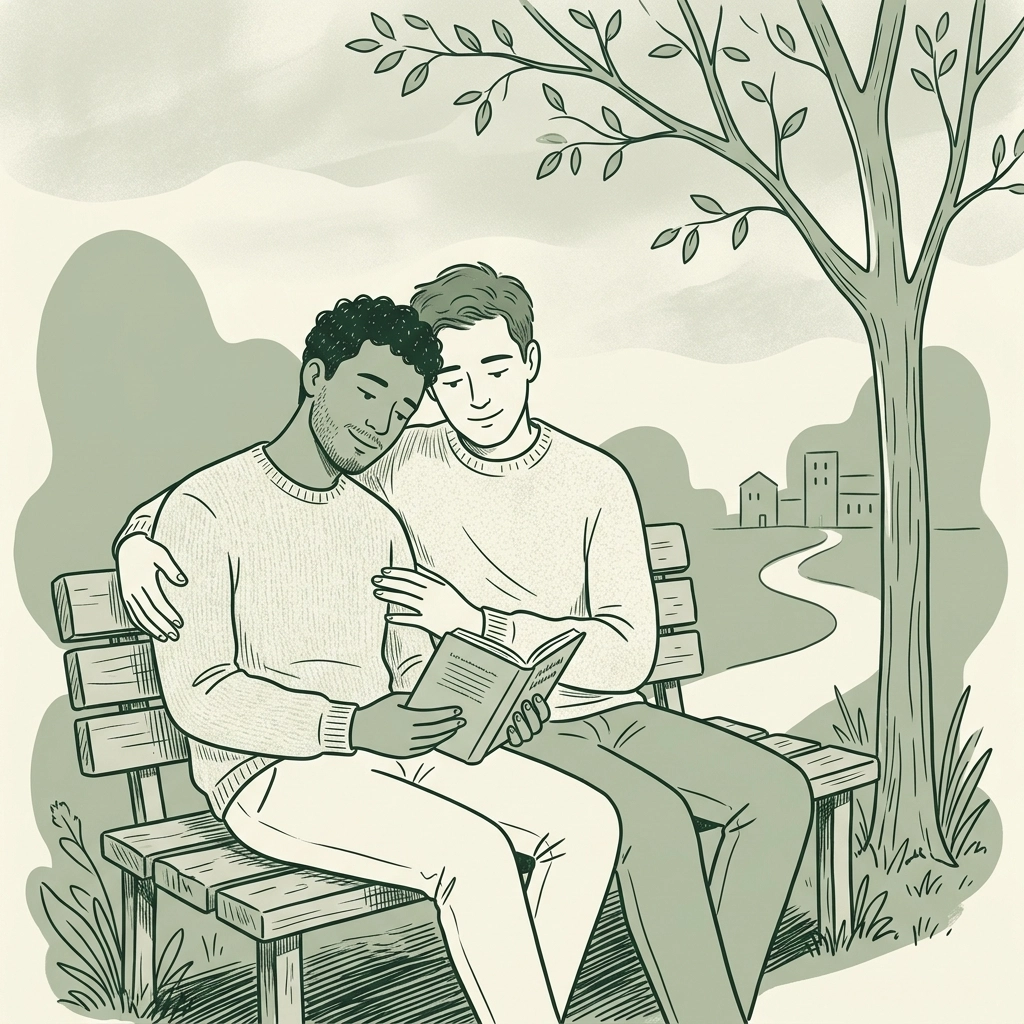
Finding your "people" shouldn't feel like a chore, yet for many of us in the LGBTQ+ community, it often does. Whether you’re looking for a group of guys to talk about the latest MM romance release with, or you're searching for a space where you can finally be yourself without explanation, the journey to finding an authentic queer community is deeply personal. It’s about more than just showing up at a bar; it’s about connection, shared experience, and mutual support.
At Read with Pride, we believe that literature, especially gay fiction and M/M books, serves as a gateway to these communities. But beyond the pages of a book, how do you actually find and nurture these spaces?
Here are 10 things you should know about finding and building authentic queer community in 2026.
1. A Guide to Understanding Asexuality and Aromanticism for Allies
To build a truly authentic community, we have to start with inclusivity. One of the most overlooked parts of our rainbow spectrum involves those who identify as asexual (Ace) or aromantic (Aro). For allies, and even for those within the broader gay and bisexual community, understanding these identities is the first step toward creating a space where everyone feels seen.
Asexuality is a sexual orientation where a person experiences little to no sexual attraction to others. Aromanticism is a romantic orientation where a person experiences little to no romantic attraction. It’s a spectrum, not a binary. Within the MM romance world, we’re seeing more "Ace-spec" characters, which is a fantastic way for readers to understand that intimacy isn't a one-size-fits-all concept.
As an ally, the best thing you can do is validate these experiences. Don't assume that a "happily ever after" in a gay love story always has to involve a bedroom scene or a traditional wedding. Authentic community means acknowledging that some of our brothers and friends experience connection differently. When we educate ourselves on these nuances, we stop accidentally excluding people from our social circles and book clubs.
2. Social Connectedness is a Mental Health Game-Changer
It’s official: science backs up what we’ve always felt. Research shows that social connectedness significantly reduces mental health struggles. When you find a queer community where you belong, it can lower feelings of depression, stress, and anxiety.
For many gay men, the isolation of "growing up in the closet" can have long-lasting effects. Finding a tribe that understands your specific hurdles, like navigating gay romance in a heteronormative world or dealing with family dynamics, actually improves your physical health. Loneliness is a physical stressor, and authentic connection is the antidote.
3. Start with Local Support Groups
If you’re feeling lost, start where you are. A great first step is to search online for local support groups. You can often narrow these down by specific interests or identities. For example, if you’re looking for peer-facilitated groups for gay men or trans-masculine spaces, they are often out there waiting for you.
Support groups provide a structured way to meet people who are often at the same stage of their journey as you. It’s less pressure than a party and more focused on genuine conversation. Whether it's a group discussing LGBTQ+ fiction or a grief support group for the community, these spaces are the bedrock of authentic connection.
4. Seek Out Recreational Groups Beyond the Bar Scene
The "Gay Bar" has historically been our town square, but authentic community today looks a lot like a hiking trail, a ceramics studio, or a football pitch. Look for LGBTQIA+ social opportunities that revolve around activities.
Are you into gay novels? Join a gay book club. Love sports? Look for a recreational league. From craft groups to gay spy romance enthusiasts, there is likely a niche group in your area. These "low-stakes" environments allow you to bond over a shared hobby first, which often leads to much deeper, more authentic friendships than you’d find shouting over music in a club.
5. Quality Always Matters More Than Quantity
In the age of social media, it’s easy to feel like you’re "failing" at community because you don’t have 50 friends to go to Pride with. Here’s a secret: quality matters more than quantity.
Regardless of how many resources exist in your city or town, focus on finding two or three meaningful spaces. Spreading yourself too thin across ten different organizations can lead to burnout. You want connections where people know your name and your favorite MM romance books, not just a sea of faces where you feel like a number.
6. Build Your Own Safe Space if One Doesn't Exist
Sometimes, the community you need doesn't exist yet. If you live in an area without formal queer organizations, you can build your own. This doesn't mean you have to file for 501(c)(3) status; it can be as simple as identifying informal safe spaces.
Maybe it’s a specific corner of a local park, a trusted coffee shop, or even an online discord server for fans of gay contemporary romance. Building community starts with one other person. If you can't find a group, be the one to start the "M/M Book Coffee Hour." You’d be surprised how many people are just waiting for someone else to take the lead.
7. Online Communities are Lifelines for the "Quietly Out"
We have to acknowledge that not everyone can be safely out. For those living in hostile environments or with unsupportive families, virtual communities are essential.
Virtual support groups, book clubs, and game nights provide meaningful connection without the physical risk. Websites like Read with Pride offer more than just LGBTQ+ ebooks; they offer a sense of belonging. Engaging with gay fiction online and joining discussions about your favorite MM historical romance can be the thread that keeps you connected to your identity when your physical surroundings aren't safe.
8. Don't Assume Resources Aren't There, Do the Research
We often tell ourselves, "There’s nothing for gay guys in this town," before we’ve actually checked. Before you give up, investigate verified meetup groups and community organizations. Check local library boards, university LGBTQ centers (even if you aren't a student), and national databases. Sometimes, a thriving community is hidden in plain sight, operating out of a community center or a back room of a bookstore.
9. Deepen Connections by Celebrating Together
Once you have a few friends, turn those "hangouts" into "celebrations." Intentionally create moments that honor your identities. This could be anything from attending a drag show to having a movie night dedicated to popular gay books turned into films.
When you intentionally celebrate your queerness together, you move from being "people who know each other" to a "community." It’s about creating shared traditions, even if that tradition is just complaining about the latest cliffhanger in a steamy MM romance series.
10. Set Boundaries Around Emotional Labor
Finally, remember that you are not a walking encyclopedia. While inviting allies into your journey is great, educating people about queerness can be exhausting. It is okay to set limits on how much emotional labor you provide.
Authentic community is a place where you should be able to rest, not a place where you always have to be "on" or teaching "LGBTQ 101." Surround yourself with people who do the work to understand you, so you can spend your time enjoying the community rather than explaining it.
Finding your place in the world is a journey, and often, that journey starts with a story. If you're looking for your next escape or a way to feel seen, check out our latest collection of MM romance books and gay literature.
Shop the Collection at Read with Pride
Follow us on social media:
- Instagram: dickfergusonwriter
- X (Twitter): @DickFergus94902
- Facebook: Dick Ferguson Writer
- Website: www.readwithpride.com
#readwithpride #LGBTQplus #gaybooks #MMromance #gayfiction #queercommunity #M/Mbooks #gayliterature #2026reads #writewithpride
Hey Dick! Here are three blog post ideas for tomorrow:
- The "Bodyguard" Trope: Why We Can’t Get Enough of Protective Heroes in MM Romance. (Focusing on the protector/protected dynamic that readers love).
- From Enemies to Lovers: How Tension Drives the Best Gay Fiction. (A deep dive into the psychology of the most popular trope in the genre).
- 5 Reasons to Re-Read Your Favorite Gay Novels During Stressful Times. (Focusing on "comfort reads" and the emotional investment of returning to familiar characters).

Leave a Reply
You must be logged in to post a comment.