

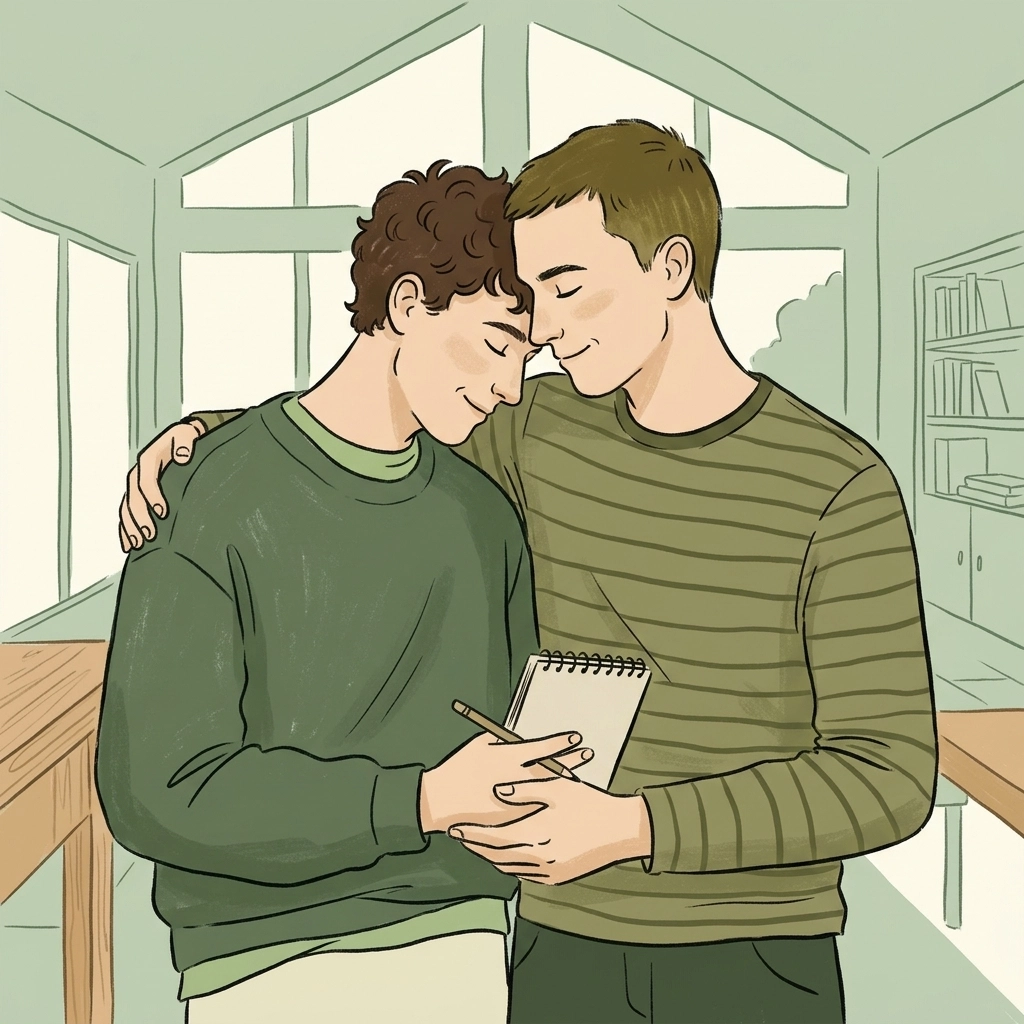
Hey there, lovely readers! Welcome back to the blog. Today, we’re diving deep into a topic that is close to our hearts here at Read with Pride. We’re talking about identity, specifically, the beauty of being non-binary and how to navigate a world that often tries to force us into one of two boxes.
If you’ve been following our journey at eBooks by Dick Ferguson, you know we’re all about celebrating authentic stories, especially within the world of MM romance and queer fiction. But identity isn't just a plot point in a book; it’s the lived reality for millions of people. So, let’s talk about "The Beauty of Being Non-Binary: Living Beyond the Binary Gaze" and how you can find your own freedom.
What Does It Mean to Live Beyond the Binary Gaze?
For most of us, we grew up in a world dominated by the "binary gaze." This is the societal expectation that everyone must fit into the categories of "man" or "woman," and that these categories come with a strict set of rules for how to look, act, and love.
Living beyond that gaze means rejecting those rigid boundaries. It’s about realizing that gender isn't a destination, it’s a spectrum, a galaxy, or sometimes, a blank canvas. When you step outside the binary, you aren't just "choosing a label"; you are reclaiming the right to define yourself on your own terms.
Decoding the Non-Binary Umbrella
"Non-binary" is a powerful umbrella term. It’s a home for anyone whose gender identity doesn’t sit comfortably in the "male" or "female" boxes. Because this experience is so personal, there are dozens of ways to describe it. You might have seen some of these terms while browsing LGBTQ+ ebooks or reading gay novels, but let’s break down what they actually mean:
- Agender: Feeling like you don’t have a gender at all, or that your gender is neutral.
- Genderfluid: Your gender identity changes over time. One day you might feel more masculine, another day more feminine, and another day something entirely different.
- Bigender: Identifying with two genders, either at the same time or alternating between them.
- Demigender: Feeling a partial connection to a specific gender (like a demiboy or demigirl).
- Neutrois: A neutral or "null" gender identity.
The most important thing to remember? You don’t need to "qualify" to use these terms. If a label resonates with you, it’s yours.
The Intersection of Non-Binary and Trans Identities
There’s often a bit of confusion here, so let’s clear the air. "Transgender" is an umbrella term for anyone whose gender identity differs from the sex they were assigned at birth. Because of this, many non-binary people consider themselves part of the trans community.
However, not every non-binary person uses the label "trans," and that’s perfectly okay! Identity is about how you feel inside, not about following a flowchart. Whether you’re a fan of gay fiction or you’re writing your own story, understanding these nuances helps us build a more inclusive community.
Expression vs. Identity: Breaking the Androgyny Myth
One of the biggest misconceptions about being non-binary is that you have to look androgynous. You’ve seen the "look", the short hair, the oversized clothes, the neutral tones. And while that look is iconic and valid, it isn’t the "only" way to be non-binary.
Gender identity is who you are. Gender expression is how you present that to the world.
You can be non-binary and have a beard. You can be non-binary and wear makeup. You can be non-binary and love MM romance books that feature rugged, masculine protagonists. Your clothes, your hair, and your hobbies don't invalidate your identity. Freedom is being able to wear what makes you feel like you, regardless of which "section" of the store it came from.
Why Representation Matters in LGBTQ+ Literature
At Read with Pride, we believe that seeing yourself reflected in the pages of a book is life-changing. When we curate M/M books and queer fiction, we look for stories that capture the emotional depth of the human experience.
Take, for example, the works of Dick Ferguson. In stories like The King of Spades and Broken Roses, we see deep, emotional male/male relationships that challenge traditional notions of strength and vulnerability. While these stories focus on gay men, the themes of self-discovery and breaking free from societal expectations are universal to the entire LGBTQ+ community.
When non-binary characters appear in gay romance, it reminds us that our love stories are just as valid and just as "romance-novel-worthy" as anyone else's.
Finding Your Own Voice: Names and Pronouns
If you’re exploring your identity, you might be thinking about names or pronouns. Some folks choose to stick with the ones they were given at birth, while others find that a new name feels like putting on a pair of glasses and finally seeing clearly.
Common pronouns include:
- They/Them/Theirs
- Ze/Zir/Zirs
- He/Him or She/Her (yes, non-binary people can use these too!)
- Any combination (like He/They or She/They)
The beauty of living beyond the binary gaze is that you get to choose the language people use to talk to you. It’s a small change that carries massive weight in terms of respect and affirmation.
How to Support the Non-Binary People in Your Life
If you’re an ally reading this: first of all, thank you! Being a part of the Read with Pride community means standing up for everyone in our rainbow family. Here’s how you can be a better ally:
- Respect Pronouns: If someone tells you their pronouns, use them. If you mess up, apologize briefly, correct yourself, and move on.
- Don’t Assume: Don’t assume someone's gender based on their appearance.
- Educate Yourself: Read gay literature, listen to non-binary creators, and stay curious.
- Buy Queer: Support authors and publishers who prioritize LGBTQ+ voices. You can find our full collection of gay eBooks and MM contemporary stories at our official store.
Conclusion: The Freedom of Authenticity
Finding freedom beyond the binary gaze isn’t about reaching a state of perfection. It’s about the messy, beautiful, ongoing process of being yourself. Whether you find comfort in gay love stories, or you're out there living your own, remember that you are enough exactly as you are.
The world is a much brighter place when we all stop trying to fit into boxes and start shining in our own unique colors.
Read with Pride, live with pride, and never stop exploring the wonderful spectrum of who you are.
Follow us on social media:
- Instagram: https://www.instagram.com/dickfergusonwriter
- X (Twitter): https://www.x.com/DickFergus94902
- Facebook: https://www.facebook.com/profile.php?id=61572869844598
- Website: www.readwithpride.com
- Store: Read with Pride Store
#ReadWithPride #NonBinaryIdentity #LGBTQBooks #MMRomance #GayFiction #QueerLiterature #GenderFluid #WriteWithPride #ReadingWithPride
Daily Blog Post Options for Dick Ferguson:
- The Rise of the Grumpy/Sunshine Trope in MM Romance: Exploring why this classic dynamic remains a fan favorite in gay romance books.
- Queer Fantasy: Why We Need Non-Binary Protagonists in Epic Worlds: A look at how gay fantasy romance is evolving to include more diverse gender identities.
- Beyond the Happy Ending: Why High-Angst Gay Fiction Resonates: An analysis of the "Emotionally Invested Reader" and why we love stories that make us cry before they make us smile.

Leave a Reply
You must be logged in to post a comment.