

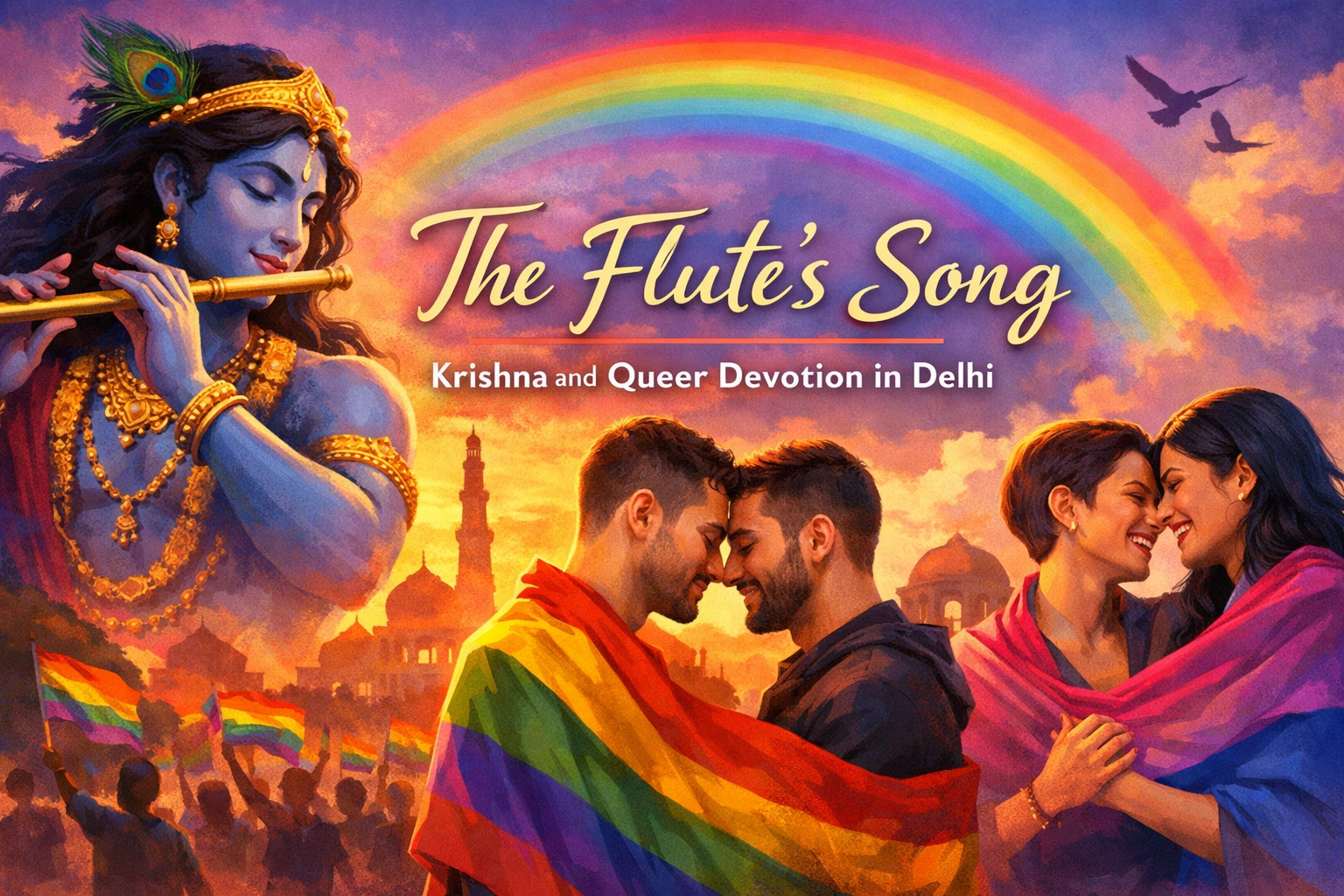
The flute calls everyone, regardless of gender, regardless of form. In the ancient stories of Krishna, the blue-skinned god doesn't just break rules; he dances through them, laughs at them, and transforms them into something far more beautiful than rigid boundaries could ever allow.
In a modest flat in Delhi's Hauz Khas, Rohan keeps a small brass Krishna murti on the kitchen windowsill. Every morning, before the city fully wakes, he lights a stick of incense and whispers a prayer. His partner, Aarav, usually joins him halfway through, still sleepy-eyed, pressing a kiss to Rohan's shoulder before adding his own silent devotion.
They didn't grow up thinking they'd find sanctuary in Hindu mythology. Both faced the typical arguments, that being gay was "Western," that it went against tradition, that their love was somehow imported rather than indigenous. Until they discovered what had always been there, hiding in plain sight within the stories they'd heard since childhood.
When the Divine Bends Gender
Krishna is many things in Hindu tradition, cowherd, warrior, lover, teacher, god. But one of the most fascinating aspects of Krishna worship is his absolute fluidity. In the devotional tradition of bhakti, Krishna takes on whatever form the devotee needs. He becomes Mohini, the enchantress. He dresses as a gopi, one of the cowherd girls. He transcends the very concept of fixed gender.
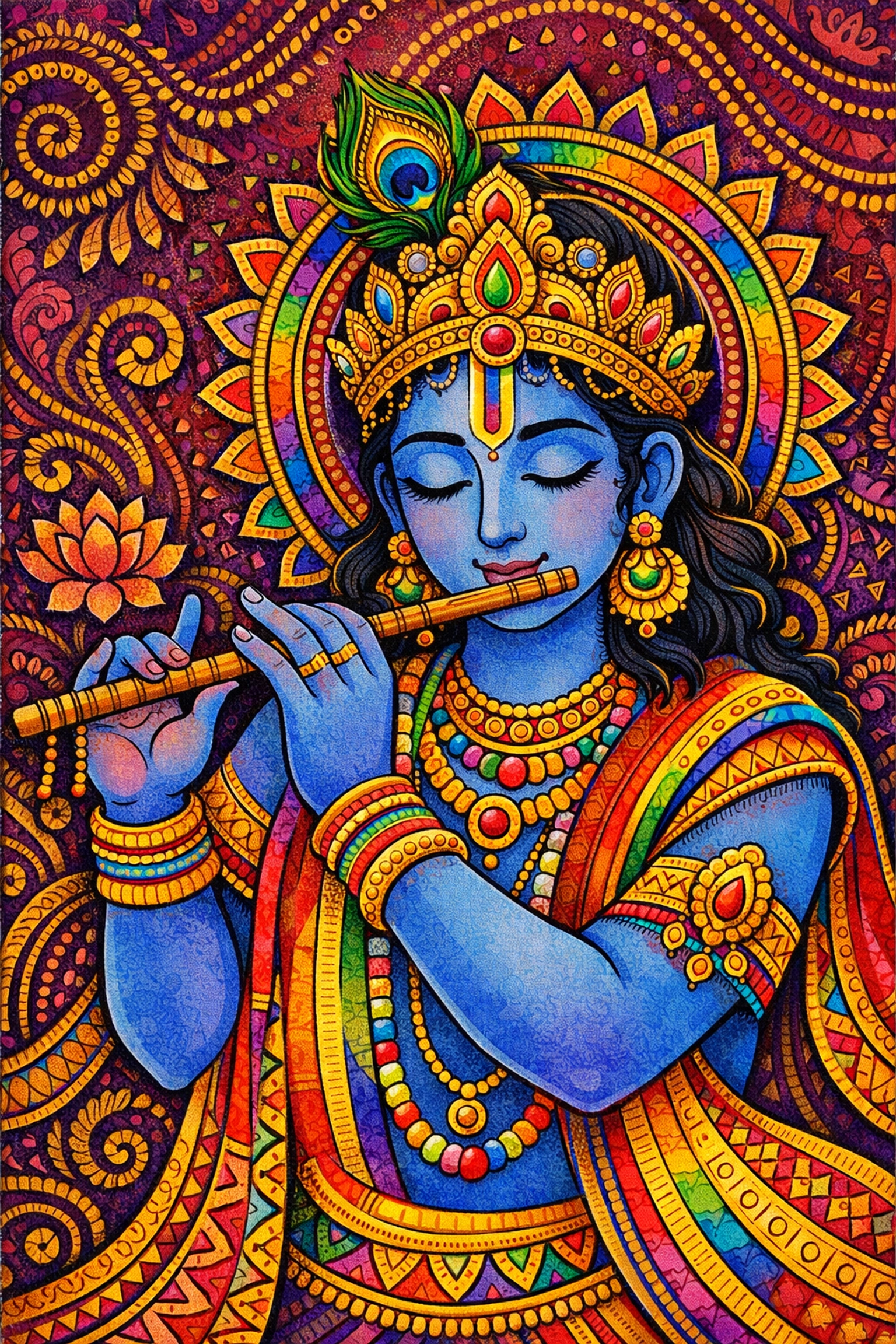
"I remember the exact moment it clicked for me," Rohan says, stirring chai on a Sunday afternoon. "I was maybe twenty-three, standing in a temple in Vrindavan, and I saw this painting of Krishna dressed in Radha's clothes, wearing her jewelry. And the priest: this elderly uncle: was explaining how Krishna did this to understand Radha's love more deeply, to experience devotion from her perspective."
Rohan felt something crack open inside him. Here was the divine, celebrated in one of Hinduism's most sacred sites, embracing gender fluidity not as transgression but as the ultimate expression of love.
This isn't modern reinterpretation: it's right there in the texts. The Brahma Vaivarta Purana tells of Krishna taking female form. The Gita Govinda celebrates Krishna's playful relationship with gender and desire. In bhakti poetry from centuries ago, male devotees write themselves as female lovers yearning for Krishna, blurring the lines between devotional and erotic love, between masculine and feminine experience.
The Gay and Lesbian Vaishnava Association
What Rohan and Aarav eventually discovered is that they weren't alone in finding queer affirmation in Krishna consciousness. The Gay and Lesbian Vaishnava Association (GALVA) has been working since the 1990s to help LGBTQ+ Hindus reclaim their spiritual heritage.
"We don't need to look West for validation," Aarav explains. "The validation is in the Mahabharata, where Shikhandi's gender transformation is honored. It's in the story of Aravan, who marries Krishna-as-Mohini before battle. It's in the legend of Ayyappa, born from Shiva and Vishnu when Vishnu took female form."
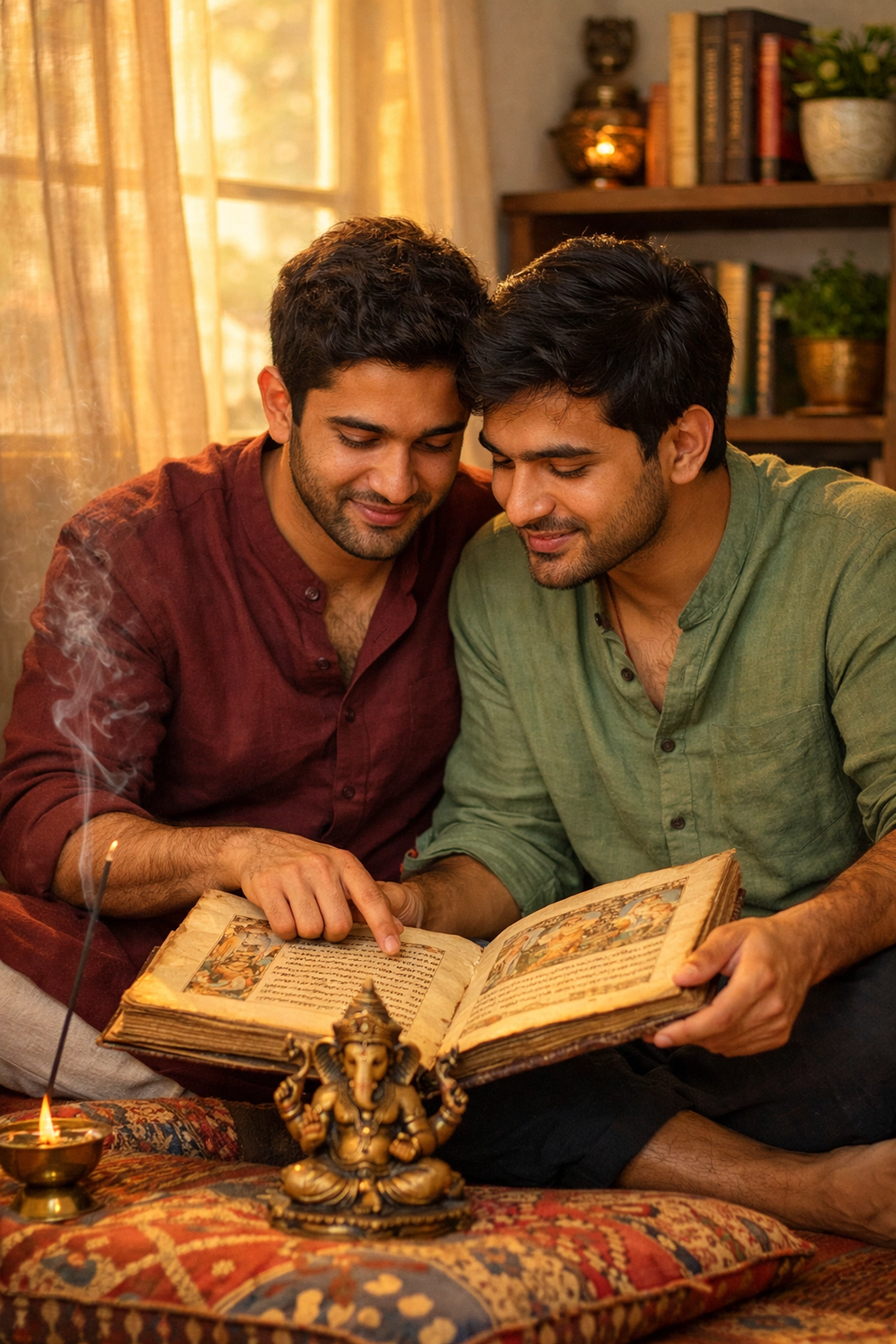
These aren't minor stories tucked away in obscure texts. These are mainstream narratives that Indian children grow up hearing: stories of gods who transform, of love that transcends gender, of devotion that makes no distinction between male and female, gay or straight.
For queer Hindus like Rohan and Aarav, rediscovering these elements of their own tradition feels like coming home. It's not about grafting Western concepts of sexuality onto Indian spirituality. It's about recognizing that queer devotion has always been part of Hindu practice, visible in centuries-old poetry and temple art, in the ecstatic traditions of bhakti saints who wrote passionate verses to the divine without concern for heteronormative conventions.
Their Love Story Begins
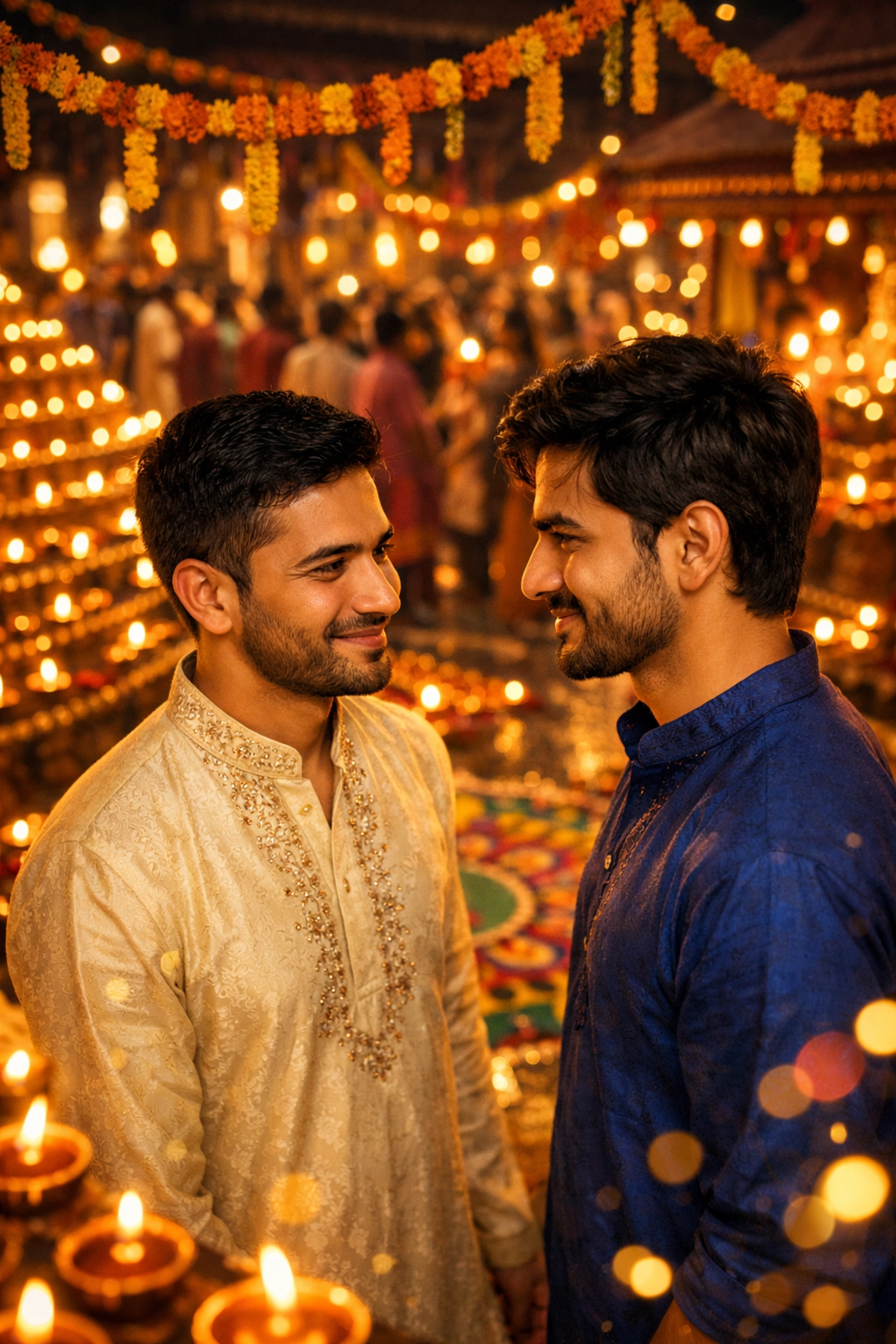
Rohan and Aarav met, appropriately enough, at a Janmashtami celebration: Krishna's birthday festival. They were both in their late twenties, both navigating the complicated space of being out to some people but not others, both feeling spiritually unmoored.
The temple courtyard was packed, colorful rangoli designs covering the ground, the air thick with incense and marigold garlands. Rohan was there with friends. Aarav had come alone, drawn by something he couldn't name: maybe just the need to feel connected to something larger than his own loneliness.
They ended up in line together for prasad, the blessed food offering. Aarav made a joke about the crowd. Rohan laughed. That was it: that tiny moment of connection.
"Can I tell you something embarrassing?" Aarav says now, grinning. "I went home and googled 'gay Hindu dating' because I thought, if Krishna brought us together at his birthday party, maybe that means something."
What he found instead was GALVA's website, and through them, a whole community of queer Vaishnavas. He found essays about Krishna's gender fluidity, about the queer readings of Radha-Krishna worship, about devotional practices that had sustained LGBTQ+ Hindus for generations.
He sent Rohan a link. Then another. Soon they were meeting up to discuss not just their attraction but their spiritual questions, their struggles with family expectations, their desire to be both authentically queer and authentically Hindu.
"The best dates are the ones where you fall in love with someone's mind before their body," Rohan says. "Though, to be clear, Aarav's body is also: " He laughs as Aarav swats him with a kitchen towel.
Bhakti Poetry and Queer Longing
One of the revelations for both of them was discovering the homoerotic undertones: and sometimes overtones: in classical bhakti poetry. Medieval saint-poets like Surdas and Mirabai wrote passionate verses to Krishna, using the voice of the lovelorn gopi, the cowherd girl pining for her divine lover.
Male poets taking on female voices to express spiritual longing. Devotional practices that encouraged men to dress as gopis, to embody feminine devotion. The radical idea that the gender of the devotee mattered less than the intensity of their love.
"There's this one verse Surdas wrote," Aarav says, pulling up a translation on his phone. "He imagines himself as one of Krishna's lovers, waiting in the grove at night, desperate for even a glimpse of him. The eroticism is right there: it's not subtle. And this is considered sacred poetry."
In the Gita Govinda, Radha and Krishna's lovemaking is described in sensual detail. The text doesn't shy away from desire, from physical passion. It sanctifies it, makes it holy. For queer readers, this opens up possibilities: if devotional love can be erotic, if the divine celebrates desire, then maybe queer love isn't just acceptable but spiritually profound.
Morning Devotions in Hauz Khas
These days, Rohan and Aarav's spiritual practice is simple but meaningful. The brass Krishna on the windowsill. The incense. Some mornings, they read a verse from the Bhagavad Gita together. Other mornings, they just stand quietly, Aarav's hand on Rohan's waist, both of them offering gratitude for this life they've built.
"My mother came to visit last month," Rohan says. "It's been a journey with her: she's trying. And she saw the murti, saw us doing puja together, and she cried. She said, 'I thought I was losing you to something foreign. But you're more Hindu than ever.'"
That's the thing about finding queer affirmation in Hindu tradition: it's not about rejecting your heritage but reclaiming it. It's about refusing to let homophobia masquerade as tradition when the tradition itself is far more expansive, far more beautiful than the narrow interpretations that try to exclude queer love.
Krishna's flute calls everyone. The stories don't ask if you're male or female, gay or straight. They ask if you're ready to love without limits, to devote yourself without fear, to dance in the cosmic play of the divine without worrying about who's watching or judging.
For Rohan and Aarav, that's enough. That's everything.
This is Part 8 of our Sacred Hearts series, exploring how queer individuals worldwide find affirmation, community, and love within religious traditions. Looking for more MM romance books that celebrate diverse spiritual journeys? Explore our collection of gay romance novels featuring characters who navigate faith, tradition, and love with authenticity.
Connect with Read With Pride:
Website | Facebook | Instagram | X/Twitter
#MMRomance #GayRomance #LGBTQFiction #QueerSpirituality #HinduMythology #ReadWithPride #QueerDevotion #GayRomanceBooks #LGBTQBooks #MMRomanceBooks #GayLoveStories #QueerFiction #SacredHeartsSeries #KrishnaConsciousness #QueerHindu #2026Books #GayFiction #DiverseRomance #QueerRepresentation #LGBTQLiterature

Leave a Reply
You must be logged in to post a comment.