


The confessional booth smells like old wood and half-forgotten prayers. Father Miguel presses his forehead against the latticed screen, listening to Señora Herrera confess to gossiping about her neighbor's daughter. Again. He murmurs the familiar words of absolution, but his mind is somewhere else entirely: on a smile that makes his collar feel too tight, on hands that lingered just a moment too long when exchanging change at the mercado.
This is what guilt tastes like: communion wine mixed with longing.
The Weight of the Collar
Buenos Aires sprawls outside the cathedral doors like a lover sprawled across rumpled sheets: messy, beautiful, and utterly indifferent to the vows whispered within these walls. Miguel has served at Santa María de la Asunción for three years now, and every single day, he's felt the tension between who he's supposed to be and who he actually is tightening like a rosary wrapped too tight around his wrist.
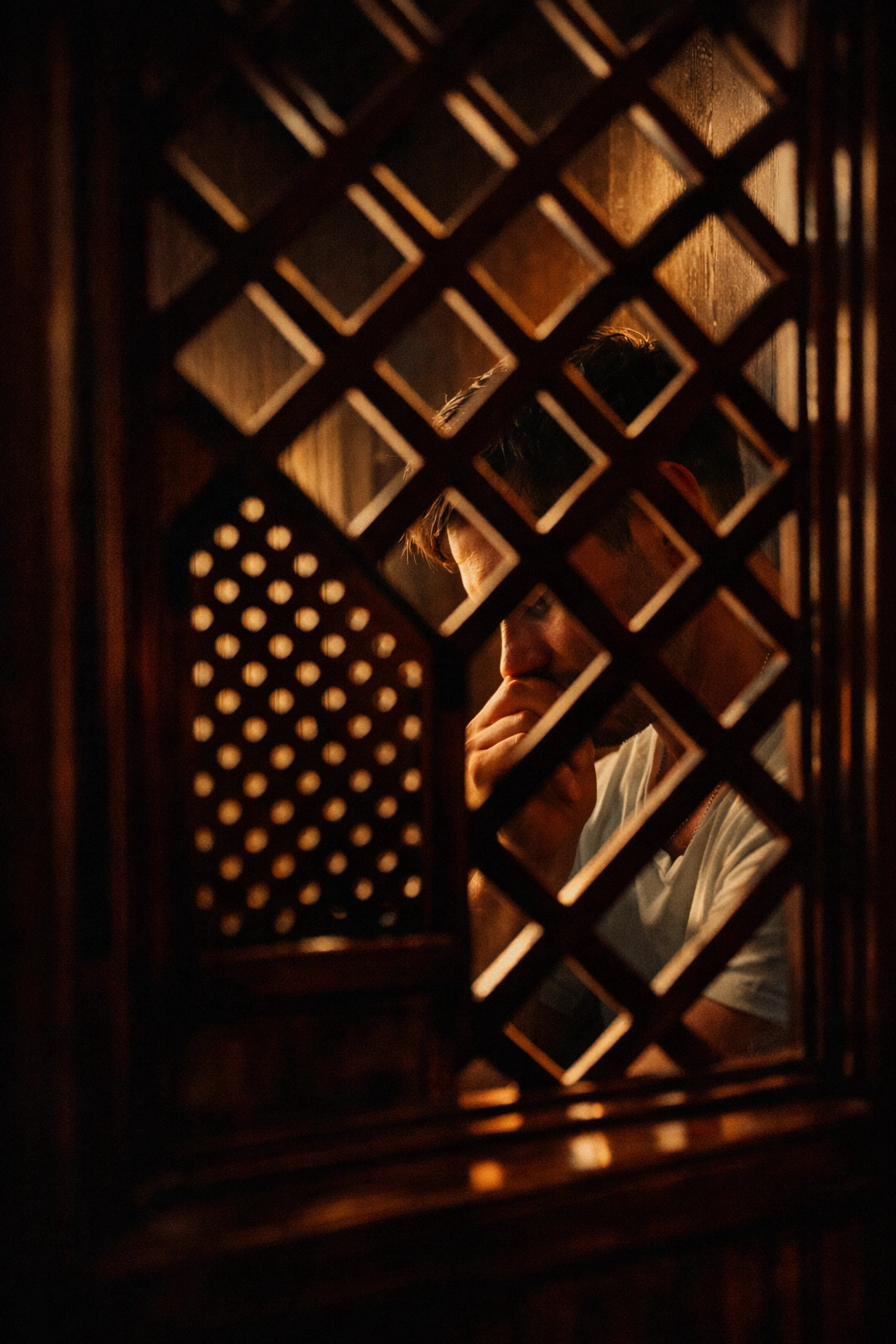
The Catholic Church doesn't exactly have a reputation for embracing gay love stories, and Miguel has spent most of his adult life trying to bury that part of himself beneath layers of devotion, routine, and desperate, breathless prayer. He thought the priesthood would save him. He thought dedication to God would somehow erase the way his heart races when certain parishioners shake his hand, the way his eyes follow the curve of a man's shoulders in a way that makes him flush with shame.
But then there's Sebastián.
A Chance Encounter That Changed Everything
It started innocently enough: don't they all? Sebastián runs a small café two blocks from the cathedral, the kind of place that serves medialunas that melt on your tongue and coffee strong enough to resurrect the dead. Miguel stopped in one morning after early Mass, rain-soaked and exhausted from a sleepless night wrestling with doubts he couldn't name.
"Padre," Sebastián had said, that first time, pushing a steaming cup across the counter. "You look like you could use something stronger than faith this morning."
The comment should have offended him. Instead, Miguel laughed: actually laughed: for the first time in months. And when their fingers brushed during the exchange, something electric and terrifying shot straight through him.
That was six months ago.
Now, Miguel finds excuses to visit the café almost daily. He tells himself he's being pastoral, getting to know the community. Building relationships. Ministering to the neighborhood. All true, technically. But the truth underneath the truth? He's falling in love, and it's the most exhilarating and devastating thing he's ever experienced.
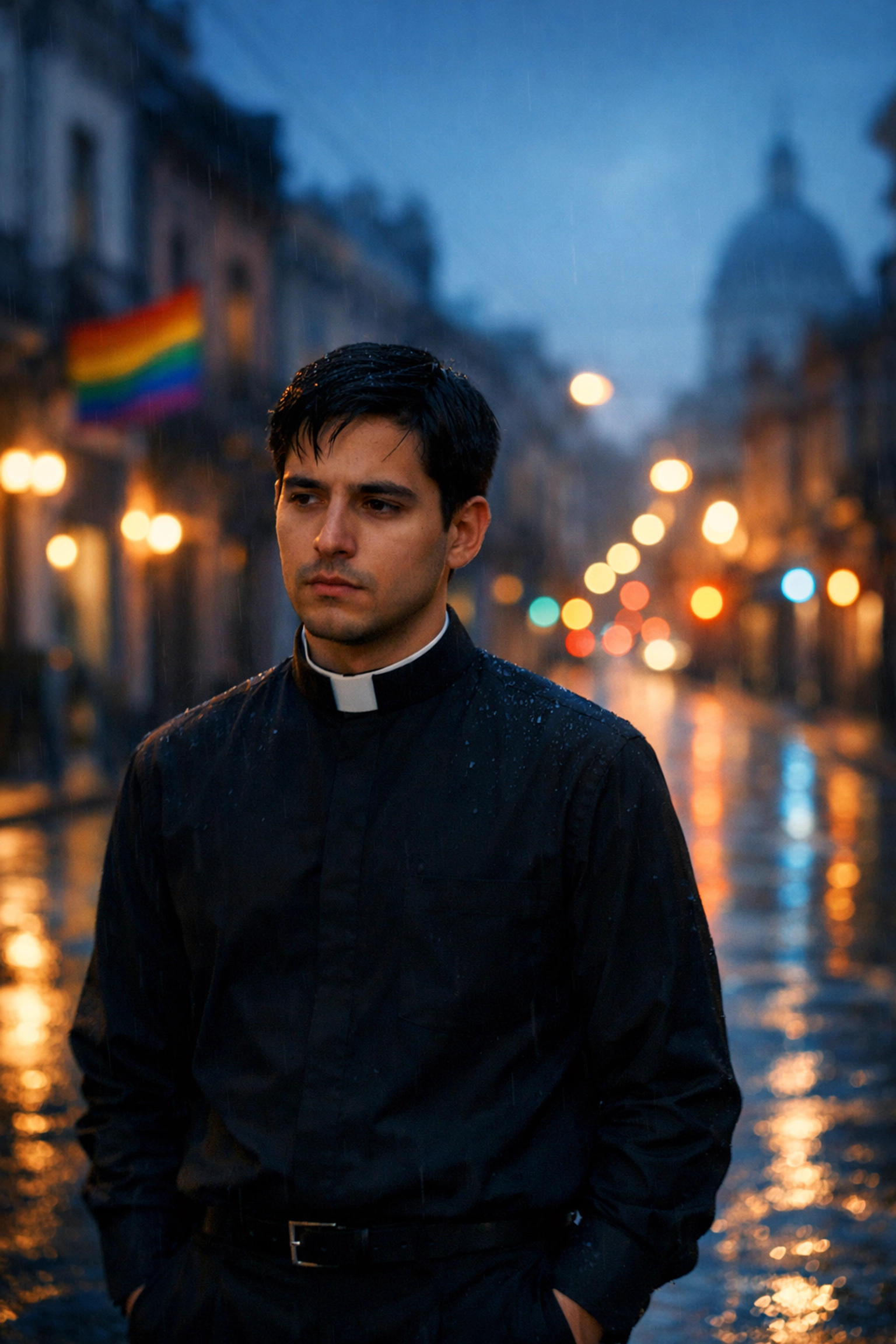
The Human Side of Faith
Here's what they don't tell you in seminary: vows of celibacy don't make desire disappear. They just make it louder, more insistent, like a drummer who refuses to keep quiet during silent prayer. Every theology class Miguel ever took focused on the spiritual, the abstract, the theoretical. Nobody prepared him for the very human reality of falling for someone's laugh, for the way they tilt their head when they're thinking, for the quiet kindness in how they remember exactly how you take your coffee.
MM romance exists in the real world, not just in the LGBTQ+ fiction Miguel secretly downloads on his phone late at night, reading by the glow of his screen like contraband. It exists in stolen glances across a crowded café. In conversations that stretch longer than they should. In the ache of wanting to reach across a table and take someone's hand, and knowing you can't.
Sebastián doesn't make it easy, either. He's not trying to seduce a priest: nothing so dramatic. He's just himself: warm, funny, openly gay, and comfortable in his skin in a way Miguel envies with his entire soul. They talk about everything: politics, poetry, fútbol, the way Buenos Aires changes color depending on the weather. Sebastián never pushes, never asks uncomfortable questions about Miguel's vows or beliefs.
But sometimes, Miguel catches him looking. And in those moments, the air between them feels charged with all the things they're not saying.
The Breaking Point
It happens on a Tuesday evening in February, during one of those summer storms that turns the city into a watercolor painting. Miguel arrives at the café soaked through, his clerical collar visible beneath his jacket. There are no other customers: just Sebastián wiping down tables, music playing softly from a radio in the back.
"I should go," Miguel says, even as he's sitting down at his usual table by the window.
"You should stay," Sebastián replies, bringing over two cups of coffee without being asked.

The silence that follows is loaded. Heavy. Miguel watches rain streak down the window and thinks about all the gay romance books he's consumed in secret, wondering if real life ever mirrors fiction. Wondering if anyone has ever successfully loved their way out of an impossible situation.
"Miguel," Sebastián says quietly, and it's the first time he's used his given name instead of "Padre." "I need to tell you something."
Miguel's heart stops. Restarts. Beats too fast.
"I'm moving," Sebastián continues, not meeting his eyes. "My sister in Córdoba: she needs help with her restaurant. I'm leaving at the end of the month."
The world tilts. Miguel realizes, with stunning clarity, that he's been living in a state of suspended possibility. As long as Sebastián was here, as long as there were daily visits and lingering conversations, Miguel could exist in this strange limbo: not breaking his vows, but not fully honoring them either. Wanting without acting. Loving without claiming.
Now, possibility is evaporating like steam from their coffee cups.
"Say something," Sebastián whispers.
And Miguel: careful, dutiful Father Miguel who has spent his entire priesthood saying the right things, the safe things, the holy things: does something reckless. He reaches across the table and takes Sebastián's hand.
When Hearts Defy Doctrine
The touch is electric. Sebastián's fingers curl around his, and Miguel feels like he's standing at the edge of a cliff, equal parts terrified and exhilarated.
"I can't ask you to stay," Miguel says, his voice rough. "And I can't leave."
"I know."
"But I need you to know: " Miguel stops, swallows hard. "You've made me feel more human, more alive, than I have in years. Whatever this is, whatever we can't have: it matters. You matter."
It's not a declaration of love. It's not a promise. It's just the truth, raw and unvarnished, and speaking it aloud feels like both a sin and a sacrament.

Sebastián brings Miguel's hand to his lips, pressing a kiss to his knuckles that's so gentle it breaks something open in Miguel's chest. "I wish I could hate the Church for making you choose," he says. "But I see how much your faith means to you. I see how you light up when you talk about helping people. I just wish…" He trails off.
"Me too," Miguel whispers.
Love in the Space Between
They sit like that until the rain stops: hands linked across a table in an empty café, not quite crossing the line but not quite staying on their respective sides of it either. This is where many gay love stories live: in the complicated, painful, beautiful spaces between what we want and what we allow ourselves to have.
Miguel knows this isn't sustainable. He knows that tomorrow, he'll wake up and put on his collar and return to his duties. He knows Sebastián will leave for Córdoba, and they'll exchange phone numbers they'll probably never use because the distance will make everything hurt worse.
But tonight, in this moment, Miguel lets himself be human. Lets himself be Miguel, not Father. Lets himself feel the full weight of longing without immediately trying to pray it away or bury it beneath scripture.
The confessional will still be there tomorrow. The vows will still bind him. The Church will still demand his obedience.
But right now, in a café in Buenos Aires while the city steams after summer rain, a young priest allows himself to be loved, even if he can't fully love back. And maybe that's its own kind of grace.
Finding Your Story
This is part of what makes queer fiction so vital: it tells stories the world often refuses to acknowledge. Stories of priests who fall in love. Of faith leaders wrestling with identity. Of humans trapped between devotion and desire. These narratives matter because they're real, messy, and achingly human.
At Readwithpride.com, we believe every love story deserves to be told: especially the complicated ones, the impossible ones, the ones that don't have easy answers. Whether you're drawn to MM romance books that explore faith and identity, or you're seeking gay novels that don't shy away from difficult emotions, you'll find authentic storytelling that honors the full spectrum of queer experience.
Because love doesn't always fit into neat categories. Sometimes it exists in confessional booths and coffee shops. Sometimes it's a priest holding hands with a café owner while rain drums against windows. Sometimes it's choosing to acknowledge the truth of your heart, even if you can't act on it.
And that, too, is sacred.
This is part 6 of our "Sacred Hearts" series exploring LGBTQ+ experiences within religious contexts around the world. Follow us on Instagram, Facebook, and X/Twitter for more stories that celebrate authentic queer narratives.
#MMRomance #GayRomance #LGBTQFiction #QueerFiction #ReadWithPride #GayLoveStories #MMRomanceBooks #GayBooks #LGBTQEbooks #CatholicPriest #BuenosAires #QueerStorytelling #AuthenticLove #GayNovels #2026LGBTQ #MMContemporary #EmotionalRomance #HeartfeltFiction #QueerReading #LGBTQLiterature

Leave a Reply
You must be logged in to post a comment.