


There's something achingly beautiful about Rome at twilight: when the golden light catches the dome of St. Peter's Basilica and the ancient stones seem to glow with a thousand whispered prayers. But for Marco and Alessandro, that beauty comes with a price: the constant weight of secrets, the careful choreography of stolen glances, and the profound loneliness of loving someone you can never claim in the light of day.
Welcome to the second installment of our "Sacred Hearts" series, where we explore the complex intersection of faith, tradition, and queer love across different religious communities worldwide. Today, we're stepping into the shadows of Vatican City, where two men navigate the dangerous territory between devotion to their faith and devotion to each other.
The Weight of Tradition
Rome isn't just a city: it's a living museum of Catholic tradition, where every cobblestone has been walked by pilgrims and every church bell has called the faithful to prayer for centuries. For those raised in deeply traditional Catholic families here, faith isn't just a Sunday obligation; it's woven into the very fabric of daily life. It's in the grandmother's rosary on the bedside table, the patron saint medals worn under work shirts, the way entire neighborhoods empty out for feast day processions.

Marco grew up in Trastevere, in one of those families where great-uncles were monsignors and cousins took vows as young men. His mother kept a shrine to the Virgin Mary in the hallway, complete with fresh flowers changed weekly. His father's expectations were clear: a good Catholic education, a respectable career, marriage, children, and unwavering devotion to the Church that had sustained their family through wars, poverty, and countless generations.
There was never room in that narrative for men who loved men.
Alessandro's story echoes with similar themes, though his family served the Church even more directly. Working within the Vatican's administrative offices, he'd spent his twenties surrounded by clerics and holy men, filing documents about canon law while his own heart remained carefully locked away. Both men learned early to compartmentalize, to separate the person they showed the world from the truth they barely dared acknowledge to themselves.
When Shadows First Touch
Their meeting was unremarkable in its mundanity: a crowded bus near Termini Station, a brief moment when Alessandro's hand steadied Marco as the vehicle lurched around a corner. But in that touch, something sparked. Recognition, perhaps. Or just the desperate hope that maybe, just maybe, they weren't as alone as they'd always felt.
What followed was a months-long dance of careful approaches. Coffee at anonymous cafes far from their neighborhoods. Conversations that stayed frustratingly surface-level while their eyes said everything their mouths couldn't. The slow, terrifying process of revealing themselves to another person, knowing that discovery could mean not just personal shame but the devastation of entire family structures built on tradition and expectation.
This is where MM romance often diverges most sharply from its straight counterparts: the stakes aren't just about winning someone's heart; they're about survival, authenticity, and sometimes choosing between love and everything else you've ever known. In gay romance novels, we explore these layered tensions, the way desire becomes rebellion, and intimacy requires courage that goes far beyond the physical.
The Architecture of Secrecy
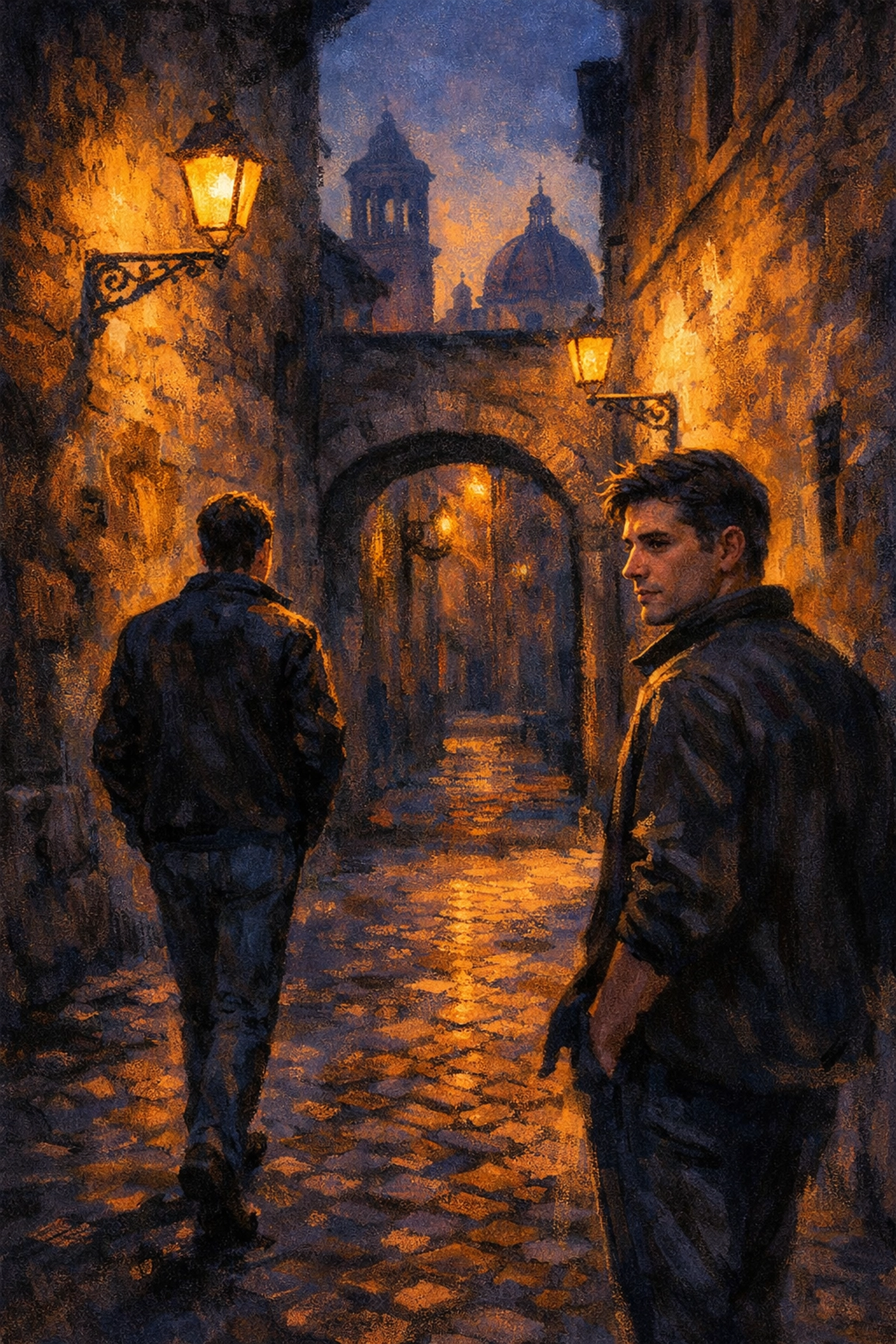
Living a secret life in Rome means becoming an expert in invisibility. Marco and Alessandro learned the city's hidden geography: the parks where men could walk together without drawing stares, the small trattoria in Testaccio where the owner never asked questions, the narrow medieval streets where shadows fell thick enough to hide a brief touch, a lingering look.
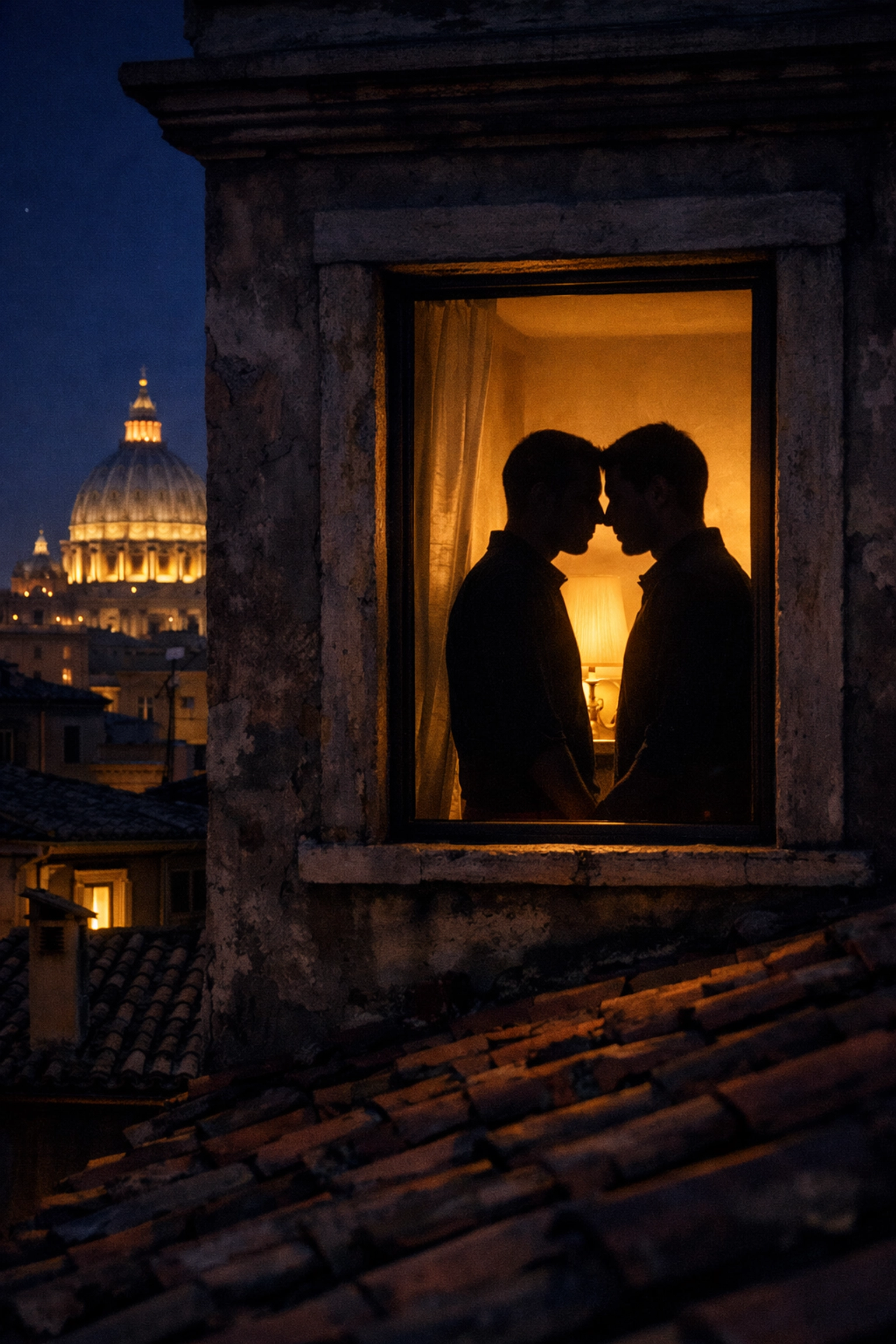
They learned to communicate in code. "Are you free this evening?" could mean "I need to see you; I'm drowning in the pretense." A text about meeting to discuss work was actually an invitation to the small apartment Alessandro rented under a friend's name: their only real sanctuary. They memorized each other's schedules, the rhythms of family obligations, the calendar of religious festivals when they'd be expected to appear, separately, at their respective family gatherings.
The melancholy of their situation wasn't just about hiding. It was about the life they couldn't have: the one where they introduced each other to their mothers, where they held hands walking home from dinner, where their love was celebrated rather than concealed. Every moment of joy was shadowed by the awareness of its impermanence, its fragility.
Faith Versus Freedom
Here's where the story gets complicated, because neither Marco nor Alessandro wanted to abandon their faith. They weren't angry atheists rejecting the Church; they were believers struggling with a doctrine that seemed to reject them. They'd both spent sleepless nights praying for change: change in themselves, change in the Church, change in something that would make the pieces fit.
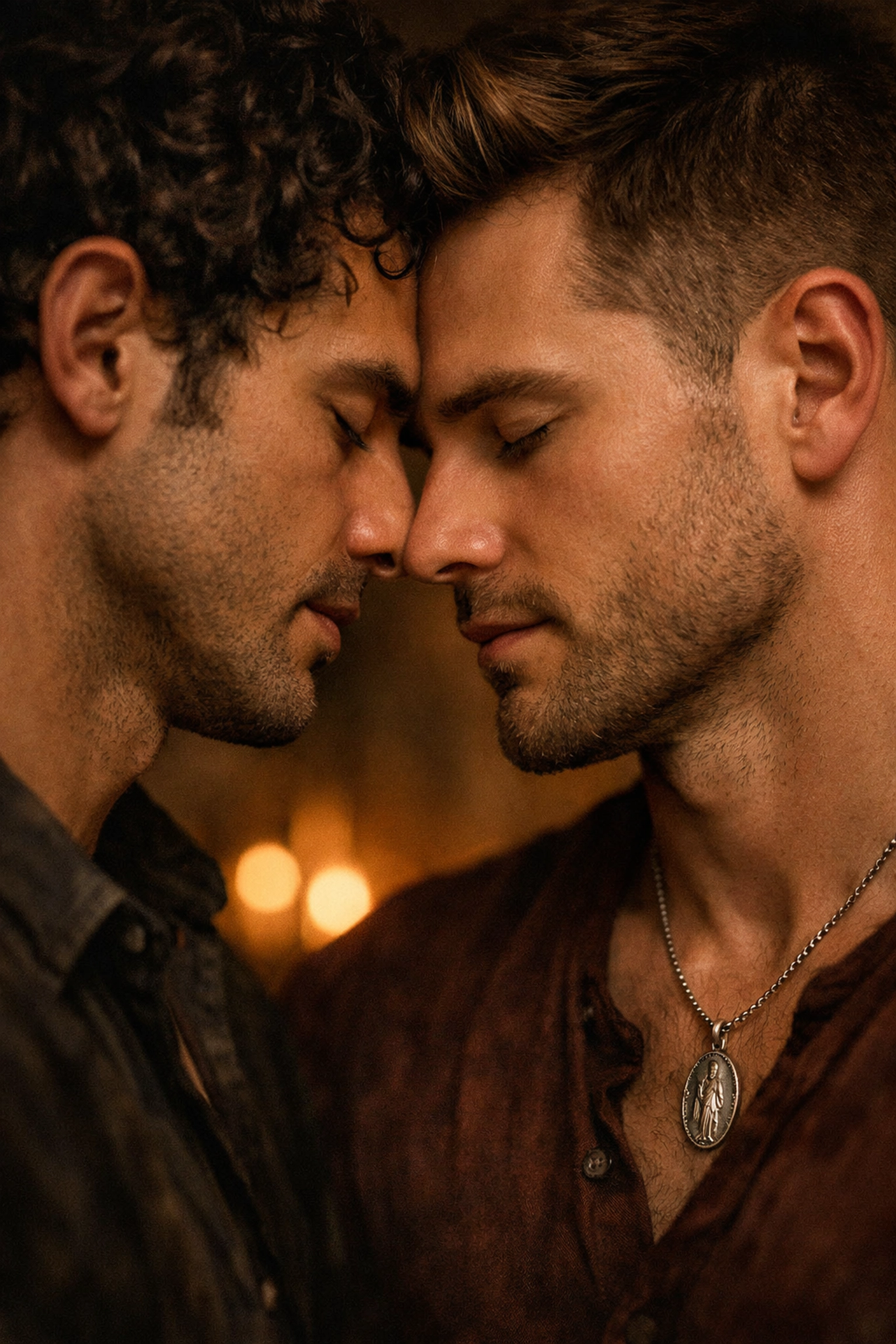
Alessandro still went to Mass most Sundays, sitting in the back pews of Santa Maria in Trastevere, trying to reconcile the God of love he felt in his heart with the institution that called his deepest feelings disordered. Marco had stopped attending regularly, but he still crossed himself when passing churches, still felt that pull toward the sacred, still wore the St. Christopher medal his grandmother had given him.
This internal conflict is something many queer fiction narratives explore: the way LGBTQ+ individuals in religious communities often remain deeply spiritual even when religious institutions reject them. It's not about choosing God or love; it's about believing that maybe, somehow, the two don't have to be in opposition.
The Moment of Reckoning
Every forbidden romance eventually reaches a crisis point. For Marco and Alessandro, it came during Holy Week, when Rome swells with pilgrims and the city becomes an even more intensely Catholic space. Alessandro's mother had invited a family friend to dinner: a nice girl, she said, someone he should get to know. Marco's father had started making pointed comments about marriage, about continuing the family name, about duty to tradition.
In a small apartment in Monti, surrounded by the sound of church bells calling the faithful to evening prayer, they faced their truth: they could keep living in the shadows, or they could risk everything for a chance at authenticity. Neither option felt remotely safe.
What makes this type of gay romance so powerful is that the happy ending isn't guaranteed. Unlike fantasy escapes or pure wish-fulfillment, stories rooted in real cultural tensions acknowledge that love, while necessary, isn't always sufficient to overcome every obstacle. Sometimes the bravest thing you can do is simply continue loving in spaces that refuse to make room for that love.
Beyond Vatican Shadows
"Vatican Shadows" is just one story in a global tapestry of LGBTQ+ individuals navigating faith communities around the world. Our "Sacred Hearts" series will take us from Rome to Jerusalem, from Bible Belt America to deeply Muslim communities in Southeast Asia, from Orthodox churches in Eastern Europe to Buddhist temples in Asia. Each story explores how queer love persists, adapts, and sometimes transforms in the face of religious tradition.
At Read with Pride, we believe these stories matter: not just as LGBTQ+ fiction, but as windows into the complex realities many people still navigate daily. While we celebrate stories of acceptance and joy, we also honor the courage of those still living in the in-between spaces, the twilight zones where love is real but must remain carefully guarded.
These narratives of faith and queer identity represent some of the most emotionally resonant MM romance books because they're rooted in authentic struggle. They remind us that coming out isn't a single moment but an ongoing negotiation with family, community, tradition, and self.
If you're searching for gay romance novels that go deeper than surface-level attraction, that explore the full spectrum of queer experience including the difficult spaces, this series offers exactly that. Visit Read with Pride to explore our growing collection of MM fiction that centers authentic LGBTQ+ voices and experiences.
Follow us on Facebook, Instagram, and X for updates on new releases, including the next installment in our Sacred Hearts series.
Because every love story deserves to be told: even the ones unfolding in the shadows.
#ReadWithPride #MMRomance #GayRomance #LGBTQFiction #SacredHeartseries #QueerFaith #MMRomanceBooks #GayFiction #LGBTQBooks #MLMRomance #QueerLiterature #GayLoveStories #MMContemporary #AuthenticQueerStories #ReligionAndIdentity #ItalianRomance #VaticanStories #ForbiddenLove #2026MMRomance #QueerReads

Leave a Reply
You must be logged in to post a comment.