

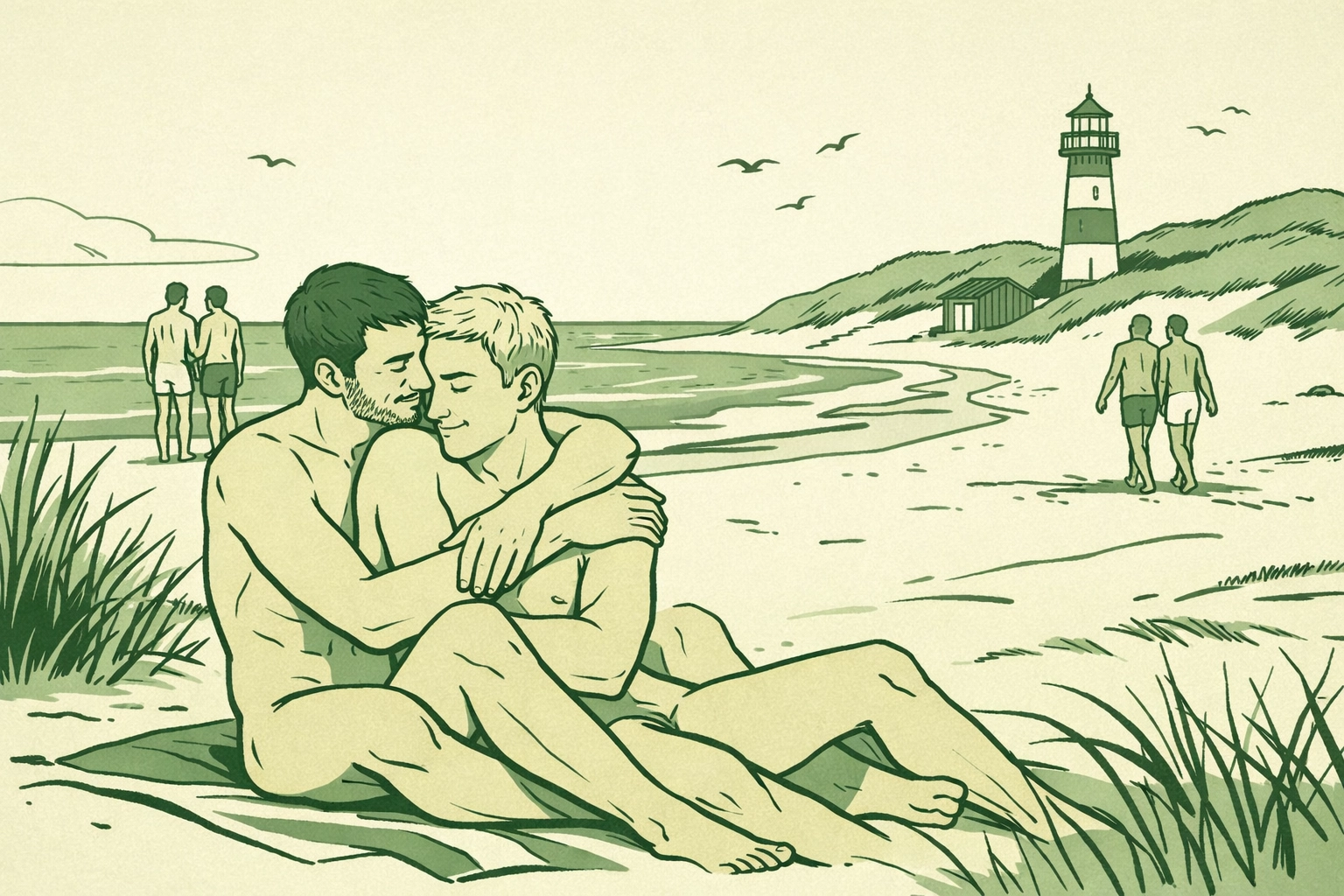
Where Sea Meets Liberation
The North Sea wind cuts across bare skin differently when you're standing on ground that pioneered freedom itself. Sylt, Germany's northernmost island, established the nation's first official nude beach in 1920: a revolutionary act that would ripple through generations of liberation movements, including the queer community's ongoing fight for visibility and acceptance.
This isn't just another European beach destination. Sylt represents something deeper: the intersection of Freikörperkultur (FKK or Free Body Culture) and queer liberation, where shedding clothes meant shedding society's restrictive expectations about bodies, sexuality, and identity.
EXPLORE THE COMPLETE GUIDE: Our Ultimate Nudist Travel Guide to Europe covers 24 destinations where freedom meets the flesh. Available now at dickfergusonwriter.com and readwithpride.com.
The FKK Revolution: More Than Just Nudity
Germany's FKK movement emerged in the late 19th century as radical social rebellion. Early practitioners weren't simply getting naked: they were dismantling class structures. Without the visual markers of expensive fabrics and fashionable cuts, the banker and the baker stood equal on the sand. The restrictive corsets and stiff collars of turn-of-the-century German fashion represented societal control over the body itself.
For queer Germans navigating criminalization and social ostracization, FKK beaches offered something precious: spaces where different rules applied. Where bodies could exist without the performative gender expressions demanded by clothed society. Where two men could share a blanket without neighbors clutching their pearls.
By the time Sylt officially designated its nude beach in 1920, the island was already establishing itself as a haven for artists, intellectuals, and those seeking alternatives to mainstream German society. The timing wasn't coincidental: this was the brief, glorious Weimar period when Berlin became Europe's queer capital and German culture briefly embraced sexual liberation before the darkness of the 1930s descended.
Buhne 16: Where Tradition Lives
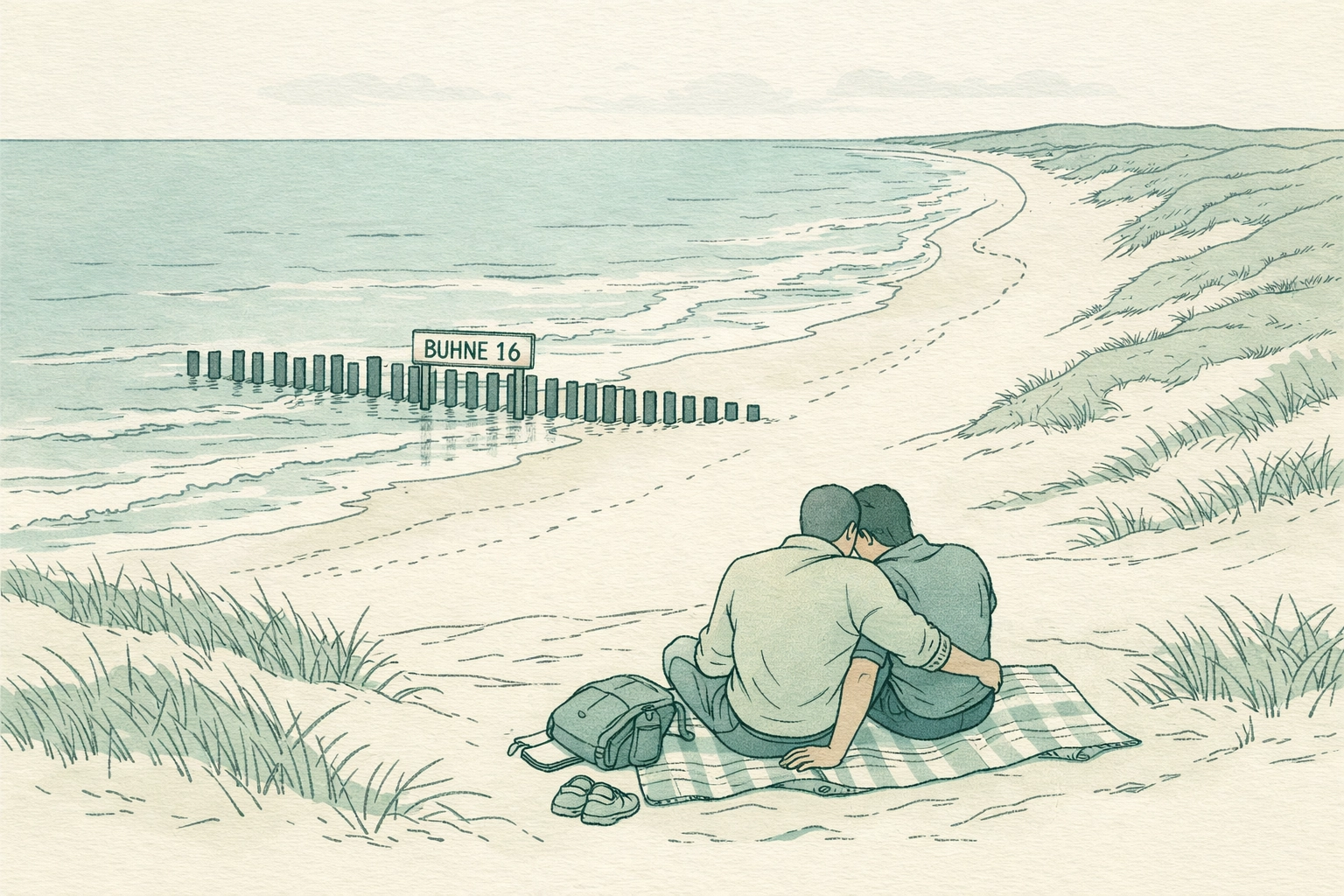
Ask any German naturist about Sylt, and they'll mention Buhne 16. This iconic stretch of sand remains the island's most celebrated nude beach, where tradition meets contemporary queer culture. The numbered beach markers (buhnen) that dot Sylt's coastline serve as meeting points, and Buhne 16 has maintained its status as the naturist epicenter for over a century.
The postwar period cemented this reputation. That famous 1952 poster: showing a nude, sun-bronzed woman emerging from Sylt's surf: became iconic across Germany. But what the mainstream marketing didn't advertise was equally important: Sylt was simultaneously becoming a discreet destination for gay men seeking spaces where they could exist openly, their relationships unremarkable among the other nude couples dotting the dunes.
German Acceptance: The FKK Difference
Understanding Sylt's significance for queer nudism requires grasping how differently Germans approach public nudity compared to most other cultures. FKK isn't sexualized: it's normalized. City parks in Berlin have designated nude sunbathing areas. Hotel saunas are typically naked and mixed-gender. Children grow up understanding that bodies are natural, not shameful.
This cultural framework created unexpected space for queer visibility. When nudity itself isn't transgressive, the presence of same-sex couples becomes far less remarkable. The German approach to FKK: framed explicitly as non-erotic celebration of the human form: paradoxically allowed queer desire to exist more openly than in cultures where any nudity automatically signals sexuality.
DISCOVER MORE LGBTQ+ STORIES: Browse our complete collection of gay romance books, MM romance, and queer fiction exploring liberation and love at dickfergusonwriter.com/collections/all. Every story celebrates authentic queer experiences.
The Island Beyond the Beach
Sylt's queer-friendly reputation extends beyond Buhne 16. The island's main town, Westerland, developed a sophisticated cultural scene that welcomed artists and intellectuals throughout the 20th century: code words that often signaled queer-friendly spaces during less accepting eras.
The island's geography contributes to its appeal. Sylt stretches nearly 40 kilometers long but remains narrow, creating endless beaches backed by distinctive reed-thatched houses and dramatic dune landscapes. The isolation: accessible only by train across the Hindenburgdamm causeway or by ferry: adds to the sense of separation from mainland conventions.
Winter transforms Sylt into something even more magical for those seeking solitude and authenticity. When summer tourists depart, the island reveals its true character: windswept, raw, and uncompromising. The year-round naturist community: including many queer couples who've made Sylt their permanent home: embraces the harsh North Sea weather with typical German fortitude.
Contemporary Queer Sylt
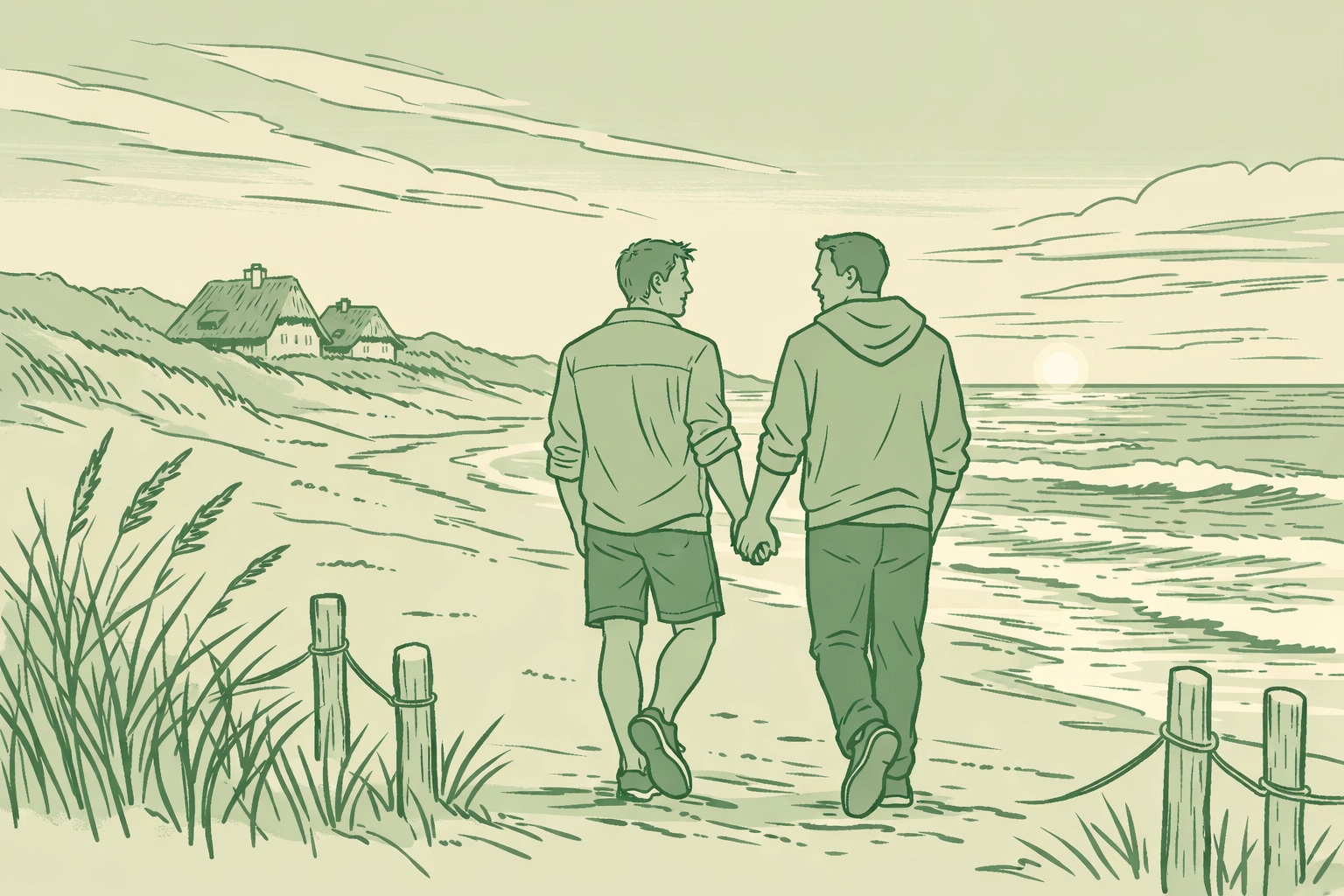
Today's Sylt balances its naturist heritage with evolving queer culture. While it's never marketed itself as explicitly gay-oriented like Mykonos or Sitges, the island maintains that distinctly German approach: understated acceptance rather than rainbow-flag celebration.
Younger queer visitors appreciate this quality. In an era where Pride has become increasingly commercialized and performative, Sylt offers something different: the freedom to simply exist without the pressure to constantly declare or demonstrate one's queerness. You're gay. You're nude. You're swimming in the North Sea. Nobody cares, and that's exactly the point.
The island attracts a particular demographic: educated, affluent queer Germans and Northern Europeans seeking quality over flash. This isn't party culture: it's naturist culture with queer inclusion woven through rather than stamped on top.
Practical Freedom: Visiting Sylt
Accessing Sylt requires planning. The train journey from Hamburg crosses the surreal Hindenburgdamm, an 11-kilometer causeway built in 1927 that transformed island accessibility. Watching the North Sea spread on both sides as the train crawls across creates anticipation for the freedom awaiting.
Accommodation ranges from traditional Frisian houses to modern boutique hotels. Many establishments have welcomed queer guests for decades with that characteristically German directness: they won't advertise themselves as "gay-friendly" because they simply assume acceptance is the baseline.
Buhne 16 remains nude-mandatory during peak season, maintaining FKK tradition. First-timers sometimes feel nervous, but the culture's non-sexual framework quickly dissolves anxiety. Within an hour, you're wondering why you ever wore a swimsuit anywhere.
EXPLORE BERLIN'S QUEER HISTORY: Our historical romance The Berlin Companions captures Germany's complex queer legacy during another transformative era.
Why Sylt Matters
In 2026, authentic queer spaces face increasing pressures: commercialization, algorithmization, the commodification of identity itself. Sylt represents something increasingly rare: a place where queer liberation exists not as brand identity but as lived reality woven into broader social acceptance.
The island's century-plus of normalized nudity created cultural conditions where bodies and relationships could exist outside heteronormative frameworks before most societies even had vocabulary for such concepts. That 1920 designation of Germany's first official nude beach wasn't explicitly queer activism: but it created space where queer lives could unfold more freely.
This is Sylt's true legacy: demonstrating that liberation often arrives not through direct confrontation but through cultural frameworks that expand possibility for everyone. FKK didn't set out to create queer space: it created free space, and queer people claimed their share of it.
The North Sea Continues
Standing on Buhne 16 today, wind sharp against bare skin, the North Sea stretching to the horizon, you're part of an unbroken tradition spanning 106 years. The same waves that crashed here in 1920 still crash today. The same wind that blew across Germany's first nude bathers now blows across you and your partner, whether that partner is male, female, or the beautiful solitude of self-acceptance.
German freedom isn't loud or performative. It's the quiet assertion that your body belongs to you, that your relationships need no justification, that you have every right to feel sun and wind against skin without shame or apology.
That's what Sylt offers: not just a nude beach, but a philosophical stance that queer people have always needed: the radical insistence that you have the right to exist exactly as you are.
#ReadWithPride #LGBTQ+Travel #GayNudism #QueerEurope #MMRomance #GayTravel #LGBTQBooks #QueerFiction #NudistTravel #GayRomanceBooks #FKK #SyltGermany #QueerHistory
VISIT US: Discover more stories of liberation and love at dickfergusonwriter.com and readwithpride.com
Follow us on social media:
Instagram: instagram.com/dickfergusonwriter
X/Twitter: x.com/DickFergus94902
Facebook: facebook.com/profile.php?id=61572869844598

Leave a Reply
You must be logged in to post a comment.