

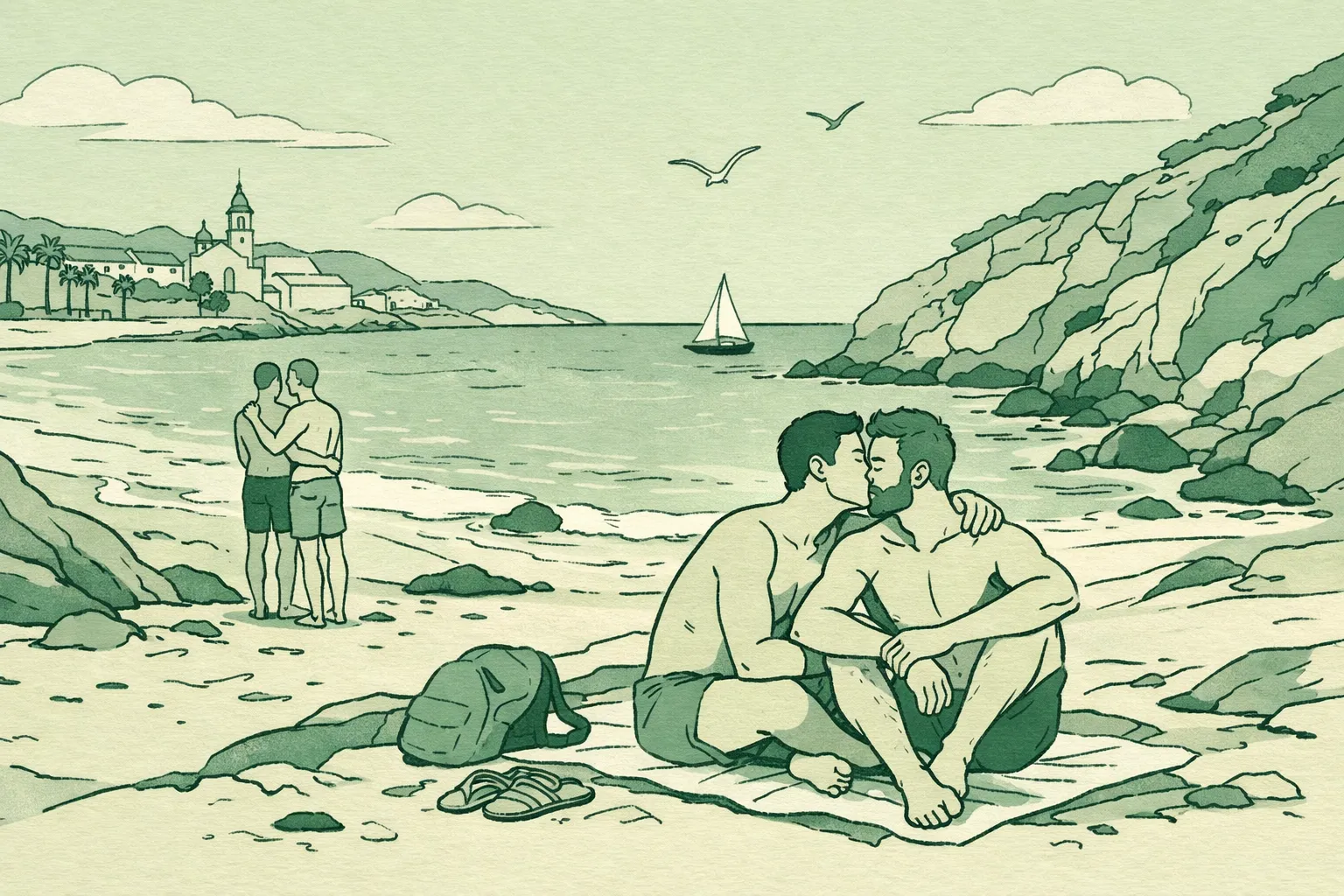
A Beach That's Been Ours Since 1930
There's something about Sitges that stays with you. Maybe it's the Mediterranean light, the way it turns everything golden in the late afternoon. Maybe it's the rainbow flags that line the promenade without apology, without hesitation. Or maybe it's knowing that when you walk the narrow streets, you're walking where queer people have walked freely since before most of the world even knew we existed.
Platja de l'Home Mort: the Beach of the Dead Man: sits just beyond the edge of all that brightness, tucked into the Costa del Garraf like a secret that's been whispered from one generation to the next since 1930. Nearly a century of queer history, of bodies laid bare under the Spanish sun, of freedom claimed one summer day at a time.
The Walk That Earns You Paradise
Getting there isn't easy, and that's entirely the point. You don't stumble onto Platja de l'Home Mort by accident. You seek it out. You earn it.
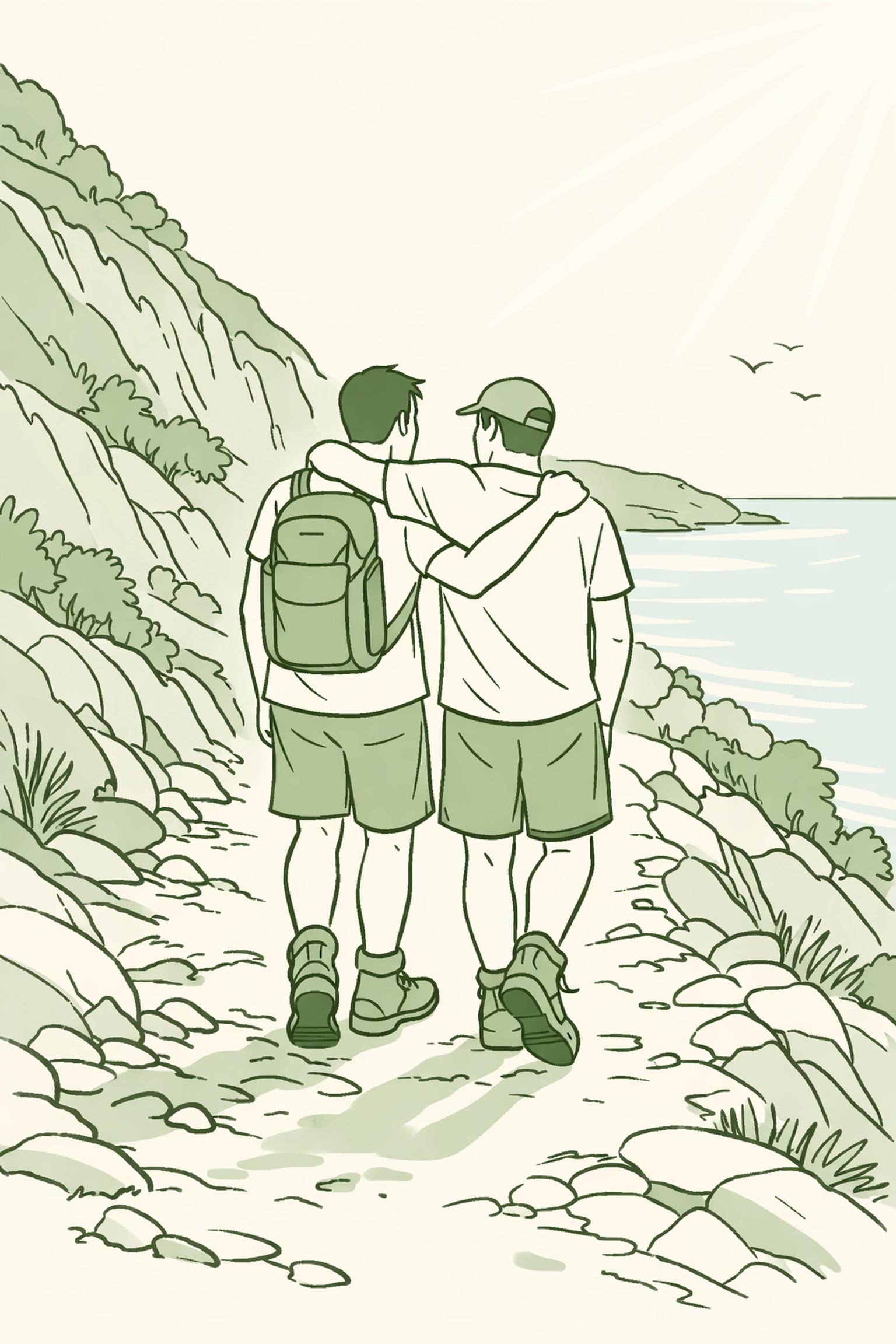
The journey begins near the Atlàntida nightclub, past the Terramar Golf Club where you can leave your car. From there, it's 30 to 45 minutes of walking along the GR-92 trail, following the rocky coastline where the green cliffs of Garraf natural park rise up to meet the impossibly blue Mediterranean. Wear proper shoes: this isn't a stroll on smooth pavement. The terrain is uneven, sometimes steep, always worth it.
The walk itself becomes part of the ritual. You leave behind the cafés and the crowd, the hustle of central Sitges with its galleries and boutiques. With each step, you shed something: expectations, maybe, or the weight of being watched. By the time you round the final bend and see that 275-meter stretch of sand nestled at the foot of the ravine, you're already different than when you started.
A Beach With No Pretense
The beach itself is small: just 10 meters wide: but what it lacks in size it makes up for in character. The seabed is a mix of pebbles and sand, the waters calm and crystal-clear in that particular shade of blue that only exists in certain corners of the Mediterranean. Green cliffs rise on either side, creating a natural amphitheater that holds the sound of waves and laughter and languages from a dozen different countries.
This has been a clothing-optional beach since its earliest days, and that freedom is tangible. Bodies of all types, all ages, all stories, share the same space, the same sun. There's no judgment here, no hierarchy. Just skin and salt water and the democratic leveling that comes from shedding everything we use to rank and sort each other in the clothed world.
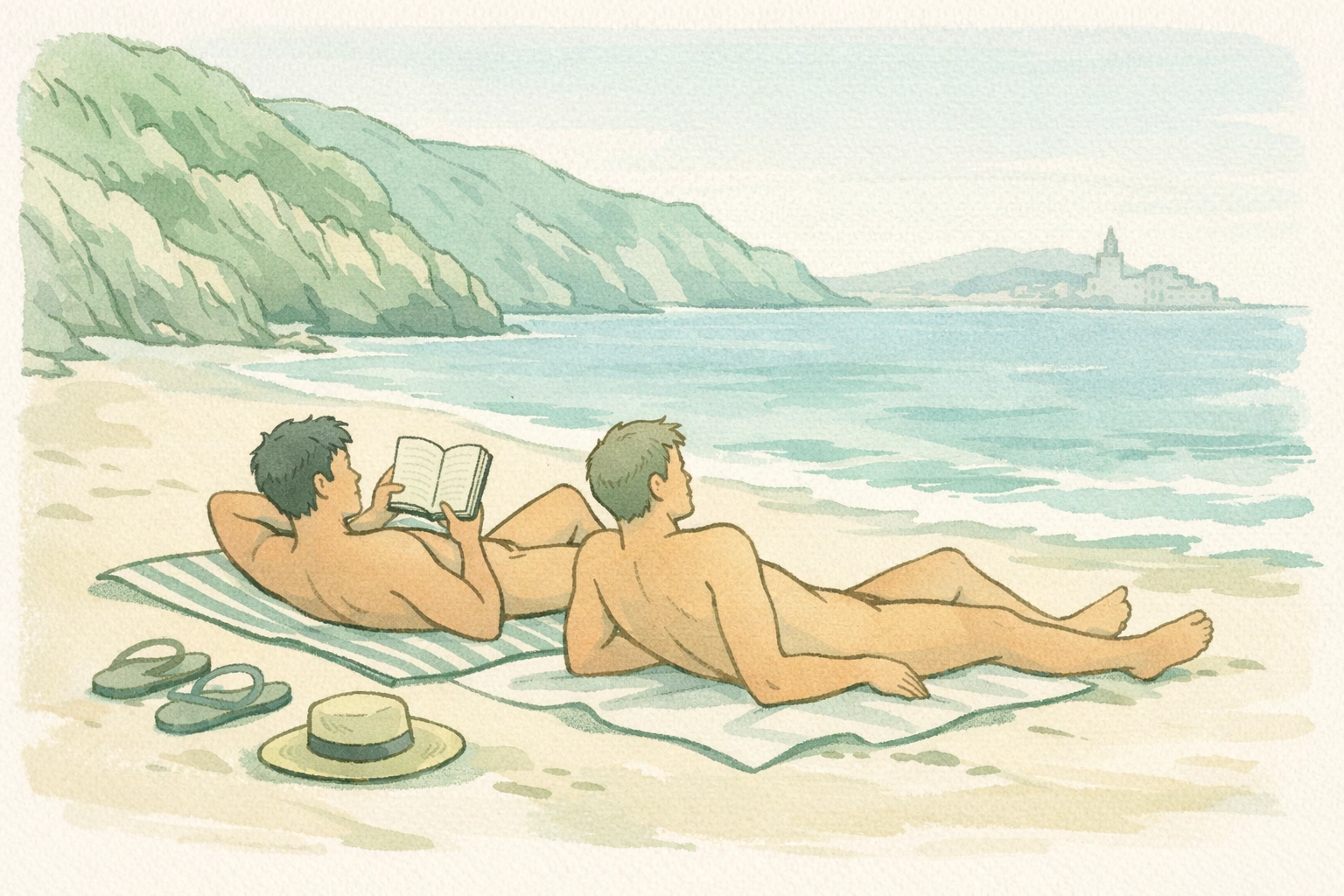
A small chiringuito perches above the beach: an open-air bar that isn't always open, so bring water, bring snacks, bring whatever you need to make the day complete. There are sunshades and loungers for rent, basic toilets, the essential amenities. But mostly, there's space. Space to breathe, to be, to exist without explanation.
The Queer Lineage
What makes Platja de l'Home Mort more than just another nude beach is its place in queer European history. While much of the continent was criminalizing us, pathologizing us, erasing us, Sitges was becoming a refuge. Artists and writers discovered it first: the way queer people always seem to find beauty before anyone else notices: and by the 1930s, this particular stretch of coastline had already become known as a place where men could be with men without fear.
The name itself: Dead Man's Beach: carries a mystery that may never be fully solved. Local legend says an aviator's body washed ashore during World War II, though no records confirm it. But perhaps the name means something else entirely. Perhaps it's about the death of pretense, the shedding of the false self we carry through the world. The man who walks onto that beach isn't the same man who leaves it.
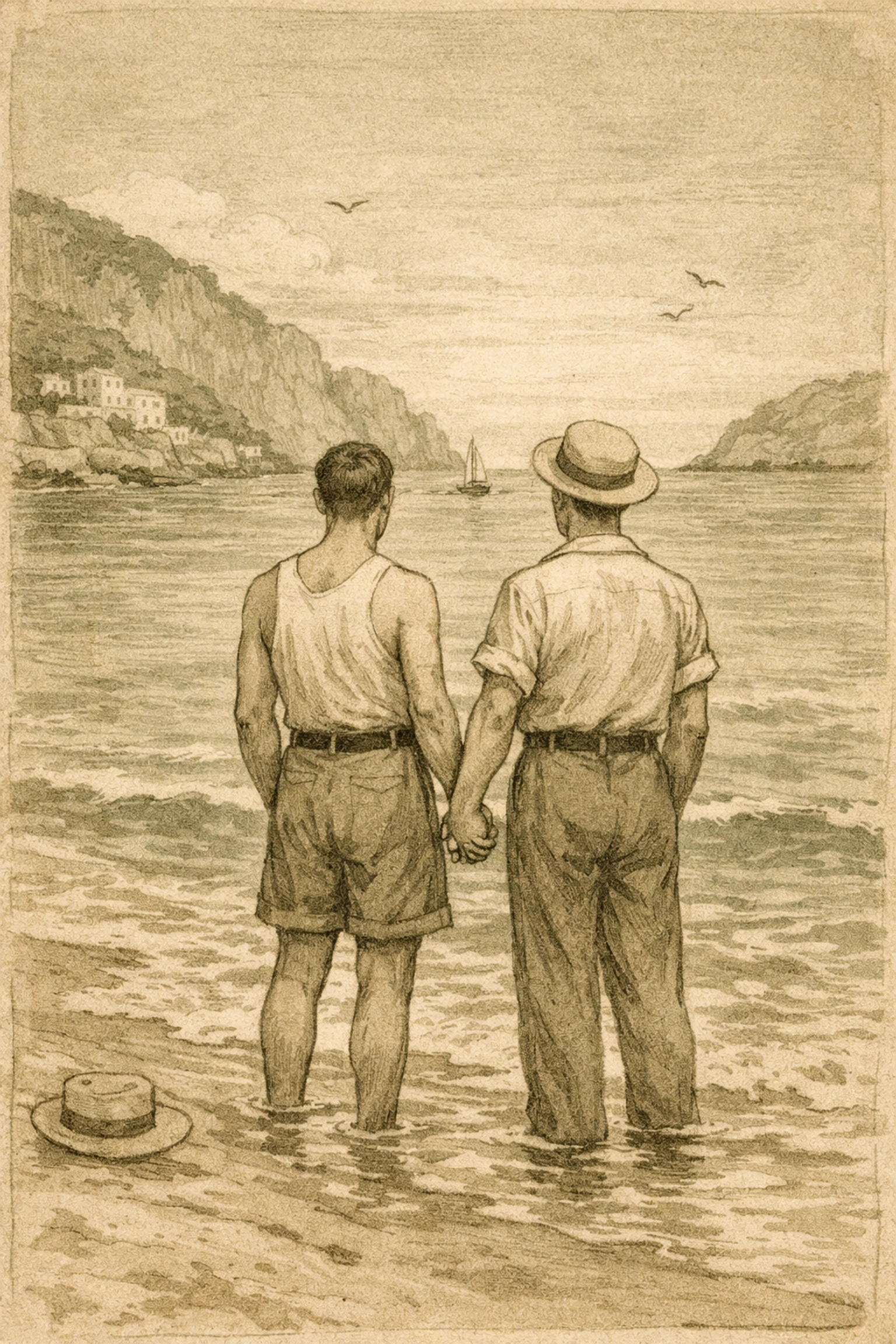
For generations of gay men and lesbians, Sitges has represented possibility. During Franco's Spain, when everything queer was driven underground or across borders, Sitges maintained its reputation as a place of relative freedom. The beach became a symbol, a destination, proof that spaces of liberation could exist even in hostile times.
Today, when you lie on that sand, you're part of that continuum. You're connected to every queer person who made that walk before you, who claimed that same space, who refused to hide.
European Summer at Its Finest
Visit on a summer morning and you'll understand why this place has endured. The sun climbs over the cliffs, warming the rocks first, then the sand, then your skin. The beach fills slowly: locals who know to arrive early, travelers who've done their research, couples holding hands as they navigate the rocky path down.
The atmosphere shifts throughout the day. Mornings are quieter, contemplative. By afternoon, the energy builds: music from someone's speaker, conversations in Spanish and English and German, the splash of bodies diving from the rocks. The wooded area behind the beach becomes as popular as the sand itself, offering shade and privacy and other forms of connection.
From Barcelona, it's simple: take the R2 train from Barcelona Sants to Sitges: about 35 minutes and €4.60. Then the walk. Always the walk, because that's part of what makes arrival feel earned, feel sacred.
Why This Matters Now
In 2026, when so much of queer culture has been commodified and sanitized, places like Platja de l'Home Mort remind us of something essential: freedom isn't comfortable. It's not convenient. It requires effort, intention, the willingness to be vulnerable.
This beach isn't featured in glossy travel magazines. You won't find it on Instagram grids carefully curated for maximum engagement. It exists for itself, for the people who seek it out, for the queer lineage that has protected it and passed it down like the inheritance it is.
The stories that unfold here: the connections made, the self-discoveries, the simple pleasure of existing without armor: these are the stories that matter. These are the moments that live in memory long after the tan fades.
For readers of gay fiction and MM romance, for those who seek stories about men loving men in all their complexity, Platja de l'Home Mort offers something more than setting. It offers truth. The kind of truth that can only be found in places where people have been free to be themselves across generations.
Explore more stories of queer liberation and LGBTQ+ fiction at Read with Pride and discover Dick Ferguson's collection of gay novels and MM romance books at dickfergusonwriter.com.
Follow us on social media:
Instagram: @dickfergusonwriter
X/Twitter: @DickFergus94902
Facebook: Dick Ferguson Writer
Website: www.readwithpride.com
#ReadWithPride #LGBTQTravel #GayBeach #Sitges #QueerHistory #MMRomance #GayFiction #LGBTQBooks #GayRomanceBooks #QueerTravel #EuropeanSummer #ClothingOptional #GayLiterature #PrideTravel #MMBooks #GayNovels #ReadingWithPride #GayTravelGuide #NudistBeach #LGBTQEurope

Leave a Reply
You must be logged in to post a comment.