

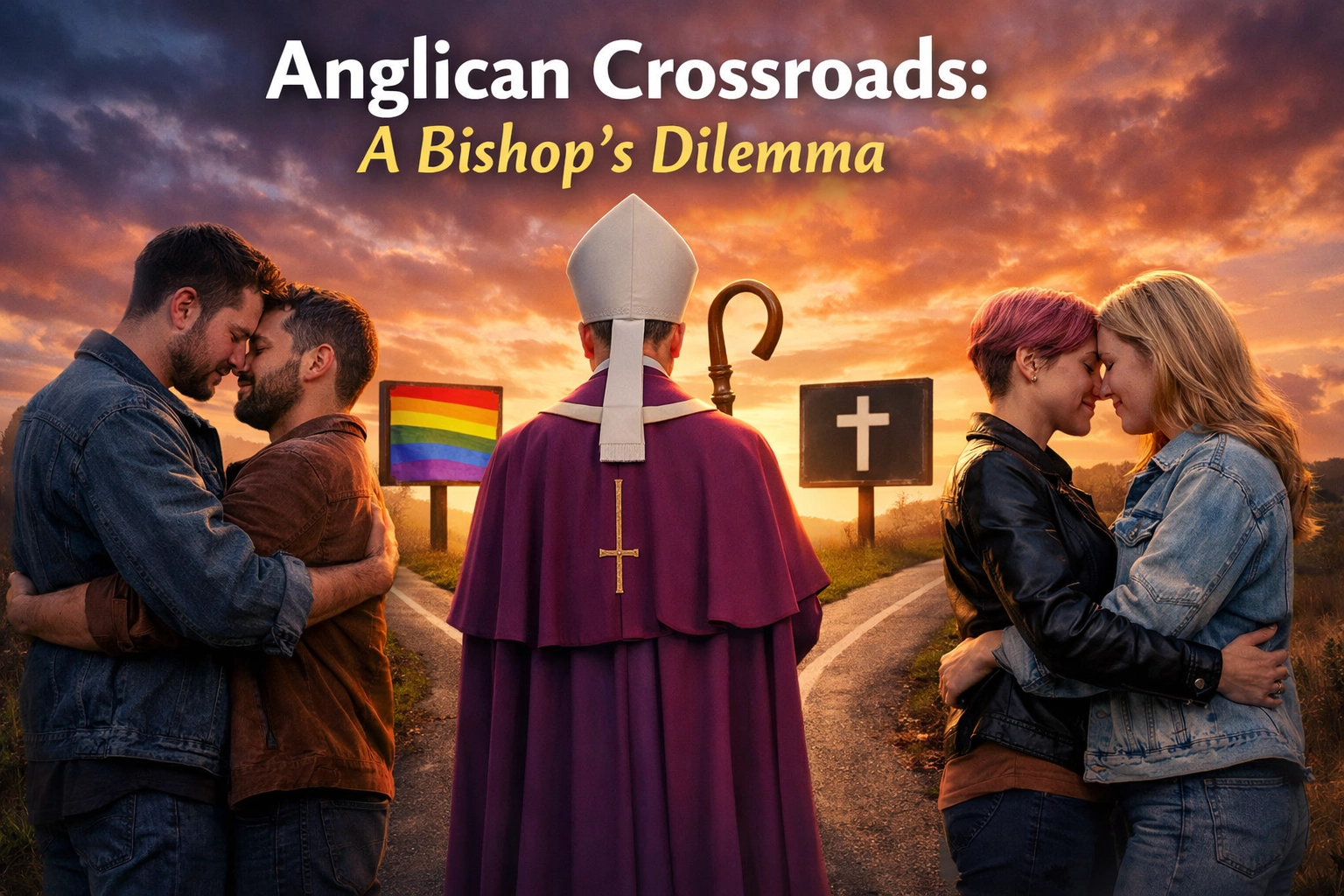
There's something profoundly human about standing at a crossroads. That moment when you realize you can't keep walking in two directions at once. For a bishop in the Anglican Church, that crossroads becomes even more complex when it's about reconciling who you are with what you represent.
Let's talk about one of the most quietly powerful stories in LGBTQ+ fiction: the moment when someone in religious authority faces their own truth.
The Weight of the Mitre
Imagine this: You've spent decades climbing the ecclesiastical ladder. You've counseled countless couples, officiated weddings, baptized babies, buried the dead. You've worn your collar with pride and your convictions with certainty. You've interpreted scripture, led congregations, and perhaps even spoken publicly about "traditional values."
And then one day, you can't ignore it anymore. That feeling you've pushed down, rationalized away, prayed over until your knees ached. The truth that won't stay buried no matter how many hymns you sing or sermons you preach.
You're gay.
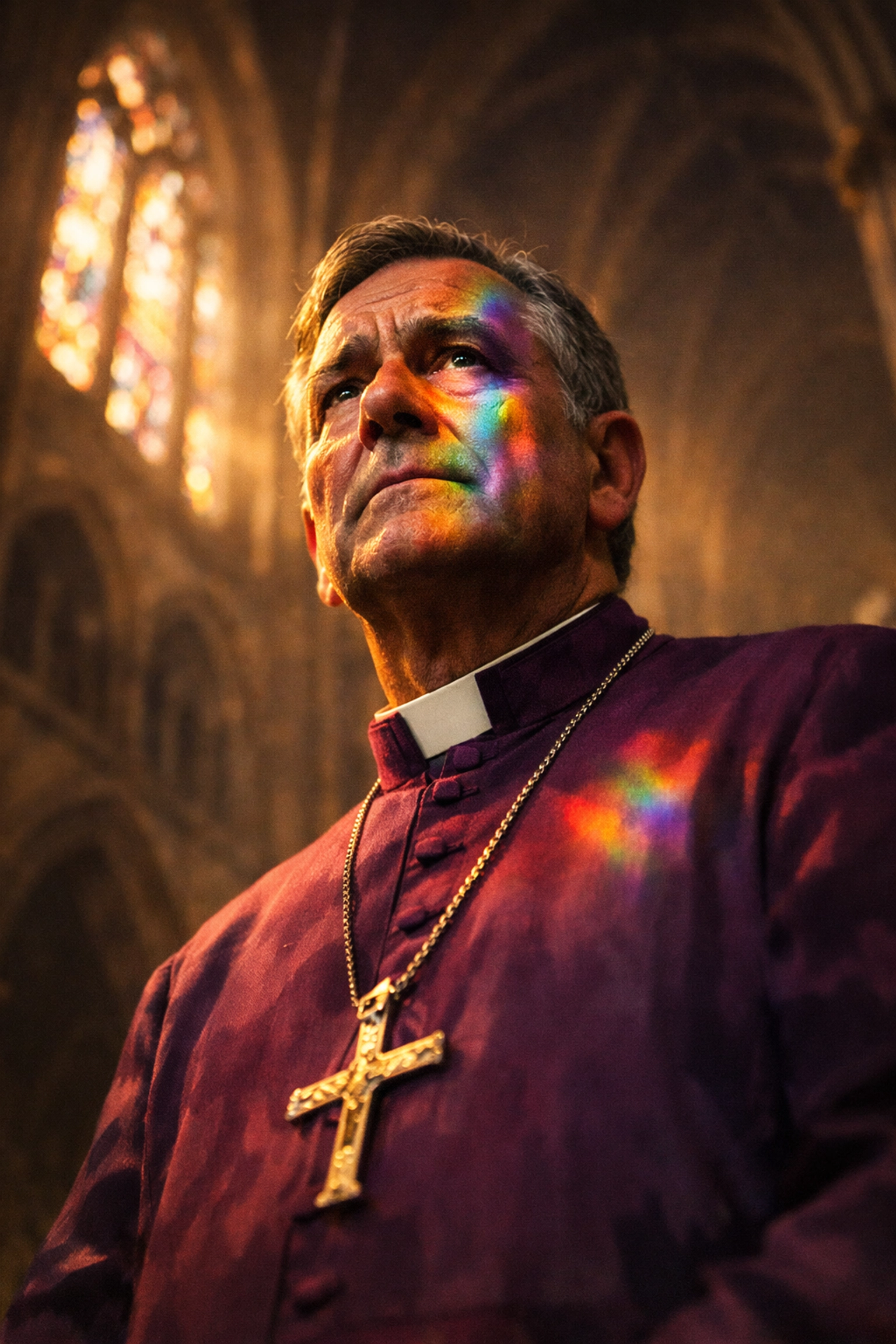
The workplace dynamics here are unlike anything else. In most professions, coming out means navigating HR policies and colleague reactions. For a bishop? It means potentially losing your calling, your community, and your understanding of God all at once. It's the ultimate gay workplace romance scenario meets existential crisis: except there might not be any romance yet, just a terrifying recognition of self.
The Global Anglican Divide
The Anglican Communion isn't exactly known for moving quickly. While some provinces have embraced LGBTQ+ inclusion: blessing same-sex marriages, ordaining gay clergy: others have doubled down on exclusion. The tension between the global North and South has created fractures that go beyond theology into colonialism, culture, and power.
Our fictional bishop isn't just wrestling with personal truth. They're caught in an institution actively tearing itself apart over this very question. Some dioceses offer sanctuary; others offer condemnation. The crossroads isn't just personal: it's institutional.
According to recent scholarship on Anglican tensions, disagreements over same-sex relationships have intensified due to globalization and social media. Bishops can no longer quietly exist in their own theological bubbles. Every decision, every sermon, every whisper gets amplified across continents within minutes.
The Closet With a Stained Glass Window
What makes this particular closet so suffocating? It's not just about hiding from your workplace (though the church is very much a workplace, with all its politics, hierarchies, and water cooler gossip). It's about the specific nature of the job itself.
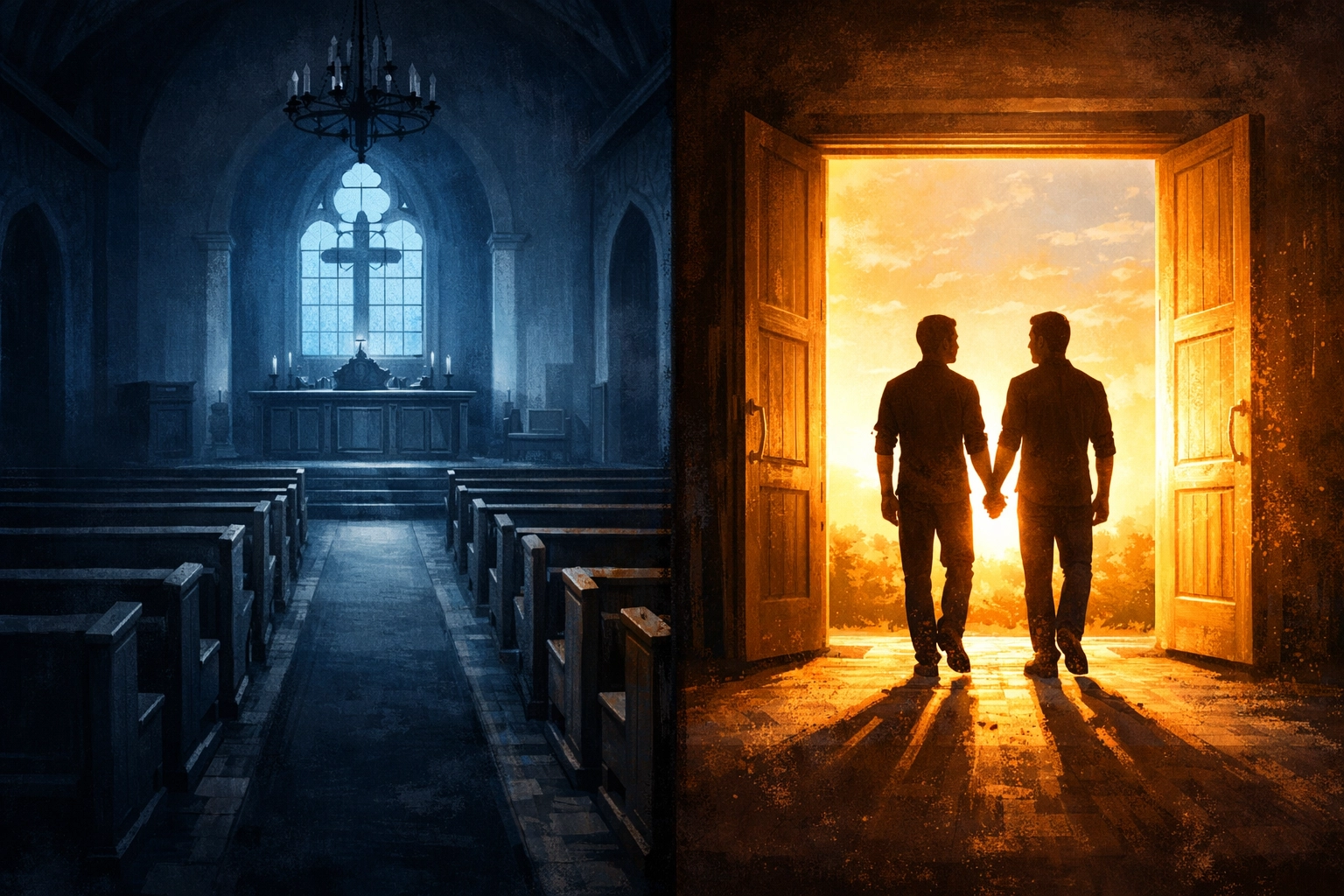
A bishop is supposed to be a moral authority, a spiritual guide, someone who has it all figured out. Admitting uncertainty, confusion, or: heaven forbid: desire? That's not in the job description. The pressure to perform certainty while drowning in doubt creates a cognitive dissonance that would break most people.
And here's where gay romance novels and MM fiction become more than just entertainment. These stories: especially ones featuring characters in positions of authority or public scrutiny: offer blueprints for survival. They show that it's possible to be both faithful and gay, both dedicated to your calling and honest about your heart.
When Theology Meets Reality
The intellectual gymnastics required to maintain cognitive dissonance are exhausting. Our bishop has likely spent years parsing Greek and Hebrew, finding theological justifications, constructing careful arguments about context and translation. Maybe they've even convinced themselves that their interpretation is the correct one.
But theology gets a lot harder when it's not theoretical anymore. When it's your heart racing at the sight of another man. When it's your hands trembling as you realize you've been performing heterosexuality for decades. When it's your soul crying out for authenticity in a life built on half-truths.
The crossroads moment isn't usually dramatic. It's more often quiet: a mundane Tuesday when you realize you simply can't do this anymore. Can't preach love while denying your own capacity for it. Can't counsel honesty while living a lie. Can't represent a God of truth while hiding your fundamental truth.
The Courage Crisis
Here's what makes this story so compelling: the stakes are impossibly high, and there's no good option. Coming out means potential loss of position, pension, housing, community, and life's work. Staying closeted means slow spiritual suffocation and the betrayal of everything you supposedly stand for.
It's the kind of dilemma that makes for gripping gay fiction: but it's also devastatingly real for countless clergy members around the world.
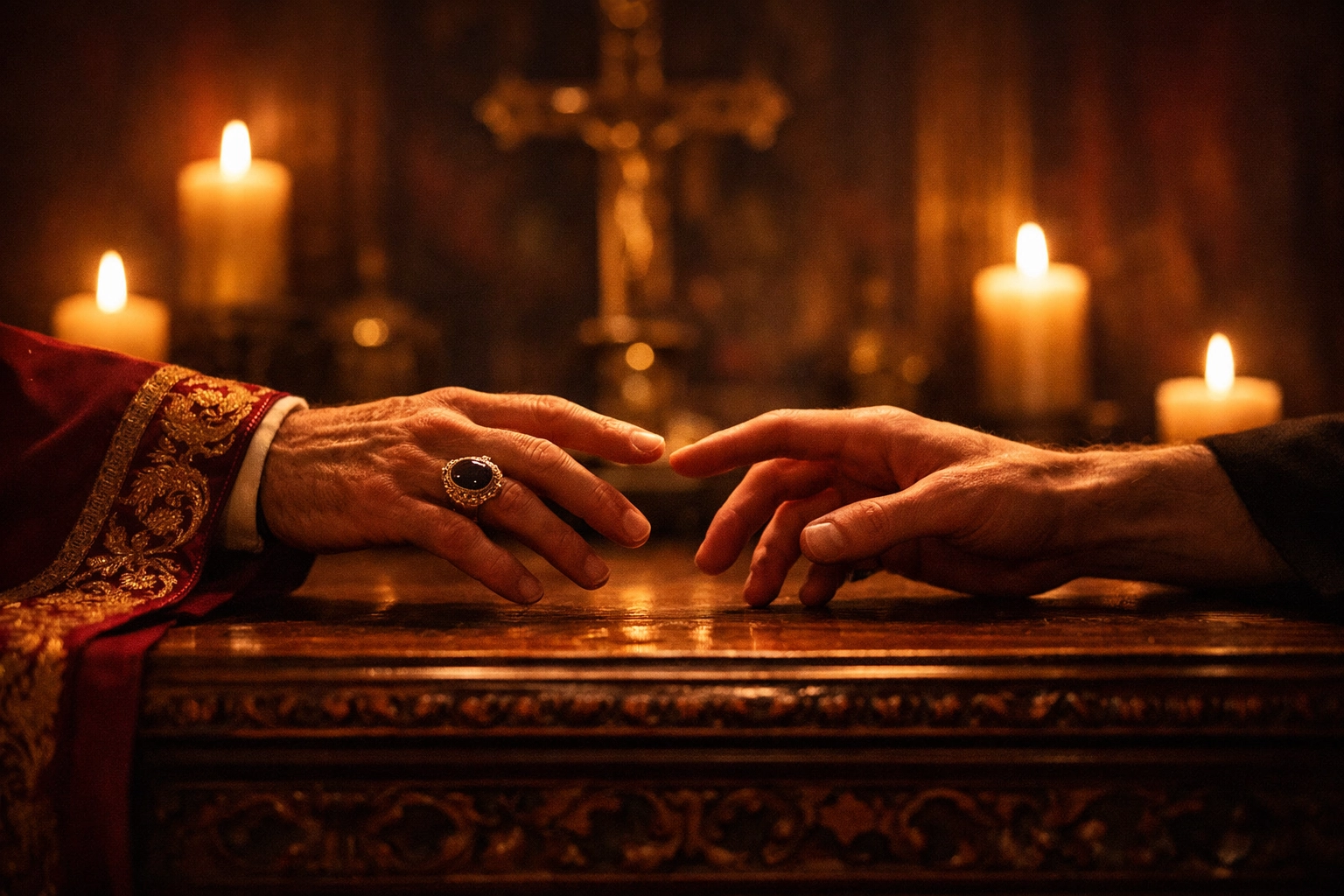
The beautiful thing about LGBTQ+ fiction is that it lets us explore these impossible choices in a safe space. We can watch characters navigate the aftermath of their decisions. We can see different paths unfold. We can witness the pain but also the liberation that comes from finally, finally being honest.
Beyond the Institution
What happens after the crossroads? Some bishops resign quietly, slipping away to rebuild lives in more accepting denominations or outside the church entirely. Others stay and fight, becoming advocates for change from within. Still others find middle paths: coming out to trusted friends while maintaining public discretion.
The MM romance version of this story usually involves someone: a choirmaster, a parishioner, a fellow clergy member: who makes staying worth the risk. Someone who represents what life could be like on the other side of authenticity. The workplace romance angle here is particularly poignant because the "workplace" is supposed to be about unconditional love, yet often demonstrates the most conditional acceptance imaginable.
But even without romance, the story of a bishop at a crossroads matters. It reminds us that coming out isn't a one-time event but a series of decisions, each requiring its own brand of courage.
Why These Stories Matter
At Readwithpride.com, we believe in the power of stories to show us possible futures. When someone in a position of authority: religious or otherwise: navigates the journey from denial to authenticity, it lights a path for others.
Gay romance books and queer fiction aren't just escapism. They're rehearsals for real life. They're proof that happiness is possible, that integrity and identity can coexist, that the crossroads doesn't have to be the end of the road.
For readers who've never had to reconcile faith and sexuality, these stories build empathy. For those currently standing at their own crossroads, they offer hope.
Finding Your Story
Whether you're drawn to gay workplace romance ebooks because you see yourself in the power dynamics, the forbidden attraction, or simply the very human struggle to be yourself in a professional setting: there's a story waiting for you.
The bishop's dilemma is everyone's dilemma, really: How do we balance who we are with what's expected of us? How do we honor our truth without destroying everything we've built? How do we love fully in spaces that demand we love in fragments?
These are the questions that make MM romance more than just love stories. They're explorations of courage, authenticity, and the radical act of choosing yourself.
Ready to explore more stories about faith, identity, and those impossible crossroads we all face? Check out our full collection of LGBTQ+ ebooks at Readwithpride.com and follow us on Facebook, Instagram, and X for daily recommendations.
#ReadWithPride #MMRomance #GayRomance #LGBTQFiction #QueerFiction #GayWorkplaceRomance #GayRomanceBooks #MMRomanceBooks #GayFiction #LGBTQBooks #GayLoveStories #QueerStories #GayNovels #MMBooks #AuthenticStories #FaithAndIdentity #ComingOutStories #LGBTQReading #GayBookClub #2026Books

Leave a Reply
You must be logged in to post a comment.