

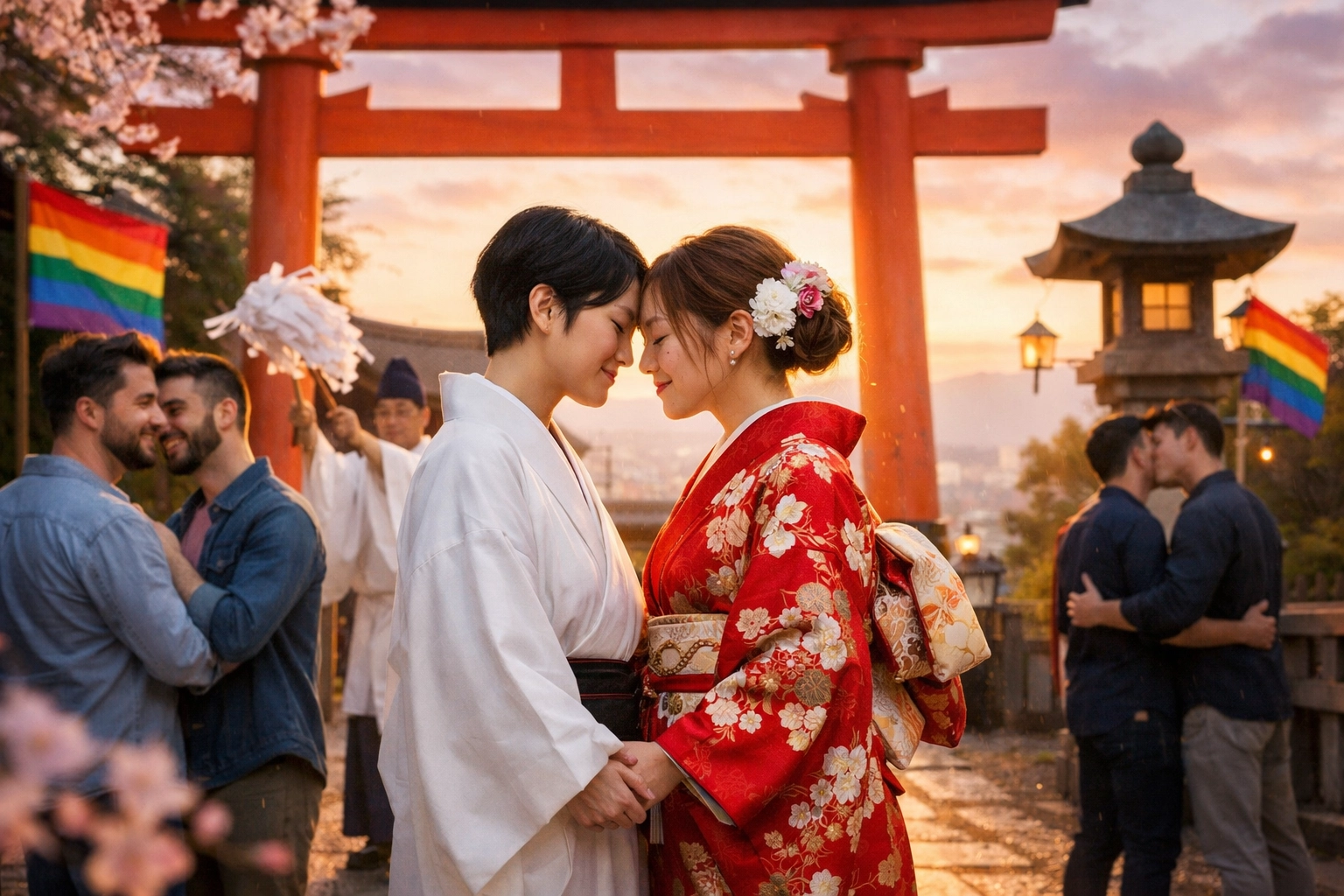
There's something achingly beautiful about ancient traditions making space for love in all its forms. And nowhere does this quiet revolution feel more profound than in the sacred shrines of Kyoto, where centuries-old Shinto rituals now bear witness to unions that would have once existed only in whispers.
Picture this: Two people standing beneath the vermilion torii gates, morning mist clinging to the temple grounds, their hands trembling as they lift ritual cups of sake to their lips. The air smells of cedar and incense. A Shinto priest chants blessings in a language that predates modern concepts of love, yet somehow encompasses them all.
This isn't just wedding planning, it's time travel with a rainbow flag.
When Ancient Meets Authentic
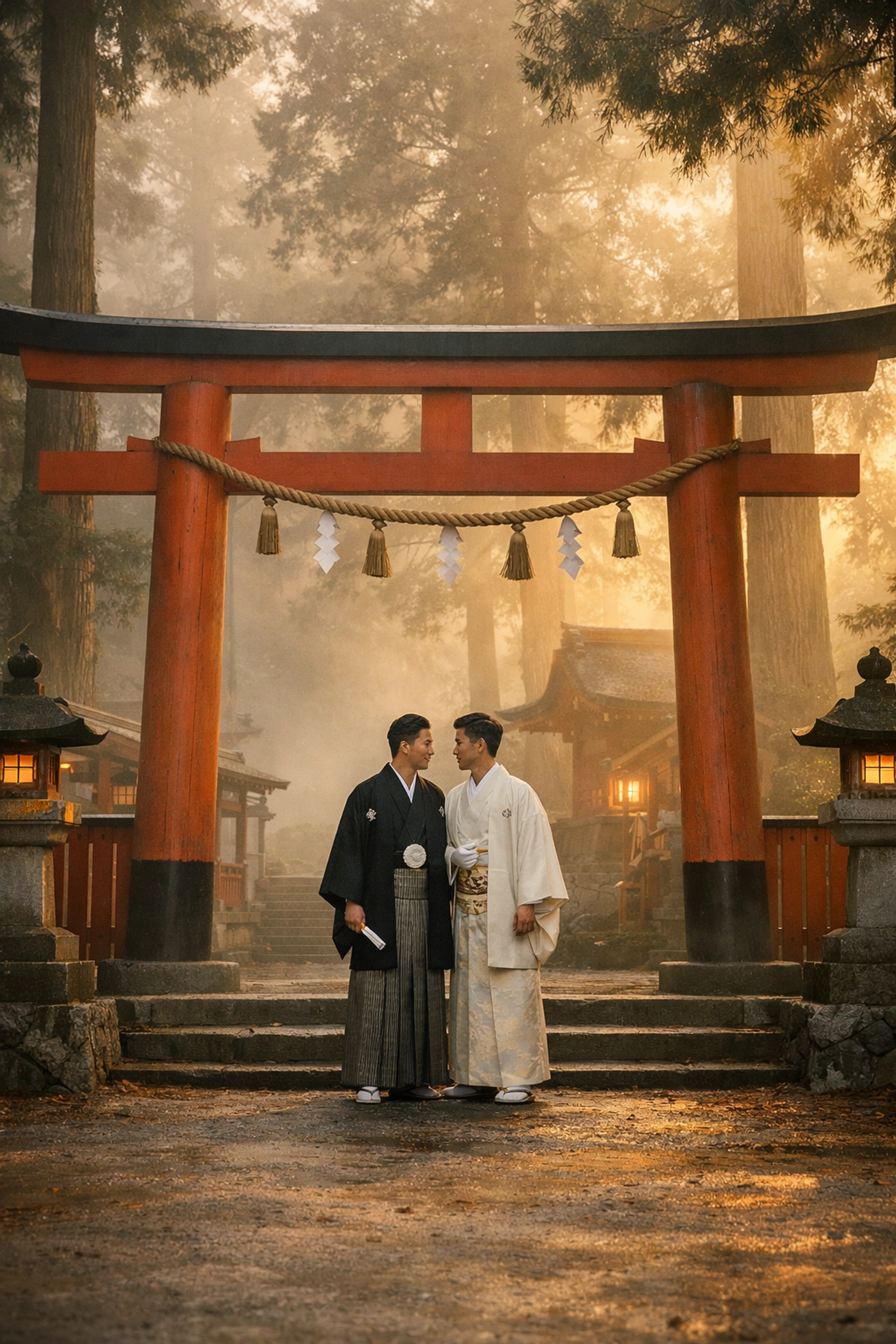
If you're a fan of historical MM romance novels, you already know the pull of forbidden love set against breathtaking cultural backdrops. But what happens when fiction becomes possibility? When the very temples that have stood for over a thousand years open their gates to same-sex couples seeking traditional blessings?
Kyoto's shrine culture offers something extraordinary: the chance to participate in rituals virtually unchanged since the Heian period, but with a decidedly modern understanding of who gets to claim these sacred moments. Places like Kitano Tenmangu Shrine, established in 947 AD and dedicated to the scholar deity Sugawara no Michizane, have become unexpected sanctuaries where LGBTQ+ couples can experience authentic Japanese spiritual ceremonies.
The irony isn't lost on anyone. Japan's relationship with LGBTQ+ rights remains complicated, same-sex marriage isn't nationally recognized, though several municipalities offer partnership certificates. Yet these ancient shrines, bastions of tradition, have quietly adapted their practices in ways that feel less like concession and more like… well, like they've been waiting for the world to catch up.
The Sacred Rituals: More Than Just Pretty Kimonos
Let's talk logistics, because if you're going to write about this in your next gay romance novel or if you're actually planning a ceremony (live your best life!), you need to understand what makes a Shinto wedding ceremony so profoundly different from Western traditions.
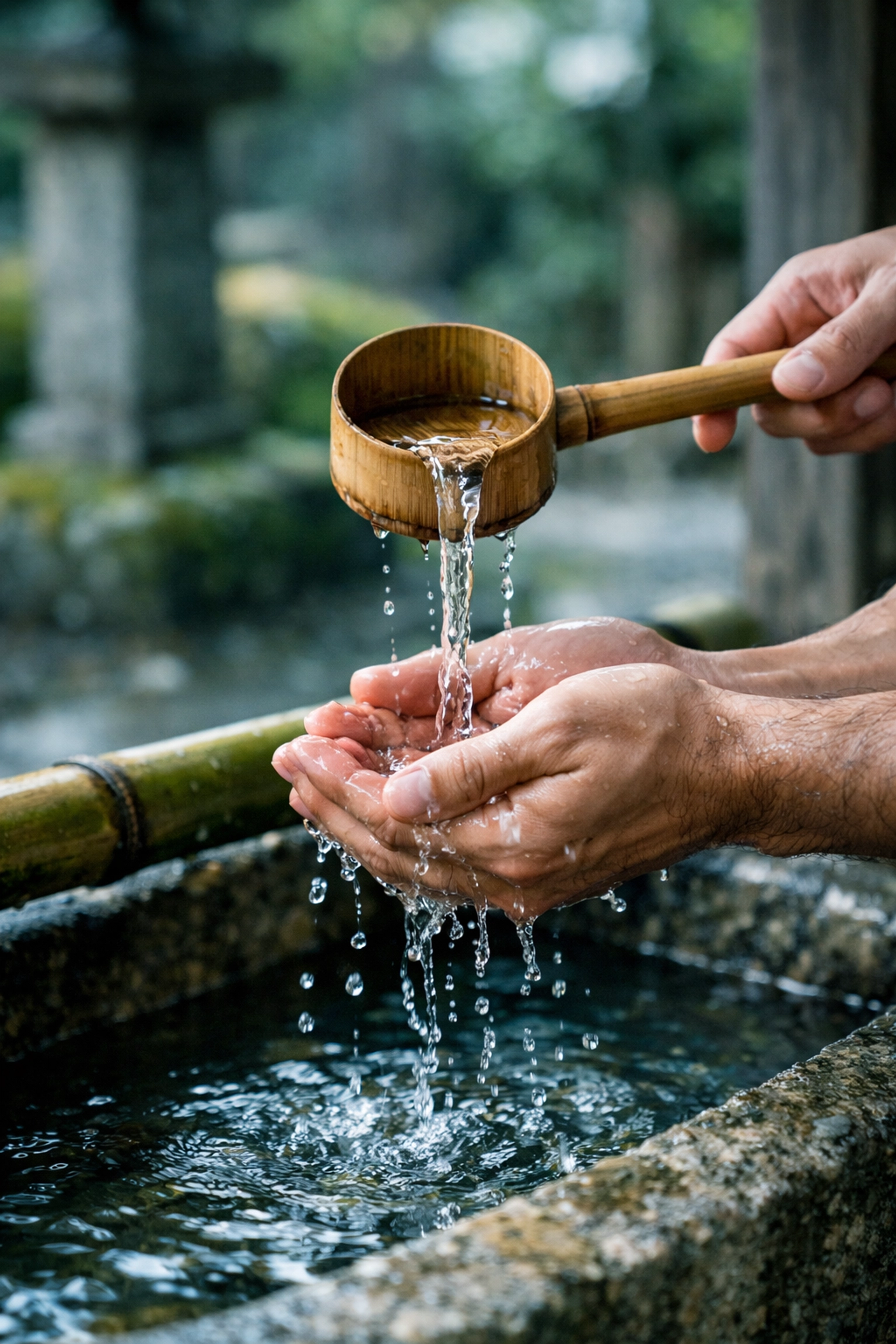
First, the purification. Before you even approach the main hall, there's the ritual at the chozuya: the water pavilion where you cleanse your hands and rinse your mouth. It's not just symbolic hygiene; it's about approaching the sacred space with intention, leaving the mundane world behind. You bow at the torii gate, acknowledging that you're stepping into a threshold space between the human and divine.
The ceremony itself typically runs 30-45 minutes and involves several key components:
The San-san-kudo: This is the heart of the ceremony: the ritual exchange of sake cups. Three cups, three sips each, shared between the couple. In traditional opposite-sex ceremonies, this symbolized the joining of two families. For same-sex couples, it takes on additional weight: a public declaration in a country where such unions exist in legal gray areas.
Tamagushi Offering: Both partners present sacred sakaki tree branches to the Shinto deities, bowing deeply. There's something deeply moving about this moment: offering blessings to the kami (spirits) and asking them to witness your union, regardless of how mortal laws might categorize it.
The Exchange of Vows: Unlike Western weddings, Shinto ceremonies traditionally don't include personal vows. The commitment is understood, sealed through ritual rather than words. Some couples find this freeing: the actions speak louder than any declaration could.
Planning Your Own Kyoto Love Story
If this is sparking ideas for your next writing project: or your actual life: here's what you need to know:
Most Kyoto shrines require advance reservations, typically made directly with the shrine office. Don't expect to waltz in and get married on a whim (though honestly, that would make for great MM contemporary romance drama). Photography during the ceremony? Usually prohibited, which makes the experience even more sacred and present. You're living it, not performing it for Instagram.
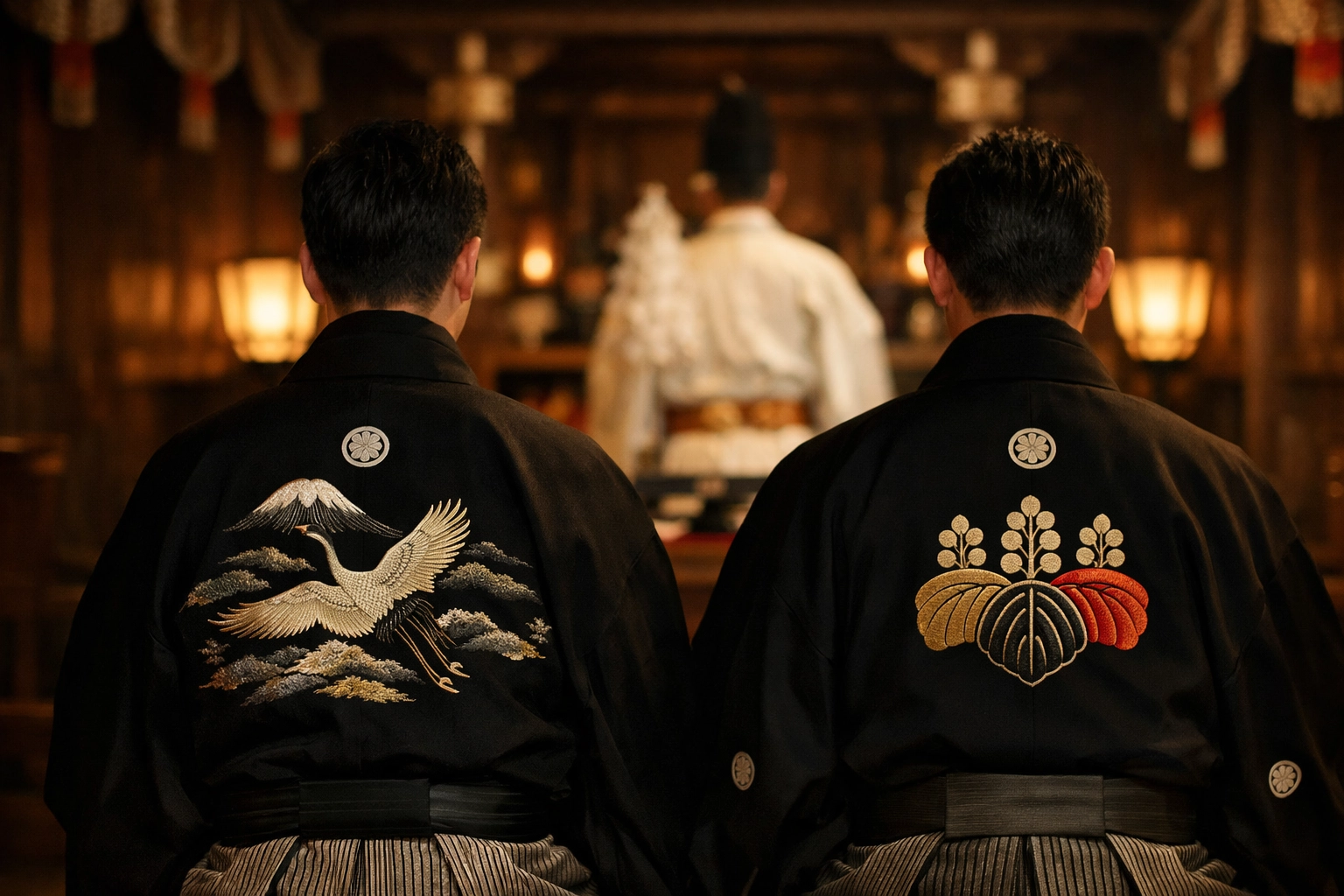
Traditional wedding kimono is required for both partners. This is where things get fascinating for same-sex couples: especially male couples navigating garment traditions typically gendered in specific ways. Some opt for matching montsuki (formal black kimono), while others mix traditional men's and women's ceremonial attire. There's no rulebook here, which means each couple gets to write their own visual story.
Ceremonies are typically available until 3 PM, with mornings being most popular. There's something about the early light filtering through ancient trees, the way the temple grounds feel hushed and separate from the modern city just beyond the walls.
Why This Matters for MM Romance
Here's where I get a bit passionate about this: Historical MM romance books often struggle with the tension between historical accuracy and LGBTQ+ representation. We want authentic period details, but we also want our queer characters to exist as more than tragic footnotes or closeted whispers.
Japan's history with same-sex relationships offers fascinating alternatives to Western narratives. The samurai tradition of wakashudō (the way of the young), the kabuki theater's onnagata performers, the openly celebrated male-male relationships in certain Buddhist monasteries: these aren't modern inventions projected backward. They're part of the cultural fabric.
Setting your gay historical romance in Japan, particularly around Shinto traditions, allows for nuanced exploration of love that exists outside Western Christian frameworks of sin and shame. Shinto doesn't have a concept of sexual orientation as moral category. Purity and impurity exist, but they're about ritual cleanliness, not who you love.
This creates space for stories where same-sex love can be complicated by social expectations, family obligations, and political realities without the overlay of religious damnation. Your characters can struggle with very real historical obstacles without the narrative needing to explain away religious persecution in a culture where it didn't exist in the same way.
The Modern Reality
Let's be real: Japan still has a long way to go on LGBTQ+ rights. Same-sex marriage remains unrecognized nationally, workplace discrimination is legal in most cases, and many queer Japanese people navigate daily microaggressions. The shrine ceremonies, while beautiful and available, exist in this complicated context.
But that's exactly why these moments matter: both in fiction and in life. Every couple who stands before those ancient altars, every priest who performs the rituals without hesitation, every photograph (taken outside the ceremony hall, naturally) of two people in wedding kimono radiating joy… it's all part of shifting what's possible.
For readers of MM romance books, these real-world ceremonies offer inspiration for stories that feel grounded in cultural authenticity while celebrating queer love. For writers, they provide rich details that make your historical or contemporary settings come alive.
Where Fiction Meets Future
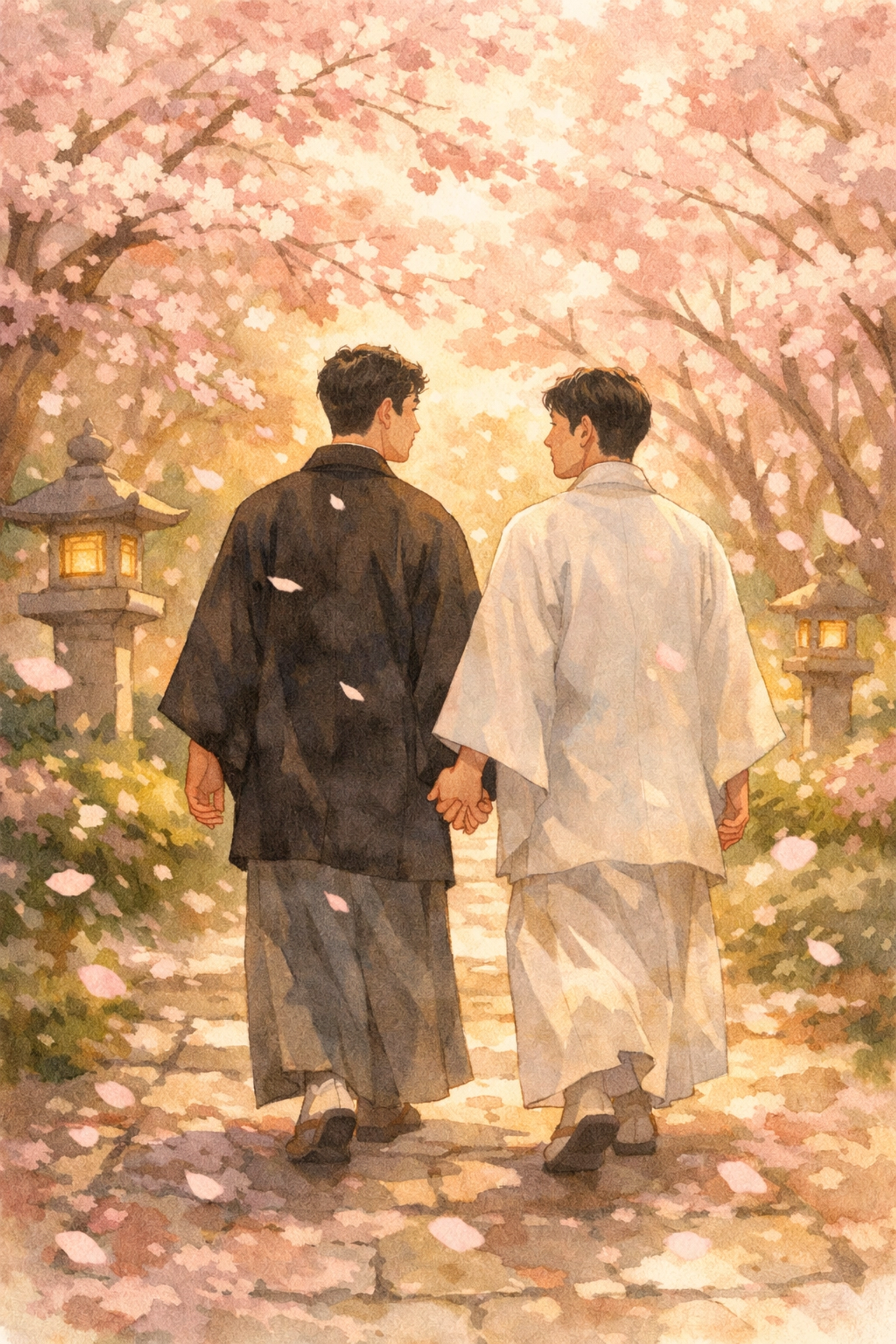
The most beautiful part of these Kyoto ceremonies? They're quietly radical precisely because they're so traditional. There's no rainbow arch, no defiant activism, no loud proclamations. Just two people in ceremonial dress, ancient words spoken by a priest, sake shared under the watchful presence of the kami.
It's resistance through participation. It's claiming space in history by showing up and asking for the same blessings that couples have sought for over a millennium.
And if that's not a premise for your next gay fiction novel, I don't know what is.
Whether you're writing it, reading about it, or planning your own journey to Kyoto's sacred spaces, remember: every love story that insists on being witnessed is an act of courage. Every traditional ceremony that expands to include queer couples is evidence that our stories belong in every chapter of human history: even the ones written centuries before we had language for who we are.
The torii gates stand ready. The kami are listening. And somewhere in Kyoto, morning mist clings to temple grounds where the next quiet revolution is taking place, one sacred blessing at a time.
Explore more stories of LGBTQ+ love across cultures and traditions at ReadWithPride.com. Find us on Facebook, Instagram, and X/Twitter.
#MMRomance #HistoricalMMRomance #GayRomanceBooks #LGBTQFiction #QueerLoveStories #JapaneseRomance #ShintoWedding #KyotoLove #GayHistoricalRomance #ReadWithPride #MMNovels #QueerFiction #GayLiterature #LGBTQBooks #AuthenticLove #CulturalRomance #MMRomanceBooks #GayJapan

Leave a Reply
You must be logged in to post a comment.