
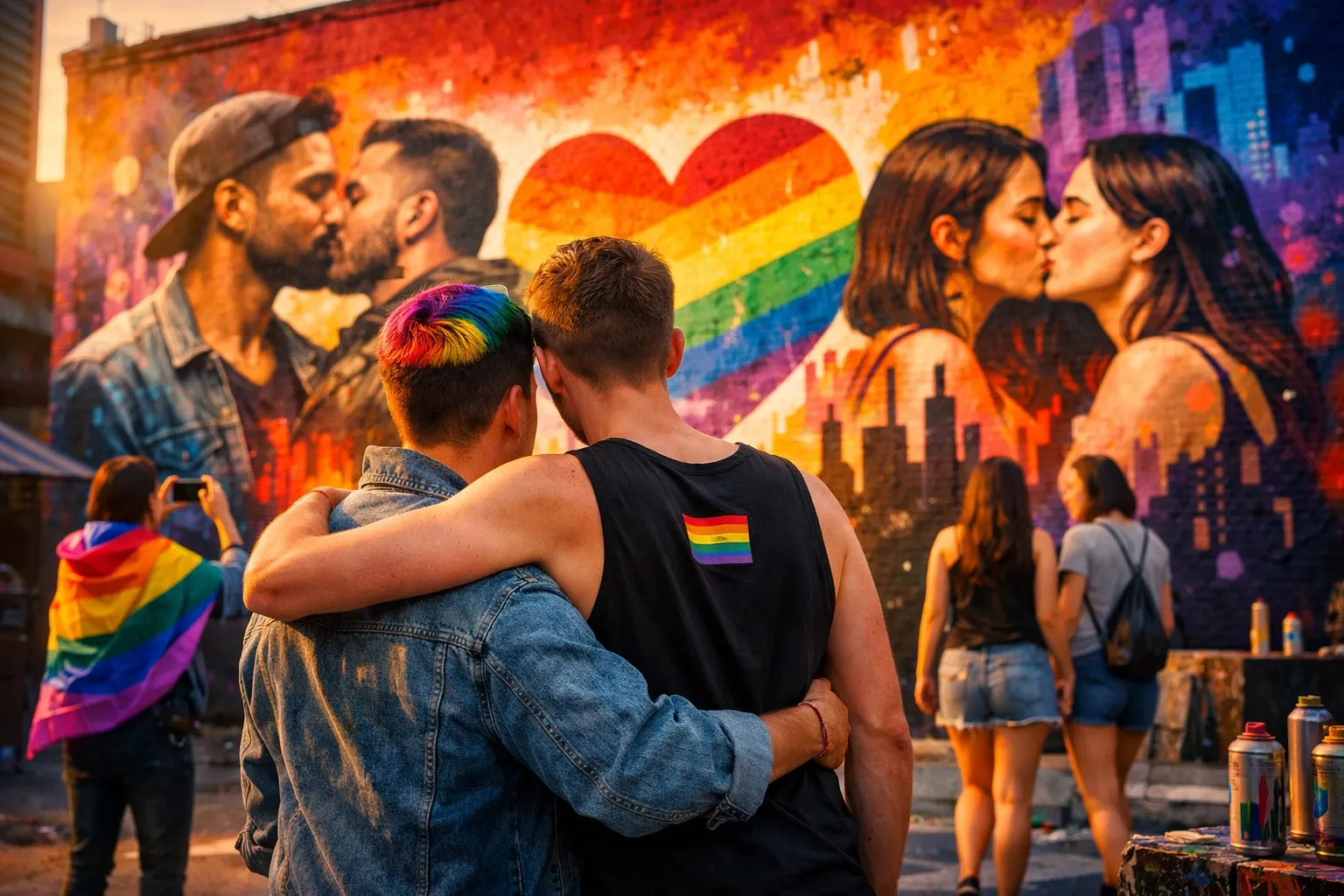
Walk down any major city street and you'll find art, sometimes subtle, sometimes screaming for attention. But when you venture into neighborhoods where queer culture thrives, the walls themselves become manifestations of our history, our struggles, and our absolutely fabulous existence. Welcome to the world of gay street art, where every mural tells a story and every spray-painted message is a declaration of visibility.
Why Street Art Matters to Our Community
Before we dive into the where, let's talk about the why. LGBTQ+ street art isn't just about making things pretty (though honey, we do love our aesthetics). These murals serve as both celebration and activism, visual reminders that we exist, we persist, and we're not going anywhere. In a world that still tries to erase queer stories from textbooks and public spaces, street art becomes our unauthorized history lesson, our unsanctioned monument, our unapologetic presence.
Think about it: while politicians debate our rights in air-conditioned offices, artists are out there in the heat, the cold, the middle of the night, claiming public space for our community. That's powerful stuff.
Philadelphia: America's Street Art Capital
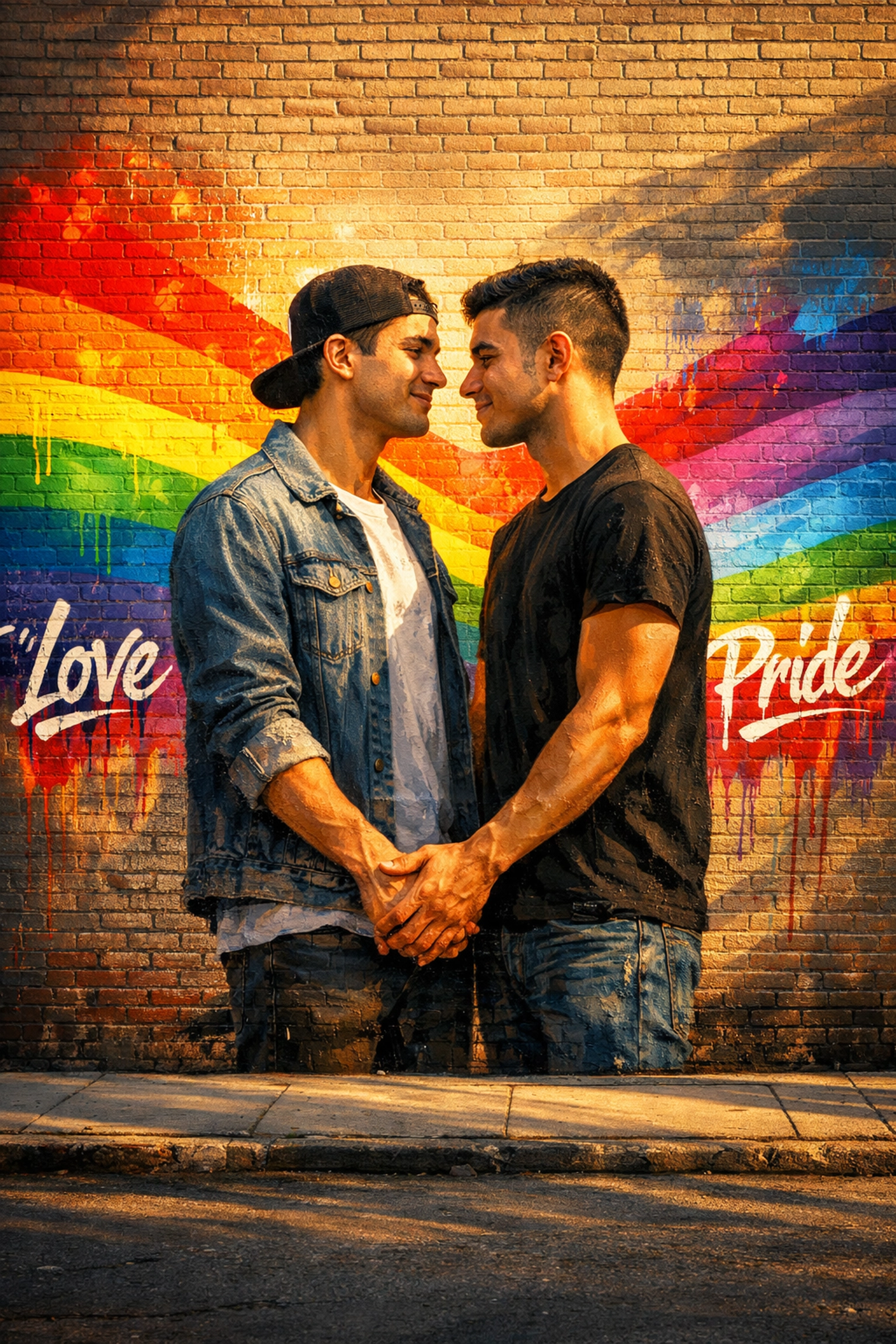
If you're serious about discovering gay street art, Philadelphia needs to be at the top of your list. USA Today readers voted it the Best City for Street Art in America, twice, and the Gayborhood delivers on that reputation in spectacular fashion.
The William Way LGBT Community Center hosts "Pride and Progress," a massive 55 x 165-foot mural by Ann Northrup that's basically a love letter to queer history. The piece depicts a pride festival while honoring the 1966 gay civil rights march, yes, three years before Stonewall, Philadelphia was already making noise. Standing in front of it feels like being wrapped in a rainbow blanket of activism and joy.
Then there's "Finally on 13th," designed by Nile Livingston, which celebrates 30 years of Philadelphia's Ballroom culture. As the first mural in the Gayborhood, it holds special significance. The piece captures the elegance, the fierceness, and the artistry of a community that turned survival into performance art.
And because this is 2026 and we're living in the timeline where Lil Nas X exists, there's a three-story mural of the artist at 1342 Cypress Street. The piece celebrates him as an LGBTQ+ trailblazer, proving that street art evolves with our culture, honoring both our pioneers and our present-day icons.
San Francisco: Where Queer Art Meets Counterculture
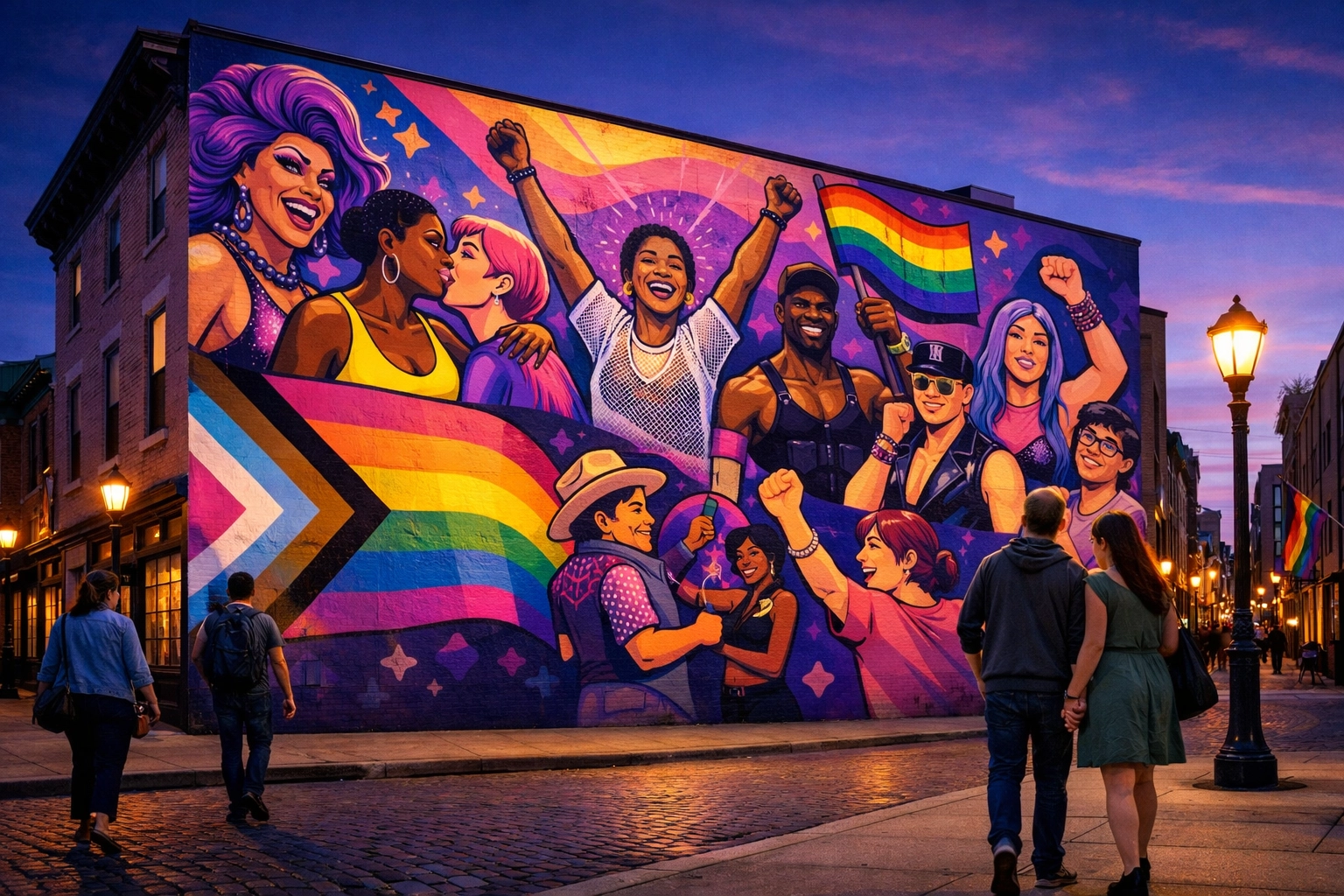
San Francisco's relationship with gay street art runs deep, like, Castro-in-the-70s deep. The city's walls have been canvases for queer expression for decades, and today's artists continue that legacy with stunning results.
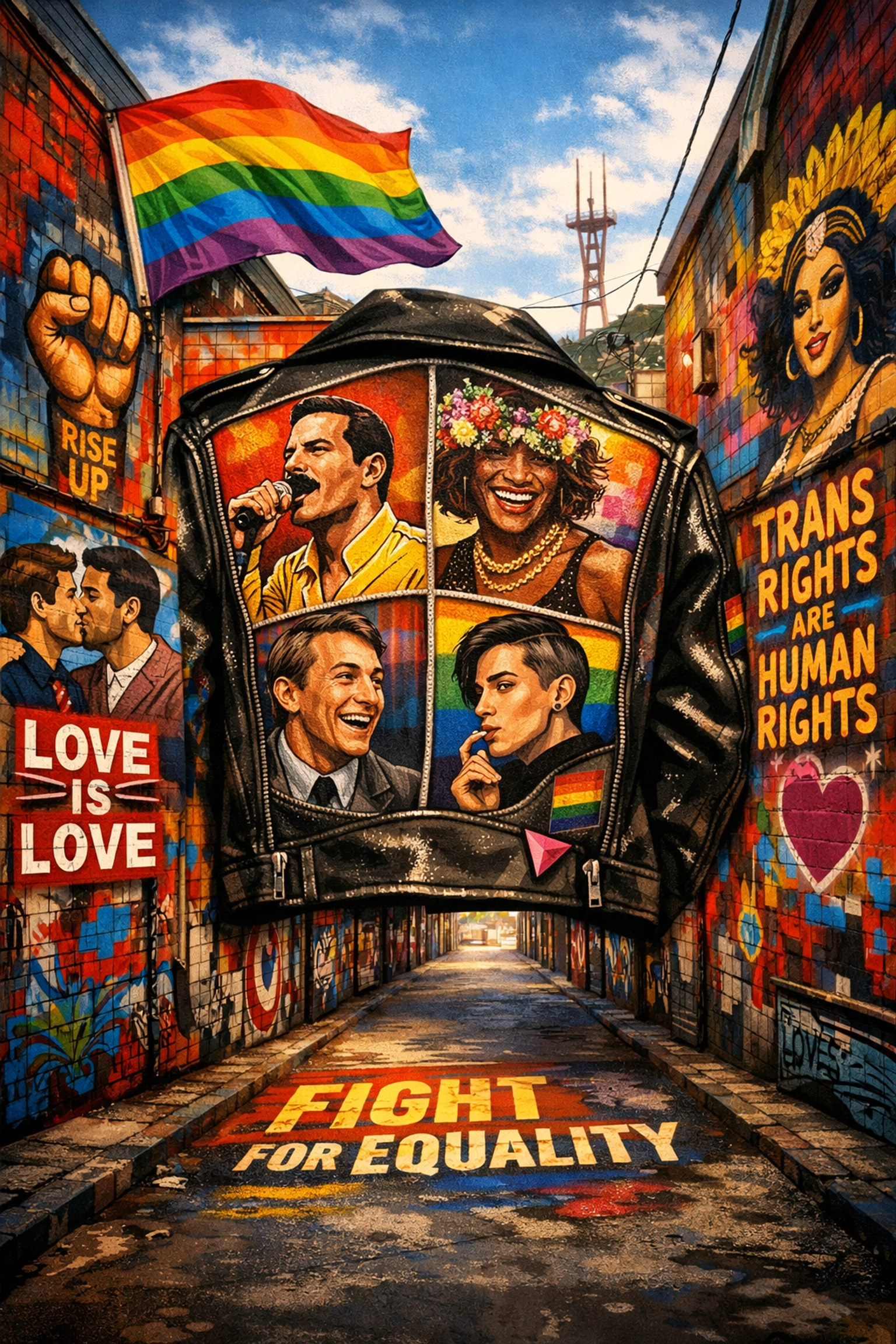
Head to Polk Gulch or the Mission District, and you'll find yourself in an open-air gallery where every alley reveals another masterpiece. "Gear Up" by queer artist Serge Gay Jnr., located outside Moby Dick bar, showcases a leather jacket adorned with pins featuring black queer heroes like James Baldwin and Marsha P. Johnson. It's a gorgeous tribute to the intersectionality that makes our community so beautifully complex.
Clarion Alley alone attracts over 200,000 visitors annually: that's more foot traffic than many actual galleries. The collection of political murals reflects the area's history and communities, creating a constantly evolving testament to queer resistance and resilience. Every time you visit, something's different. That's the beauty of street art: it breathes, it changes, it lives.
New York: Stonewall's Legacy in Paint
New York brings the history, the attitude, and the energy you'd expect from the birthplace of the modern LGBTQ+ rights movement. The pride mural outside the "3 Dollar Bill" nightclub in Brooklyn, created in 2019 as part of the World Pride Mural Project, celebrates the 50th anniversary of the Stonewall Riots. Because if we're going to commemorate a revolution, we might as well do it in technicolor.
The city's street art scene reflects its diversity: from subtle installations in Chelsea to bold statements in the East Village. Walking through these neighborhoods feels like flipping through a visual history book, one that actually includes our stories instead of erasing them.
Manchester: The UK's Rainbow Wall
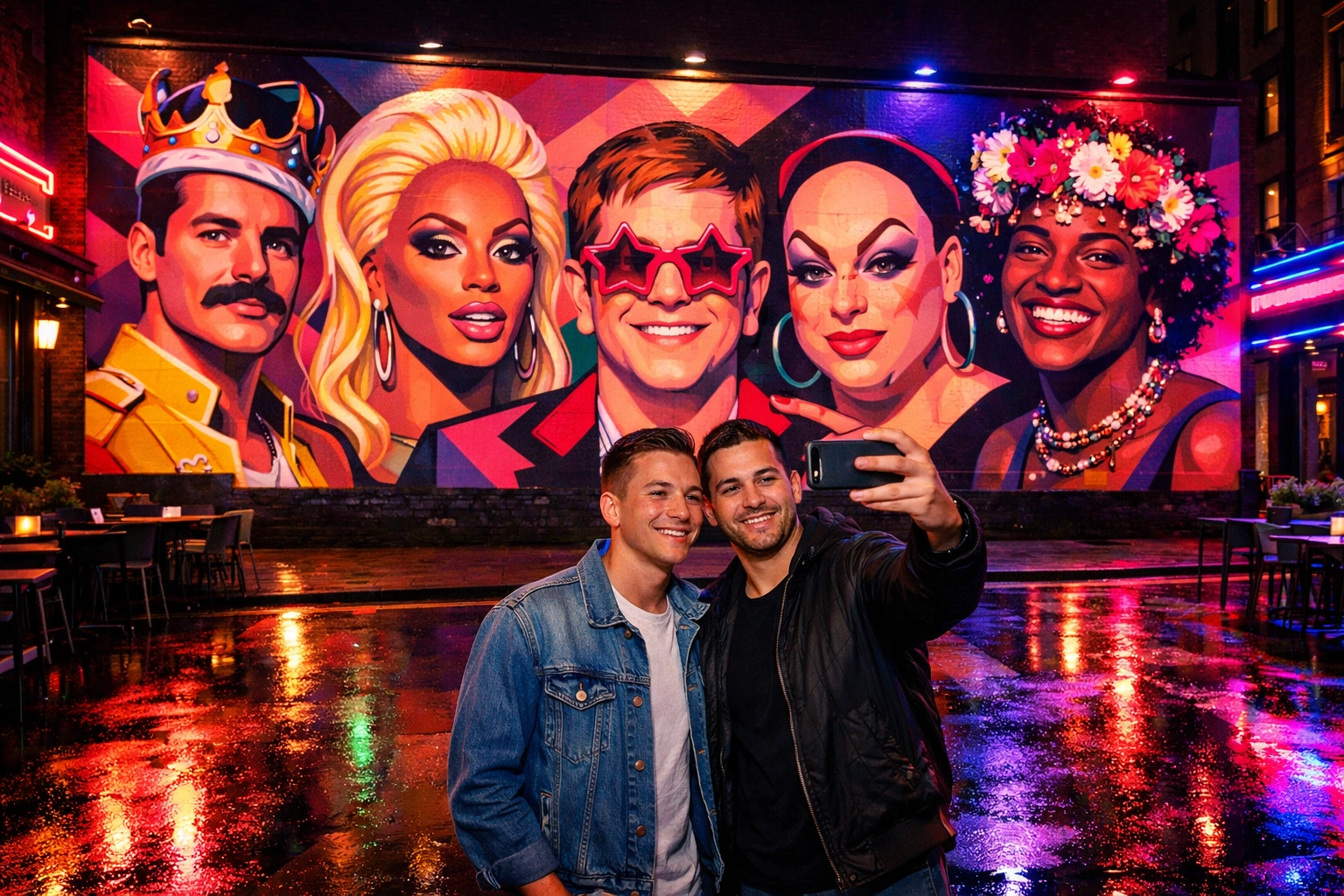
Across the pond, Manchester hosts the UK's largest LGBTQ+ street art piece on The Molly House on Canal Street. The mural depicts five famous LGBT icons important to Manchester's gay scene: a fitting tribute for a city whose queer community has shaped British culture for generations.
Canal Street itself is an experience. The street art here doesn't just decorate; it narrates, commemorates, and sometimes throws shade at the establishment. Very British, very gay, very necessary.
Copenhagen: Bold, Provocative, Unapologetic
Danish artist EDES takes street art to another level, literally. They paint bold imagery featuring rainbow flags and provocative symbolism on train exteriors. Imagine commuting to work and seeing a moving gallery of queer resistance rolling through the station. That's Copenhagen's approach: if you're going to make a statement, make it impossible to ignore.
EDES's work directly challenges homophobia and asserts freedom of expression, proving that street art doesn't have to whisper. Sometimes it needs to shout from the rooftops: or the side of a train.
Finding Your Own Urban Gallery
The cities mentioned here are just the beginning. From Rockford, Illinois, where non-binary artist Sam Kirk created "Be True" (celebrating communities that "live life following their true selves, unfiltered and unbounded"), to Washington DC, where Lisa Marie's "LOVE Mural" is expanding globally, gay street art exists in unexpected places.
The key is knowing where to look. Start with your city's LGBTQ+ neighborhood: if it has one. Check local queer venues, community centers, and pride organization headquarters. Follow local LGBTQ+ artists on social media; they often post about new pieces and installations. Join walking tours focused on queer history and art. Many cities offer these now, led by community members who know every story behind every paint stroke.
The Art of Visibility
What makes gay street art so special isn't just the technical skill (though let's be clear, these artists are incredibly talented). It's the act of visibility itself. Every mural is a statement: We were here. We are here. We will continue to be here. In a world that still marginalizes queer experiences, street art makes us unavoidable.
These aren't pieces you can skip past in a museum or close the tab on. They're part of the urban landscape, woven into the fabric of daily life. Commuters see them. Tourists photograph them. Kids grow up walking past them, absorbing the message that queer people exist and deserve to be celebrated.
Your Next Adventure
Ready to start your own urban gallery tour? Grab your camera, comfortable shoes, and maybe a friend or two. Visit Read with Pride for more LGBTQ+ content and stories that celebrate our community's creativity. Whether you're into MM romance books, queer fiction, or just looking for your next great gay read, we've got you covered.
Follow us on Instagram, Facebook, and Twitter for updates on LGBTQ+ culture, art, and of course, the best gay romance novels to read while you're planning your next street art adventure.
Because here's the thing: whether it's painted on a wall or written in a book, our stories matter. They deserve to be seen, celebrated, and preserved. So go find those murals. Take those photos. Share those stories. And remember: every piece of gay street art you encounter is part of our collective history, our ongoing struggle, and our brilliant, beautiful future.
The urban gallery is open 24/7, admission is free, and the stories are waiting to be discovered. What are you waiting for?
#ReadWithPride #LGBTQArt #GayStreetArt #QueerCulture #MMRomance #GayRomanceBooks #LGBTQFiction #QueerArtists #StreetArt2026 #PrideArt #GayBooks #QueerFiction #LGBTQCommunity #UrbanArt #GayLoveStories #ReadwithprideBooks

Leave a Reply
You must be logged in to post a comment.