

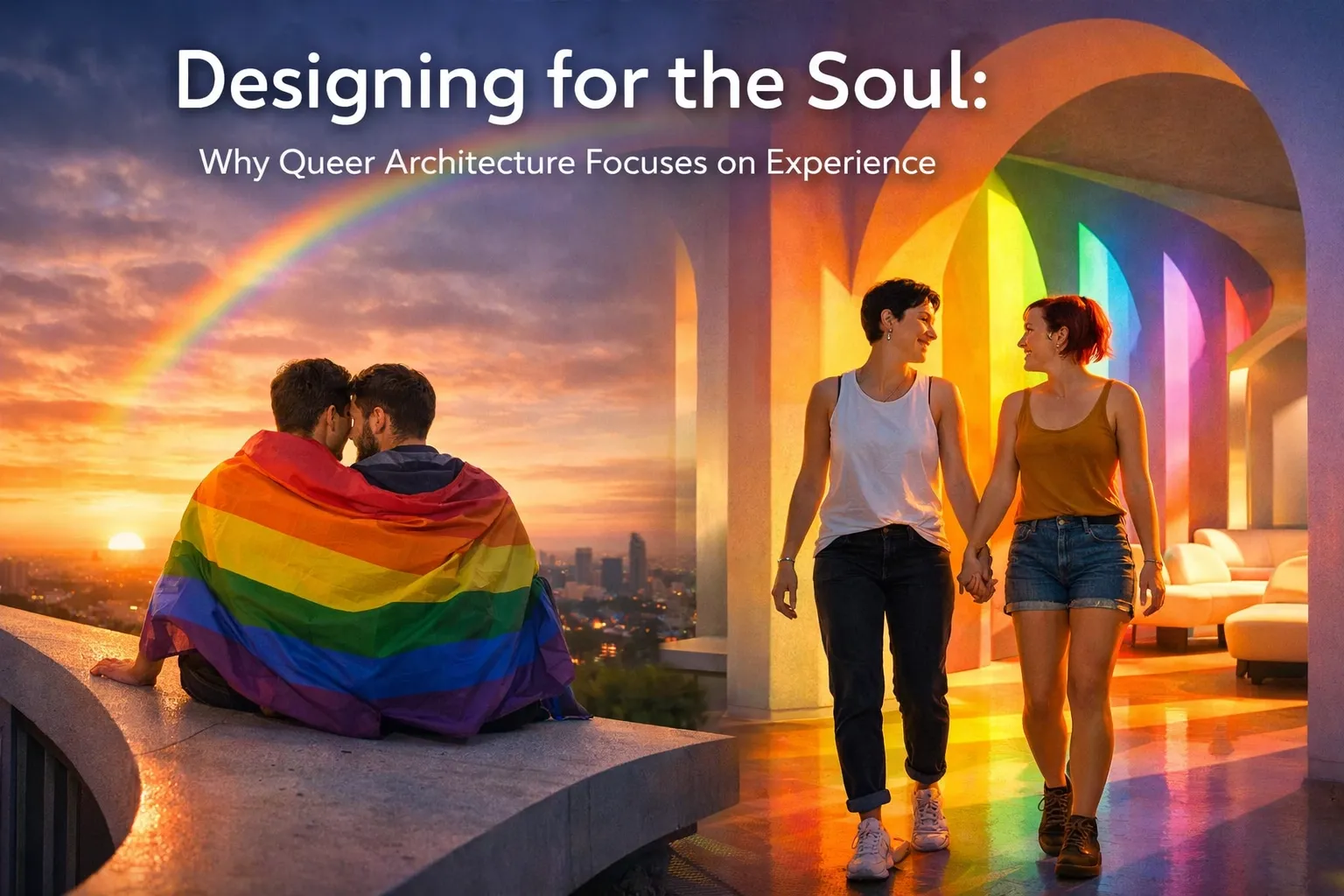
Walk into most buildings and you'll notice something: they're designed for function. There's a lobby, some hallways, rooms with specific purposes. Everything has its place. But what if a building could do more than just house activities? What if it could hold space for your feelings, your identity, your need to simply be?
That's where queer architecture comes in: and it's about so much more than rainbow flags and pride-colored facades.
Space as Performance, Not Product
Here's the thing: traditional architecture treats buildings like finished products. You design it, build it, done. But queer architectural theory flips that script entirely. It understands that spaces are never truly "finished": they're constantly being created and recreated through the people who inhabit them.
Think about your favorite queer bar or community center. What makes it feel queer isn't necessarily the walls or the furniture. It's the interactions happening inside: the conversations, the looks exchanged across a room, the unspoken understanding that you can let your guard down. The space becomes what it is through "verbal, non-verbal, and physical interactions" over time.
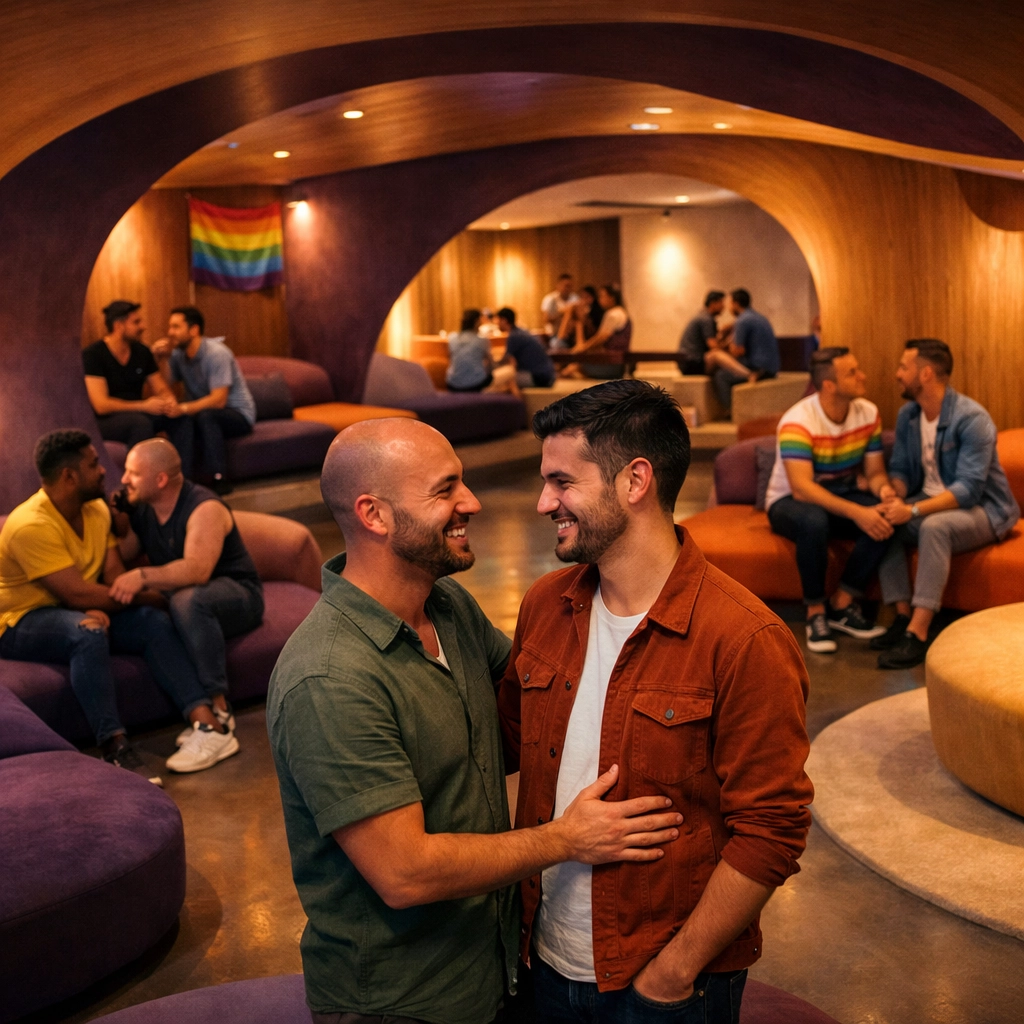
This performative nature means queer spaces are alive. They breathe with the community. They change based on who shows up and what they bring with them. It's architecture as an ongoing conversation rather than a monologue.
The 3 Cs: Building with Care
Let's get real for a second. Many folks in the LGBTQ+ community have experienced some form of trauma: whether that's outright violence, familial rejection, or the slow, grinding stress of living in a world that wasn't built with us in mind. Queer architects get this, which is why they embrace trauma-informed design principles.
Enter the 3 Cs: Choice, Community, and Comfort.
Choice means giving people agency over their environment. Can you control the lighting in your space? Choose where to sit? Decide how visible you want to be? In queer architecture, nothing should feel forced or predetermined.
Community centers connection. These spaces create opportunities for people to find each other, to build networks of support. It's why so many queer community centers have flexible common areas that encourage organic gathering: not just scheduled programming.
Comfort addresses the sensory quality of spaces through intentional use of light, sound, and materials. Harsh fluorescent lighting? Probably not great for creating emotional safety. But warm, adjustable lighting with acoustic dampening and soft textiles? Now we're talking.
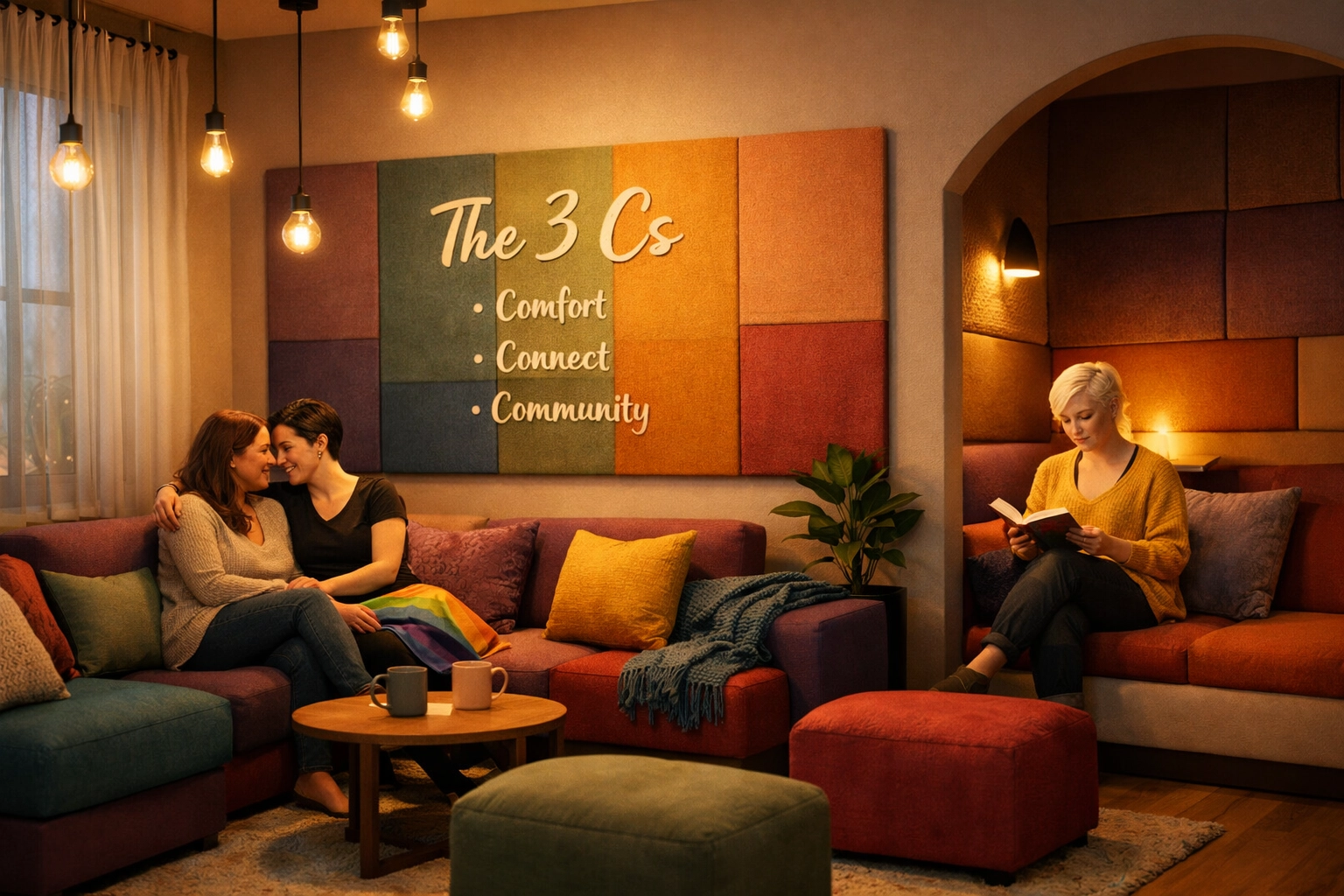
These principles recognize something crucial: how a space makes you feel matters just as much as what you can do there.
Your Body Knows the Difference
Ever notice how some spaces just feel right while others make you want to leave immediately? That's your body responding to sensory input, and queer architecture takes this seriously.
Consider the classic gay club: those spaces are sensory wonderlands. Dramatic lighting that shifts and plays, mirrored surfaces that multiply presence and possibility, flexible layouts that encourage movement and discovery. These aren't arbitrary design choices; they're intentional environments for identity expression and joy.
The emphasis on sensory and transformative experiences over static function means these spaces actively encourage you to explore who you are and how you want to be seen. They create conditions for self-discovery through spatial experience.
At Read with Pride, we see parallels in how queer fiction and MM romance books create emotional landscapes for readers. Just as queer architecture shapes physical experience, gay romance novels shape emotional journeys: both prioritizing authentic feeling over prescribed narrative.
Design as Radical Welcome
Here's where it gets political (because let's be honest, our existence is inherently political): queer architecture is activism.
Every design decision asks: whose stories are told? Whose bodies are considered? Who is welcome here? Traditional architecture often defaults to serving a narrow definition of "normal": cisgender, heterosexual, able-bodied, and so on. Queer architecture actively disrupts that.

This shows up in thoughtful details: privacy-enhancing features for those who need discretion, semi-enclosed intimate spaces for connection without forced exposure, visibility without vulnerability. It's about creating conditions where people can show up authentically without fear.
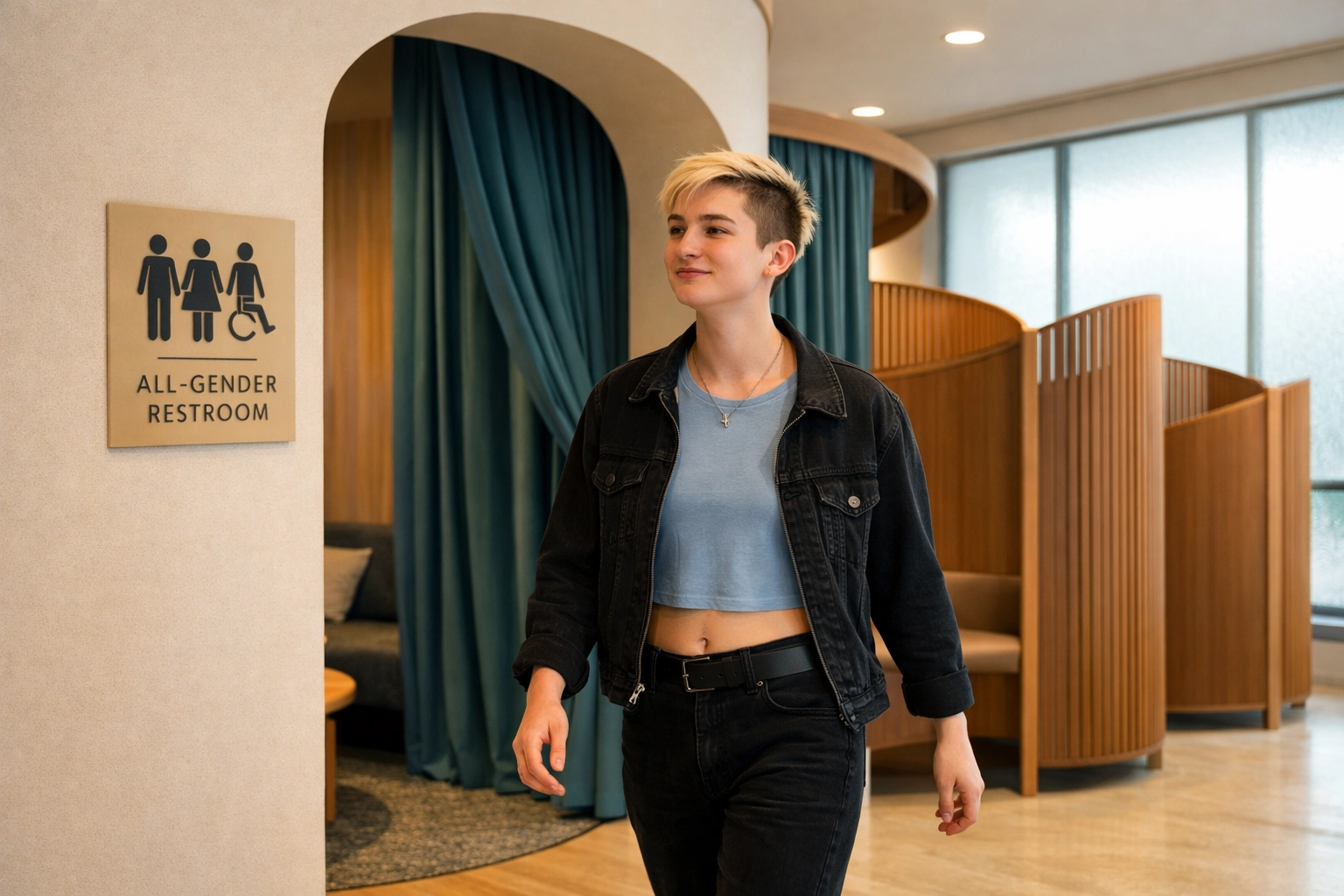
Think about gender-neutral restrooms, for example. That's not just about plumbing: it's a spatial gesture that says "we see you, all of you, and you belong here." It's design that affirms queer lives through intentional care.
Fluid Spaces for Fluid Lives
If there's one thing queerness has taught us, it's that rigid categories rarely serve us well. So why should our spaces be rigid?
Queer architecture embraces flexibility and fluidity, creating environments that can evolve with their communities. This might mean movable partitions instead of fixed walls, multi-functional furniture, or layouts that accommodate organic growth and changing needs.
This flexibility recognizes the beautiful complexity of intersectional identities. A young trans person has different spatial needs than an older gay couple, and both differ from what a queer parent might need. Rather than designing for a single imagined user, queer architecture creates adaptable spaces that respond to diverse realities.
The concept of "continuous movement and coexistence of different functions" means these spaces can be multiple things at once: just like we can be multiple things at once. A room might serve as a quiet reading nook during the day and transform into a vibrant gathering space at night. Why not?
Beyond the Binary
What makes queer architecture particularly powerful is its rejection of either/or thinking. Traditional architecture loves binaries: public or private, work or play, formal or casual. Queer architectural theory asks: what if spaces could be and instead of or?
This both/and approach creates richer, more nuanced environments. A space can be intimate and communal. It can offer visibility and discretion. It can be structured and flexible. This mirrors the complexity of queer experience itself: we're constantly navigating multiple truths and identities simultaneously.
Why This Matters Now
In 2026, as we continue fighting for LGBTQ+ rights and recognition, the spaces we inhabit matter more than ever. Queer architecture offers a blueprint (pun intended) for creating environments that don't just tolerate difference but actively celebrate it.
Whether you're designing a community center, renovating your home, or just thinking about the spaces you inhabit, these principles apply. Ask yourself: Does this space make me feel safe? Can I be myself here? Does it offer choice, foster community, and provide comfort?
For those of us who find refuge in gay books and LGBTQ+ fiction, there's a beautiful parallel. Just as queer architecture creates physical spaces for authentic living, MM romance and queer literature create imaginative spaces for exploring identity, desire, and belonging. Both prioritize experience and emotional truth over convention.
Creating Your Own Queer Spaces
You don't need to be an architect to apply these principles. Start small:
- Create zones in your home that serve multiple purposes
- Use lighting to set different moods and energy levels
- Incorporate elements that reflect your authentic self
- Design for flexibility so spaces can grow with you
- Consider how each area makes you feel, not just what it does
The goal isn't perfection: it's creating environments that honor your humanity and support your wellbeing. That's what queer architecture is really about: designing for the soul, not just the schedule.
Explore more stories celebrating LGBTQ+ creativity and culture at Read with Pride. Discover our collection of gay romance novels, MM fiction, and queer literature that create emotional spaces as rich and complex as the physical ones we inhabit.
Connect with us:
- Facebook: Read With Pride
- Instagram: @read.withpride
- Twitter: @Read_With_Pride
#QueerArchitecture #LGBTQDesign #ReadWithPride #QueerTheory #LGBTQCommunity #InclusiveDesign #MMRomance #GayBooks #QueerFiction #LGBTQBooks #AuthenticSpaces #QueerCreativity #DesignActivism #LGBTQCulture #ReadwithprideCommunity #GayRomanceBooks #2026QueerCulture #LGBTQReading

Leave a Reply
You must be logged in to post a comment.