

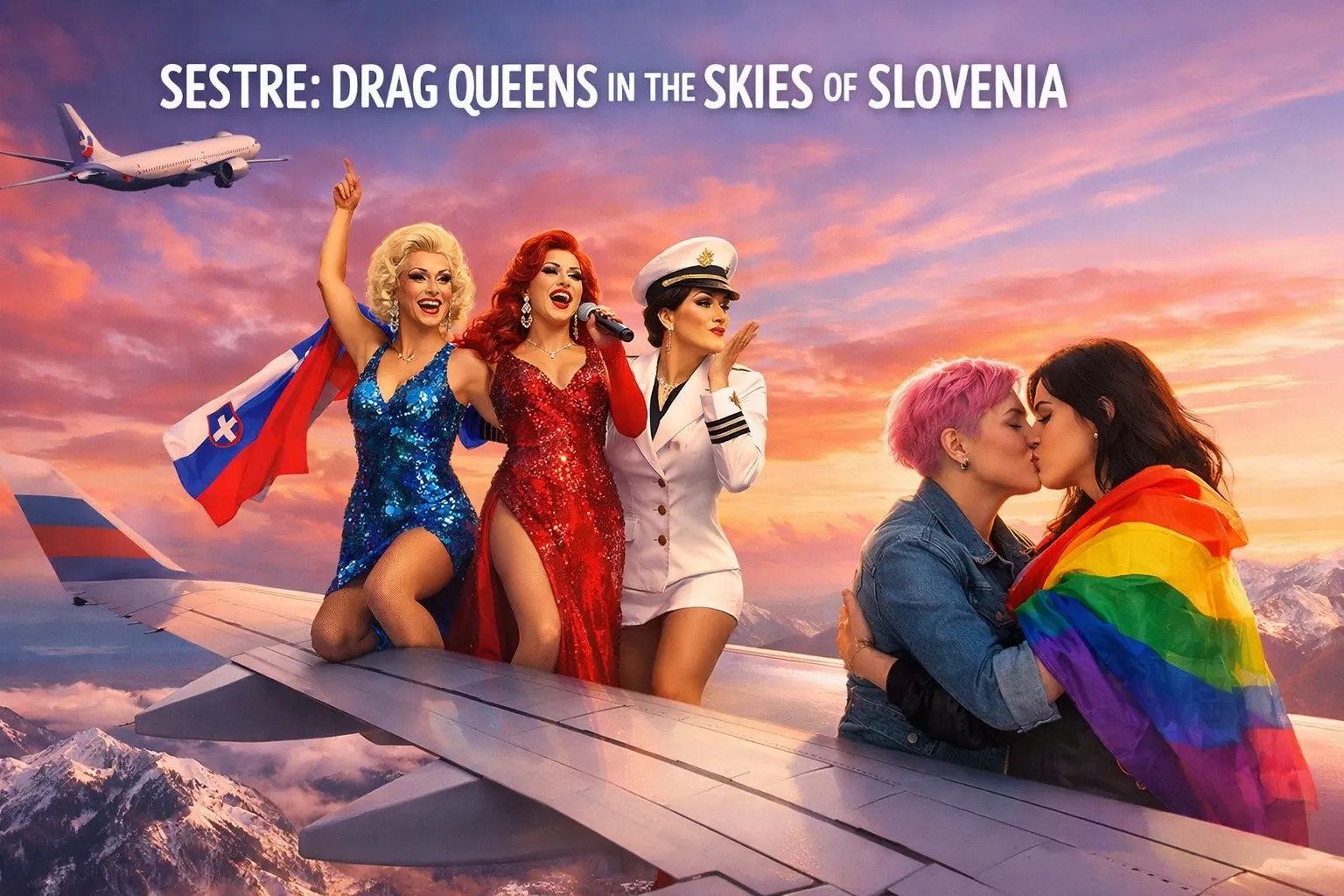
Picture this: It's 2002, and the Eurovision Song Contest stage in Tallinn, Estonia is about to witness something it has never seen before. Three drag queens in full flight attendant regalia are preparing to serve looks, vocals, and a whole lot of courage. Welcome aboard Flight Sestre, destination: Eurovision history.
Taking Off: Who Were Sestre?
Sestre (which means "Sisters" in Slovenian) weren't just another Eurovision act. They were a revolution wrapped in glittery red suits. The trio consisted of Tomaž performing as Marlenna, Damjan as Emperatrizz, and Srečko as Daphne, three performers who had been slaying stages together since 2000 under the name Suspender Sisters.
When they won Slovenia's national pre-selection in February 2002 with their song "Samo ljubezen" (Only Love), they became the first drag performers to compete as contestants at Eurovision. Let that sink in for a moment. This wasn't a backing dancer situation or a brief cameo, these queens were representing an entire country on one of the world's biggest stages.
The Look That Launched a Thousand Conversations
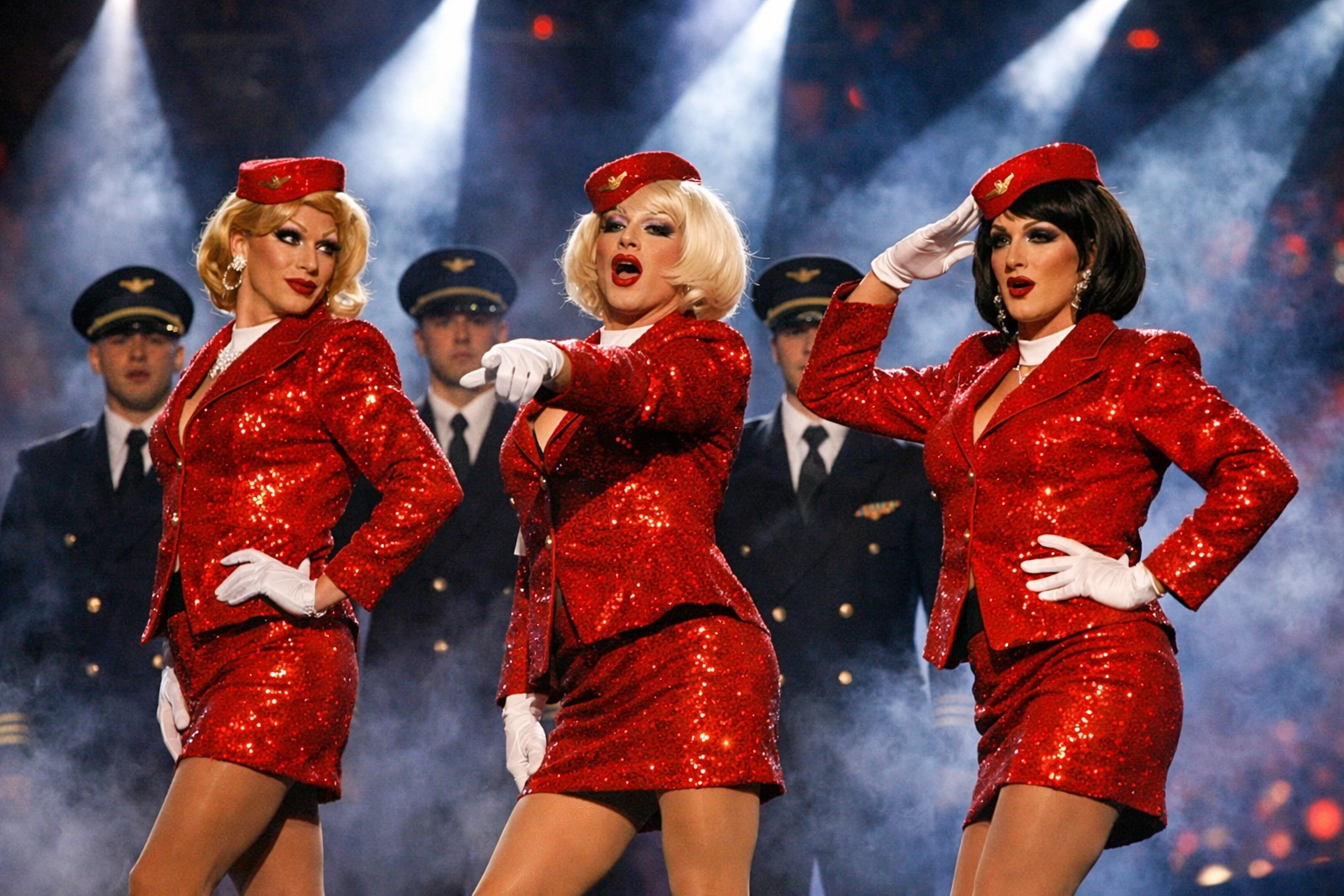
The visual concept was pure genius. Sestre styled themselves as flight attendants, complete with white shirts, white gloves, white stockings, high heels, red caps, lipstick, and those unforgettable glittery red suits and skirts. They wore short brown wigs and served up a perfectly coordinated fantasy that screamed professionalism meets performance art.
Behind them stood three backing singers dressed as airline pilots in crisp white suits, trousers, and caps. The staging was tight, the concept was crystal clear, and the metaphor? Well, that was taking flight in more ways than one. They were literally and figuratively elevating drag performance to new heights, showing Europe that queer culture deserved a first-class seat at the table.
The Performance That Divided a Nation
"Samo ljubezen" translates to "Only Love," and honestly, that message couldn't have been more needed. Despite being among the bookies' favorites to win the whole competition, Sestre placed 13th with 33 points. But the real story wasn't about the scoreboard: it was about what happened back home.
The performance sparked massive controversy in Slovenia. Anti-gay protests erupted. Debates raged in the Slovenian Parliament. The conversation even escalated to the European Parliament, where politicians argued about the performance and the public's reaction to it. Some European politicians went so far as to suggest that Slovenia's EU admission should be questioned based on the social attitudes toward homosexuality displayed in the aftermath.

Think about the weight of that for a second. Three performers in drag were being used as a litmus test for an entire country's European credentials. That's not just pressure: that's being thrust into the center of a cultural battlefield whether you asked for it or not.
Beyond Eurovision: The Legacy Takes Shape
Here's the thing about Sestre: they didn't let the controversy clip their wings. They kept performing, kept pushing boundaries, and kept serving what the world needed: visibility, pride, and damn good entertainment.
After Eurovision, they toured extensively across Europe, performing in Germany, France, Sweden, Austria, and the United Kingdom. They even appeared on Channel 4's Eurotrash, bringing their unique brand of performance to audiences who were hungry for something different, something authentic, something real.
In October 2002, they released their first album, Souvenir: a perfect title for a group that had already become a memento of a pivotal moment in Eurovision and LGBTQ+ history. And "Samo ljubezen"? That song they performed on the Eurovision stage became a number-one hit. The people had spoken, and love: as it turns out: really does win.

Why Sestre Still Matter Today
Fast forward to 2026, and we're living in a world where drag culture has become more mainstream (thanks, RuPaul's Drag Race), where Eurovision regularly features queer artists, and where Slovenia has made significant strides in LGBTQ+ rights. But none of that should diminish what Sestre did or the bravery it required.
They performed at a time when Slovenia was still finding its voice on queer issues, still navigating its identity as a newly independent nation preparing for EU membership. They put on their wigs, their heels, and their flight attendant uniforms, and they said: "We're here. We're queer. And we're going to sing about love on the biggest stage we can find."
That's the kind of story that belongs in every collection of gay love stories and queer fiction we celebrate. It's real-life MM romance meets political activism meets performance art. It's messy and brave and beautiful: just like the best LGBTQ+ narratives always are.
The Bigger Picture: Eurovision and Queer Culture
Sestre opened a door that would never fully close again. Their appearance paved the way for countless other queer performers, from Conchita Wurst's iconic 2014 victory to Duncan Laurence's vulnerable 2019 win with "Arcade," and beyond. Eurovision has become a safe space for queer expression, and we have acts like Sestre to thank for weathering the initial storms.
When we talk about gay culture at Eurovision, we're not just talking about glitter and camp (though there's plenty of both, and we love it). We're talking about visibility. We're talking about representation. We're talking about queer artists using one of the world's most-watched television events to say: "We exist. Our stories matter. Our love is valid."
Reading the Legacy
At Read with Pride, we believe in celebrating stories of courage: whether they're found in MM romance books, gay historical romance, or real-life moments that changed the trajectory of queer visibility. Sestre's story has all the elements of great queer fiction: high stakes, fierce protagonists, societal pushback, and ultimately, triumph.
Their journey reminds us why representation in media: from Eurovision stages to the pages of LGBTQ+ fiction: matters so deeply. Every time someone sees themselves reflected in a story, whether it's a contemporary MM romance or a historical account of drag queens defying expectations, it validates their existence and expands the possibilities of what they can become.
Final Boarding Call
Sestre didn't win Eurovision in 2002, but they won something arguably more important: they secured their place in history as pioneers who refused to be invisible. They showed up, served absolute looks, and reminded everyone watching that love: samo ljubezen, only love: is always worth fighting for.
So here's to Tomaž, Damjan, and Srečko. Here's to the drag queens who flew when others said they should stay grounded. Here's to every queer performer who's ever stepped onto a stage knowing they might face backlash but doing it anyway because visibility matters more than safety.
And here's to you, reading this story and recognizing that every act of queer defiance, every moment of visibility, every performance done in heels and a wig is part of our collective history: a history we get to celebrate, honor, and carry forward.
Keep flying high, and keep reading with pride. ✈️🏳️🌈
Discover more LGBTQ+ stories and MM romance books at readwithpride.com
Follow us on Facebook | Instagram | Twitter/X
#ReadWithPride #SistreEurovision #DragHistory #LGBTQHistory #EurovisionHistory #GayRomance #MMRomance #QueerStories #LGBTQBooks #GayFiction #PrideStories #DragQueens #Slovenia2002 #QueerVisibility #LoveWins

Leave a Reply
You must be logged in to post a comment.