

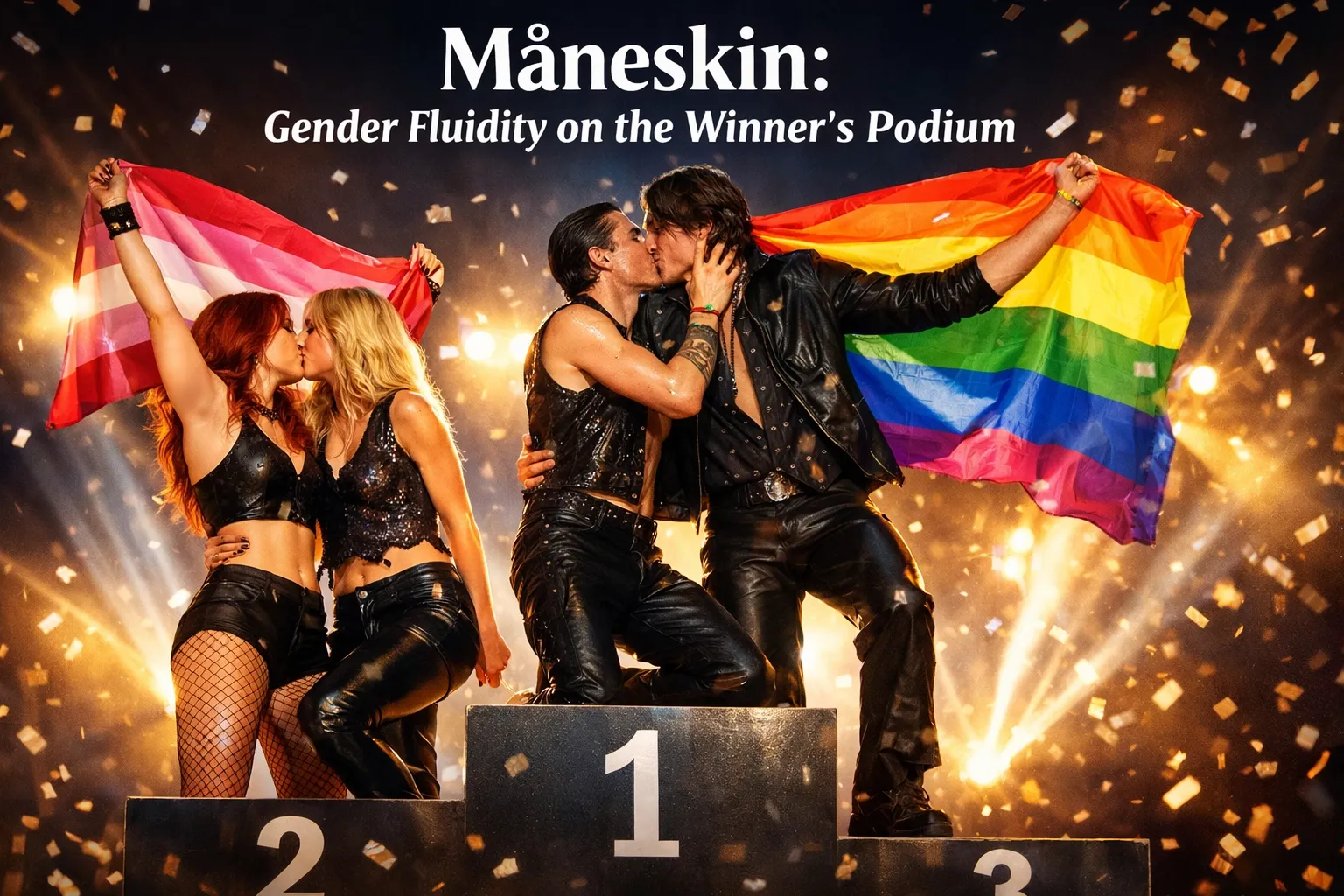
When Italy sent a rock band in leather and lace to Eurovision 2021, nobody expected them to ignite a cultural revolution. But Måneskin didn't just win the contest: they shattered every expectation about what a mainstream rock band could look like, dress like, and stand for.
The Night Rock Wore a Corset
Rotterdam 2021 was supposed to be Eurovision's comeback after the pandemic cancelled 2020. Instead, it became the stage where four Italian twenty-somethings proved that gender is a social construct and rock 'n' roll never looked better in fishnet stockings.
"Zitti e buoni", literally "shut up and behave": was their battle cry, and boy, did they refuse to behave. Damiano David prowled the stage in a combination of leather, sequins, and attitude that made gender binaries weep. The performance was raw, unapologetic, and dripping with a sexual energy that didn't care about your pronouns or your comfort level.
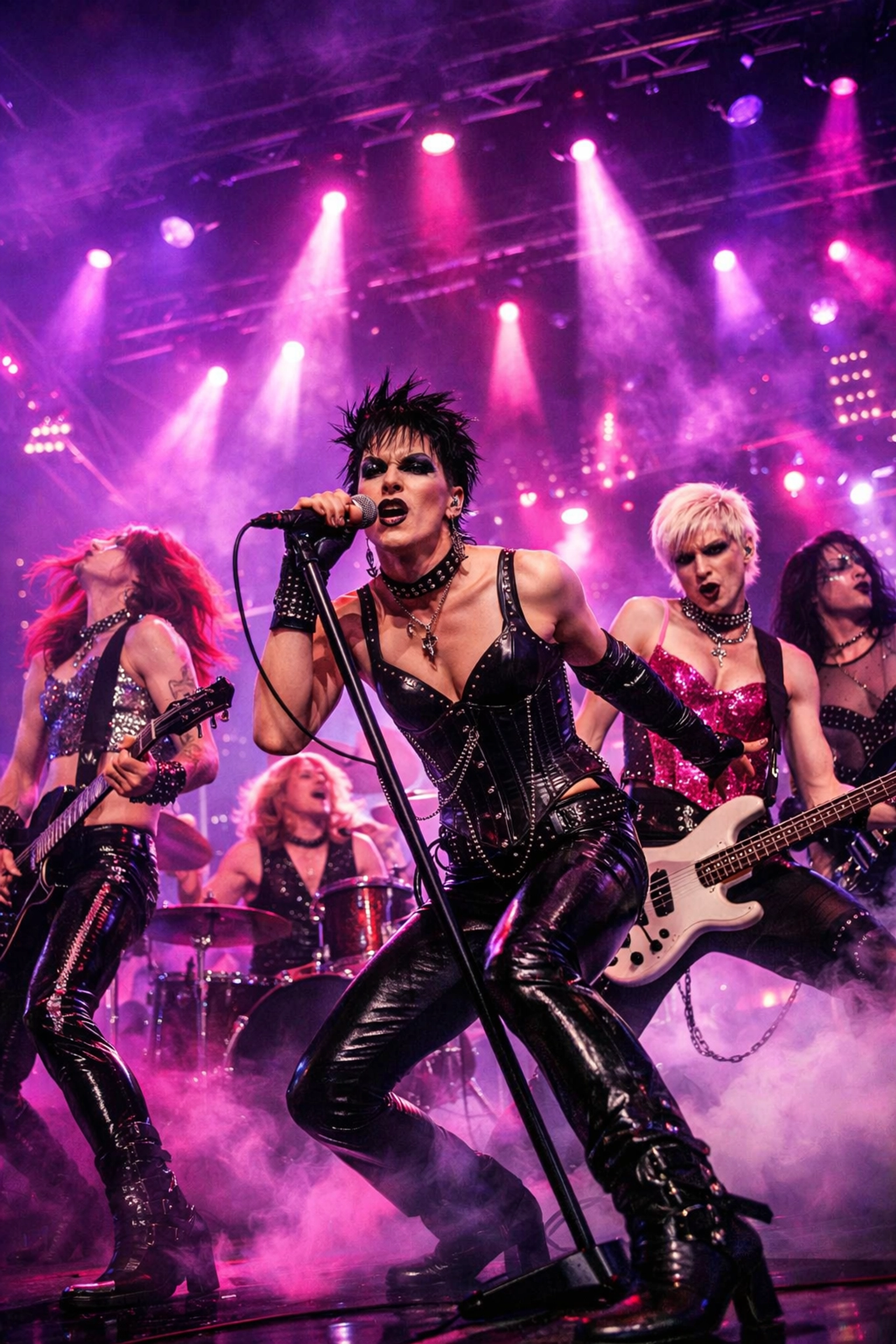
When they won, it wasn't just a victory for Italy. It was a victory for every queer kid who'd been told to tone it down, dress more "appropriately," or stop being so extra.
More Than Just a Look
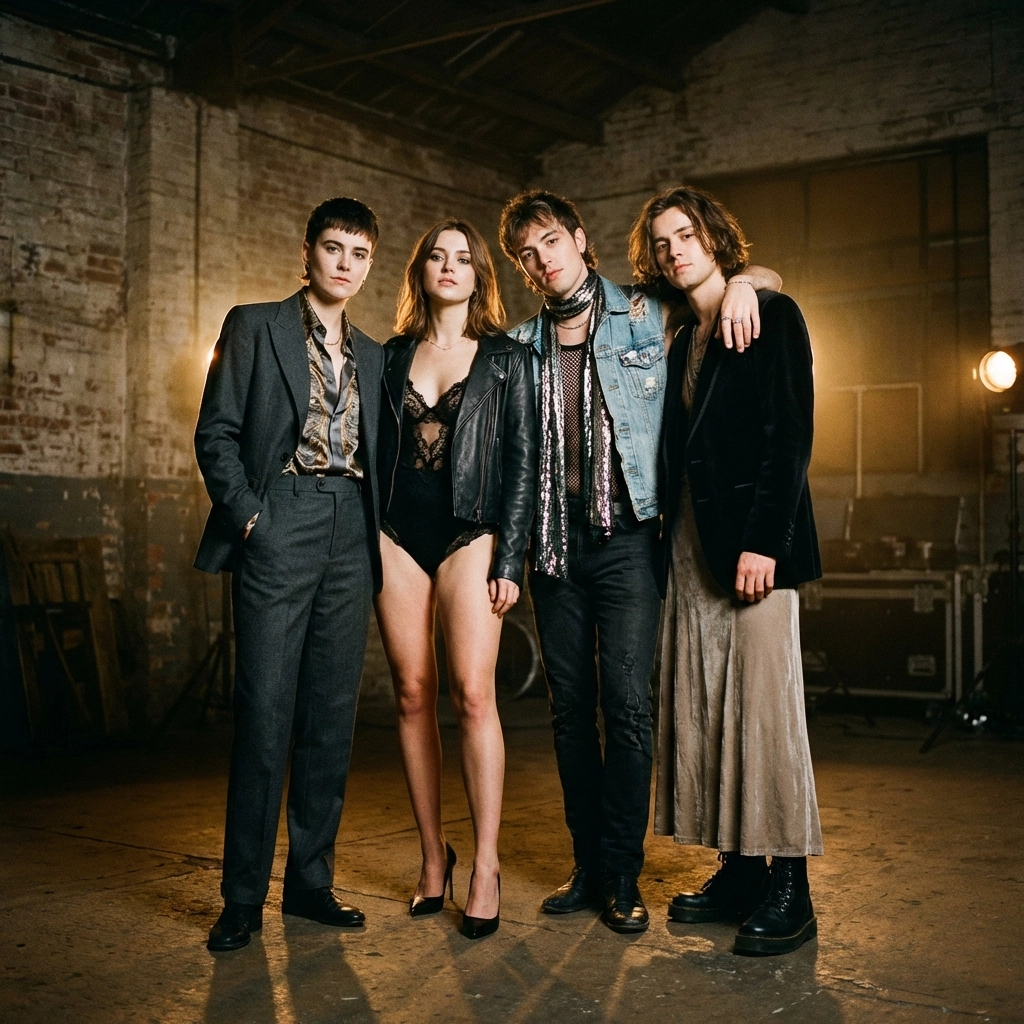
Here's where it gets interesting: not all of Måneskin identify as queer. Bassist Victoria De Angelis and drummer Ethan Torchio are both openly queer. Vocalist Damiano David identifies as heterosexual but "curious" (whatever that means to him), and guitarist Thomas Raggi is straight. Yet all four members fully embrace gender-fluid fashion as part of their identity: not a costume, not a marketing gimmick, but genuine self-expression.
They swap dresses for blazers, corsets for leather pants, and nobody bats an eye within the band. Victoria might rock a sharp suit while Damiano struts in lingerie and heels. The "VENT'ANNI" music video featured all four members bare-chested, further blurring any lines society tried to draw.
This matters. A lot.
Because when straight members of a band genuinely embrace gender-fluid presentation alongside their queer bandmates, it normalizes the idea that clothing has no gender. It proves that you don't need to be queer to reject toxic masculinity or rigid gender norms. It shows that freedom of expression isn't reserved for one community: it's for everyone brave enough to claim it.
Why Queer Youth Connected
The "Zitti e buoni" attitude resonated deeply with LGBTQ+ audiences because it embodied something we've always known: the best response to people telling you to sit down, shut up, and conform is to get louder, stand taller, and be more yourself.
Their song "I WANNA BE YOUR SLAVE" became an unofficial queer anthem, celebrating sexual fluidity and power dynamics with zero apology. The track topped charts across Europe while the queer community claimed it as their own: and Måneskin welcomed that embrace.
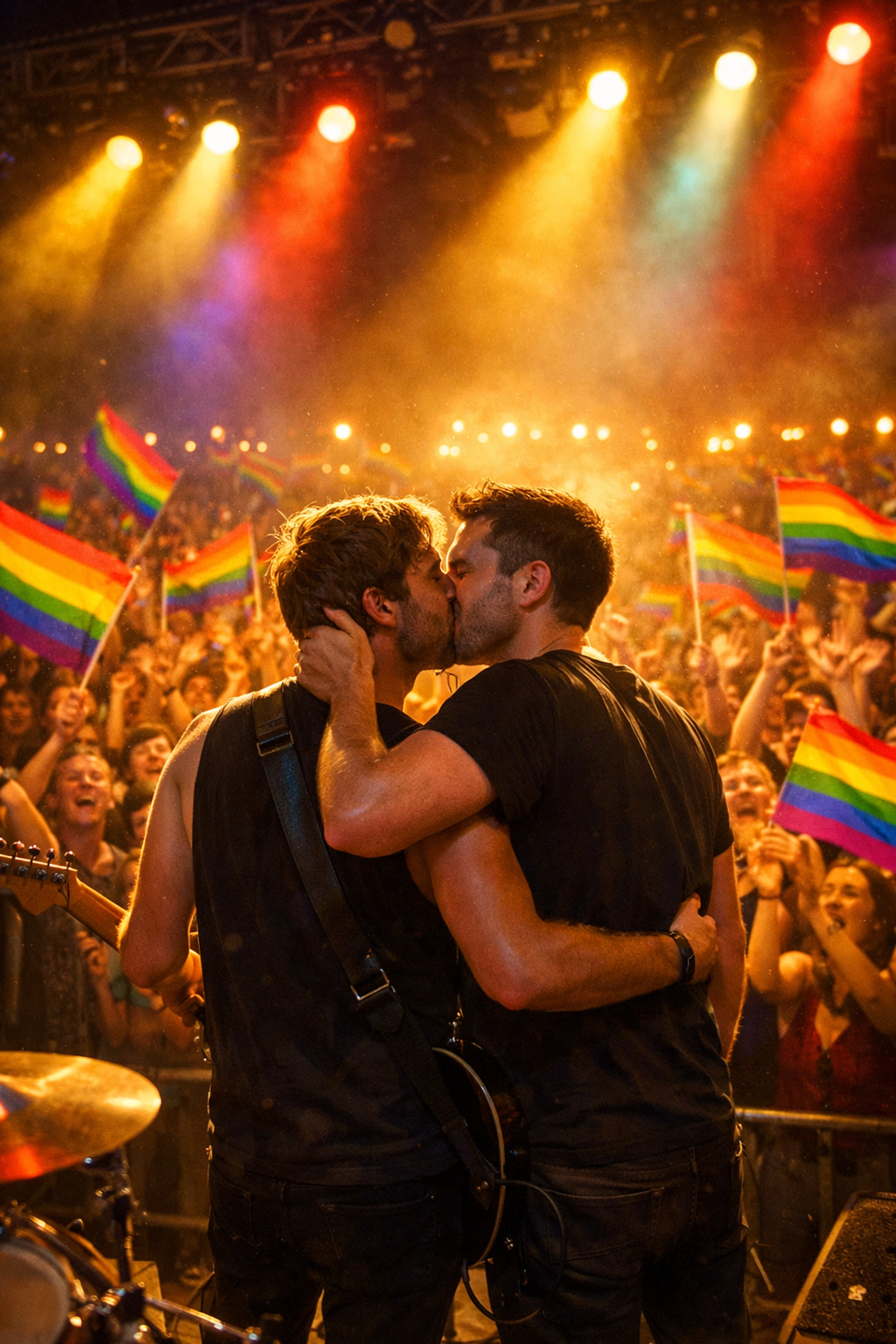
When they performed in Poland: a country with increasingly hostile anti-LGBTQ+ policies: Damiano kissed bandmate Thomas on stage and declared: "We think that everyone should be completely free to be whoever the fuck you want." That moment wasn't subtle. It wasn't diplomatic. It was necessary.
For queer youth watching from countries where being yourself could get you ostracized or worse, seeing a mainstream, chart-topping band refuse to tone down their gender-fluid aesthetic or pro-LGBTQ+ stance provided hope. Here was proof that you could be authentically yourself and successful. You didn't have to choose.
The Queerbaiting Debate
Of course, nothing this culturally significant happens without controversy. Some critics accused Måneskin's straight members of "queerbaiting": appropriating queer aesthetics for mainstream success without facing the same discrimination that actual queer people experience.
Victoria De Angelis addressed this head-on, seeing no problem with her straight bandmates' fashion choices. Her perspective? Gender expression isn't owned by any one community, and policing who can wear what based on their sexuality defeats the entire purpose of challenging gender norms.
It's a valid debate. There's legitimate frustration when straight artists profit from queer aesthetics while actual LGBTQ+ artists struggle for mainstream acceptance. But Måneskin's case feels different because:
- They've consistently used their platform to advocate for LGBTQ+ rights
- Their gender-fluid presentation appears authentic, not performative
- Two of the four members are actually queer
- They've faced real ridicule and criticism for their choices
The band has spoken openly about being mocked for their presentation. That criticism, paradoxically, pushed them toward even greater creative expression: a very queer response to oppression, honestly.
The Bigger Picture
What makes Måneskin significant in Eurovision's LGBTQ+ history isn't that they're the queerest act to ever win (they're not). It's that they brought gender fluidity to the mainstream in a completely casual, unapologetic way.
Previous Eurovision moments often featured LGBTQ+ artists making explicitly queer political statements. Conchita Wurst's 2014 victory was revolutionary because she was a drag artist. Dana International's 1998 win was groundbreaking because she was transgender.
Måneskin's impact is different. They didn't win because of their gender-fluid aesthetic: they won despite the fact that some viewers were uncomfortable with it. They proved that in 2021, a rock band where men wear corsets and makeup could win Europe's biggest entertainment competition based purely on talent and charisma.
That normalization matters. It shifts the conversation from "Can queer people succeed?" to "Gender doesn't determine your worth, so who cares what you're wearing?"
The Lasting Impact
Three years after their Eurovision victory, Måneskin continues to dominate international charts while maintaining their commitment to gender-fluid presentation. They've performed everywhere from Coachella to the MTV VMAs without ever toning down their aesthetic for American audiences.
For readers at Read with Pride, their story resonates with the themes we love in MM romance books and queer fiction: the courage to be yourself, the power of found family, and the revolutionary act of refusing to conform. If Måneskin were characters in a gay romance novel, they'd be the friends cheering on the protagonists, reminding them that authenticity is always worth the risk.
Their influence extends beyond fashion. Young musicians now see that you can be commercially successful without sanitizing your image for mainstream consumption. LGBTQ+ youth see that allies can stand beside them: not speaking for them, but amplifying the message that everyone deserves freedom of expression.
Shut Up and Be Good? Never.
"Zitti e buoni" translates to "shut up and behave," but Måneskin turned it into a defiant rejection of conformity. That rebellion: against gender norms, against expectations, against anyone who says you're "too much": is fundamentally queer, regardless of who's wearing the fishnets.
They may not all identify as LGBTQ+, but their impact on queer culture is undeniable. They proved that gender-fluid fashion belongs on the world's biggest stages. They showed that you don't need to choose between commercial success and authentic self-expression. And they gave a generation of young people permission to be as extra, as fluid, and as unapologetically themselves as they want to be.
In a contest that's always celebrated diversity and defiance, Måneskin embodied both: and looked absolutely stunning doing it.
Looking for more stories about authenticity, self-expression, and breaking boundaries? Explore our collection of LGBTQ+ books and MM romance novels at ReadWithPride.com where every story celebrates being unapologetically yourself.
Follow us for more LGBTQ+ content and book recommendations:
- Facebook: Read With Pride
- Instagram: @read.withpride
- Twitter/X: @Read_With_Pride
#Maneskin #Eurovision2021 #GenderFluid #LGBTQPride #QueerCulture #ReadWithPride #MMRomance #QueerFiction #GayBooks #LGBTQBooks #EurovisionHistory #GenderExpression #QueerRepresentation #Authenticity #LGBTQAllies #QueerYouth #MMRomanceBooks #GayRomance #LGBTQCommunity #BeYourself

Leave a Reply
You must be logged in to post a comment.